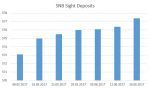
The sight deposits at the SNB increased by 3.4 billion francs compared to the previous week.
Read More »2024-04-26
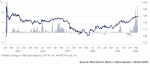
SNB Sight Deposits: increased by 3.4 billion francs compared to the previous week






2024-04-26
The sight deposits at the SNB increased by 3.4 billion francs compared to the previous week.
Read More »2023-12-08
Investors constantly seek new avenues for diversification and higher returns in the ever-evolving finance landscape. One such frontier that has gained significant attention in recent years is private credit. This alternative asset class offers unique opportunities and challenges, attracting institutional investors, high-net-worth individuals, and fund managers. In this comprehensive guide, we’ll explore the intricacies …
Read More »2023-11-29
For many, tax refunds feel like a mini-windfall—a delightful surprise at the beginning of the year. A chance to cover old debts, splurge on something desired, or simply bolster savings. But what happens when this eagerly anticipated money doesn’t arrive on time? Delays can, unfortunately, throw a wrench in your financial plans, causing unnecessary stress. …
Read More »2023-10-16
In today’s hyper-connected world, the efficient management of a company’s fleet is an imperative that can’t be overlooked. Businesses that rely on fleet operations must prioritize their management not only for financial prudence but also to ensure the safety and efficiency of operations. Whether you’re overseeing a fleet of delivery trucks, rental cars, or …
Read More »2023-10-13

Wahrscheinlich ist Ihnen schon aufgefallen, dass Ihre Gas- und Stromrechnungen teurer sind als früher. Falls Sie nach Möglichkeiten suchen, Ihre Stromkosten zu senken, gibt es viele einfache Maßnahmen, die Sie ergreifen können, um Ihre Energierechnungen zu senken – vom Ausschalten des Lichts bis hin zum kosteneffizienten Wäschewaschen. Hier finden Sie die 23 besten Möglichkeiten, …
Read More »2023-09-28

Finding the right retirement portfolio balance is an individual journey, especially in today’s ever-evolving environment. No two individuals are alike when it comes to investing and planning for financial security in retirement, which can make it daunting to find a suitable option that provides protection yet also offers growth potential. One less conventional …
Read More »2023-08-11
In today’s fast-paced world, technological advancements are changing the game in almost every industry. Restaurants, a sector once considered traditional and manual, are no exception. With the increasing demands of the 21st-century customer, the integration of technology has become inevitable. In this article, we will explore emerging technologies in restaurant management software, the benefits it …
Read More »2023-08-09
When discussing different ways to run an economy, one idea that stands out is the “free market” system. Instead of being a mouthful, it’s essentially a way of doing things where the government doesn’t get too involved, and businesses are free to compete. This setup has some pretty cool perks that can make life …
Read More »2023-08-08
Texas is not the only US state to have deregulated electricity. The states of Delaware, Connecticut, Maine, Massachusetts, and New Hampshire have several deregulated electricity zones as well. However, there are significantly more deregulated electricity sectors in Texas than in any other state. As per official reports, more than 26 million residents of the state live …
Read More »
Celebrating individual and team successes and encouraging team bonding are among the best ways of improving workplace culture. Employees who feel appreciated regardless of the team they are in are more likely to be highly productive, ensure their team succeeds, and be more motivated and energetic in the workplace. Here are a few ways your …
Read More »2023-07-21

Fleet management is a critical aspect of any business that utilizes multiple vehicles for its operations. It’s an area of business operations that can often seem riddled with complexity and high costs, especially for businesses with a large fleet. However, successful businesses find ways to minimize these costs while maintaining optimal fleet operations. This article …
Read More »2023-06-01
Year in and year out, online gambling continues to increase in popularity in Australia. With the industry’s growth, there has been a surge in the number of payment methods available to players. With the many payment options available, AstroPay stands out as one of Australia’s most secure and reliable online gambling options. What is AstroPay? …
Read More »2023-05-11
As a small business owner, there are numerous benefits to taking advantage of the tax incentives associated with life insurance. It can provide you and your loved ones financial security and help you maximize profits for your business in the long run. This article will explain the basics of life insurance for small business …
Read More »2023-05-08

The auto market can be challenging and unpredictable, but with the right strategies and insights, automotive business owners can thrive. This article will explore the financial savvy ways to succeed in the auto market, focusing on understanding the current landscape, saving money, using modern financial tools and AI, and navigating warranties and service contracts. …
Read More »2023-02-27
Are you looking to invest in Singapore but feeling overwhelmed by all the different options? Finding the correct brokerage account can be challenging, especially if you are not an experienced investor. That’s why we’ve broken down some of the top-rated brokers in Singapore, explaining the pros and cons each offers so you can choose which online trading platform is best for your needs.
Read More »2022-12-20
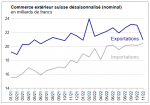
In November 2022, seasonally adjusted exports plunged by almost a tenth while imports increased by 1.4% month on month. At the exit in particular, the chemical-pharmaceutical sector weighed down the result. The trade balance closes with a small surplus of half a billion francs.
Read More »2022-11-18
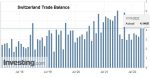
In October 2022 and after two consecutive monthly increases, seasonally adjusted exports fell by 1.1% (real: −1.8%). However, they remain on a positive trend. Imports fell by 1.4% over one month (actual: −0.8%), but have stagnated since the middle of the year. The trade balance ends with a surplus of 3 billion francs, the highest recorded in the last six months.
Read More »2022-10-20
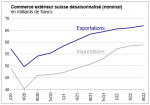
Also in the 3rd quarter of 2022, Swiss foreign trade experienced a positive development: while exports increased by 1.3%, imports grew by 0.8%. However, the latter have lost their vigor since the middle of the year. Both imports and exports nevertheless posted a record quarterly result. The trade balance closes with a surplus of 8 billion francs.
Read More »2022-07-29
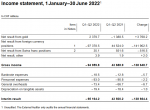
I was predicting for many years that the SNB will suffer a big loss when inflation comes. The time of reckoning has come. I expected some 150 billion loss in one year: at half time we are 95 billion CHF.
Read More »2022-07-19
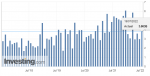
Swiss foreign trade strengthened further in both traffic directions in the 2nd quarter of 2022, reaching new highs. Exports increased by 0.9% and imports by 2.4% compared to the previous quarter. Prices have risen both at entry and exit. The trade balance closes with a surplus of 7.6 billion francs.
Read More »2022-06-22
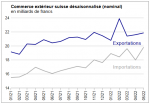
In May 2022, Swiss foreign trade strengthened in both directions of traffic: seasonally adjusted exports increased by 1.2% while imports jumped by 10.3%. The latter thus confirmed their upward trend despite strong fluctuations. Due to the different pace of growth at the outflow and the inflow, the trade balance surplus stood at CHF 2.0 billion.
Read More »2022-05-03
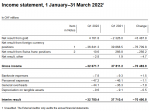
The Swiss National Bank reports a loss of CHF 32.8 billion for the first quarter of 2022. The loss on foreign currency positions amounted to CHF 36.8 billion. A valuation gain of CHF 4.2 billion was recorded on gold holdings. The profit on Swiss franc positions was CHF 10.6 million.
Read More »2022-04-27
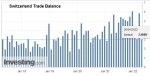
Swiss foreign trade also grew in the 1st quarter of 2022, climbing to a record level. Imports strengthened further (+6.7%) while exports lost ground somewhat (+1.2%). Both at entry and exit, prices stood at very high levels. Due to different trends in the two directions of traffic, the trade balance surplus fell sharply (–2.8 billion francs).
Read More »2022-03-18
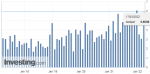
In February 2022, seasonally adjusted exports jumped 15.4% – after their setback in the previous two months – while imports fell 2.9%. The output boom was driven by the strength of chemicals and pharmaceuticals. For the first time, the trade balance surplus passed the 5 billion franc mark.
Read More »2022-01-27
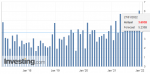
After a year 2020 strongly affected by the Covid-19 pandemic, Swiss foreign trade proved to be very dynamic in 2021. Exports thus jumped by 15.2% – reaching a record level – while imports swelled by 10 .1%. The different pace of growth at entry and exit explained the jump in the trade surplus to the imposing level of 58.7 billion francs.
Read More »2021-11-18
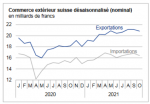
In October 2021, Swiss foreign trade lost its vigor. Exports declined 1.4% and imports 2.3% from the previous month. The chemicals and pharmaceuticals sector weighed on the results in both directions of traffic. The trade balance closed with a surplus of 4.4 billion francs, similar to that of previous months.
Read More »2021-10-29
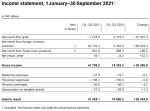
The Swiss National Bank reports a profit of CHF 41.4 billion for the first three quarters of 2021. The profit on foreign currency positions amounted to CHF 42.2 billion. A valuation loss of CHF 1.3 billion was recorded on gold holdings. The profit on Swiss franc positions amountedto CHF 0.8 billion.
Read More »2021-09-23
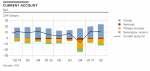
In the second quarter of 2021, the current account surplus amounted to almost CHF 11 billion, CHF 7 billion higher than in the same quarter of 2020. The rise was mainly attributable to a higher receipts surplus in goods trade.
Read More »2021-08-19
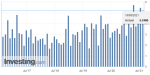
Secondary sector production rose by 14.2% in 2nd quarter 2021 in comparison with the same quarter a year earlier. Turnover rose by 15.5%. These sharp increases can largely be explained by the weak 2nd quarter of 2020, during which measures against the COVID-19 pandemic came into effect.
Read More »2021-07-20
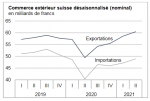
Swiss foreign trade showed dynamism in the second quarter of 2021. Exports rose 3.2% to a record level. They posted a fourth consecutive quarterly increase since the drop recorded at the start of the coronavirus pandemic. Imports continued the momentum of the previous quarter and increased 3.8%. The trade surplus stood at 11.5 billion francs.
Read More »2021-05-27
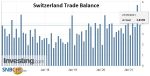
After jumping 5.9% in March, exports stagnated in April, however, rising to a high level of 20 billion francs. Imports confirmed their vitality in previous months, up 3.5% to 16.8 billion francs (actual: + 2.2%). The trade balance closes with a surplus of 3.3 billion francs.
Read More »2021-04-23
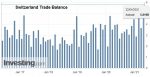
During the 1st quarter of 2021 and on a seasonally adjusted basis, exports increased by 4.8% (+ 2.7 billion francs; actual: + 4.9%), signing a third consecutive quarterly increase. At 58.1 billion francs, they not only exceeded their pre-crisis level, but also their second largest quarterly result. Imports increased by 1.7% or 805 million francs (actual: + 1.9%).
Read More »2021-03-04
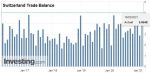
Bern, 04.03.2021 – The 2020 statistics of the Federal Customs Administration (AFD) are strongly influenced by the COVID-19 pandemic. In order to reduce the risk of transmission of the coronavirus, Switzerland has reintroduced systematic checks at national borders for the first time since joining Schengen, imposed entry restrictions and temporarily closed small border posts.
Read More »2021-03-01
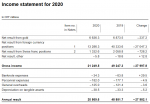
The Swiss National Bank reports a profit of CHF 20.9 billion for 2020 (2019: CHF 48.9 billion). The profit on foreign currency positions amounted to CHF 13.3 billion. A valuation gain of CHF 6.6 billion was recorded on gold holdings. The profit on Swiss franc positions was CHF 1.3 billion.
Read More »2021-02-18
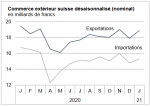
After declining in December 2020, Swiss foreign trade again showed a strong increase at the start of 2021. In January and in seasonally adjusted terms, exports rose 5.4% to 18.9 billion francs and imports by 3.3% to 15.3 billion. In both directions of trafficking, the boom relied heavily on chemicals and pharmaceuticals. The trade balance closed with a surplus of 3.6 billion francs.
Read More »2021-01-28
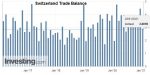
Switzerland’s 2020 foreign trade will bear the brunt of the consequences of the COVID-19 pandemic: exports (-7.1% to 225.1 billion francs) and imports (-11.2% to 182.1 billion) posted a historic decline. Never before have they suffered such a significant quarterly decline as in the second quarter of 2020. Foreign trade has fallen back to its level recorded three years earlier. The trade balance closed the year with a record surplus of CHF 43.0 billion.
Read More »2021-01-19
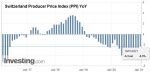
The Producer and Import Price Index rose in December 2020 by 0.5% compared with the previous month, reaching 98.4 points (December 2015 = 100). Compared with December 2019, the price level of the whole range of domestic and imported products fell by 2.3%.
Read More »2021-01-05
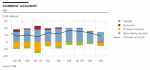
In the third quarter of 2020, the current account surplus amounted to CHF 9 billion, CHF 3 billion less than in the same quarter of 2019. This decline was particularly due to the lower receipts surplus in trade in goods and services. In the case of the goods trade, the decline was attributable to gold trading. This decrease was curbed by the expenses surplus for primary and secondary income, which decreased compared to Q3 2019.
Read More »2020-12-17
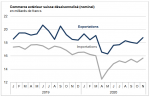
In November 2020, Swiss foreign trade stood out with an increase in both directions of traffic. In seasonally adjusted terms, exports advanced 4.8% and imports 4.2%. Falling over the previous two months, exports resumed their growth path and the trade balance closed with a surplus of 3.1 billion francs.
Read More »2020-12-15
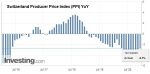
The Producer and Import Price Index fell by 0.1% in November 2020 compared with the previous month. The index stood at 97.9 points (December 2015 = 100). This decline was due in particular to lower prices for petroleum products and pharmaceutical preparations.
Read More »2020-11-19
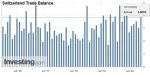
In October 2020, Swiss foreign trade took off. In seasonally adjusted terms, exports stagnated (-0.4%) while imports fell 3.3%. The slowdown recorded since this summer in both directions of traffic has thus been confirmed. The trade balance closed with a surplus of 2.9 billion francs.
Read More »2020-11-18
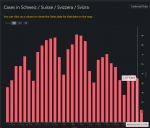
Over the last 48 hours, Switzerland’s Federal Office of Public Health (FOPH) reported a further 227 deaths among laboratory-confirmed Covid-19 cases, bringing the death toll to 1,654 since summer and 3,385 since the beginning of the year.
Read More »2020-11-16
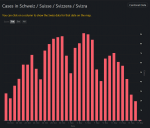
Over the last 72 hours, Switzerland’s Federal Office of Public Health (FOPH) reported 198 deaths among laboratory-confirmed Covid-19 cases, bringing the death toll to 1,427 since summer and 3,158 since the beginning of the year.
Read More »2020-11-13
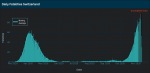
Over the 7 days to 13 November 2020, Switzerland’s Federal Office of Public Health (FOPH) reported 553 deaths among laboratory-confirmed Covid-19 cases, bringing the death toll to 1,229 since summer and 2,960 since the beginning of the year.
© Sudok1 | Dreamstime.comThe 553 reported deaths this week represent 19% of the total so far, making the last 7 days the deadliest 7-day period since the virus arrived in Switzerland.
There are currently 3,945 Covid-19 patients in hospitals across Switzerland, according to FOPH figures published by RTS, a number significantly above the peak during the first wave.
Switzerland is currently using 77% of its current intensive care capacity (1,142 places), according to SRF. The number of Covid patients in intensive care has reached 512, a number
Read More »2020-11-10
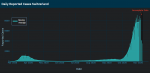
On 9 November 2020, Switzerland’s Federal Office of Public Health (FOPH) reported 17,309 new laboratory-confirmed Covid-19 cases over 72 hours, bringing the total to 229,222.
Read More »2020-11-06
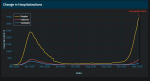
On 5 November 2020, Switzerland’s Federal Office of Public Health (FOPH) reported 62 deaths among laboratory-confirmed cases of Covid over 24 hours, bringing the total death toll since summer to 606.
Read More »2020-10-31
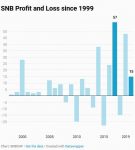
The Swiss National Bank reports a profit of CHF 15.1 billion for the first three quarters of 2020. We explain why these profits are possible.
Read More »2020-10-21
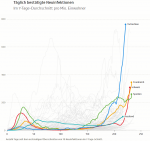
The second wave of the Coronavirus is currently raging in Europe. The attached image shows the number of newly infected people in European countries on a linear scale. In particular in the Czech republic, but also in Switzerland, France or Spain, one can see a tendency of exponential growth.
Read More »2020-10-20
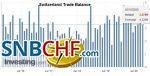
After its historic decline in the second quarter, Swiss foreign trade showed a clear recovery in the third quarter of 2020. In seasonally adjusted terms, exports swelled by 6.5% and imports by 11.5%. The two traffic departments, however, remained well below their record level for the second quarter of 2019. The trade balance closed with a surplus of 8.2 billion francs.
Read More »2020-10-15
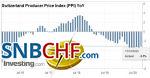
The Producer and Import Price Index rose in September 2020 by 0.1% compared with the previous month, reaching 98.0 points (December 2015 = 100). The rise is due in particular to higher prices for scrap as well as for basic metals and semi-finished metal products.
Read More »2020-09-23
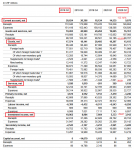
In the second quarter of 2020, the current account surplus amounted to CHF 10 billion; in the same quarter of 2019 it was CHF 21 billion. This decline was principally due to lower receipts from direct investment abroad. While the goods trade balance and the services trade balance changed only marginally, there was a significant decrease in receipts and expenses.
Read More »2020-09-16
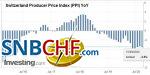
The Producer and Import Price Index fell in August 2020 by 0.4% compared with the previous month, reaching 97.9 points (December 2015 = 100). This decline was due in particular to lower prices for chemical and pharmaceutical products. Compared with August 2019, the price level of the whole range of domestic and imported products fell by 3.5%.
Read More »2020-08-17
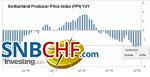
The Producer and Import Price Index rose in July 2020 by 0.1% compared with the previous month, reaching 98.3 points (December 2015 = 100). The rise is due in particular to higher prices for petroleum products. Compared with July 2019, the price level of the whole range of domestic and imported products fell by 3.3%.
Read More »2020-08-03
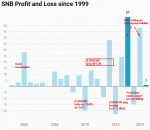
Fed and ECB money printing and massive fiscal stimulus help the SNB to come back into positive territory for the year.
The renewed asset price inflation compensate for losses on the US dollar.
2020-07-21
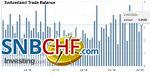
Swiss foreign trade recorded a record decline in the second quarter of 2020. In seasonally adjusted terms, exports plunged by 11.5% compared to the previous quarter and imports even by 16.0%. This result stems from the traffic collapse recorded in April in the wake of the coronavirus pandemic, with May and June having regained some color. The trade balance closed with a record surplus of 9.6 billion francs.
Read More »2020-07-14
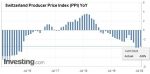
14.07.2020 – The Producer and Import Price Index rose in June 2020 by 0.5% compared with the previous month, reaching 98.1 points (December 2015 = 100). The rise is due in particular to higher prices for petroleum products as well as petroleum and natural gas. Compared with June 2019, the price level of the whole range of domestic and imported products fell by 3.5%.
Read More »2020-06-29
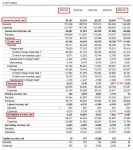
Key figures: Current Account: Down 13.72% against Q1/2019 to 17.4 bn. CHF of which Goods Trade Balance: Plus 8.05% against Q1/2019 to 17.4 bn. of which the Services Balance: Minus 53.84% to 3.02 bn. of which Investment Income: Minus 0.54% to 6.3 bn. CHF.
Read More »2020-06-18
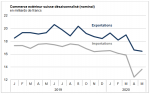
After its historic setback of the previous month, foreign trade recovered a few colors in May 2020. Imports posted a seasonally adjusted increase of 9.8% to 13.6 billion francs; however, they are still below their March 2020 level. Although exports fell again (-1.2%), they eased compared to April. The trade balance closed with a surplus of 2.8 billion francs.
Read More »2020-06-15
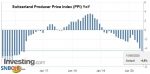
15.06.2020 – The Producer and Import Price Index fell in May 2020 by 0.5% compared with the previous month, reaching 97.6 points (December 2015 = 100). This decline is due in particular to lower prices for pharmaceutical and chemical products as well as for petroleum products. Compared with May 2019, the price level of the whole range of domestic and imported products fell by 4.5%.
Read More »2020-05-26
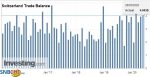
Compared with the previous month, April 2020 exports contracted by 11.7% (actual: -10.0%); this is the largest seasonally adjusted decline ever recorded. They retracted by 2.2 billion to reach 16.7 billion francs. Imports even plunged by 21.9%, that is, by a drop of 3.5 billion francs, to 12.4 billion francs (actual: -17.8%); they thus fell almost to their July 2005 level. The trade balance closed with a record monthly surplus of 4.3 billion francs.
Read More »2020-05-14
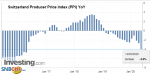
14.05.2020 – The Producer and Import Price Index fell in April 2020 by 1.3% compared with the previous month, reaching 98.1 points (December 2015 = 100). The decline is due in particular to lower prices for petroleum products, petroleum and natural gas. Compared with April 2019, the price level of the whole range of domestic and imported products fell by 4.0%.
Read More »2020-05-11
2020-04-24
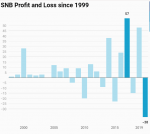
The Swiss National Bank reports a loss of CHF 38.2 billion for the first quarter of 2020. The loss on foreign currency positions amounted to CHF 41.2 billion.
Read More »2020-04-22
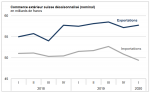
The boom in chemicals and pharmaceuticals enabled Swiss exports to increase in March as well as in the first quarter of 2020 (+ 2.2% respectively + 1.0%). Despite the global economic situation linked to the “Covid-19”, the performance of this sector offset the decline suffered by most of the other groups. As in the previous quarter, seasonally adjusted imports fell (- 2.8%). The trade balance for the first three months of 2020 ends with a surplus of 8.3 billion francs.
Read More »2020-04-16
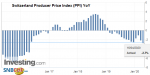
16.04.2020 – The Producer and Import Price Index fell in March 2020 by 0.3% compared with the previous month, reaching 99.4 points (December 2015 = 100). This decline is due in particular to lower prices for petroleum products. Compared with March 2019, the price level of the whole range of domestic and imported products fell by 2.7%.
Read More »2020-03-23
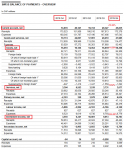
In the fourth quarter of 2019, the current account surplus was CHF 26 billion, CHF 11 billionmore than in Q4 2018. The increase was primarily attributable to the higher receipts surplus in investment income and goods trade. The transactions reported in the financial account showed a net acquisition of financial assets (CHF 40 billion) and a net incurrence of liabilities (CHF 19 billion) in Q4 2019.
Read More »2020-03-22
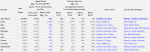
Key for understanding the expansion of the Coronavirus, is the slope (or steepness / derivation) of the curve.
This post compares the slope values of different countries.
2020-03-19
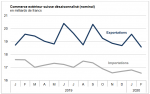
After their strong increase the previous month, exports plunged 5.0% in February 2020 and thus continue on their negative trend that started in September 2019. Imports weakened by 1.4%. The trade balance closed with a surplus of 2.0 billion francs.
Read More »2020-03-02
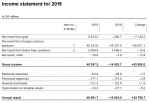
The increasing volatility of SNB Earnings Annual results are not really definite. Given that the SNB accumulates foreign currencies with interventions, they have huge swings. But the SNB may lose 50 billion in one year and win 60 billion in the next year or vice verse. Good years of the Credit Cycle This trend was … Continue reading »
Read More »2020-02-26
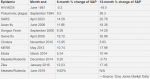
We suggest that the first month of a bigger virus outbreak is a good time for buying stocks. History has proven this timing decision right.
Read More »2020-02-20
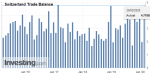
20.02.2020 – Secondary sector production rose by 1.3% in 4th quarter 2019 in comparison with the same quarter a year earlier. Turnover rose by 0.3%. This rise has continued without interruption since the 1st quarter 2017 but was slightly weaker in the reporting quarter. This is shown by provisional results from the Federal Statistical Office (FSO).
Read More »2020-02-14
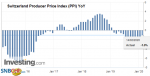
The Producer and Import Price Index remained unchanged in January 2020 compared with the previous month. The index stood at 100.7 points (December 2015 = 100). Petroleum products in particular saw higher prices, while pharmaceutical preparations became cheaper. Compared with January 2019, the price level of the whole range of domestic and imported products fell by 1.0%.
Read More »2020-01-28
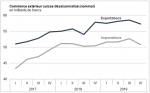
Despite a climate of uncertainty linked to trade tensions and the global economy, Swiss foreign trade grew in 2019, albeit at a slower pace. Exports increased by 3.9% to 242.3 billion francs while imports increased by 1.6% to 205.0 billion francs, the two directions of traffic thus reaching an historic peak. The trade balance closed with a record surplus of 37.3 billion francs.
Read More »2020-01-17
17.01.2020 – The Producer and Import Price Index rose in December 2019 by 0.1% compared with the previous month, reaching 100.7 points (December 2015 = 100). Compared with December 2018, the price level of the whole range of domestic and imported products fell by 1.7%. The average annualised inflation rate in 2019 was –1.4%.
Read More »2019-12-20
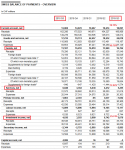
In summary: Nearly any change against the third quarter of 2018. About the same figures. But clearly and – as usual – a massive surplus. Key figures: Current Account: Up 39.15% against Q3/2018 to 18.09 bn. CHF. of which Goods Trade Balance: Plus 49.78% against Q3/2018 to 16.76 bn. of which the Services Balance: Minus 12.94% to 5.25 bn.
Read More »2019-12-19
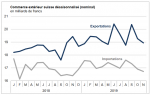
As in the previous month, cross-border flows of goods fell in both directions of traffic in November 2019. In seasonally adjusted terms, exports fell 1.7% on a month compared to 1.1% for imports. Swiss sales fell back to their level at the start of 2019, while admissions fell by almost a billion francs. The trade balance closed with a surplus of 2.2 billion francs.
Read More »2019-12-12
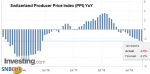
12.12.2019 – The Producer and Import Price Index fell in November 2019 by 0.4% compared with the previous month, reaching 100.5 points (December 2015 = 100). This decline was due in particular to lower prices for chemical and pharmaceutical products. Compared with November 2018, the price level of the whole range of domestic and imported products fell by 2.5%.
Read More »2019-11-19
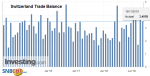
In October 2019, Swiss foreign trade declined in both traffic directions. Exports fell sharply (-5.3%); however, they had jumped 8.8% the previous month, setting the bar very high. Imports fell 2.4%. Since the beginning of the year, foreign trade has thus revealed stagnation. The trade balance closes with a surplus of 2.4 billion francs.
Read More »2019-11-14
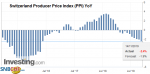
The Producer and Import Price Index fell in October 2019 by 0.2% compared with the previous month, reaching 100.9 points (December 2015 = 100). Compared with October 2018, the price level of the whole range of domestic and imported products fell by 2.4%.
Read More »2019-10-17
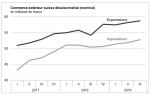
In the third quarter of 2019, foreign trade showed a positive trend: while exports rose by 0.9%, imports posted double growth (+ 1.8%). Both the first and the second have achieved a record quarterly result. The trade balance is closing with a surplus of 5.9 billion francs.
Read More »2019-10-15
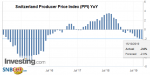
15.10.2019 – The Producer and Import Price Index fell in September 2019 by 0.3% compared with the previous month, reaching 101.1 points (December 2015 = 100). This decline is due in particular to lower prices for petroleum products and scrap. Compared with September 2018, the price level of the whole range of domestic and imported products fell by 2.0%.
Read More »2019-10-02

Dear readers, SNBCHF has changed sending service. If you are missing the daily newsletters, please look in your spam or quarantine program.
Read More »2019-09-20
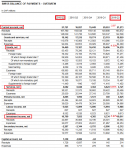
The assets side of the financial account registered a total net acquisition of CHF 11 billion (Q2 2018: net reduction of CHF 30 billion). Other investment contributed CHF 7 billion to this net acquisition (Q2 2018: net reduction of CHF 36 billion), in part because the SNB increased its foreign claims in connection with repo transactions.
Read More »
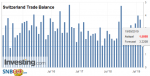
In August 2019, Swiss exports fell for the second month in a row. Down 4.3% year-on-year, they dropped below 19 billion francs. On the other hand, imports rose by 3.4% and thus regained their level at the beginning of the year. The trade balance closed with a surplus of 1.2 billion francs.
Read More »2019-09-12
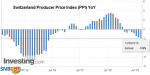
12.09.2019 – The Producer and Import Price Index fell in August 2019 by 0.2% compared with the previous month, reaching 101.4 points (December 2015 = 100). The decline is due in particular to lower prices for rubber and plastic products as well as basic metals and semi-finished metal products. Compared with August 2018, the price level of the whole range of domestic and imported products fell by 1.9%.
Read More »2019-08-20
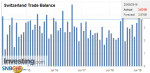
After shining the previous month, foreign trade turned red in July 2019. Despite a decline of 3.9% to 19.6 billion francs, exports had their second largest monthly result ever reached. Down 1.7%, imports were close to CHF 17 billion. The chemistry-pharma has greatly impacted both directions of the traffic. The trade balance is closing with a surplus of 2.7 billion francs.
Read More »2019-08-15
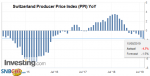
15.08.2019 – The Producer and Import Price Index fell by 0.1% in July 2019 compared with the previous month, reaching 101.6 points (December 2015 = 100). The decline is due in particular to lower prices for scrap as well as petroleum and natural gas. Compared with July 2018, the price level of the whole range of domestic and imported products fell by 1.7%.
Read More »2019-07-31
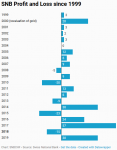
The Swiss National Bank reports a profit of CHF 38.5 billion for the first half of 2019. The profit on foreign currency positions amounted to CHF 33.8 billion. A valuation gain of CHF 3.8 billion was recorded on gold holdings. The profit on Swiss franc positions was CHF 1.1 billion. The SNB’s financial result depends largely on developments in the gold, foreign exchange and capital markets.
Read More »2019-07-18
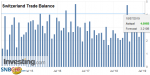
In the second quarter of 2019, exports increased by 1.4% and imports by 0.2%. The two traffic departments have thus set a record quarterly result. The trade surplus, on the other hand, stood at 6.8 billion francs.
Read More »2019-07-15
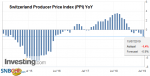
The Producer and Import Price Index fell in June 2019 by 0.5% compared with the previous month, reaching 101.7 points (December 2015 = 100). The decline is due in particular to lower prices for petroleum products, petroleum and natural gas as well as basic metals and semi-finished metal products. Compared with June 2018, the price level of the whole range of domestic and imported products fell by 1.4%.
Read More »2019-06-24
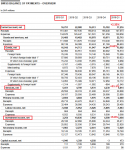
In the first quarter of 2019, the current account surplus amounted to CHF 17 billion, on a par with the same quarter of 2018. Trade in services recorded a higher receipts surplus compared with the year-back quarter, whereas secondary income registered a higher expenses surplus. The balances of trade in goods and primary income barely changed.
Read More »2019-06-13
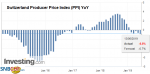
13.06.2019 – The Producer and Import Price Index remained unchanged in May 2019 compared with the previous month. The index stood at 102.2 points (December 2015 = 100). Petroleum products in particular saw higher prices, while chemical and pharmaceutical products became cheaper. Compared with May 2018, the price level of the whole range of domestic and imported products fell by 0.8%.
Read More »2019-05-14
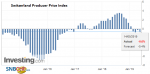
The Producer and Import Price Index remained unchanged in April 2019 compared with the previous month. The index stood at 102.2 points (December 2015 = 100). Higher prices were seen in particular for petrol and machinery, while diesel and heating oil became cheaper.
Read More »2019-04-25
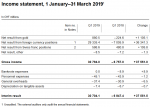
The Swiss National Bank reports a profit of CHF 30.7 billion for the first quarter of 2019. The profit on foreign currency positions amounted to CHF 29.3 billion. A valuation gain of CHF 0.9 billion was recorded on gold holdings. The profit on Swiss franc positions was CHF 0.6 billion.
Read More »2019-04-18
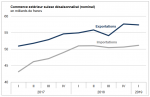
Swiss foreign trade saw a mixed evolution during the first half of 2019. In seasonally adjusted terms, exports fell slightly, still remaining above the 57 billion franc mark. Imports, on the other hand, continued to rise (+1 , 0%) to reach a record level of 51.2 billion francs. The trade balance closes with a surplus of 6.2 billion francs.
Read More »2019-04-16
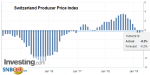
15.04.2019 – The Producer and Import Price Index increased in March 2019 by 0.3% compared with the previous month, reaching 102.2 points (December 2015 = 100). The rise is due in particular to higher prices for petroleum products. Compared with March 2018, the price level of the whole range of domestic and imported products fell by 0.2%.
Read More »2019-03-25
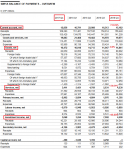
The current account surplus for 2018 was CHF 71 billion, CHF 26 billion more than in the previous year, an increase by over 50%.
Read More »2019-03-20
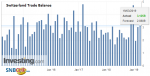
In February 2019, like the previous month, seasonally-adjusted exports increased (+ 2.3%), reaching a record level of 19.4 billion francs. On the other hand, imports fell by 1.2% in one month to 17.4 billion francs. The trade balance shows a surplus of 2.0 billion francs.
Read More »2019-03-14
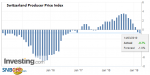
The Producer and Import Price Index increased in February 2019 by 0.2% compared with the previous month, reaching 101.9 points (December 2015 = 100). The rise is due in particular to higher prices for petroleum products. Compared with February 2018, the price level of the whole range of domestic and imported products fell by 0.7%. These are some of the findings from the Federal Statistical Office (FSO).
Read More »2019-03-05
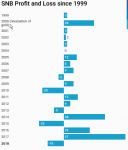
The SNB earned 2 billion on negative interest rates (Swiss franc positions below), but lost nearly 17 billion CHF on FX investments, of which 5 bn on bonds and 12 bn on stocks. Gold was nearly unchanged.
Read More »2019-02-28
2019-02-19
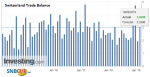
Swiss foreign trade started the year 2019 in a positive way. Seasonally adjusted exports rose by 1.1% to 18.9 billion francs and imports by 3.4% to 17.5 billion. The trade balance closed with a surplus of 1.4 billion francs.
Read More »2019-02-14
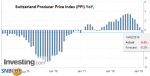
14.02.2019 – The Producer and Import Price Index fell in January 2019 by 0.7% compared with the previous month, reaching 101.7 points (December 2015 = 100). This decline is due in particular to lower prices for petroleum products. Compared with January 2018, the price level of the whole range of domestic and imported products fell by 0.5%.
Read More »2019-01-18
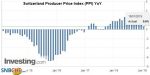
18.01.2019 – The Producer and Import Price Index fell in December 2018 by 0.6% compared with the previous month, reaching 102.5 points (December 2015 = 100). Compared with December 2017, the price level of the whole range of domestic and imported products rose by 0.6%. The average annualised inflation rate in 2018 was 2.4%.
Read More »2019-01-10
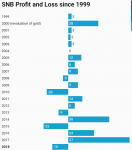
15 Billion Francs Losses in 2018. Given that the good years have finished: Will the SNB will ever make profits again? And compensate for the ever rising Swiss franc?
Read More »2018-12-21
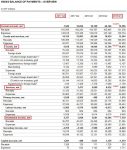
Current Account Key figures: Current Account: Up 85% against Q3/2017 to 14.6 bn. CHF of which Goods Trade Balance: Up 16.6% against Q3/2017 to 10.5 bn. of which the Services Balance: Minus 5.6% to 5.0 bn. of which Investment Income: Up 74.4% to 7.6 bn. CHF. Financial account Net acquisition of financial assets The … Continue reading »
Read More »2018-12-20
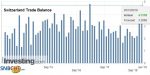
In November 2018, exports confirmed their growth the previous month with a 1.8% increase, posting a new monthly peak. Imports, on the other hand, weakened by 1.2% and remain in a negative spiral. The trade balance closed with a surplus of 3.1 billion francs.
Read More »2018-12-13
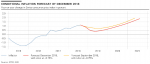
The Swiss National Bank (SNB) is maintaining its expansio nary mo netary policy, thereby stabilising price developments and supporting economic activity. Interest on sight deposits at the SNB remains at –0.75% and the target range for the three-month Libor is unchanged at between –1.25% and –0.25%.
Read More »
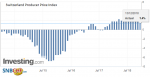
The Producer and Import Price Index fell in November 2018 by 0.3% compared with the previous month, reaching 103.1 points (December 2015 = 100). This decline is due in particular to lower prices for pharmaceutical products. Compared with November 2017, the price level of the whole range of domestic and imported products rose by 1.4%.
Read More »2018-11-20
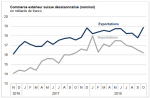
In October 2018, seasonally adjusted exports grew 6.0%, after their slightly negative evolution since June. They thus reach a level monthly record. Conversely, the decline in imports continued (-1.8%). The balance commercial loop with a surplus of 2.6 billion francs.
Read More »2018-11-13
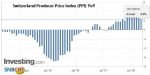
The Producer and Import Price Index increased in October 2018 by 0.2% compared with the previous month, reaching 103.4 points (December 2015 = 100). The rise is due in particular to higher prices for petroleum products, petroleum and natural gas. Compared with October 2017, the price level of the whole range of domestic and imported products rose by 2.3%.
Read More »2018-10-31
The Swiss National Bank (SNB) reports a loss of CHF 7.8 billion for the first three quarters of 2018. A valuation loss of CHF 3.7 billion was recorded on gold holdings. The loss on foreign currency positions amounted to CHF 5.3 billion. The profit on Swiss franc positions was CHF 1.5 billion.
Read More »2018-10-18
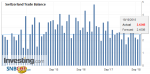
After a year and a half of continued growth in Swiss foreign trade, exports in the third quarter of 2018 contracted by 2.9% compared with the previous quarter’s record. However, they remained above the 54 billion franc mark. Evolving at a high level, imports fell by 1.5% (-768 million francs). The trade balance closes with a surplus of 3.5 billion francs.
Read More »2018-10-15
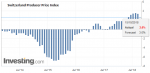
The Producer and Import Price Index fell in September 2018 by 0.2% compared with the previous month, reaching 103.2 points (December 2015 = 100). The decline is due in particular to lower prices for scrap. Compared with September 2017, the price level of the whole range of domestic and imported products rose by 2.6%. These are some of the findings from the Federal Statistical Office (FSO).
Read More »2018-09-24
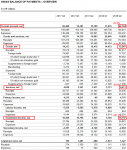
Key figures: Current Account: Up 27.0% against Q1/2018 to 22.1 bn. CHF, Goods Trade Balance: Up 4.8% against Q1/2018 to 15.2 bn., Services Balance: Minus 20.6% to 4.6 bn., Investment Income: Plus 107.7% to 10.7 bn. CHF.
Read More »2018-09-20
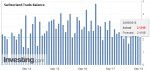
After the dynamism registered until May 2018, Swiss foreign trade has been stalled since. In August and after seasonal adjustment, exports stagnated at a high level and imports fell by 1.1%. The trade balance has a surplus of 1.4 billion francs.
Read More »2018-09-13
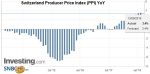
The Producer and Import Price Index remained unchanged in August 2018 compared with the previous month. The index stood at 103.4 points (December 2015 = 100). Prices were higher in particular for pharmaceutical and chemical products, while scrap became cheaper. Compared with August 2017, the price level of the whole range of domestic and imported products rose by 3.4%.
Read More »2018-08-22
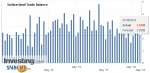
After stagnating the previous month, both exports and imports fell in July 2018. In seasonally adjusted terms, they fell by 3.0 and 2.8%, respectively. The decline in the chemicals-pharmaceuticals sector weighed on the result in both directions of the traffic. The trade balance is closing with a surplus of 1.2 billion francs.
Read More »2018-08-14
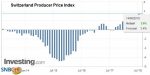
The Producer and Import Price Index increased in July 2018 by 0.1% compared with the previous month, reaching 103.3 points (December 2015 = 100). The rise is due in particular to higher prices for watches, petroleum and natural gas. Compared with July 2017, the price level of the whole range of domestic and imported products rose by 3.6%.
Read More »2018-07-31
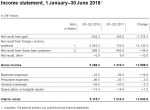
The Swiss National Bank (SNB) reports a profit of CHF 5.1 billion for the first half of 2018. A valuation loss of CHF 0.9 billion was recorded on gold holdings. The profit on foreign currency positions amounted to CHF 5.2 billion. The profit on Swiss franc positions was CHF 1.0 billion.
Read More »2018-07-20
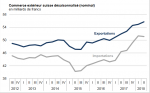
The dynamism shown by exports since the beginning of 2017 continued in the second quarter of 2018. They are thus flying from record to record for the fifth quarter in a row. Imports, on the other hand, came to a standstill, at a high level, however, after posting strong growth in previous quarters. The trade balance closes on a surplus of 4.6 billion francs.
Read More »2018-07-13
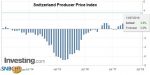
The Producer and Import Price Index increased in June 2018 by 0.2% compared with the previous month, reaching 103.2 points (December 2015 = 100). The rise is due in particular to higher prices for petroleum products and timber products. Compared with June 2017, the price level of the whole range of domestic and imported products rose by 3.5%.
Read More »2018-06-25
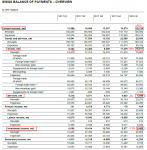
The current account surplus amounted to CHF 18 billion in the first quarter of 2018, an increase of CHF 5 billion over the same quarter of 2017. This rise was attributable to the higher receipts surplus on trading in non-monetary gold, which is recorded under trade in goods. In the case of services as well as primary and secondary income, the balances remained stable.
Read More »2018-06-21
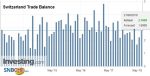
After stagnating in previous months, exports rose in May 2018. Seasonally adjusted exports rose 0.9% in one month. Imports were more dynamic, at + 3.8%. Chemistry-pharma and the vehicle sector generated 90% of growth in both traffic directions. The trade balance closed with a surplus of 2.3 billion francs.
Read More »2018-06-13
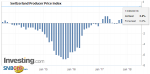
The Producer and Import Price Index increased in May 2018 by 0.2% compared with the previous month, reaching 103.0 points (December 2015 = 100). The rise is due in particular to higher prices for petroleum products. Compared with May 2017, the price level of the whole range of domestic and imported products rose by 3.2%. These are some of the findings from the Federal Statistical Office (FSO).
Read More »2018-05-29
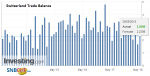
In recent months, both exports and Swiss imports have been apathetic. On April 1, 2018, and after seasonal adjustment, they respectively stagnated and fell by 3.4%. The chemistry-pharma has sealed the result in both directions of the traffic. The trade balance closed with a surplus of 2.8 billion francs.
Read More »2018-05-24
2018-05-18
2018-05-15
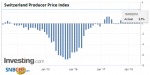
The Producer and Import Price Index increased in April 2018 by 0.4% compared with the previous month, reaching 102.8 points (December 2015 = 100). The rise is due in particular to higher prices for petroleum products and machinery. Compared with April 2017, the price level of the whole range of domestic and imported products rose by 2.7%.
Read More »2018-04-27
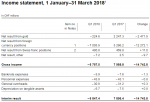
The Swiss National Bank (SNB) reports a loss of CHF 6.8 billion for the first quarter of 2018. A valuation loss of CHF 0.2 billion was recorded on gold holdings. The SNB’s financial result depends largely on developments in the gold, foreign exchange and capital markets. Strong fluctuations are therefore to be expected, and only provisional conclusions are possible as regards the annual result.
Read More »2018-04-24
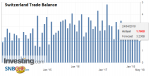
In the first quarter of 2018 and on a seasonally adjusted basis, foreign trade confirmed the positive trend of previous quarters. Both traffic directions have also reached record levels. Exports increased by 0.2% and imports by 4.1%. The divergent evolution of inflows and outflows has led to the smallest trade surplus in four and a half years.
Read More »2018-04-16
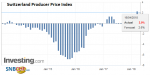
The Producer and Import Price Index fell in March 2018 by 0.2% compared with the previous month, reaching 102.3 points (December 2015 = 100). This decline was due in particular to lower prices for petroleum products and pharmaceutical preparations. Compared with March 2017, the price level of the whole range of domestic and imported products rose by 2.0%. These are some of the findings from the Federal Statistical Office (FSO).
Read More »2018-03-27
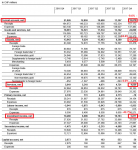
Key figures: Current Account: -9.6% against Q4/2016 to 19,679 bn. CHF, Record High Trade Surplus in Goods: +24.4% to 17,279 bn., Services Surplus : -4.0% to 4,820 bn., but Investment Income: down 42.7% to 5,877 bn.
Read More »2018-03-23
2018-03-20
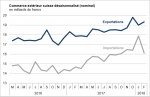
In February 2018, exports increased by 1.8%, confirming their positive trend. After their January record, imports fell back (-9.8%). However, they continued to grow at a high level, at 16.1 billion francs. At the entrance, the flagship markets Europe and North America led the result.
Read More »2018-03-15
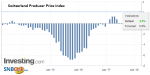
The Producer and Import Price Index rose in February 2018 by 0.3% compared with the previous month, reaching 102.6 points (December 2015=100). The rise is due in particular to higher prices for chemical and pharmaceutical products. Compared with February 2017, the price level of the whole range of domestic and imported products rose by 2.3%. These are some of the findings from the Federal Statistical Office (FSO).
Read More »2018-03-06
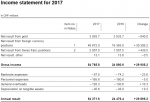
The Swiss National Bank (SNB) reports a profit of CHF 54.4 billion for the year 2017 (2016: CHF 24.5 billion). The profit on foreign currency positions amounted to CHF 49.7 billion. A valuation gain of CHF 3.1 billion was recorded on gold holdings. The profit on Swiss franc positions was CHF 2.0 billion.
Read More »2018-02-28
2018-02-20
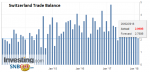
Although exports fell in January 2018 from the December peak, their trend remains upward. Imports, for their part, began the year with fanfare to sign a record result. In both traffic directions, chemicals and pharmaceuticals made rain and shine.
Read More »2018-02-13
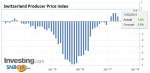
Neuchâtel, 13 February 2018 (FSO) – The Producer and Import Price Index rose in January 2018 by 0.3% compared with the previous month, reaching 102.2 points (December 2015=100). The rise is due in particular to higher prices for petroleum products, electricity and gas as well as metals and metal products. Compared with January 2017, the price level of the whole range of domestic and imported products rose by 1.8%. These are some of the findings from the Federal Statistical Office (FSO).
Read More »2018-01-30
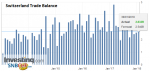
Last year, Swiss foreign trade accelerated yet again relative to 2016: exports rose by 4.7% to reach a new record high. Imports grew by 6.9%, posting their strongest growth rate since 2010. Aside from the improved economic situation worldwide, the weakening of the Swiss franc and price trends played a decisive role in both directions of trade. With a surplus of CHF 34.8 billion, the balance of trade closed the year 6% (or CHF 2.1bn) lower than the previous year.
Read More »2018-01-19
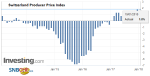
The Producer and Import Price Index rose in December 2017 by 0.2% compared with the previous month, reaching 101.9 points (December 2015=100). Compared with December 2016, the price level of the whole range of domestic and imported products rose by 1.8%. The average annualised inflation rate in 2017 was 0.9%. These are some of the findings from the Federal Statistical Office (FSO).
Read More »2017-12-30
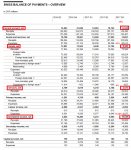
The Swiss current account surplus went down by 15% against the same quarter in 2016. In the third quarter of 2015. The current account surplus was still at 22 bn. CHF.
It seems to be a change in the usual movement that sees a higher Q3 surplus compared to the other quarters.
2017-12-21
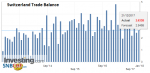
Swiss foreign trade proved dynamic in November 2017. After correction of working days, exports grew by 9.5% and imports even 16.4% year on year, both boosted by rising prices. In real terms, they increased by 4.4 and 6.8%, respectively. The balance commercial loop with a surplus of 2.7 billion francs.
Read More »2017-12-14
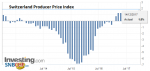
The Producer and Import Price Index rose in November 2017 by 0.6% compared with the previous month, reaching 101.6 points (base December 2015 = 100). The rise is due in particular to higher prices for petroleum products, chemical and pharmaceutical products and scrap. Compared with November 2016, the price level of the whole range of domestic and imported products rose by 1.8%.
Read More »2017-11-30
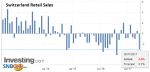
Turnover in the retail sector fell by 2.7% in nominal terms in October 2017 compared with the previous year. Seasonally adjusted, nominal turnover fell by 1.6% compared with the previous month. These are provisional findings from the Federal Statistical Office (FSO).
Read More »
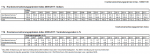
The health insurance premiums index (CIPI) recorded a growth of 3.8 percent over the previous year for the 2017 premium year. The KVPI thus achieved an index level of 185.3 points (base 1999 = 100). The impact of premium development on the growth of disposable income can be estimated using the CIPI. According to the KVPI model calculation by the Federal Statistical Office (FSO), the increase in premiums reduces the growth in average disposable income in 2017 by 0.3 percentage points.
Read More »2017-11-21
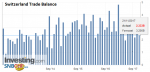
In October 2017, Swiss foreign trade continued its advance. Adjusted for working days, exports grew by 5% against 7% for imports. Growth, however, weakened slightly compared to previous months. The trade balance is closing with a surplus of 2.4 billion francs.
Read More »2017-11-14
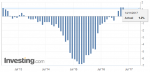
The Producer and Import Price Index rose in October 2017 by 0.5% compared with the previous month, reaching 101.0 points (base December 2015 = 100). The rise is due in particular to higher prices for machinery, electrical equipment and metal products. Compared with October 2016, the price level of the whole range of domestic and imported products rose by 1.2%.
Read More »2017-11-02
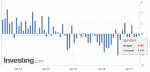
Turnover in the retail sector remained stable in nominal terms in September 2017 compared with the previous year. Seasonally adjusted, nominal turnover rose by 0.8% compared with the previous month. These are provisional findings from the Federal Statistical Office (FSO).
Read More »2017-10-31
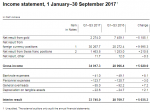
The Swiss National Bank (SNB) reports a profit of CHF 33.7 billion for the first three quarters of 2017. But in 2017, the picture is changed. Assuming a “biblical” cycle of seven good years and seven bad years, the SNB could now increase profits every year – thanks to a weaker franc and the seven good years.
Read More »2017-10-19
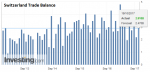
With adjusted working days, exports grew by 2.5% and imports by 7.4% in the third quarter of 2017. Trade was thus consolidated at a high level. The balance of the trade balance contracted from 10.3 to 8.5 billion francs.
Read More »2017-10-02
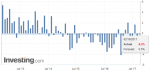
Turnover in the retail sector fell by 0.6% in nominal terms in August 2017 compared with the previous year. Seasonally adjusted, nominal turnover fell by 0.3% compared with the previous month. These are provisional findings from the Federal Statistical Office (FSO).
Read More »2017-09-26
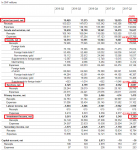
Key figures, Current Account: -3.6% against Q2/2016 to 18,748 bn. CHF, Trade Balance: +6.5% to 15,550 bn, Services Balance: -12.8% to 4,087 bn, Investment Income: -22.9% to 7,369 bn.
Read More »2017-09-21
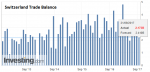
In August 2017, Swiss foreign trade grew stronger both at entry and exit. With growth of 9.9%, imports were much more dynamic than exports (+ 3.9%). The balance of trade closed with a surplus of 2.2 billion francs.
Read More »2017-09-14
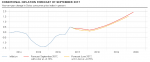
The SNB projects that she will reach her inflation target, shortly under 2% in the medium term, i.e. in 2019/2020. One reason might be the weakening of the Swiss Franc. But she does not prepare for a normalization of her policy: From the history we know that – once the franc is weakening – inflation may rise very quickly.
Read More »2017-09-10
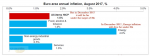
The euro rose close to CHF 1.15 with the ECB meeting this week. Finally traders realized that the ECB committed not to hike rates for a very long time. The ECB will review and take a first decision on the bond purchasing program this autumn. However, this program will come to an end only when the inflation target of 2% becomes in reach.
Read More »2017-09-04
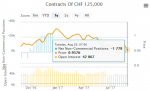
The net speculative CHF position has fallen from 2K short to 1.8K contracts short (against USD). Speculators did not make any significant adjustment to gross positions, which we define as 10k or more contracts in the currency futures, during the CFTC reporting week ending August 29.
Read More »2017-09-03
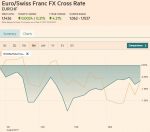
For us, the sudden euro rise from 1.08 to 1.14 is an illusion, the euro will fall sooner or later again. Macron will not help the French economy and low core inflation will prevent that the ECB ends her bond buying program.
Read More »2017-09-01
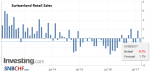
Turnover in the retail sector fell by 0.8% in nominal terms in July 2017 compared with the previous year. Seasonally adjusted, nominal turnover fell by 1.1% compared with the previous month. These are provisional findings from the Federal Statistical Office (FSO).
Read More »2017-08-28
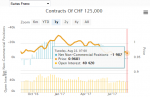
The net speculative CHF position has risen from 1.2K short to 2K contracts short (against USD). Speculators continued to amass a significant short sterling position in the futures market. In the CFTC reporting week ending August 22, speculators added 11.7k contracts to the gross short position, lifting it to 107.4k contracts.
Read More »2017-08-26
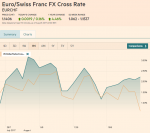
The broad technical condition of the dollar deteriorated materially before the weekend. The dollar had some gains versus the franc during the last month, but it lost all during the last days.The EURCHF continues with a 2.5% win for the last month.
Read More »2017-08-22
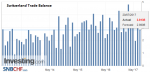
In July 2017, after adjusting for working days, exports grew by 4.5%, which were less dynamic than the previous two months. Imports rose red (-0.5%). The trade balance loops with a surplus of 3.6 billion francs.
Read More »2017-08-21
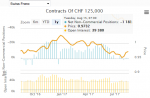
The net speculative CHF position has fallen from -1.4K short to -1.2K contracts short (against USD). Speculators made several significant position adjustment in the CFTC reporting week ending August 15, that included an escalation of aggressive rhetoric by the US and North Korea.
Read More »2017-08-20
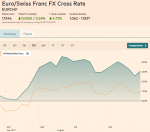
The euro has lost some momentum, Draghi does not want to talk about an early end of his bond buying programming. Confirmed by economic data, 1.2% core inflation compared to a long-term inflation target of 2%. Consequently the Swiss appreciated during the week.
Read More »2017-08-15
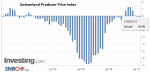
The Producer and Import Price Index remained unchanged in July 2017 compared with the previous month at 99.7 points (base December 2015 = 100). Petroleum products in particular became cheaper. Prices were higher for scrap, computers and metal products. Compared with July 2016, the price level of the whole range of domestic and imported products fell by 0.1%.
Read More »2017-08-14
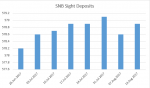
Despite the tensions between Donald Trump and North Korea’s Kim Jong-un, the EUR/CHF only depreciated to 1.13. In the last week, the SNB did not have to intervene. This proves that investors have not taken the tensions seriously.
Read More »2017-08-07
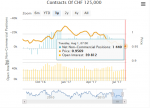
The net speculative CHF position has risen from -1.5K short to 1.4K contracts long (against USD). In the CFTC reporting week ending August 1, speculators in the futures market continued to build long exposure in the dollar-bloc currencies. In the three sessions after the reporting period closed, the dollar-bloc currencies have traded heavily.
Read More »2017-08-06
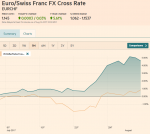
The Swiss Franc entered the second week of stronger losses. While the euro gained 4% last week, the dollar appreciated against the Swiss Franc 2% during this week.
Read More »2017-08-02
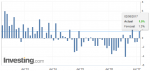
Turnover in the retail sector rose by 1.1% in nominal terms in June 2017 compared with the previous year. Seasonally adjusted, nominal turnover rose by 0.5% compared with the previous month. Real turnover in the retail sector also adjusted for sales days and holidays rose by 1.5% in June 2017 compared with the previous year.
Read More »2017-07-31
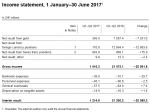
The Swiss National Bank (SNB) reports a profit of CHF 1.2 billion for the first half of 2017. A valuation gain of CHF 0.3 billion was recorded on gold holdings. The profit on foreign currency positions amounted to CHF 0.1 billion and the profit on Swiss franc positions stood at CHF 0.9 billion. The SNB’s financial result depends largely on developments in the gold, foreign exchange and capital markets.
Read More »
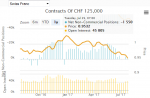
The net speculative CHF position has risen from -3.7K short to -1.5K contracts short (against USD). Speculators were active in the currency futures in the CFTC reporting week ending July 25. In particular, speculative sentiment continues to be drawn to the Canadian and Australian dollars.
Read More »2017-07-30
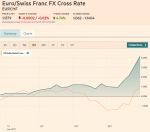
The Swiss franc was the only major foreign currency that fell against the dollar last week. The 2.6% decline was the largest in two years.
Read More »2017-07-24
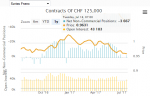
The net speculative CHF position has changed from -0.2K long to 3.7K contracts short (against USD). Since the beginning of May the Canadian dollar has been the strongest of the major currencies. However, until the most recent CFTC reporting week ending July 18, speculators in the futures market were net short.
Read More »2017-07-23
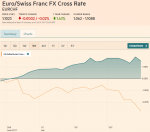
Both Swiss Franc and Euro were moving upwards against the dollar. So CHF gained 3% versus the dollar in the last month. CHF losses against the euro are smaller, around 1.3%.
Read More »2017-07-20
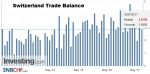
In the first half of 2017, both exports (+ 4.4%) and imports (+ 4.8%) were dynamic. While the former scored a record result, the latter scored a higher in eight years. In both directions of traffic, chemicals and pharmaceuticals contributed decisively to growth. The trade balance loops with a surplus of 19 billion francs.
Read More »2017-07-17
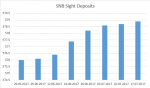
Hawkish comments by Mario Draghi boosted the EUR against both USD and CHF. It also reduced the need for SNB interventions. The question is how long Draghi will remain hawkish, especially next winter, when headline inflation in the euro zone may fall under 1%.
Read More »
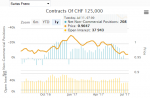
The net long CHF position has risen from 0.1K short to 0.2K contracts short (against USD). Speculators are long EUR against both USD and CHF. We wonder how long this will be the case, given that we expect Euro zone inflation to fall under 1% from December 2017 onward.
Read More »2017-07-16
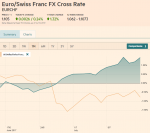
The Euro remained the strongest among EUR, CHF and USD during the last month.
The Swiss lost against EUR 1.5%, while it gained versus the dollar 0.75%.
2017-07-13
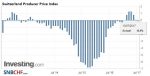
The Producer Price Index (PPI) or officially named “Producer and Import Price Index” describes the changes in prices for producers and importers. For us it is interesting because it is used in the formula for the Real Effective Exchange Rate. When producers and importers profit on lower price changes when compared to other countries, then the Swiss Franc reduces its overvaluation.
Read More »2017-07-10
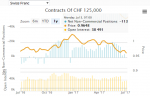
The net short CHF position has fallen from 4.7k short to 0.1k contracts short (against USD). Speculators in the futures market made several significant position adjustments in the CFTC reporting week ending July 4, despite it being a holiday-shortened week.
Read More »2017-07-09
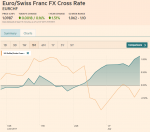
The ECB appears to be preparing investors for a further adjustment of its risk assessment and a reduction of its asset purchases as they are extended into next year.
This assessment has marked a new phase of an appreciating EUR/CHF rate. It followed the previous phase, the one with and after the French elections.
2017-07-04
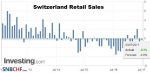
Turnover in the retail sector fell by 0.3% in nominal terms in May 2017 compared with the previous year. Seasonally adjusted, nominal turnover rose by 0.3% compared with the previous month. Real turnover in the retail sector also adjusted for sales days and holidays fell by 0.3% in May 2017 compared with the previous year. Real growth takes inflation into consideration. Compared with the previous month, real, seasonally adjusted retail trade turnover registered an increase of 0.3%.
Read More »2017-07-03
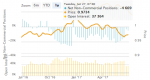
The net short CHF position has risen from 3k short to 4.7k contracts short (against USD). Speculators bought back previously sold Canadian dollar and Mexican peso futures positions in dramatic fashion in the CFTC reporting week ending June 27.
Read More »
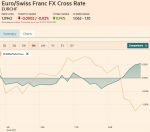
A virus has spread across the markets as the first half drew to a close. Many investors have become giddy. The low vol environment was punctuated by ideas that peak in monetary accommodation is past and that the gradual process of normalization is beginning.
Read More »2017-06-26
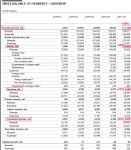
Key Figures, Current Account: +39% against Q1/2016, now +11.1 bn. CHF, Trade Balance: +78% to 10.5 bn, Services Balance: +21% to 5.5 bn, Investment Income: -50% to +2.9 bn.
Read More »
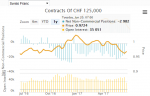
The net short CHF position has fallen from 14.5 short to 3K contracts short (against USD). The expiration of the June contracts and the roll into September positions appears to have boosted activity in the currency futures, and may obscure the signaling effect. Of the 16 gross positions we track, speculators add to exposure in all but four positions. There speculators covered gross short Swiss franc, Canadian, Australian, and New Zealand dollar positions.
Read More »2017-06-25
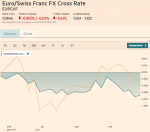
Over the last month, the Swiss franc outpaced both EUR and USD. But the change is only little, the EUR fell by 0.60% and the dollar by 0.40%. The main reason for the stronger CHF is the fading enthusiasm after Macron’s victory in the French elections and hence a weaker euro. Consequently SNB interventions are rising again.
Read More »2017-06-22
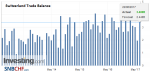
In May 2017, Swiss foreign trade was dynamic. Adjusted for working days, exports increased by 7.5% and imports by 8.7%. Chemicals and pharma boosted growth in both directions. The balance of trade closed with an impressive surplus of 3.4 billion francs.
Read More »2017-06-19
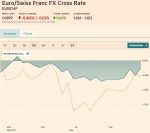
The pro-European politician Macron has won the French elections. His success moved the EUR/CHF up to 1.0980, mostly caused by FX speculators. But “serious” investors (not FX speculators) did not follow the political event, but focus on monetary policy. A ECB rate hike is very, very far, see why….
Read More »
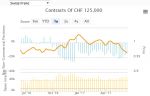
The net short CHF position has fallen from 16.5 short to 14.5K contracts short (against USD). We wonder how long this will be the case, given that we expect Euro zone inflation to fall under 1% from December 2017 onward.
Read More »
Swiss Franc vs USD and EUR Rarely in the foreign exchange market is there a V-shaped extreme. Most of the time, the high or low is a process that is carved over time. Although the explanation of the dollar’s weakness here in H1 vary, we continue to believe that the longer-term cyclical rally, the third since … Continue reading »
Read More »2017-06-15
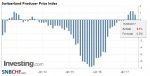
The Producer Price Index (PPI) or officially named “Producer and Import Price Index” describes the changes in prices for producers and importers. For us it is interesting because it is used in the formula for the Real Effective Exchange Rate. When producers and importers profit on lower price changes when compared to other countries, then the Swiss Franc reduces its overvaluation.
Read More »2017-06-12
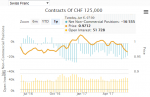
The net short CHF position has fallen from 18.5 short to 16.5K contracts short (against USD). But the major movement was that speculators are net long the euro now and not the dollar any more. This implies that they are also long Euro against CHF. In the CFTC reporting week that covered the US employment data and the run-up to Super Thursday that featured an ECB meeting, former FBI Director Comey’s testimony before the Senate Intelligence Committee, the UK election, speculators mostly reduced exposure in the foreign exchange futures market.
Read More »2017-06-11
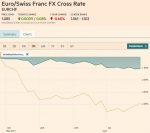
The US Dollar has lost 4% against the franc since the beginning of May, while the euro is down only 1%. Most important events in this week were the ECB meeting and the UK elections. The inability of the Tory Party to secure a parliamentary majority spurred a sharp decline in sterling.
Read More »2017-06-05
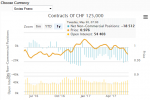
The net short CHF position has fallen from 19.8 short to 18.5K contracts short (against USD). But the major movement was that speculators are net long the euro now and not the dollar any more. This implies that they are also long Euro against CHF. Speculators in the future market made mostly minor adjustment in the gross positioning in the currencies.
Read More »2017-06-04
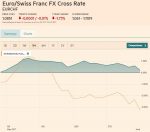
While the Euro traded in the range between 1.08 and 1.09, the dollar declined by nearly 3%. The technical indicators warn that the US dollar is stretched, but the combination of disappointing auto sales and jobs report may deny it the interest rate support needed to facilitate a resumption of the bull market.
Read More »2017-06-01
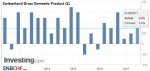
Switzerland’s real gross domestic product (GDP) grew by 0.3 % in the first quarter of 2017*. Private consumption growth expanded only slightly, while government consumption rose moderately. Following the previous quarter’s fall, investment in construction and equipment increased.
Read More »
Real turnover in the retail sector also adjusted for sales days and holidays fell by 1.2% in April 2017 compared with the previous year. Real growth takes inflation into consideration. Compared with the previous month, real, seasonally adjusted retail trade turnover registered a decline of 2.4%.
Read More »2017-05-29
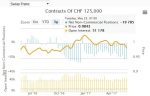
The net short CHF position has fallen from 21.1 short to 19.8K contracts short (against USD). But the major movement was that speculators are net long the euro now and not the dollar any more. This implies that they are also long Euro against CHF. In the CFTC reporting week ending May 23 speculators in the futures market continued to largely position themselves for further dollar weakness.
Read More »
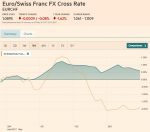
The Swiss Franc recovered a lot of the losses that came with the French elections. That political event was mostly driven by speculators that will close their positions. We expected the EUR to trade around 1.07 to 1.0750 CHF in some time.
Read More »2017-05-23
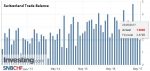
In April 2017, adjusted exports of working days shrank as imports strengthened by 2.3%. Changes in sales were marked by the reluctance of the chemical and pharmaceutical sector. The trade balance has closed with the smallest surplus in the last two years.
Read More »2017-05-22
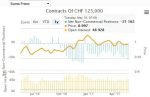
The net short CHF position has risen from 15.2 short to 21.1K contracts short (against USD). But the major movement was that speculators are net long the euro now and not the dollar any more. This implies that they are also long Euro against CHF. In the Commitment of Traders reporting week ending May 16, speculators in the futures market made three significant adjustments in the currency futures.
Read More »2017-05-21
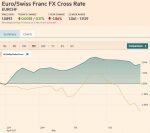
The Swiss Franc recovered a lot of the losses that came with the French elections. That political event was mostly driven by speculators that will close their positions. We expected the EUR to trade around 1.07 to 1.0750 CHF in some time.
Read More »2017-05-16
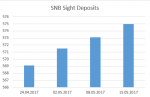
The pro-European politician Macron has won the French elections. His success moved the EUR/CHF up to 1.0980, mostly caused by FX speculators. But “serious” investors (not FX speculators) did not follow the political event, but focus on monetary policy. A ECB rate hike is very, very far, see why….
Read More »2017-05-15
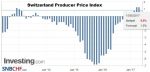
The Producer and Import Price Index fell in April 2017 by 0.2% compared with the previous month, reaching 100.1 points (base December 2015 = 100). This decline is due in particular to lower prices for petroleum products and machinery. Compared with April 2016, the price level of the whole range of domestic and imported products rose by 0.8%.
Read More »
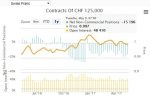
The net short CHF position has fallen from 17.7 short to 15,2K contracts short (against USD).
But the major movement was that speculators are net long the euro now and not the dollar any more. This implies that they are also long Euro against CHF.
2017-05-13
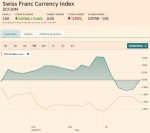
The euro rose up to 1.0980. How long this momentum will last is still the question, given that it is driven by this political event and sustained by SNB interventions.
Read More »2017-05-10
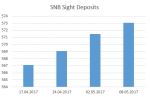
The centre-left politician Macron has won the French elections. His success moved the EUR/CHF up to 1.0960, mostly caused by FX speculators. But serious investors – i.e. not FX speculators – did not follow the political event. The SNB had to intervene for 1.6 bn francs.
Read More »2017-05-08
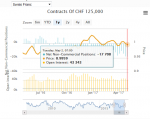
The net short CHF position has risen to 17K contracts (against USD). It was feast or famine in the adjustment of speculative positions in the currency futures market during the CFTC reporting period ending May 2. Speculators either made large adjustments or very small adjustments, and little in between.
Read More »2017-05-07
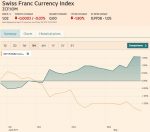
The Swiss Franc index gained 1.5% in the last month, the biggest part of it is from the last week. The trade-weighted indices the Fed tracks are updated monthly. The Bank of England calculates the effective exchange rate on a daily basis. It has not fallen since April 24.
Read More »2017-05-03
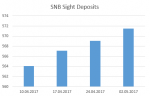
The centre-left politician Macron has won the French elections. He is a politician that – similar to Hollande four years ago – promises economic improvements, move investment, more jobs. Mostly probably he will fail similar to Hollande. His success moved the EUR/CHF up to 1.0865, mostly caused by FX speculators, but the SNB had to intervene.
Read More »2017-05-01
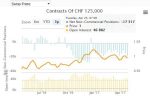
The net short CHF position has risen to 17K contracts (against USD). The striking development among speculators in the futures market is the reversal of the record gross (and net) short Treasury note position two months ago.
Read More »
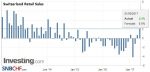
Turnover in the retail sector rose by 1.8% in nominal terms in March 2017 compared with the previous year. This is the sharpest increase since June 2014. Seasonally adjusted, nominal turnover rose by 0.6% compared with the previous month. These are provisional findings from the Federal Statistical Office (FSO).
Read More »
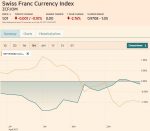
Often the US dollar, as the numeraire, seems to be the main actor in the foreign exchange market. Other times, the dollar appears to be at the fulcrum between European currencies on one hand, and the dollar-bloc currencies on the other hand. Another way expressing this is whether there is a dollar-move underway or is it really more about the crosses.
Read More »2017-04-27
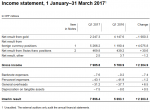
The SNB reports a profit of 7.9 bn CHF, of which 2.2 bn come from the gold holdings. Given that the bank has introduced a “minimum euro rate” around 1.06-1.07, this is not very difficult. It comes at the price of continuing interventions.
Read More »
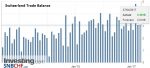
Swiss exports are moving more and more toward higher value sectors: away from watches, jewelry and manufacturing towards chemicals and pharmaceuticals. With currency interventions, the SNB is trying to keep sectors alive, that would not survive without interventions.
Read More »2017-04-25
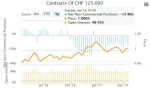
The net short CHF position stands at 13K contracts (against USD). In the CFTC reporting period ending April 21, speculators to significant positions in the euro, sterling and the Mexican peso. Bulls and bears were took more exposure in the euro and sterling, while in the peso the former added on while later sought cover.
Read More »2017-04-23
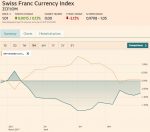
While the dollar index had another bad week with a 0.75% less, the Swiss Franc currency index could accumulate the corresponding gains. Main reason is that the EUR/CHF rose over 1.07.
Read More »2017-04-17
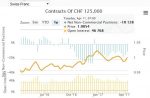
The net short CHF position has fallen to 10K contracts (against USD). In the days before US President Trump expressed concern about the dollar’s exchange value, speculators in the futures market mostly added to the gross long foreign currency positions.
Read More »2017-04-16
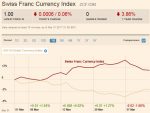
Last week the Swiss Franc improved against both euro and dollar, but – compared to its safe-haven counterpart Japanese Yen – it had a bad performance. We expect strong SNB interventions.
Read More »2017-04-13
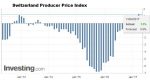
The Producer and Import Price Index rose in March 2017 by 0.1% compared with the previous month, reaching 100.3 points (base December 2015 = 100). The slight rise is due in particular to higher prices for scrap. Compared with March 2016, the price level of the whole range of domestic and imported products rose by 1.3%. These are some of the findings from the Federal Statistical Office.
Read More »2017-04-10
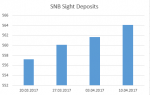
SNB sight deposits changed by 2.4 bn last week, hence the SNB intervened for this amount. This value is a movement back to the weekly intervention trend. We expect a further downtrend of EUR/CHF in the next 2 years.
Read More »
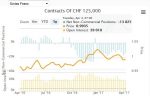
Speculators continued to reduce their net short euro exposure until March 28. Apparently they do not understand the difference between core inflation and the headline figure. In the last week, finally they increased their Euro shorts again…. and reduced their CHF shorts.
Read More »
The US dollar appreciated against most of the major currencies last week. The Japanese yen was the chief exception. It rose about 0.5% as US yields remained heavy and equities were mostly softer. The Dollar Index did not fall in any session last week. It has had one losing session over the past nine, and that was the last day in March when the Dollar Index slipped less than 0.1%. It finished the week a bit above thee 61.8% retracement objective of the decline from last month’s peak (March 9) near 102.25, found just below 101.00 A trend line from the January and March highs is found near 101.40 by the end of next week. It corresponds to the 50% retracement of the Dollar Index decline from the January high, and near the upper Bollinger Band (~101.55 now).
Read More »2017-04-03
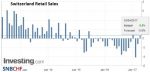
Turnover in the retail sector rose by 0.5% in nominal terms in February 2017 compared with the previous year. However, excluding turnover from service stations, retail turnover fell by 0.3%. Seasonally adjusted, nominal turnover rose by 0.9% compared with the previous month. These are provisional findings from the Federal Statistical Office.
Read More »
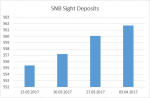
The SNB intervenes for 1.6 bn CHF at EUR/CHF 1.07 – 1.0750. This is less than previously.
Read More »
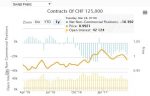
Speculators continued to reduce their net short euro exposure until March 28. Apparently they do not understand the difference between core inflation and the headline figure.
Read More »2017-04-02
Weak inflation figures in the euro zone let the common currency fall against both the dollar and the Swiss franc. Still last week, the Swiss Franc index had some losses against the US dollar index.
Read More »2017-03-28
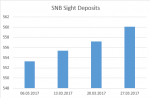
The SNB intervenes for 2.9 bn CHF at EUR/CHF 1.07. For us, clearly too much and too risky; she will not maintain this pace over a longer term. Hence the EUR/CHF is prone to fall again.
Read More »
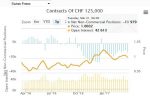
Another time speculators reduced their net Euro shorts after the less dovish ECB. But the net short of CHF nearly remains stable. This resulted in an appreciation of EUR/CHF.
Read More »2017-03-26
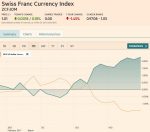
In the last week, the Swiss Franc index recovered and gained about 2%. The dollar index lost 1.5%. Position adjustments: The dollar tended to trade heaviest against those currencies that speculators were short, like the euro, yen, and sterling.
Read More »2017-03-24
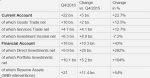
Switzerland extended its current account and trade surplus in Q4/2016 by 22%, helped by strong interventions by the Swiss National Bank.
Read More »2017-03-23
The Swiss National Bank carried out foreign exchange interventions totaling 67.1B Swiss francs in 2016 in order to counter “an undesired tightening of monetary conditions,” the central bank disclosed in its annual report. That was down from 86.1B francs in 2015, when the SNB intervened heavily at the start of the year following its decision to remove a cap on the franc’s value against the euro.
Read More »2017-03-21
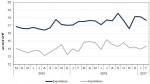
Swiss exports are moving more and more toward higher value sectors: away from watches, jewelry and manufacturing towards chemicals and pharmaceuticals. With currency interventions, the SNB is trying to keep sectors alive, that would not survive without interventions.
Read More »2017-03-20

The EUR/CHF suddenly appreciated with the ECB meeting, when Draghi seemed less dovish than before. The rate rose from the previous 1.0650 to over 1.0750. With the SNB meeting, the EUR/CHF receded again. SNB interventions, are currently at 2 bn. per week compared to 5 bn. before Draghi.
Read More »
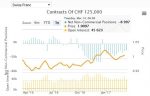
Speculators reduced their net Euro shorts after the less dovish ECB. But the net short of CHF nearly remains stable. This resulted in an appreciation of EUR/CHF.
Read More »2017-03-19
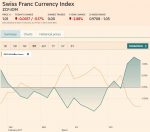
The failure of the Fed to signal an increased pace of normalization and the prospects of other central banks raising rates spurred dollar losses, which deteriorated its technical outlook.
Read More »2017-03-16
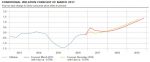
The EUR/CHF collapsed after the monetary assessment meeting of the Swiss National Bank. The SNB did not fulfill the wishes of currency traders with a more dovish policy, i.e. with lower rates or the thread of stronger interventions.
Read More »2017-03-15
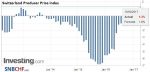
The Producer and Import Price Index fell in February 2017 by 0.2% compared with the previous month, reaching 100.2 points (base December 2015 = 100). This decline is due in particular to lower prices for scrap, petroleum products and pharmaceutical products. Compared with February 2016, the price level of the whole range of domestic and imported products rose by 1.3%. These are the findings from the Federal Statistical Office (FSO).
Read More »2017-03-13
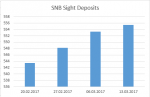
The SNB intervened less than before. Investors might have changed their positions after a less dovish ECB.
Read More »
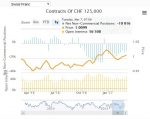
The commitments of traders were released on March 7 before the ECB meeting of March 9. We expect a considerable re-adjustment.
Read More »2017-03-12
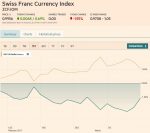
The Swiss Franc lost this week in particular against the euro, given that Mario Draghi was less dovish than expected. If the stronger euro is driven only by speculators, or also by “real money” (investments in cash, bonds, stocks) will be visible in Monday’s sight deposits release.
Read More »2017-03-08
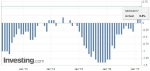
The Swiss National Bank will have difficulties to weaken the Swiss Franc, because she is obliged to maintain her mandate, the avoidance of inflation. Already in January 2015, she gave up, because continuing interventions – at the excessively high euro rate of 1.20 – could have endangered her inflation mandate.
Read More »2017-03-06
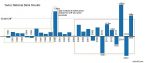
The Swiss National Bank (SNB) reports a profit of CHF 24.5 billion for the year 2016 (2015: loss of CHF 23.3 billion). The profit on foreign currency positions amounted to CHF 19.4 billion. A valuation gain of CHF 3.9 billion was recorded on gold holdings. The profit on Swiss franc positions was CHF 1.6 billion.
Read More »
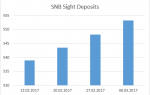
Once again a massive SNB intervention and a post Trump election record: 5,1 billion, at far too expensive FX rates: EUR rate of 1.0648 and USD/CHF over parity.
Read More »
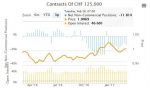
Speculators reduced their EUR net short positions, on a potential reduction of ECB quantitative easing. At the same time, they increased the CHF net shorts.
Read More »2017-03-05
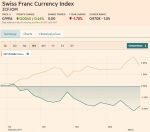
The pendulum of market sentiment swung hard and fast toward a Fed rate hike in the middle of March. The signals from Fed officials, including Governor Brainard and Powell, spurred the move. According to Bloomberg, the market had discounted a 90% chance of a hike before Yellen and Fischer spoke. A week ago, Bloomberg calculations showed a 40% chance of a move.
Read More »2017-03-02
The Swiss economy relies very much (and probably too much) on exports. In the fourth quarter export of goods fell by 3.8%, while imports remained the same. Investments dipped, too. On the other side, consumption rose by a strong 0.9%. In total, the economy grew by only 0.1% QoQ (+0.6% YoY).
Read More »
Turnover in the retail sector fell by 2.0% in nominal terms in January 2017 compared with the previous year. Seasonally adjusted, nominal turnover rose by 0.6% compared with the previous month. These are provisional findings from the Federal Statistical Office (FSO).
Read More »2017-02-27
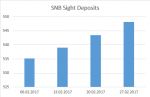
Once again: another record in SNB intervention record for the period after Trump’s election: an increase of 4.7 billion CHF in sight deposits. The trend for EUR/CHF versus parity getting confirmed.
Read More »
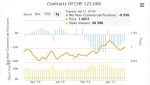
Speculators increased their EUR net short position against the dollar, but lowered their CHF net shorts (vs. USD). This tendency confirms our view that EUR/CHF will move towards parity.
Read More »2017-02-26
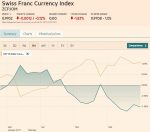
It is difficult right now to talk about the foreign exchange market using the dollar as the numeraire. The dollar was stronger against most of the major currencies last week, but not the yen or sterling. The Dollar Index itself was little changed, rising less than 0.15%.
Read More »2017-02-21
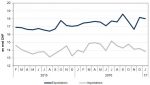
After adjusting for working days, exports increased by 5.3% (real: + 2.3%) in January 2017, boosted by chemicals and pharmaceuticals. Imports, on the other hand, fell by 1.2% (real: -6.8%). The trade balance loops on a record monthly surplus of 4.7 billion francs.
Read More »2017-02-20
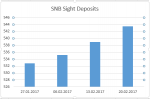
Once again a massive SNB intervention and a post Trump election record: 4.5 billion CHF at a EUR rate of 1.0648.
Read More »
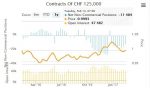
Speculators increased their EUR net short position against the dollar, but lowered their CHF net shorts (vs. USD). This tendency confirms our view that EUR/CHF will move towards parity.
Read More »2017-02-19
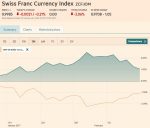
Arguments for being long the dollar: FX investors because of the difference in monetary policy (e.g. higher US rates), Bond investors long US Bonds because higher bond yields, On the other side, European and Swiss equities are not so much overvalued as U.S. stocks are.
Read More »2017-02-18
The Producer and Import Price Index rose in January 2017 by 0.4% compared with the previous month, reaching 100.4 points (base December 2015 = 100). The rise is due in particular to higher prices for petroleum products, scrap and watches. Compared with January 2016, the price level of the whole range of domestic and imported products rose by 0.8%. These are the findings from the Federal Statistical Office (FSO).
Read More »2017-02-13
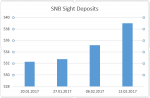
A big Swiss bank bets on EUR/CHF 1.10 as soon as the ECB ends their bond buying program. But one should realize that private investors will need to buy the EUR at 1.10, but the SNB is not willing to do so any more. Hence we must see SNB interventions of zero, before EUR/CHF goes to 1.10.
Read More »
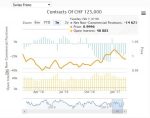
Speculators are net short CHF with 14.6K contracts against USD. This is less than the 17K last week.
Read More »2017-02-12
We are expecting a further strengthening of both dollar and Swiss Franc against the euro over the next 3 months. Reason is the rising Swiss demand the continued dovishness of the ECB, despite rising inflation.
Read More »2017-02-08
The reader might have seen the latest Swiss Consumer Sentiment and the UBS consumption indicator. They suggest that the Swiss boom phase should finally come.
I anticipated the boom already in my slides for the CFA Society. The Swiss boom was postponed when the SNB decided to remove the euro peg in early 2015.
2017-02-06
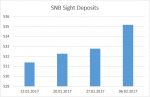
SNB intervenes for 2.4 bn CHF, while speculators increase their CHF shorts to 17K.
Read More »2017-02-05
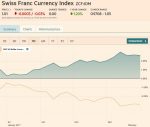
The Swiss Franc index remained around the 2% gain that for the last month, the recovery from the Trump reflation trade. In this trade, investors preferred U.S. against European stocks. This tendency, however, is reversing now – and with it the franc recovered.
Read More »2017-01-30
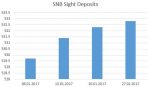
With the strong Swiss trade balance, the SNB let EUR/CHF fall to 1.0680. SNB intervenes for 0.5 bn CHF. Speculators are net short CHF with 13.6K contracts against USD, nearly unchanged.
Read More »
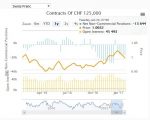
Speculators are net short CHF with 13.6K contracts against USD. This is nearly unchanged. But net short of Euro and Yen are Diminishing.
Read More »2017-01-29
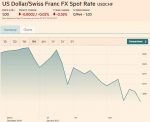
The US dollar spent the first month of the new year correcting lower after a strong advance in the last several months of 2016. We argue that the correction actually began in mid-December following the Federal Reserve’s rate hike.
Read More »2017-01-26
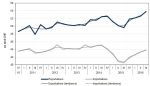
Following a decline the previous year, foreign trade grew again in 2016, with chemicals and pharmaceuticals shaping the trend. Exports climbed by a total of 3.8% (real: – 0.8%) to a record high of CHF 210.7 billion. However, the two other large groups – machinery and electronics, and watches – were unable to participate in the growth. Imports increased by 4.1% (real: +1.2%) to CHF 173.2 billion. The trade surplus reached a new peak of CHF 37.5 billion.
Read More »2017-01-23
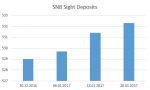
EUR/CHF is slightly above the “in-official minimum band”. The weaker dollar leads to bigger SNB losses in January. SNB intervenes for 0.9 bn at higher EUR/CHF rate. Speculators are net short CHF with 13.7K contracts against USD.
Read More »
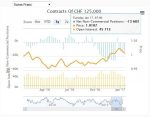
Speculators are net short CHF with 13.7K contracts against USD. This is nearly unchanged. On the other side, the USD/CHF is falling.
Read More »2017-01-22
The US dollar turned in a mixed performance over the past week. The technical indicators continue to support our expectation that after correcting since mid-December, following the Fed’s hike, the dollar is basing.
Read More »2017-01-19
The Producer and Import Price Index rose in December 2016 by 0.2% compared with the previous month, reaching 100.0 points (December 2015=100). Inflation was 0.0% in comparison with December 2015. The average annualised inflation rate in 2016 was -1.8%. These are the findings from the Federal Statistical Office (FSO).
Read More »2017-01-16
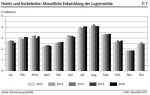
The Swiss hotel industry registered 1.9 million overnight stays in November 2016, which corresponds to a slight growth of 0.5% (+9300 overnight stays) compared with the same period a year earlier. Domestic visitors generated 878,000 overnight stays, representing an increase of 0.9% (+7900). Foreign visitors generated 999,000 overnight stays, i.e. a very slight increase of 0.1% (+1400).
Read More »
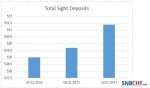
EUR/CHF slightly above the “in-official minimum band” of 1.0680 – 1.07. SNB intervenes for 1.7 bn at higher EUR/CHF rate. Speculators are net short CHF with 14K contracts against USD.
Read More »
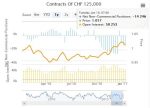
Speculators are net short CHF with 14K contracts against USD. This is 1K more than last week. But yen and Euro net shorts are currently diminishing. This could imply that soon CHF net shorts start falling, too.
Read More »2017-01-10
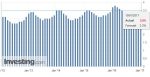
Registered unemployment in December 2016 – According to the SECO surveys, 159,372 unemployed were registered at the Regional Employment Centers (RAV) at the end of December 2016, 10,144 more than in the previous month. The unemployment rate thus rose from 3.3% in November 2016 to 3.5% in the reporting month. Compared to the previous month, unemployment rose by 743 persons (+ 0.5%).
Read More »2017-01-09
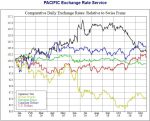
The Swiss National Bank has announced 24 bn profits from 2016. Profits came from the dollar, yen and Canadian dollar, while the pound retreated by 15%. The EUR/CHF is only slightly weaker, mostly because the SNB actively supported the euro.
Read More »
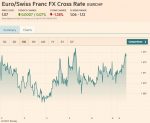
EUR/CHF at the “in-official minimum band” of 1.0680 to 1.07. SNB intervenes for 0.7 bn CHF to keep the euro slightly over 1.07. Speculators are net short CHF with 13K contracts against USD, 3K more than last week. This is still far from the post financial crisis record of 26 K contracts. Moreover the net short GBP are increasing again.
Read More »
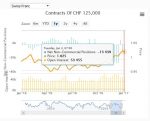
Speculators are net short CHF with 13K contracts against USD, 3K more than last week. This is still far from the post financial crisis record of 26 K contracts. Moreover the net short GBP are increasing again.
Read More »2017-01-06
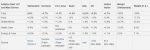
Energy prices in Switzerland turned around from a minus 2.4% in November to a +6.8% in December. Oil prices had seen its trough exactly one year ago.
Especially in Germany and Spain, this translated into inflation rates, that are close to the ECB target rate of 2%.
2017-01-03
Last week’s data: FX: EUR/CHF was between 1.07 and 1.0750. SNB sight deposits: SNB intervenes for 0.7 bn. CHF at the EUR/CHF 1.07 level. CHF Speculative Positions Speculators went net short CHF with 10K contracts, this is still far from the 26.K contracts record.
Read More »
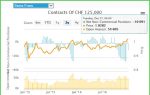
The sudden adjustment of CHF speculative positions ended (see last week’s post) . Speculators went net short CHF USD with 10K contracts, this is still far from the 26.K contracts record. We should wait for another Fed rate hike, to reach these levels again.
Read More »2017-01-01
https://snbchf.com/feed/ for RSS
and https://snbchf.com/feed/atom if somebody uses atom.
2016-12-27
The Fed has hiked rates and with this fait accomplis speculators sold the news. They closed their short CHF and opened new CHF longs. The SNB, however, intervened again for 0.5 billion CHF.
Read More »2016-12-26
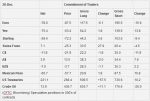
The expiry of the December currency futures may spurred more than normal speculative position adjusting. The out-sized 27.9k contract jump in the speculative gross long Swiss franc futures position is a prime example.
Read More »
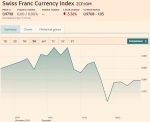
The small adjustment to Fed’s anticipated path for the Fed funds target helped lift the US dollar to its highest level against the euro since 2003, and to ten-month highs against the Japanese yen. The graph shows that the dollar has improved by 25% against the euro, but only by 10% against CHF over the last 3 years.
Read More »2016-12-20

The Swiss National Bank uses a strange formula on the basis of economic growth for the provisions for FX losses. It would be much easier to connect this number to the size of the balance sheet, e.g. 10% of the balance sheet.
Read More »2016-12-19
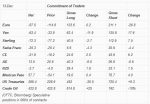
The net short CHF speculative position is close to reaching new records. Shortly before the end of the peg, speculators were net short CHF by 26.4K contracts. Now we are at 25.4K.
Read More »2016-12-18
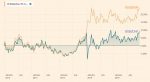
The small adjustment to Fed’s anticipated path for the Fed funds target helped lift the US dollar to its highest level against the euro since 2003, and to ten-month highs against the Japanese yen. The graph shows that the dollar has improved by 25% against the euro, but only by 10% against CHF over the last 3 years.
Read More »2016-12-14
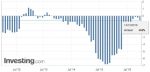
The Producer and Import Price Index rose in November 2016 by 0.1% compared with the previous month, reaching 99.9 points (base December 2015 = 100). The slight rise is due in particular to higher prices for scrap and petroleum products. Compared with November 2015, the price level of the whole range of domestic and imported products fell by 0.6%. These are the findings from the Federal Statistical Office (FSO).
Read More »2016-12-12
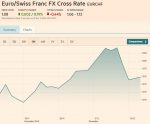
Who has read Milton Friedman knows that the Trump reflation trade is now showing its positive side. US wages are rising by 2.5%, while inflation is still relatively low. According to Friedman, inflation will increase only later.
Read More »
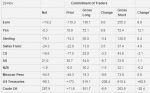
The net short CHF speculative position is close to reaching new records. Shortly before the end of the peg, speculators were net short CHF by 26.4K contracts. Now we are at 25.4K.
Read More »2016-12-11
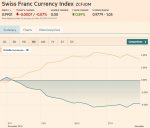
Swiss Franc Currency Index The Swiss Franc index remained in a losing position compared to the dollar index. However since November 25, it has remained stable. Given that the ECB extended the QE period, the EUR/CHF has fallen to 1.0730 again. USD/CHF The US dollar is finishing the year on a firm note. It rose … Continue reading »
Read More »2016-12-10

The following is the list of “Russian Propaganda sites”, as published by PropOrNot. Several articles by the Washington Post refer to this list. Many sites on that list are based on libertarian ideas and Austrian economics. Those are in favor of a free market economy, they reject central banks and the establishment. The rejection of the U.S. establishment is possibly the only point that are in common with Putin.
Read More »2016-12-06
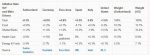
Swiss consumer price inflation remain the lowest in comparison with different countries in the euro zone and the United States. Consumer prices in the U.S. are driven by rising health care costs and asset price inflation in shelter. In Europe, we see the opposite phenomenon: Rents in Italy or Spain are steady or falling. In Germany and Switzerland rent control prevents that asset price inflation moves into consumer prices. In Switzerland, more and more supply is helping to contain housing costs.
Read More »2016-12-05
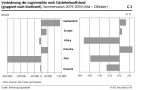
In the summer months, the Swiss hotels registered more guests from Switzerland. from the United States and from Europe. But there was a sharp decline of guest from Asia.
100’000 more overnight stays from Switzerland could not recover the decrease of 200’000. One important reason for decline is the weakening Chinese currency, that reduced their purchasing power, in dollar but also in CHF.
Italy has three options: 1. exit the euro zone and devalue the currency; 2. remain in the euro zone and devalue salaries. 3. go for Japan-like decades-long slow growth with stagnating wages, but also with falling inflation and (positive news!) falling bond yields.
Read More »2016-12-04
The Swiss Franc index continued around its 4% loss since the U.S. elections, while the US Dollar index had a 4% increase. The focus shifts to the ECB meeting, where participants are wary of a “hawkish ease”.
Read More »
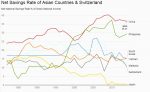
For us the Net National Savings Rate is the best alternative indictator to GDP growth. It is positively correlated with the change in wealth, with the establishment of future productive capacity, the price of government bonds and currency valuations. But today GDP growth is often negatively correlated to the Net Savings Rate. Hence GDP is often a less useful measure.
Read More »2016-12-03
The net short CHF speculative position is close to reaching new records. Shortly before the end of the peg, speculators were net short CHF by 26K contracts. Now we are at 24.3K.
Read More »2016-12-02
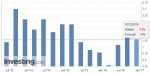
Switzerland’s real gross domestic product (GDP) has remained almost unchanged in the 3rd quarter of 2016 (+0.0%). Consumption was nearly stagnated, while net exports had a decline. But investments increased by 0.5% on the quarter.
Read More »2016-11-28
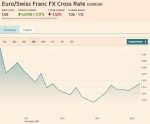
We explained the Trump reflation trade, where the Swiss Franc acts as the usual inflation hedge against the obviously inflationary policies of Trumpeconomics. Trump is about tax cuts – i.e. a fiscal deficit up to 10%, and about protectionism. Trump would restrict global trade and push up U.S. wages.
Read More »2016-11-27
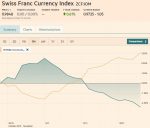
After a three-week rally, the dollar bulls finally showed signs of tiring ahead of the weekend. At least against the Swiss Franc index, the dollar index could further advance. We had observed SNB interventions in the previous week that kept the euro mostly above 1.07.
Read More »2016-11-24
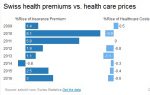
The latest data releases from Swiss Statistics shows that health care premiums have risen by 3%, while health care prices for consumers have fallen. The reason may be the oligopoly structure of the Swiss health care system. But also that we consume higher and higher quantities of health care. Or is Swiss Statistics cheating on inflation?
Read More »2016-11-22
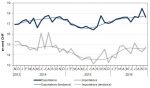
In October 2016, Swiss exports were down 5.6% (in real terms: – 10.4%) against the previous year. Imports rose by 1.8%YoY (in real terms: -1%). The trade surplus diminished, after months of rising exports.
Read More »2016-11-21
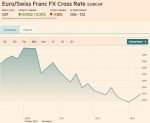
We explained the Trump reflation trade, where the Swiss Franc acts as the usual inflation hedge against the obviously inflationary policies of Trumpeconomics. Trump is about tax cuts – i.e. a fiscal deficit up to 10%, and about protectionism. Trump would restrict global trade and push up wages. According to Lars Christensen Trumpeconomics is also about monetary stimulus: Trump would push for a more jobs and a dovish Fed, same as his fellow Republican Nixon did. He could even replace the “hawk” Yellen.
Read More »2016-11-20
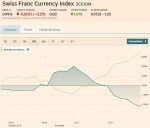
The US dollar has recorded its best two-week performance since Reagan was President. The weeks after Trump’s election continue to see a weakening of the Swiss Franc, while the dollar index is on a steady rise. Still both the euro and the yen have seen worse performance than the Swiss Franc. The euro is currently under 1.07.
Read More »2016-11-17
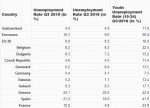
With 4.8%, the Swiss unemployment rate based on the ILO concept is higher than the rates in Iceland (2.6%), Czech Republic (4.0%) and Germany (4.1%), but lower than the ones of the remaining 25 countries. As for youth unemployment, the Swiss are on position three with a rate of 11%, this is half the rate of the Eurozone, or a fourth of the rate in Spain or Greece.
Read More »2016-11-14
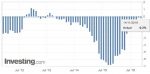
The Producer and Import Price Index rose in October 2016 by 0.1% compared with the previous month, reaching 99.8 points (base December 2015 = 100). While the Producer Price Index declined by 0.1%, the Import Price Index rose by 0.3%. The slight overall increase is due in particular to higher prices for petroleum products. Compared with October 2015, the price level of the whole range of domestic and imported products fell by 0.2%. These are the findings from the Federal Statistical Office (FSO).
Read More »2016-11-13
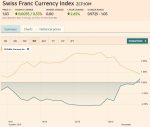
The Swiss Franc Index rose sharply, shortly after the U.S. elections. But then the Trump reflation trade came. Trump may fulfills the wet dreams of many economists. With tax cuts he might extend the U.S. fiscal deficit up to 10% per year. This resulted in:
Gains on U.S. stocks, inflows in U.S. Bonds, inflation hedges gold and Swiss Francs.
2016-11-07

Swiss consumer price inflation remain the lowest in comparison with different countries in the euro zone and the United States. Consumer prices in the U.S. are driven by rising health care costs and asset price inflation in shelter.
Read More »
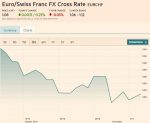
Sight Deposits: show that the SNB has not intervened to sustain the euro, that dipped under EUR/CHF 1.08. We considered the 1.08 as line in sand for the SNB. The odds of Trump are rising. This causes fear and demand for Swiss Franc. The EUR/CHF fell to 1.0750. Speculators were net short CHF January 2015, shortly before the end of the peg, with 26K contracts. Then again in December 2015, when they expected a Fed rate hike, with 25K contracts. We see these net short levels reached again this year, maybe even more. Reason the recently strong U.S. and European PMIs.
Read More »2016-11-06
Swiss Franc Currency Index As visible in the graph, the Swiss Franc index recovered most of its losses against the US Dollar Index for the last 30 days. In the last 30 days, both the USD currency index and the CHF currency index have had a positive performance.
Read More »2016-11-05
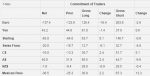
The weekly speculative position shows increasing short positions on the euro and on the Swiss Franc. On the other side, both currencies have appreciated, what they should not do if net short positions increase. This implies that there is real money, .e.g in the form of cash, bonds, stocks or real estate that is invested in the euro area or in Switzerland. For Switzerland, we will see this in the weekly sight deposits.
Read More »2016-11-02
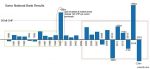
Interim results of the Swiss National Bank as at 30 September 2016 The Swiss National Bank (SNB) reports a profit of CHF 28.7 billion for the first three quarters of 2016. But the volatility is rising: The SNB may lose 50 billion in one year and win 60 billion in the next year or the opposite.
Read More »
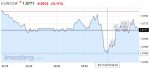
We have always emphasized that the SNB intervenes between 1.08 and 1.0850. Even if there was no change in sight deposits the 1.08 “line in sand” broke.
Read More »2016-10-30
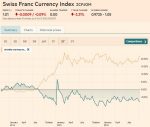
The Swiss Franc Index could recover some of the losses as compared to the US dollar index. Still the USD/CHF remains above 0.99. The US dollar rose against most of the major currencies last week, but the upside momentum appeared to be dissipating, even before the FBI’s announcement about new Clinton emails. There are a few exceptions like the greenback’s performance against the Japanese yen, Canadian dollar, and Swedish krona. The dollar made new multi-month highs against all three currencies in the last two sessions.
Read More »2016-10-23
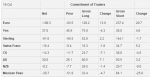
The net short Swiss Franc position against the dollar has risen to the levels seen before the breakdown of the EUR/CHF floor.
It has increased from short 9.4 K contracts to 16.4 K contracts.
In the last week, speculators raised their short positions by 15% for both the euro and CHF. Euro longs against USD were up slightly, while CHF longs were reduced.
The Swiss Franc index had once again a bad stance against the dollar index. The CHF index was down 1%. The dollar index, however, improved. The US dollar rose against the major currencies last week, except the Australian and Canadian dollars.
Read More »2016-10-21
In the third quarter of 2016, the Swiss quarterly trade surplus rose over 10 bn. CHF for the first time in history. Exports rose by 8.1% and Imports by 7.9%.
Read More »2016-10-16
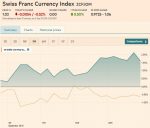
The Swiss Franc index had once again a bad stance against the dollar index. The CHF index was down 1%. The dollar index, however, improved. The US dollar rose against the major currencies last week, except the Australian and Canadian dollars.
Read More »2016-10-14
The Producer and Import Price Index rose in September 2016 by 0.3% compared with the previous month, reaching 99.7 points (base December 2015 = 100). The rise is due in particular to higher prices for petroleum products. Compared with September 2015, the price level of the whole range of domestic and imported products fell by 0.1%.
Read More »2016-10-10
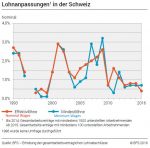
The social partners signing the collective labour agreements (CLA) have agreed a nominal rise in real wages estimated at 0.4% for 2016, of which 0.2% is to be awarded collectively and 0.2% at individual level. Minimum wages were increased by 0.7%. The graph shows nominal wages since 1993.
Read More »2016-10-08
Privathaftpflichtversicherungen in der Schweiz sind sehr intransparent. Oft steckt der Teufel im Detail, irgendwo in den AGB. Zum Abschluss einer neuen Versicherung sende ich diesen Fragebogen zu verschiedenen Anbietern.
Read More »
The Franc index lost considerably in the last week, in particularly in comparison to the dollar index. Reason was the exceptionally strong U.S. ISM Non-Manufacturing Index.
Read More »2016-10-02
The US dollar fell against most of the major currencies in Q3. The Norwegian krone was the best performer, gaining 4.4% against the greenback, followed by Aussie and Kiwi. The Swiss Franc collapsed on Friday at quarter end.
Read More »2016-09-20
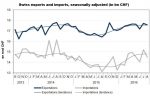
We do not like Purchasing Power or Real Effective Exchange Rate (REER) as measurement for currencies. For us, the trade balance decides if a currency is overvalued. Only the trade balance can express productivity increases, while REER assumes constant productivity in comparison to trade partners.
In August 2016, Swiss exports were up 7.0% YoY (in real terms: + 1.2%) and imports 8.4% YoY (in real terms: + 5.1%).
2016-09-17
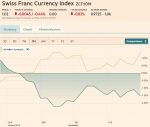
The dollar was surprisingly strong this week. This despite a more hawkish ECB, bad U.S. economic data in the ISM surveys.
Read More »
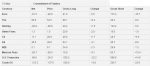
Speculators are reducing their net short Euro positions, since Draghi’s comments on inflation. Apparently not only against the dollar but also against the Swiss Franc. This also means that the euro zone may be target real money (like purchases of stocks, real estate and bonds) instead of Switzerland.
Read More »2016-09-10
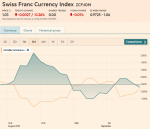
It took the market a few days to overcome the shockingly poor non-manufacturing ISM (51.4 vs. 55.5). However, by the end of the week, the US dollar bulls had regained the upper end.
Read More »2016-09-04
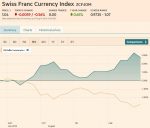
During this week the Swiss Franc index lost against both dollar and euro. The CHF index ended one percent down. Despite not convincing US jobs, the dollar index ended in positive territory.
Read More »2016-08-29
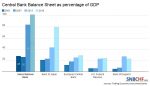
Since 2008 the balance sheet of the Swiss National Bank has risen from 28% to 102% of Swiss GDP. Balance sheets of other central banks have strongly risen, too. But there is one big difference: The risk for the SNB is far higher, the SNB nearly exclusively possesses assets denominated in volatile foreign currency.
Read More »2016-08-28
After winning 5% against the dollar index last week, the Swiss Franc index lost 3% again. CHF lost against both USD and EUR. Reason: An increased probability of a rate hike in the U.S.
Read More »2016-08-23
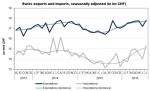
We do not like Purchasing Power or Real Effective Exchange Rate (REER). For us, the trade balance decides if a currency is overvalued. Only the trade balance can express productivity increases, while REER assumes constant productivity in comparison to neighbours. In July 2016, Swiss Exports were up 7.9% YoY (in real terms: + 2.4%) and imports 11.8% YoY (in real terms: + 8.2%). Exporters could even raise prices, as we see in the difference between nominal and real.
Read More »2016-08-21
The US dollar lost ground against nearly all the major currencies last week. The sole exceptions were the Australian dollar, where Moody’s decision to cut the outlook for five Australian banks wiped out the previous small gain. The Swiss Franc index gained nearly 5% compared to the dollar index.
Read More »2016-08-17

Swiss National Bank President Thomas Jordan keeps saying the franc is “significantly overvalued.” And that’s despite the central bank’s record-low deposit rate and occasional currency market interventions.
Read More »2016-08-13
The CHF index experienced its first good week since many weeks, when we compare it against the dollar index. On a three years interval, the Swiss Franc had a weak performance.
Read More »2016-08-10
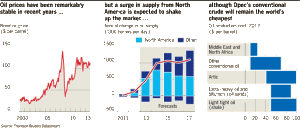
Mainstream media often speaks of the great shale gas/oil revolution and how it makes the United States more productive and a net exporter of oil. We wanted to go into more details,we compare oil production costs for US shale and global oil producers. As reason for the cheap oil we see the combination of two effects:
Demand: Cheap US money supported a Chinese investment boom in factories and housing until 2012. The over-investment phase is followed by lower demand growth.
Supply: The Arab countries need to maintain their social welfare systems, increased production, and – more or less deliberately – kicked high-cost fracking companies out of the market.
2016-08-07
The robust US employment report before the weekend allowed the dollar to recoup the losses it experienced earlier in the
week against most of the major currencies. The Australian dollar and Japanese yen managed to hold onto minor gains for the
week.
2016-08-02
This economic graph is maybe the most important in the last decade. Service prices are rising, while goods prices have steadily fallen. The main reason for us is the possibility to outsource big parts of the durables supply-chain to China and East Asia. This is where productivity growth happens. Prices of services, however, are ever increasing. …
Read More »2016-07-31
Many know that gold is very volatile in the course of year. Gold prices tend to be low in January and rise between July and November. But what are the fundamental reasons behind this seasonality?
Read More »
The US dollar advance was stopped in its tracks by the
disappointingly weak Q2 GDP figures. The 1.2% annualized growth rate was
roughly half of the pace expected. The FOMC statement earlier in the week did not leave the impression that a September hike was likely, and with the poor growth numbers, the odds were downgraded
further.
2016-07-24
The US dollar gained against all the major currencies over the past week. It also rose against many emerging market currencies. A notable exception was the Chinese yuan.
Read More »
GDP growth is a bad economic measure. GDP growth in the form of consumption-driven (hyper-) activity (aka Bawerk’s “GDC” Gross Domestic Consumption) must finally lead to a depreciating currency, inflation, falling government bond prices and wealth in real terms. Instead, GDP should be driven by investment and the consequent improvements in productivity.
Read More »2016-07-23
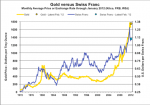
Many people think that Switzerland is related to gold due to its inflation-hedging safe-haven status. Historically this is true. With rising U.S. inflation in the 1970s gold appreciated to record-highs. So did the German Mark and even more the Swiss franc, that maintained low inflation levels.
Read More »2016-07-22
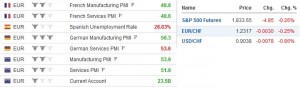
A big part of Swiss consumption is imported from Germany. Therefore Swiss inflation is often correlated to German inflation. Capital flows often move to Switzerland and Germany at the same time.
Read More »2016-07-16
Our weekly review of currency movements, with focus on the Swiss franc. This week: The US dollar is easily the most traded currency, and despite the plethora of other currencies, it is on one side of nearly 90% of all trades. Yet the movement in the foreign exchange market presently is not so much driven by the dollar as it is by other currencies.
Read More »2016-07-10
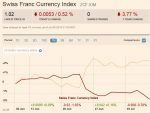
In the Brexit month, the Swiss franc index clearly underperformed the dollar index. The major reason is that the dollar is seen as a better safe-haven than the Swiss Franc, possibly because Swiss sales are affected more when British demand falls.
Read More »2016-07-08

Positive job data in the United States are typically positive for both USD and EUR, because the odds of a rate hike are increasing. Consequently the EUR/CHF rose. In the last two days SNB interventions should have been smaller. The Swiss unemployment rate fell from 3.5% to 3.3%.
Read More »
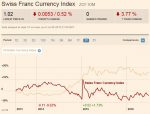
On a three years interval, the Swiss Franc had a weak performance. The dollar index was far stronger.
Contrary to popular believe, the CHF index gained only 1.73% in 2015. It lost 9.52% in 2014, when the dollar strongly improved.
2016-07-05

The British pound has been hammered to fresh lows just above $1.3115. The euro is moving toward GBP0.8500. The immediate catalyst is three-fold. First, one of the UK’s largest property funds has moved to prevent retail liquidation. Second, the BOE reversed an earlier decision on the capital buffer for banks, which is tantamount to easing policy by boosting the banks’ lending capability by as much as GBP150 bln.
Read More »
SNB intervenes for 6.3 bil francs in the week ending last Friday. Once again a record high since January 2015. The SNB raised the intervention level to 1.0850. Apparently conversion of GBP->CHF flows into GBP-> EUR flows – via EUR/CHF purchases. Speculators: are long CHF 10K contracts against USD versus 6.3K last week.
Read More »2016-07-02
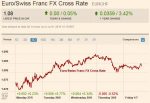
Week after Brexit.: The Swiss franc (-0.3%) and the yen (-0.5%) were the worst performers, as so-called safe haven buying was reversed.
But the Swiss Franc index is still stronger in the last month than the dollar index.
2016-07-01
EUR/CHF finished the week after Brexit with slight improvement of 0.18%. The scare mongering by the Swiss media was misplaced. The euro even recovered from a dip after BoE governor Carney’s comments on Thursday. We do not see strong SNB interventions at this elevated price level. We judged that the interventions happened below 1.08.
Read More »2016-06-29

Iceland has gained the admiration of populists in recent years by doing that which no other nation in the world seems to be willing or capable of doing: prosecuting criminal bankers for engineering financial collapse for profit.
Read More »2016-06-26
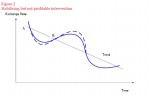
The papers from the Reserve Bank of New Zealand describes in easy words where central banks should intervene based on economic history and experience. It avoids the often used econometric considerations. For FX rates those often do not incorporate sufficient long-term data.
Read More »2016-06-25
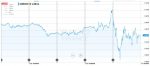
The dramatic reaction to the UK decision to leave the European Union has changed the technical condition in the foreign exchange market. The EUR/CHF peaked shortly before the Brexit referendum, when traders were anticipating a yes. It found its trough when the No was published. Then the SNB intervened.
Read More »2016-06-24
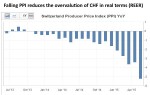
Most economists, like the ones at the Swiss National Bank (SNB), claim that the franc is overvalued. Many use misleading Purchasing Power Parity (PPP) measures like the Big Mac index, the OECD index or the PPP based on consumer prices for computing fair values.
The second big mistake is to compute the Real Effective Exchange Rate (REER) with the wrong “base year”The third error is to ignore massive Swiss current account surpluses, helped by high savings and by immigration of cheaper highly qualified personnel. Both help to reduce unit labor costs and achieve productivity gains. Eventually the ex-post FX evaluation based of capital flows in the balance of payments should clearly take precedence against the ex-ante FX evaluations REER and PPP, that are obviously misleading for the franc.
2016-06-22
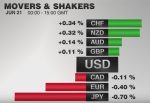
The Swiss Franc was the strongest currency. The euro fell from 1.0877 to 1.0808. Two fundamental reasons:
Speculator anticipate that German investors buy Swiss francs in response to the court decision in favor of the OMT and the positive ZEW.
2016-06-20

Recently I enumerated the different drivers for the continuing strength of the franc. Most commentators mentioned Brexit fears, but I insisted on the low rate and yield environment in the United States after the last Non-Farm Payroll report and the FOMC.
Today’s jump in sterling confirmed my view. This anticipation of an Anti-Brexit vote was not followed by a franc decline against USD. This also implies that a Brexit will not entrench a huge strengthening of the franc.
2016-06-18

Two main events that drove the foreign exchange market. The first iare some post-FOMC meeting movements and the assassination of Jo Cox, that might be positive for the Anti-Brexit camp . The EUR/CHF has fallen down to 1.0774 and recovered.
Read More »2016-06-04
Massive surprise in the US job report was reflected in currency rates. The EUR/CHF surprisingly increased, despite weak US data. This reflects the fact that the ECB is currently considered the most dovish central bank. The dollar lost 2% against the yen, 1.6% against the euro and 1.3% vs. the Swiss franc.
Read More »2016-06-03
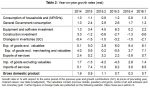
Q/Q GDP growth: +0.1%, YoY GDP growth: +0.7%.
Until 2014, Swiss GDP was driven by net exports: Exports were rising more quickly than imports, which improved GDP.
Positive change in the trade balance in goods: +8.1% YoY exports, +1.4% YoY imports in Q1/2016.
Negative change in the trade balance for services: export +2.0%, import +6.7% YoY
In 2015 and in Q1/2016 the main GDP drivers were consumption (+1.3% YoY in Q1/2016) and investment (+2.1%).
Government consumption and inventories lagged in Q1/2016, they dragged down GDP to 0.1% QoQ.
2016-05-24

Authorities in Switzerland and Singapore are punishing BSI, the private bank based in the Ticino region of Switzerland, for alleged money-laundering offenses, shutting their activities in Singapore and seizing part of its profits.
Read More »2016-05-20
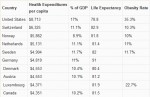
The United States spends 17% of GDP for health care, compared to around 10% in many other advanced economies. Thanks to rising health care costs, GDP growth was higher in the U.S. in recent years. The question is if this kind of GDP growth enriches the whole population or only the privileged.
Read More »2016-05-08
A share of 20% equities is too much for a conservative investor.
– She increases the CHF debt with continuing interventions at a pace of 10% per year.
– yield on bond investments is less than 1% p.a. and equity markets might not improve a lot any more.
– Expensive dollar: she bought U.S. equities when the dollar was relatively expensive.
2016-04-28
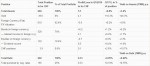
SNB Results Q1 2016: Two thirds of SNB profit comes from Gold. Deflation helps with higher bonds prices and profit on negative interest rates.
Read More »
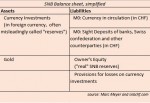
The Q1/2016 update on the SNB investment strategy and its assets.
The Swiss National Bank is a passive conservative investor. As opposed to other investors, the exposure in currencies is as important as the strategic asset allocation according asset classes (bonds, equities, cash, real estate). The importance of currencies is one reason why the SNB is often called a hedge fund, the second the volatility of gains and losses.
2016-04-26
Speculative position: Speculators are even longer CHF (against USD): +9410x 125K contracts.
Sight Deposits: SNB intervenes for 6.4 bln. CHF in only three weeks. Sight deposits (aka debt) are rising by nearly 1% per month, this is 10% per year. The SNB can never achieve such a yield on investment, her yield is between 1 and 2 percent. Is the bank running suicide again?
2016-04-24

Fauke Petry, leader of the Alternative for Germany (AfD), believes Germany “needs more Switzerland … more democracy” and that Switzerland is some way ahead of her country when it comes to a “culture of democracy”.
Read More »2016-04-07
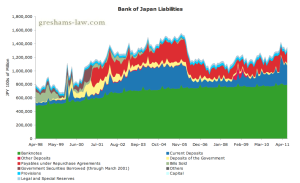
We show the history of Japanese FX interventions. The Japanese only intervened when the USD/JPY was under 80. Therefore the 2016 FX intervention threads at 108 are ridiculous.
As opposed to the Swiss National Bank, the Japanese only talk, they do not fight.
2016-04-04
Speculative position: Strong shift to CHF long: +4967x 125K contracts after the Fed reduced their expectations of rate hikes for this year. …………Sight Deposits: SNB intervenes for 6.1 bln. CHF during the month of March. This is the higest level since January 2016. ……….FX: EUR/CHF steady slightly over 1.09. As I expected last week, the EUR/CHF …
Read More »2016-04-01
2016-03-18
We examine the SNB monetary assessment statement of March 17 and the Swiss economy. We explain why negative rates may be a “toothless measure” if a central bank wants to weaken a currency. They have rather an inexpected consequence, they slow down GDP growth, in particular for banks and pension funds.
Read More »2016-03-07
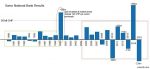
The Swiss National Bank (SNB) is reporting a loss of CHF 23.3 billion for the year 2015 (2014: profit of CHF 38.3 billion). The loss on foreign currency positions amounted to CHF 19.9 billion. A valuation loss of CHF 4.2 billion was recorded on gold holdings. The profit on Swiss franc positions was CHF 1.2 billion.
Read More »2016-03-05

According to the latest news release, the Swiss National Bank expects an annual loss of 23 billion CHF, after reporting a loss of 50 billion at the end of June. Primarily thanks to the stronger dollar, the SNB was able to achieve unrealized gains of 27 billion CHF in the second half. This reduced her annual loss to 23 billion. With its rate hike, Fed is helping the SNB: the dollar has appreciated by 6% since July.
Read More »2016-03-04
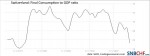
For George Dorgan the “Swiss Franc Shock” celebrated by the Swiss press did not affect the Net Exports component of Swiss GDP, but it rather suppressed growth in consumption. Therefore the Swiss economy could not replace lost export jobs by new jobs in the internal economy.
Read More »2016-02-15
Weekly SNB Intervention Update: Sight Deposits and Speculative Position
Read More »2016-02-07

In December 2015, the seven year Joseph cycle ended with a Fed rate hike. These lean years of the Joseph cycle started in December 2008 when the Fed lowered rates to the current level. We think that in the next seven year cycle, even the risk-averse Swiss investors will buy more foreign assets, not only the central bank and speculators. Different crises have passed in the three parts of the world, the U.S. subprime, the euro crisis and the Emerging Markets crisis. The last one culminated in the Russia crisis and the end of the peg in January 2015. At the CFA Society in summer 2014, I predicted the end of the EUR/CHF peg. This time, however, I foresee a weaker Swiss franc
Read More »2016-01-25
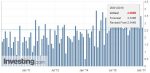
After several years of moderate growth, exports (-2.6%) and imports (-6.9%) fell in nominal terms in 2015. Nevertheless, exports were at their third-highest level ever at CHF 202.9 billion. Prices clearly declined, particularly for imports, against the backdrop of the strong Swiss franc.
Read More »2016-01-02
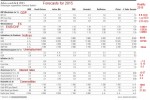
Our analysis of the forecasts of economic data for 2015 shows that the Swiss banks were too optimistic for most data. US growth, the oil price, inflation and interest rates are far lower than expected. The errors for stock indices were smaller.
Read More »2015-12-10
Monetary assessment meeting Swiss National Bank: My real-time tweets contain the main important points of the SNB meeting from the view of investors or FX traders.
Read More »2015-12-09
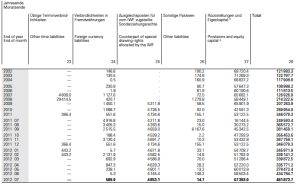
The SNB monthly bulletins contain all important data of the SNB and the Swiss economy as of the latest quarter.
Read More »2015-12-08
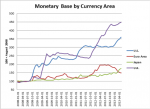
2015-10-18
2015-09-04

2015-08-29
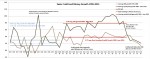
We explain the risks on the rising money supply in Switzerland. We distinguish between broad money supply (M1-M3) and narrow money supply (M0). Both are rising quickly.
Read More »2015-08-28
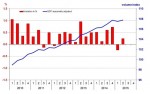
Swiss GDP increased by 0.2% q/q and by 1.2% y/y. Once again, investments on equipment and software (+3.6%) was one of the main drivers. For many economists investment on equipment and software is the most desired GDP growth component.
Read More »
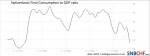
According to the figures of Swiss Statistics, the Swiss trade surplus rose by 10.4% in 2014. Therefore its contribution to the 2014 real GDP is higher than 50%. Private consumption lagged compared to the other components of Gross Domestic Product.
Read More »2015-08-21
2015-08-10

2015-08-09
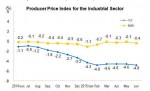
Both Chinese PMI and the producer price index (PPI) are in deflation since 2012. This opens a lot of questions about the sustainability of Chinese economic growth, but also about the certain economic theories that consider deflation as a precursor of depression, as it did in the early 1930s. China’s speed of economic growth simply slows, recently to 7%, according to China statistics “China’s Economy Showed Moderate but Steady Growth”.
Read More »2015-08-08
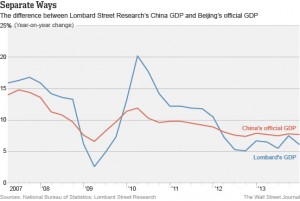
Many claim that China manipulates its economic data. We explain why the best way not to get caught is to lower the GDP deflator, as lower inflation helps to increase real GDP. Lombard Street Research assumes that Chinese officials followed that approach.
Read More »2015-07-26
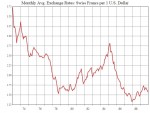
2015-07-21

SNBCHF.com most important posts about the Swiss National Bank
Read More »2015-07-13
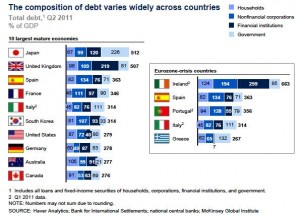
For us the five major drivers of government bond yields are:
Inflation expectations and inflation: The by far most important criterion. High inflation expectations must be compensated via higher bond yields. The main driver behind inflation expectations is the wage development, this is the form of inflation that typically persists. Price inflation follows inflation expectations with a certain lag.
Wealth: The higher the wealth of a country, the lower the bond yields. Wealth is typically increased by high savings.
Regular and irregular influences on bond yields by central banks: Regular: Central banks buy government bonds, in particular in US Dollars, the world reserve currency. Irregular: Central banks buy bonds of their own government and depress yields – the “quantitative easing”.
If a country has relatively low wealth then foreigners must help with the purchase of bonds and the following factors become relevant:
Foreign debt relative to GDP: Foreign bond holders want higher yields against risks (e.g. currency risks) of holding foreign assets.
The net international investment position (5a) and change in this position, namely the current account balance (5b).
2015-06-28
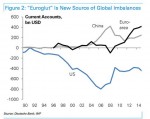
Deutsche Bank’s George Saravelos was one of the first to use the term “euro glut”. He anticipated a massive capital outflow from Europe that countered the huge European current account surplus. The Euro glut also led to the end of the EUR/CHF peg. Reasons are missing investment opportunities in Europe despite the high savings rate.
Read More »2015-06-23
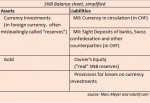
Latest update for June 2015: The pace of SNB intervention is slowing. Sight deposits, the indicator for SNB interventions, rise by 0.5 billion francs per week.
April and May: Sight deposits rise by 1.5 billion CHF per week. Thanks to this intervention the SNB is able to maintain the EUR/CHF around 1.0450.
2015-06-20
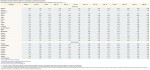
2015-06-18
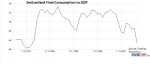
George Dorgan shows that Gross Domestic Product (GDP) is a measurement in the local currency. Effectively, Swiss real GDP rose by 15% in Euro terms, but fell slightly in CHF. He also emphasizes that Switzerland needs a big rebalancing of its economy, away from exports towards consumption. The Swiss National Bank was right to remove the euro peg. The move towards consumption is only possible when the Swiss franc is stronger because consumers will profit on it.
Read More »2015-06-15
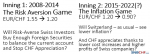
We show the two phases or “two innings” of Swiss franc appreciation: The risk aversion phase and the high inflation phase.
With the weakening of emerging markets and the strengthening of the United States in 2013/2014, the Swiss National Bank (SNB) had won the first battle in the war against financial market, the “risk aversion game”, the first inning in two-part match. Risk aversion is lower because the United States recovered with weaker oil prices.
The “inflation game” started earlier than we expected, at least in the eyes of the Swiss National Bank, namely in January 2015. They anticipate higher inflation that will come with rising wages in the United States and Germany.
2015-06-08
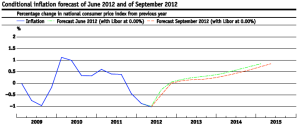
In this post we will show the history of the Swiss Franc until 1971, a monetary era driven by the gold standard and the Bretton Woods period, both periods with nearly fixed exchange rates.
Read More »2015-06-02
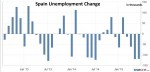
In the new series George Dorgan suggests that the euro crisis is a temporary development but not a long-lasting crisis. In the first part he shows that Spain actually created a lot of jobs in last twenty five years.
Read More »2015-05-24
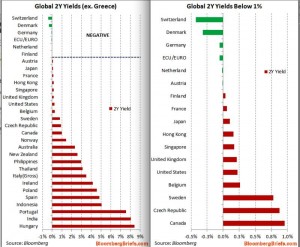
The Safe-haven government bond bubble did not pop, but Italy or Spain have become low yielders as well
Government bond yields under 10 years for safe-havens are close to zero. In April 2013, even 20 year bond yields are less than 3%, What can explain this bubble of the century?
2015-05-05
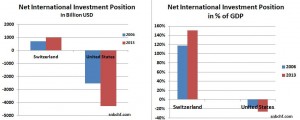
(post written originally in March 2013)
We reckon that the Swiss National Bank (SNB) will have issues maintaining the EUR/CHF floor in the longer term, because the expected yields on Swiss investments abroad will not be sufficiently higher than the yield on investments in Switzerland. Because of this insufficient risk-reward relationship, outflows in the capital account of the Swiss balance of payments will not cover the persistent Swiss current account surpluses. Only strong outflows in the capital account may lead to a carry trade that may make SNB interventions obsolete.
We judge that the balance of payments model is the only useful ex-ante estimation and ex-post FX rate valuation.
Other ex-ante FX estimations like the Real Effective Exchange Rate for the Swiss franc need to be rejected.
2015-05-04
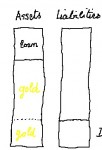
Money creation and sight deposits may have two points of view:
1. The central bank creates money – i.e. the SNB decides to increase sight deposits when it does currency interventions
2. Commercial banks create money – inflows in CHF on Swiss bank accounts make those banks increase their “sight deposits at the SNB. If inflows in CHF are higher than outflows then CHF must rise, unless the central bank does currency interventions.
We will present both alternatives.
2015-05-01
2015-04-27
This IMF data on the SNB website shows SNB Forex and gold reserves in the last month. It is so-called “IMF Special Data Dissemination Standard (SNB Data)”
Read More »2015-04-03
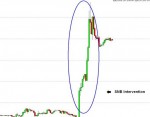
In his first response to the Swiss financial tsunami on January 15, George Dorgan suggested that the EUR/CHF of 1.10 will not be reached any time soon. He explains where the SNB should intervene and if they sell Euros and dollars.
Read More »2015-04-02
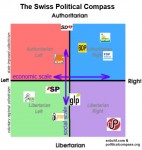
Libertarians close to UP Schweiz (Swiss independent party) ridiculed the Green Liberal Party, GLP and the Pirate Party as being in favor of the state and left-wing, hence not libertarian. George Dorgan suggests that both GLP and the Pirate Pirate are pretty close to UP, hence all three are libertarian parties. He thinks that the discussion if one is “Left” or “Right” needs to be left out completely, when we speak about liberty.
Read More »2015-03-30
2015-03-28

The concerted actions in September 2012 between the two big central banks reflected two fundamental economic principles: The Fed opted for Keynes’ law, the ECB for Say’s Law with conditionality. And apparently the ECB was successful.
Read More »2015-03-22
2015-03-08
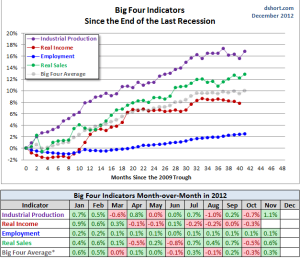
The four best US economic indicators, in form of concurrent indicators, can be seen at Doug Short, here in detail.
Read More »2015-02-28
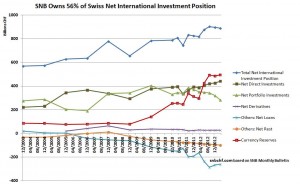
We compare aspects of the Net International Investment Positions for Italy and Switzerland
Read More »
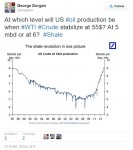
In this post we give a comparison of breakeven prices by major investment houses for different shale oil fields and different opinions on it
Read More »
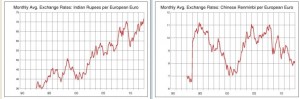
The effects of so-called “currency wars” and other central bank actions are small compared to the long-term impact made by these five catalysts, which include credit cycles, trade balance, differences in economic growth, and more.
Read More »2015-02-27
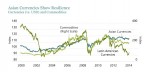
2015-02-26
We indicate the main factors that influence FX rates in the longer term. We explain the movements of currencies based on these factors.
Read More »2015-02-25
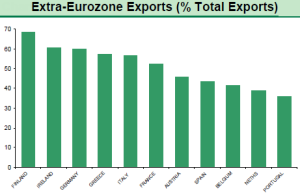
German spending is one factor that drives currencies in Northern Europe.
Read More »
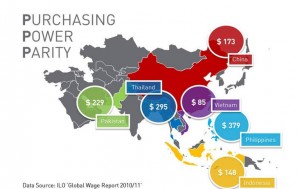
An economic theory that estimates the amount of adjustment needed on the exchange rate between countries in order for the exchange to be equivalent to each currency’s purchasing power.
Read More »2015-02-24
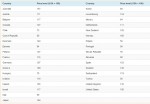
The OECD purchasing power parity compares consumption prices in different countries.
Read More »2015-02-23

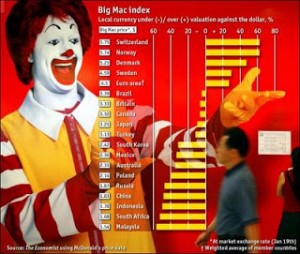
The following table compares the Big Mac and the Starbucks Tall Latte index among different countries. It explains the issues with these measurements.
Read More »
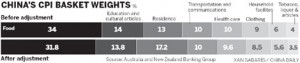
Typically poorer countries have a basket with a higher weight for food and other consumption goods, but richer states give them a smaller weight. Here the full details over different countries
Read More »

The best posts by Marc Meyer, the biggest and most influential enemy of the Swiss National Bank. He regularly published in German on InsideParadeplatz.ch
Read More »2015-02-22
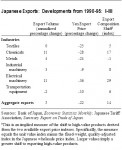
2015-02-21
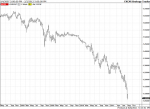
Selected essays on the end of the EUR/CHF peg
Read More »
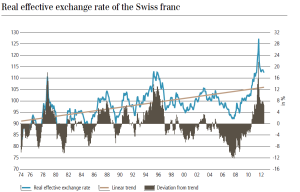
The weighted average of country’s currency relative to index or basket of other major currencies adjusted for inflation. We explain the Real Effective Exchange Rate for the Franc, the Yen and Renmimbi
Read More »2015-02-20
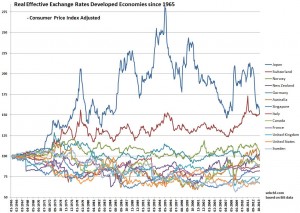
If we calculate Real Effective Exchange rates on the base year 1965, the Japanese yen remains the most overvalued currency.
This analysis is based on the real effective exchange rate (REER) provided by the Bank of International Settlement (BIS) and a consumer price-index adjusted exchange rate.
The real value of the yen is around 50% higher than 1965, the same applies to the Swiss franc.
2015-02-17
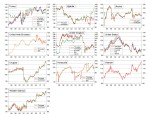
In August 2013 the Bruegel blog offered one of the best comparison of long-term real effective exchange rates (REER). The data is CPI based and therefore not as good as the producer price index (PPI) that reflects tradable goods better.
However the data is huge with three different sources – BIS, World Bank, Eurostat, OECD and Bruegel. The data indicates how the real value of the currencies of China and many other Emerging Markets (EM) have improved against 1995. In order fulfill basic needs like food, transportation and housing, this expansion required more and more commodities. By consequence the commodity producers Canada, Australia, New Zealand, Russia, Brazil and OPEC countries but also less known oil producers like Angola, Guatemala, Honduras, Sudan went into a boom.
2015-02-16
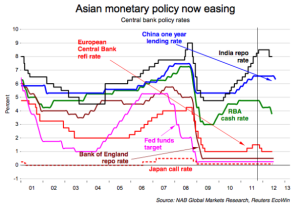
In this chapter we connect three related concepts: inflation, central banks and interest rates.
Read More »2015-02-15
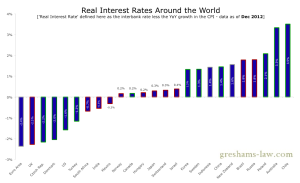
The interest rate parity gives a mathematical explanation for the purchasing power parity and real effective interest rates
Read More »2015-02-14
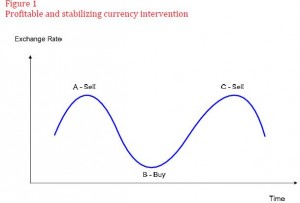
Carry Trades, Central Bank Interventions, Fundamental Data, mean reversion, Momentum Trades, Overshooting, trend following
Read More »2015-02-13
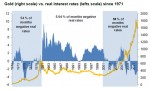
Gold and silver are the most complicated assets to price. Stocks, currencies, commodities mostly depend on their fundamental data, supply and demand. Gold and silver, however, are priced indirectly.
Read More »
In Switzerland the ordinary people have started several initiatives to protect their savings against the establishment. After the first gold referendum failed in November 2014, a new gold initiative is trying to introduce a gold-backed Swiss currency, as parallel currency or investment vehicle.
With the end of the EUR/CHF peg and the apparent risks caused by the SNB, the importance of the Gold Franc initiative has increased. Different groups want to introduce parallel currencies in addition to the Swiss franc. CHF is based on fractional reserve banking and, according to the critics, its quantity is increasing too rapidly.
A sound money initiative (German “Vollgeld”) wants to abolish fractional reserve banking, while the new gold franc initiative desires a gold-backed currency. Already now, the so-called WIR money (“Our Money”) is a local currency created during the Great Depression. “WIR money” allows borrowing and lending, in particular for real estate. It is fully backed by commodities, like real estate. By law, parallel currencies, like WIR money, are not legal tenders. Due to a lack of convertibility into foreign currency, WIR money trades at a slight discount to the Swiss franc. This, however, might change when the SNB gets further into negative equity.
In the following we will compare the two gold initiatives.
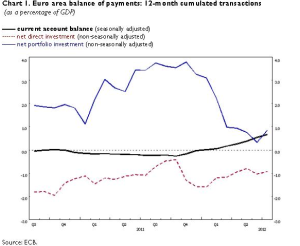
The Balance of Payments is the sum of current and capital account. The Balance of Payments model states that a currency appreciate when the Balance of Payments is positive. We give an explanation in around 400 words, that clarifies the relationships.
Read More »2015-02-12
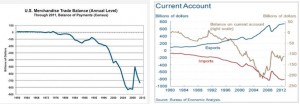
George Dorgan explains why currencies of countries with trade surpluses must appreciate over the long-term. Thanks to these surpluses, inflation and costs of companies rise more slowly than in other countries. In Forex a mean reversion does not exist, but only an inflation-adjusted reversion to the mean: a real exchange rate mean reversion or in short the “real mean reversion.”
Read More »2015-02-11
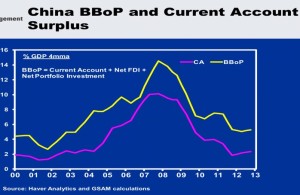
We will apply the balance of payments model for determining FX rate movements and FX interventions by central banks.
Read More »
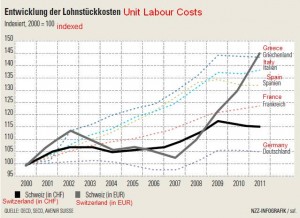
George Dorgan extends the previous discussion on trade surplus countries. Now he explains the Penn and the Balassa-Samuelson Effect. He applies these principles to Germany, to Greece and to Switzerland.
Read More »2015-02-10
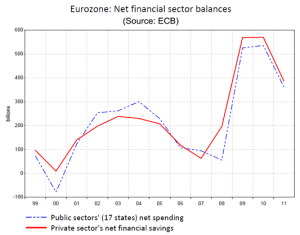
Private savings finance public deficit and current account surpluses. Important for understanding the euro crisis and the drivers of government bond yields.
Read More »2015-02-09
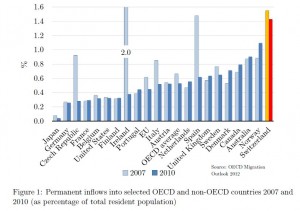
Economic freedom, immigration and high savings are main drivers for strong currencies. Switzerland, Singapore, Norway, Sweden and in the future even Germany are examples. Strangely most are in Europe.
Read More »2015-02-08
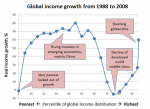
It was tweeted out and annotated by James Plunkett and it’s based on a chart from inequality economist Branko Milanovic.
Read More »2015-02-06
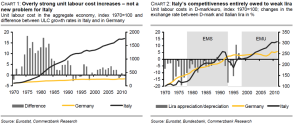
This page discusses two closely related concepts: the carry trade and the reverse carry trade.
Read More »2015-02-04
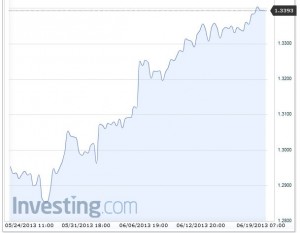
The EUR/USD is going on its longest winning streak for a long time. Since May 27, it has improved from 1.2850 to 1.3396 and is approaching 1.34. What are the reasons?
Read More »2015-02-02
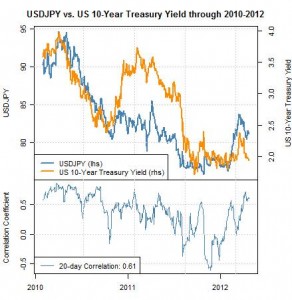
The Asset Market Model implies that a currency will be in higher demand and should appreciate in value, if the flow of funds into financial market of the country such as equity and bonds markets increase.
Read More »2015-01-31
Direct or indirect intervention is credible only in countries where domestic asset prices are undervalued and CPI/asset price inflation are no issues. Otherwise they create medium-term risks.
Read More »
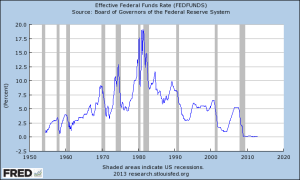
Availability of funds (wealth and the international investment position): One of the 5 key indicators for FX rates. Often currencies of countries with a a lot of funds appreciate when markets decline.
Read More »2015-01-30
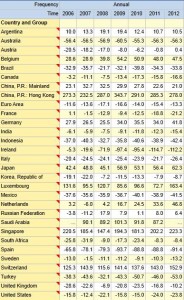
A comparison of the net international investment position (NIIP) of several countries. We explain why asset valuation effects this position at the example of the United States.
Read More »
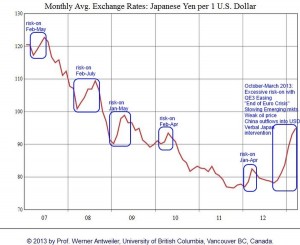
The yen overshot during and after the financial crisis. The USD/JPY fell from 120 in 2008 to lowest levels of 74, by 62%, but rose to 102 again. What are the reasons?
Read More »2015-01-26
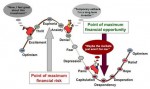
We extended our existing post to contrarian investing. It was published on Seeking Alpha and awarded the Editor’s Pick.
Gross Domestic Product(ion) is (or has become) a measurement of activity and consumption, but not of capital accumulation and production.
In many cases, GDP growth is negatively correlated to saving. Higher savings (aka austerity) leads to lower GDP growth today, but to higher GDP in the future.
In its worst case, GDP growth could be completely based on credit, eliminating the capital basis of a country (example Greece).
FX rates are less driven by GDP but by savings and investments, in particular on the corporate side, by investors and micro-economic indicators.
In addition to micro-economic indicators like price to cash flow or price to book ratio, the saving rate is the best macro-economic indicator of the investment style called “contrarian investing.”
2015-01-24
Read our contrarian insights: We provide regularly contrarian indications to technical Forex movements. Trade after work and do not look at markets during the day, third read scary facts about stops.
Read More »
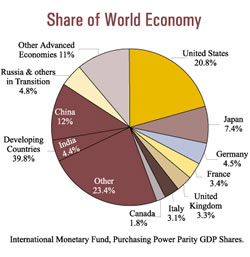
In our view the Swiss franc is not a pure Safe-Haven, but a “Safe Proxy for Global Economic Growth”. Global investors want to participate via the purchase of safe Swiss multi-nationals in global growth. This means inflows into Swiss franc denominated assets. Together with the big Swiss trade surplus, this implies a stronger franc. China stands for global economy, its slowing growth has a negative influence on the profits of Swiss multi-nationals and is therefore negative for the franc.
Read More »
Arguments in favor of and against the Swedish Krona,as safe-haven during the euros crisis. Extracts from tradingfloor.com
Read More »2015-01-20

In this post we give our (Swiss) view for the financial tsunami on January 15.
The SNB has preferred its secondary mandate, namely financial stability, and the elimination of risks on its own balance sheet caused by ECB QE.
It will not obey its primary target, price inflation, for the next three to five years. While in the mid-term (5 -10 years) inflation should move up.
Differing perceptions between Switzerland and the Anglophone world about “price stability in the medium and long-term” is the second explanation for the financial tsunami.
The massive trade surplus of 10% of GDP is the third reason.
2015-01-09
The Swiss National Bank reported a profit of CHF 38 billion for the year 2014. They obtained price gains in all asset classes, in bonds, stocks and gold. Interest payments and dividends achieved a yield of 1.7%.
Read More »
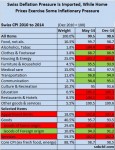
In the following we present the drivers of Swiss price inflation. We first present the components of the consumer price index. Then we explain which are upwards-drivers of inflation and which ones cause downwards adjustments.
Read More »2015-01-06

We are currently looking for an curator of this category. The aim is explain how to obtain sustainably nice returns on stocks and bonds. The focus here should be also on global macro. Sustainability is key: “buy today and sell far in the future”, for example when you get retired. Publicity for own books or publication is allowed.
Read More »2015-01-01
The following table compares the dividend yields for blue chips in the SMI, DAX and Dow Jones.
Read More »2014-12-31

Blog entries on the SNB that got last updated in 2014
Read More »
Blog pages last updated in the year 2014 on the Swiss Franc.
Read More »
2014-12-30
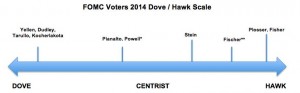
Composition of the Fed’s Federal Open Market Committee (FOMC composition), needed to know if the Fed is opting for quantitative easing or not.
Read More »
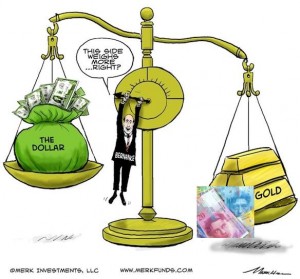
The main drivers of demand for Swiss francs are the euro crisis and, even more, the behavior of American investors, who go out of the dollar in the fear of bad US economic data and/or Quantitative Easing (QE). Risk-friendly investors move into risky assets like stocks or currencies of emerging markets, while risk-averse investors fear inflation and buy inflation-resistant assets like Swiss francs.
Read More »2014-12-29
European national central banks released European household wealth reports in Spring 2013. According to that data, “median” German households were far poorer than many of their European counterparts. Based on 2012/2013 data we compared apartment prices and discovered that French prices were strongly overvalued or German ones undervalued.
We wanted to know if this is still the case in 2014 and integrated our 2012/2013 data with the one of 2014. We discovered that German home prices are quickly recovering their delay against French ones. Hence German wealth is ticking up again.
2014-12-24

Dear friends and readers, Christmas is family time. But since my blog is contrarian, you read here a contrarian family post by one my idols, Lars von Trier. I just want to thank all my loyal readers and followers for following and commenting on my blog and any discussion on Twitter. Since the blog is driven by …
Read More »2014-12-18
The Swiss National Bank has introduced negative interest rates. They apply only to sight deposits in excess of 20 times minimum reserves. Therefore they will affect hardly any bank and can be considered symbolic or even toothless. The view of the SNB is different.
Read More »2014-12-17
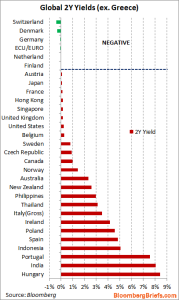
We judge that negative or close to zero yielding government bonds reflect three points: Risk off environment, long-run currency gains on currency with low inflation, insufficient supply of government bonds for bank refinancing purposes.
Read More »2014-12-01
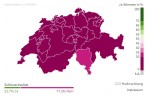
In a referendum, the Swiss had to decide about:
1) Ecopop, an ecological-political movement that wants to limit immigration to 0.2% of the population.
2) Abolishment of tax advantages for rich foreigners.
3) A gold initiative.
All three initiatives were rejected, the gold initiative by 78%.
George Dorgan summarizes the outcome. He explains what it means for gold, CHF and the SNB. He argues that the next economic cycle will be driven by stronger wage growth in Germany and in the United States. He argues that in some years time the major enemy of the SNB will become inflation that is caused by rising Swiss asset prices and rents and from inflation spill-overs from Germany and the U.S.
The SNB will finally react according to the proposal raised by Prof. Janssen, a major supporter of the gold initiative: with a managed currency appreciation.
Read More »2014-11-29
Heterodox economic theories focus on the human desires to spend, to save, to obtain credit in order to anticipate spending and future earnings, to increase or to reduce debt or even to deplete existing savings, on human behaviour. Those theories neither think that humans are rational nor that markets are efficient.
Read More »2014-11-28

Der frühere UBS-Banker und Ökonom George Dorgan sieht in der Debatte um die Goldinitiative vier Fronten aufeinander prallen. Dabei wird die Abstimmung über das Schweizer Gold immer mehr zu einem Entscheid über den Fortbestand oder die Abschaffung des Euro-Mindestkurses.
Read More »2014-11-26
The recognized Austrian economist Keith Weiner and the Wall Street Journal argue that the SNB must keep the euro over 1.20 in order maintain stability in the Swiss banking system. A rapid appreciation of the franc would create losses on the balance sheet of Swiss banks.
Read More »2014-11-24
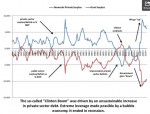
To find further explanations as to why the gold price was weak in the late 1990s we analyze sector balances. Effectively private spending and private debt went in two different directions: a heavy increase in private spending and debt in the US against less growth in private spending and less debt in the rest of world. This combination fostered GDP growth in the US and weakened it in other countries. Real interest rates were positive. Markets thought that the debt-financed growth could continue for years; they created the dot com bubble on top of it that strengthened technology stocks and the related currency, the dollar. This rare situation led to excessively weak oil and gold prices.
Read More »2014-11-22
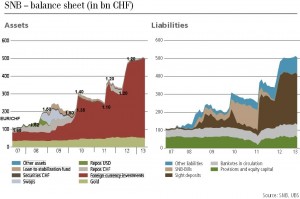
High inflows of around 400 billion francs between 2009 and 2012 in the Swiss balance of payments could only be countered with an increase in reserve assets and interventions by the Swiss National Bank. This number is far higher than the one seen during the collapse of the Bretton Woods system, when the ten times bigger Germany had to buy reserves for 71 billion German Marks (at the time around 56 billion CHF). We look at the detailed history of these interventions.
Read More »2014-11-21

Das Thema der “Abstimmungs-Arena” im Schweizer Fernsehen war „Gefährdet die Gold-Initiative die Handlungsfreiheit der SNB“? Dieser Blog versucht zu vermitteln, dass die SNB ihre Handlungsfreiheit im Sinne der Einhaltung der Preisstabilität schon im September 2011 verloren hat, als sie den Euro-Mindestkurs einführte.
Read More »2014-11-20

Latest gold referendum poll November 19: The latest poll shows 27% surely in favor of the gold initiative, 36% surely against the initiative. The most important development is the decision of the gold initiative to actively fight against the SNB’s minimum euro rate.
Read More »2014-11-01
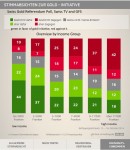
According to the latest polls 38% of voters would support the Swiss gold initiative, 47% are against it. The previous poll, recognized as more reliable, showed 45% pro gold and 38% against.
A win of the initiative would most probably imply a breakdown of the EUR/CHF floor.
According to the polls, low income groups are in favor. Effectively their purchasing power would increase when the CHF appreciates.
High income earners and stock owners are rather against it. If CHF improves Swiss stocks could collapse; this explains their voting intentions.
2014-10-27
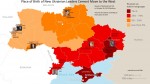
The place of birth of the Ukrainian leaders give us hints where the country is headed. Most of them come from the very West of Ukraine, from places that formerly were part of the Austrian-Hungarian empire, of Poland or Romania.
Read More »2014-10-09
Already in 2013, the Swiss National Bank (SNB) spoke out against the gold initiative and revealed that the Swiss gold is stored mostly in Switzerland and 20% in the UK and 10% in Canada. There is no Swiss gold in the United States according to SNB chairman Jordan. In this post we provide an exchange of Jordan’s arguments against the ones of the gold initiative. We also state our view that is not as strict as the one of the referendum proponents.
Read More »2014-10-07
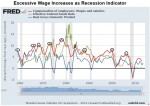
On this page we show that
Inflation expectations and wages drive the behaviour of the Fed and Treasury bond yields.
Excessive wage increases lead to recessions, more or less voluntarily caused by central bank tightening
Central banks pin down the short end of the yield curve, while financial-market participants price longer-dated yields
Some Emerging Markets seem to copy strong wage increases and inflation that we lived in the 1970s
Quickly rising higher wages in emerging markets may narrow their competitive advantage against the U.S. and Europe
Therefore the “secular stagnation” might not be so long as expected.
2014-10-01
2014-09-21

2014-09-15

George Dorgan held a presentation at the CFA society in Zurich on September 1. The subjects of his speech were:
Reasons why the EUR/CHF exchange rate will fall under 1.20 once the deflationary pressures in Europe have ended
The missing link in the CFA program between its chapters on micro-economy, macro and currencies
Does history repeat? From Bretton Woods to Bretton Woods 2 and its slow end. Why the unexpected, the black swan happens more often than you think.
The slow end of Bretton Woods 2: rise and fall of the global carry trade and debt-driven growth
The contention that the Swiss franc must depreciate is often based on a simplified view on currency drivers and on “solely” one piece of the balance of payments. An evaluation must take place in full assessment of all drivers.
2014-09-09
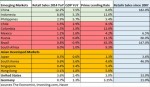
In this Cross Asset Global Macro Analysis we name our reasons for the current dollar strength. The main causes are ECB’s euro “downtalk”, tight monetary policy in Emerging Markets, rising savings of the aging populations. This leads to weak global spending and growth. With the help of Fed-financed higher asset prices and falling gasoline prices, …
Read More »2014-09-08
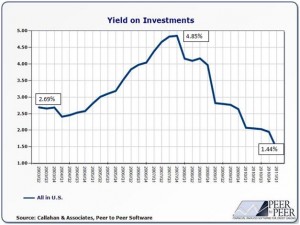
Will the SNB be able to survive an upturn in inflation: We focus on income and yields for foreign exchange position and gold and find out if the SNB makes enough income to survive a franc appreciation.
Read More »2014-08-21
2014-08-19
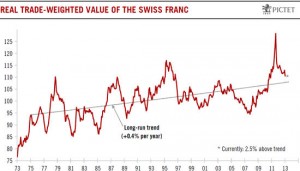
Before the upcoming SNB monetary policy assessment meeting on June 19th, rumors started the SNB could follow the ECB and set negative rates on banks’ excess reserves. We would like to deliver the whole background, starting with the question why Swiss inflation has been so low in the past and why CHF always appreciated.
Read More »2014-08-18

2014-08-17
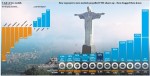
Monetary policy is and remains tight in Emerging Markets, in particular since many of their currencies collapsed in summer 2013. This created inflation and led to lower spending. We want to find out which stock indices in the developed world have which exposure to Emerging Markets.
Read More »2014-08-10
Das deutsche Zeitungswesen ist gleichgeschaltet und schreibt und kopiert die gleiche Propaganda, egal ob FAZ, n-tv.de, Spiegel, Süddeutsche, Focus oder das Staatsfernsehen (ARD & ZDF). Seiten wie compact online, Cicero, Deutsche Wirtschaftsnachrichten des Kopp Verlag sind aber dann wieder zu polarisierend. Es fehlt eine Zeitung von Qualität, die wirklich neutral informatiert und Meinungen vergleicht.
Es bleiben nur das Handelsblatt und die Schweizer Weltwoche als relativ neutrale Medien. Die Zeit ist noch einigermassen ertragbar.
Der Herausgeber des Handelsblatt hat in “Der Irrweg des Westens (Ложный путь Запада)” die Propaganda der Mainstreammedien kritisiert, ohne auf die stark polarierende Sicht von Compact “Querdenker jenseits von Links und Rechts” zu schwenken. Wahrscheinlich als Reaktion dazu hat die Frankfurter Allgemeine Zeitung (FAZ) anfgefangen über sich selbst zu reflektieren
Ich persönlich lese mittlerweile mehr die FAZ-Kommentare, da diese häufig eine bessere Qualität haben als der FAZ-Artikel selbst. Ein Auszug.
2014-08-09
We name thirteen macro-economic reasons why Russia is currently the best place for contrarian investments.
Read More »2014-08-08
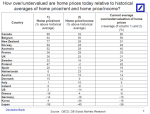
The Bubble Bubble is produced by economic analyst and Forbes columnist Jesse Colombo, who was called one of the “Ten People Who Predicted the Financial Meltdown” in 2008 by the London Times.
Read More »2014-08-06
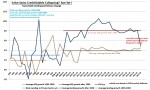
Despite macro-prudential measures like the countercyclical capital buffer, Swiss credit to the private sector is rising more quickly than previously. On the other side, real estate prices are not increasing so rapidly any more. Global risks let M3 money supply growth slow in June 2014.
Read More »2014-08-04
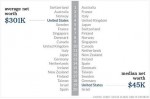
The second part on Net National Savings in % of gross national income, our preferred alternative indicator to GDP. This part contains the consumption-driven economies, which are Latin America and our Western countries
Read More »2014-08-01

Swiss parliament member Lukas Reimann outlines the importance gold. In a future inflationary environment, prices of SNB holdings, the ones of German Bunds and US Treasuries will drop, while gold will appreciate.
Read More »2014-07-31
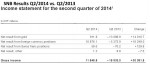
The ECB commitment to a weak euro and the maintenance of ultra-low interest rates, was a nice (temporary) gift for the Swiss National Bank (SNB). The bank earned nearly 12 billion francs in Q2/2014.
Read More »2014-07-30

2014-07-19

strong suspicion that Ukrainian air control deliberately facilitated and enabled the shot-down. Combining Western and Ukrainian propaganda with pro-Russian propaganda helps. In each piece of “manufactured or exaggerated news” there might be a bit of truth. Still there is only one party to this conflict that has to gain from a deliberate blowing up of MH17, this is not Russia or the so-called “Donezk People’s Republic”.
Read More »2014-07-12
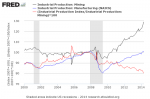
In summer 2013, even the sceptical and “gold-friendly” economist John Mauldin followed the mainstream thinking that fracking and other technology could reduce OPEC’s and the Chinese advantage in global trade and reduce the U.S. trade deficit. Recently both claims got refuted: the first with WTI crude oil prices rising to nearly 108$ despite enhanced supply. Detailed data showed that rising U.S. industrial production was not caused by more manufacturing but by mining and the oil industry. We think that any way the U.S. current account deficit could effectively shrink. The reason, however, is that the savings rate of Americans could rise further and the balance sheet recession continue. Traditionally currencies appreciate with higher savings (in local currency) and depreciate with more spending.
Read More »

We recently explained that China will overtake the United States not only for GDP but also for wealth. In this post we explain what is still missing to become a world reserve currency and how quickly this could happen.
Read More »2014-07-10

We examine how long the U.S. Dollar will remain the unique world reserve currency. The most important criterion for being a reserve currency is wealth. While China has recently overtaken the U.S. as for inflation-adjusted GDP, in the next step, it will overtake the U.S. as for wealth.
Read More »2014-07-07

2014-07-02
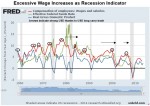
Inflation expectations drive the Fed’s and markets behaviour. Bond yields adjust, often but not always, with an inflation premium against short-term rates.
Read More »
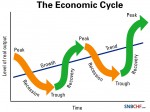
2014-06-29
In this post we present financial and credit cycles in the history: Due a weak credit cycle, Germany was a weak economy under many other weak ones.
Read More »
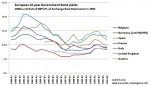
Two additional criteria important for Emerging Markets: High foreign debt, a weak net investment position and a current account deficit increases government bond yields.
Read More »
The typical backstops of all improvements in business cycles are high oil prices and inflation. Inflation is mostly caused by local effects.
Read More »
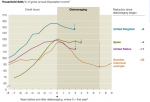
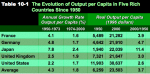
The Bretton Woods time from 1945 to 1966 was a period of strong growth, especially in country like Germany, France, Italy and Japan.
Read More »

Rational expectations led to a wage-price spiral in the United States, which was followed later by a similar phenomenon in Germany. In both cases credit and money expansion paved the way for spending sprees.
Read More »
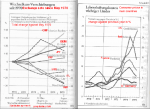
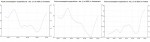
The next financial cycle takes from 1981 to 1990: The dollar was strong, Latin America lost a decade and the Japanese created their bubble.
Read More »
A history of financial cycles: 1990-1996 the breakdown of communism leads to a boom in Germany and – due to high interest rates and inflation – to a breakdown of the European monetary system.
Read More »
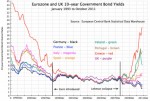
In this post we present financial and credit cycles in the history: Due a weak credit cycle, Germany was a weak economy under many other weak ones.
Read More »
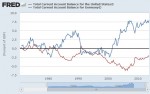
2014-06-22
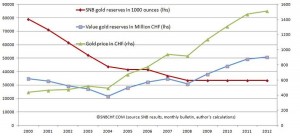
A critical Swiss Franc History: Between 2000 and 2007, the SNB made the Swiss cantons happy and delivered some billions of francs to prop up their finances. The gains were unfortunately not caused by strong asset management capabilities, but mostly due to gold price improvements and gold sales at quite cheap prices.
Read More »
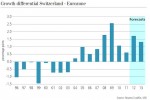
A Critical History of the Swiss Franc: During the “global carry trade” period between 2004 and 2007, the euro strongly appreciated against the Swiss franc. Most astonishingly this happened, despite the fact that the Swiss GDP growth was on average 0.5% higher
Read More »
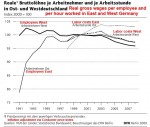
A critical Swiss Franc History: Between 1996 and 2004 Switzerland and its main trading partner and FX proxy Germany saw slower growth compared to other European countries. We explain the reasons
Read More »
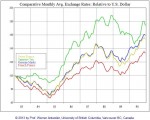
A critical Swiss franc history: This chapter describes the most controversial episode in the Swiss monetary history: How the Swiss National Bank helped to wreck the Swiss real estate market in the 1990s.
Read More »
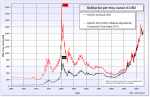
After the Volcker moment or sometimes called “Volcker shock”, commodity prices plunged, the gold price collapsed. Thanks to additional supply, e.g. from Northsea oil, a so-called oil glut appeared. After the increase of debt in the 1970s, some economies in Southern America collapsed. The major reason was Volcker’s tight monetary policy with high interest rates and the dependency on US funds.
Read More »
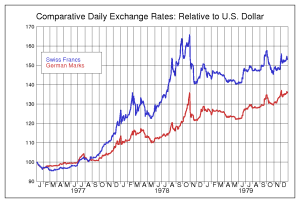
We shows the massive appreciation of Swiss franc and German mark in the 1970s, the reasons were: stagflation and the wage-price spiral.
Read More »

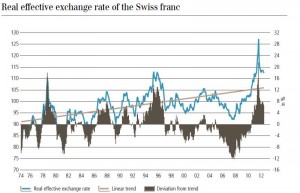
We establish a long-term view and history of the Swiss franc. We compare the franc with gold.
Read More »2014-06-21
2014-06-19
2014-06-18

On June 18th, 2014, the new radical libertarian party UP!, “Unabhängige Partei”, Independent Party was founded. The party is co-headed by the former head of the Swiss young liberals, Brenda Mäder, the former head of the young liberals St. Gallen Simon Scherrer and Silvan Amberg, the former leader of FDP’s homosexual association. The FDP is losing some of their brightest minds.
Read More »2014-06-16
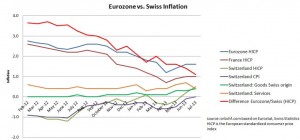
According to Swiss Statistics the inflation rate has risen to 0.2% y/y – as for both the Swiss CPI standard and the European HICP standard.
Read More »2014-06-14
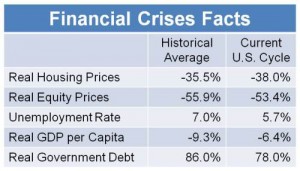
2014-06-13
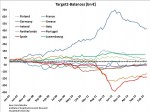
The ECB surprised with negative rates on excess reserves, on the deposit facility and even on TARGET2. We clarify whether the Bundesbank, as a member of the euro system, must pay negative interest rates on its huge TARGET2 surplus.
Read More »2014-06-09
In June 2014, the ECB decided to introduce negative rates on the excess reserves of banks. We explain that German banks had already removed most excess liquidity before the ECB meeting of June 2014, and they will continue to do so. Hence hardly any German bank will pay negative rates after the recent ECB decisions at that meeting.
Read More »2014-06-06
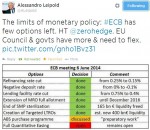
In our view, the ECB measures of June 2014 want to increase German lending, spending, salaries and inflation. Finally they target a reduction of German competitiveness. The ECB wanted to talk down the euro but will not succeed. We explain why the measure are bullish for the euro. We expect EUR/USD of 1.40 in the …
Read More »2014-06-04
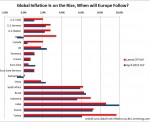
The European Central Bank (ECB) has the habit of reacting late. As seen in July 2008 and July 2011, the ECB is often the last major central bank to hike rates. They hike rates at the moment when others prepare for a recession or a significant slowing. Currently we are witnessing the opposite movement: The world is getting …
Read More »2014-06-03
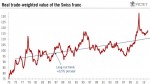
Pictet calls for negative interest rates in Switzerland in order to maintain rate differentials between the euro zone and Switzerland. Maintaining rate differentials would be useful for FX speculators and for money market funds that still invest in the euro zone.
Read More »2014-06-01
2014-05-30
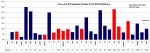
The tendency of the European parliament elections seems to be that in the Northern countries rather right-wing parties obtain more votes, like British UKIP, German AFD, Danish People’s Party, Austrian FPÖ or Sweden Democrats. In the austerity countries the left-wing movements are getting stronger and stronger, led by SYRIZA in Greece and Sinn Fein in …
Read More »2014-05-29
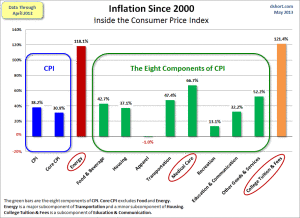
We name the main drivers of disinflation and the downwards manipulators of the CPI: Markets, central banks, investors, governments, statisticians, ageing, entrepreneurs, global competition, technology and last but least the euro. Despite that downwards-manipulation we realized that inflation is there, just not where you might live!
Read More »2014-05-27
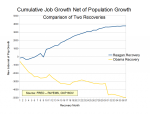
The most effective ways of measuring employment is by looking at the Labor Participation Rate. We compare the participation rates of the United States, Canada, the U.K., Germany and Italy.
Read More »2014-05-25
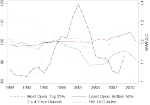
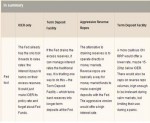
Cleveland Fed: Price inflation is a monetary phenomenon. Hence, the money multiplier theory is still valid, just not in the US and in Europe.
Read More »2014-05-21
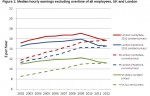
The major reason for rising British and American home prices is for us the relatively new phenomenon that they are to able to finance at cheap rates. Swiss or Germans have seen relatively low mortgage rates for more than three decades (with a short exception in the mid 1990s after the German reunification). The main driver of low rates …
Read More »2014-05-18
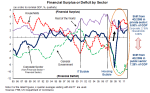
A list of long-term sector balances and related provided by Nomura’s research institute and its chief economist Richard Koo.
Read More »
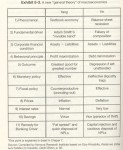
2014-05-14

Hans Werner Sinn has formulated his critique with Piketty. Sinn says that r ≠ i > g. Interest rate are usually higher than economic growth, but not necessarily increases of wealth.
Read More »2014-05-08
We have published the extended version of “The Swiss Franc, Pseudo-Mathematics And Financial Charlatanism” on the investor site Seeking Alpha. The version is longer than the one published previously.
Read More »2014-05-05

2014-05-02

The main task of a central bank occupied with QEE (quantitative easing or exchange intervention) is to obtain higher gains on seigniorage than it loses with its “ever appreciating” currency. Otherwise its equity capital would be absorbed. In the first quarter of 2014, the Swiss National Bank (SNB) was unable to accomplish this task.
Read More »2014-05-01
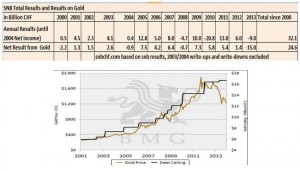
2014-04-30

There are different discussions ongoing if a central bank may monetize debt and act of a quasi-fiscal agent. One opinion was the Modern Monetary Theory that advocates monetizing debt.
Read More »

2014-04-29
The Indian central banker Rajan recently accused his Western colleagues of lax policy until 2007. Furthermore he argued that FX intervention using so-called “quantitative easing or exchange intervention” (QEE) help to dry up the needed money supply in India. We will look on his statement from this money supply angle: In some countries, the money …
Read More »
2014-04-28
In some countries, the money multiplier is falling, in some others it is increasing, mostly due to central bank tightening. Does this justify to speak of secular stagnation?
Read More »2014-04-26
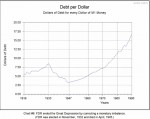
2014-04-20
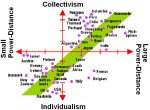
The power distance between employer and employee enforces the importance of the leader, the entrepreneur. Moreover, the collectivite Asian society does not want unemployment, employees prefer to renounce to salary hikes in favor of the collective. These cultural reasons can qualify as drivers of the Japanese balance sheet recession.
Read More »2014-04-15
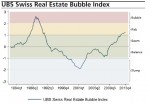
Based on four different data sources, we prove that Swiss the home price to income ratio is small in global comparison and in a historic perspective. Combined with another decade of near zero interest rates, reason enough to think that the Swiss real estate boom should continue for another decade.
Read More »2014-04-13
A repo provides liquidity to banks while the reserve repos aims to reduce liquidity and reduce inflation. In 2011, the SNB used SNB bills and reverse repos to reduce inflationary pressure. SNB bills are short-term bonds that pay a certain interest.
Read More »2014-04-11
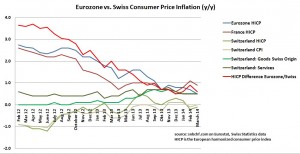
According to Swiss Statistics the yearly inflation rate is at 0.0%, and the monthly rate is +0.4%. The Spanish CPI is already under zero at -0.2%, and the Italian one is at +0.3%, not to speak about severe Cyprus or Greek deflation . Still in February 2012, the difference between the Swiss and Euro …
Read More »2014-04-09
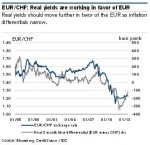
2014-04-02
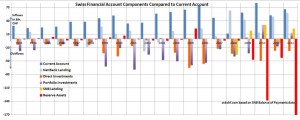
2014-04-01
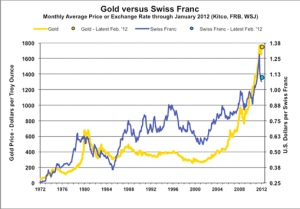
Somebody who follows regularly the trade balance figures from Eurostat, may have noticed a sentence that was repeated in each monthly release from the Eurostat trade statistics in 2013: “The EU28 trade surplus increased significantly with Switzerland”. The reason was massive gold sales from the UK to Switzerland.
Read More »2014-03-30
Update March 21, 2014: Total SNB sight deposits increased to 367.8 bln. CHF, but flows reverted a bit. Foreign banks and “non-banks” reduced their CHF exposure at the SNB to 50.8 bln, possibly converting a part of the difference into USD. Dollars are more useful when sanctions will hurt both Russian and German firms. On …
Read More »2014-03-29
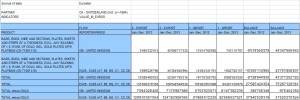
In 2013, private investors from the UK sold net (!) 1464 tons of physical gold (and similar) for a value 44.3 billion EUR. This was 1 464 000 kilograms each at the current price of 30254€ per kilo
Read More »2014-03-27
In the 2014 assessment for Switzerland by the International Monetary Fund several sentences caught our eyes; we will contrast them with our recent critique. The most important one was that for the IMF is only “moderately overvalued”, this would have no negative effect for exporters.
Read More »2014-03-26
In the 2014 assessment for Switzerland by the International Monetary Fund, several sentences sparked in our eyes; we will contrast them with our recent critique.
Read More »2014-03-19
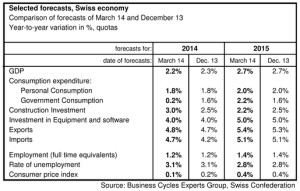
The Swiss government see Swiss GDP growth at 2.2% in 2014 and 2.7% in 2015. Our estimate sees a divergence in the GDP components; we expects a lower trade surplus and higher spending. in both cases CHF should rise.
Read More »
2014-03-18
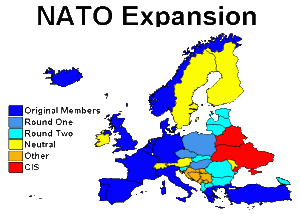
Der Propagandakrieg in Russland, in den USA und insbesondere in Deutschland und auch in der Schweiz geht weiter. Russische Medien trichtern den Menschen ein, dass eine riesige Flüchtlingswelle von Russen aus der Ukraine stattfindet. Deutsche Medien sind gleichgeschaltet: von links (TAZ, Spiegel, Stern) bis rechts (FAZ, n-tv.de und Welt) trichtern sie den Deutschen ein, dass …
Read More »2014-03-07
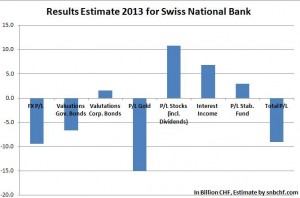
The Swiss National Bank (SNB) is reporting a loss of CHF 9.1 billion for the year 2013 (2012: profit of CHF 6.0 billion). Valuation losses on gold holdings amounting to some CHF 15.2 billion contrast with a profit of CHF 3.1 billion on foreign currency positions and a net result of CHF 3.4 billion from …
Read More »2014-03-06
The main task of a central bank occupied with QEE (quantitative easing or exchange intervention) is to obtain higher gains on seigniorage than it loses with its “ever appreciating” currency. Otherwise its equity capital would be absorbed.
Read More »
For anybody complaining about gold that caused the big loss of the Swiss National Bank. Since 2000, the total SNB profit was 32.1 bln. CHF, of which 24.6 billion came from gold.
Read More »2014-02-28
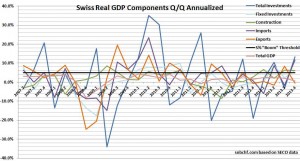
According to the latest data from the SECO,Swiss GDP rose by 0.2% in Q4/2013. Despite the relatively weak headline, the detailed data showed a couple of characteristics that speak for an upcoming boom. At the same time, the Swiss National Bank is printing money again: both the monetary base and money supply are increasing.
Read More »2014-02-23
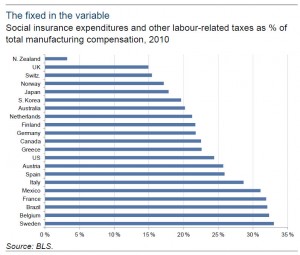
The conflict between labor and capital is a long and illustrious one, and one in which ideology and politics have played a far greater role than simple economics and math.
Read More »

Am 7. Februar hat George Dorgan eine Präsentation bei den Jungfreisinnigen Zürich gehalten. Themen waren die weitere Entwicklung des Frankens, die Schweizer Wirtschaft, die SNB und die Auswirkungen der Gold- und Masseneinwanderungsinitiativen.
Read More »
It only needs a few years until democratically elected presidents become so-called “tyrants” and “dictators”. The bad economic situation in many emerging markets and Russia, and therefore also in Ukraine, has taken its toll. Demonstrators and Ukrainian nationalists toppled a president that has a Russian mother tongue. But Yanukovych was a protector of the country’s …
Read More »2014-02-15
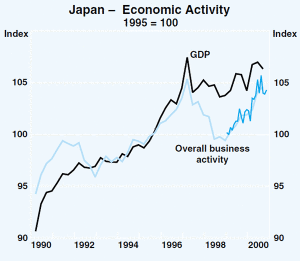
2014-02-10
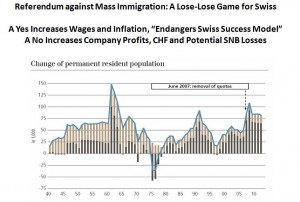
In the referendum on Mass Immigration on Sunday, the Swiss opted for less competition, which implies that with the upcoming Swiss boom, salaries and inflation will rise.
Read More »
2014-02-05
On Friday the 7th of February at 19.00, George Dorgan is presenting his outlook on the Swiss Franc. He explains if and when the Swiss National Bank is able to generate profits again. Moreover he discusses the influence of the two referendums “Save Our Swiss Gold” and “Against Mass Immigration” on the Swiss Franc and …
Read More »2014-02-02
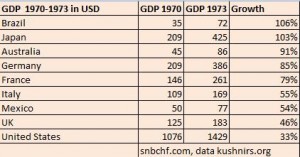
Economists commonly explain rising oil price between 1998 and 2008 with the growth of emerging markets. We argue that the cost-push inflation of the 1970s was also a reflection of rising global demand.
Read More »2014-02-01
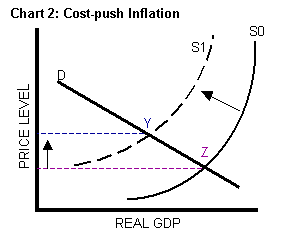
2014-01-30
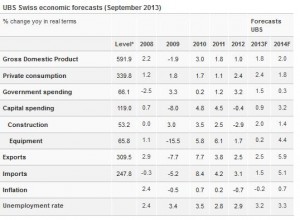
FacebookShare As usual, the Swiss economy seems to be better than economists thought. After 1.40 still in December, the UBS consumption indicator has risen to 1.81, a value higher than the ones in 2012, when private consumption increased by 2.4%. Similarly as last year, the latest reading contradicts UBS’s own growth forecasts, albeit this year …
Read More »2014-01-29
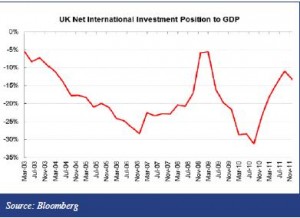
We discuss the net international investment position of the United Kingdom
Read More »2014-01-27
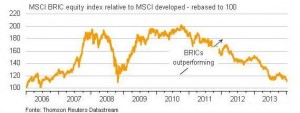
Last week’s decline in stock markets was probably caused by the HSBC manufacturing PMI for China that contracted for the first time in months, and possibly also by the rapid fall of UK unemployment rates and Bank of England’s response to it. As the rising gold price showed, Fed “tapering fears” were not at the …
Read More »2014-01-23
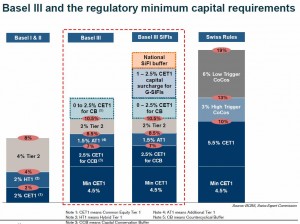
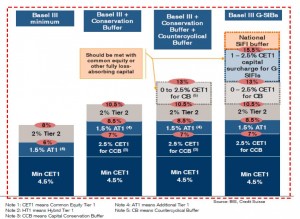
The SNB requires banks to raise the weight of the counter-cyclical capital buffers” (CCB) by holding extra capital worth 1 per cent of the risk-weighted assets in their mortgage portfolios.
Read More »
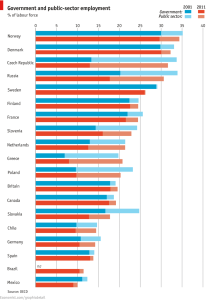
Government and Public-Sector Employment
Read More »
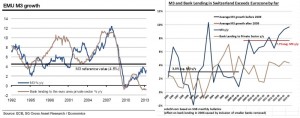
Switzerland is currently living in a big real estate boom. The bubble bursting would imply that banks’ collateral in the form of real estate falls in value. Therefore the banks’ assets might fall because many home buyers might not be able to repay their mortgage. If a real estate bubble pops, then banks should be better capitalized to absorb such a shock. Therefore the Swiss National Bank introduced macro-prudential measures, like the so-called “counter-cyclical capital buffer” (CCB).
Read More »2014-01-20
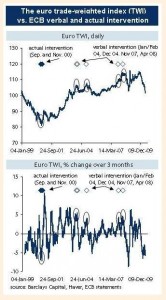
2014-01-19

The concerted actions in September 2012 between the two big central banks reflected two fundamental economic principles: The Fed opted for Keynes’ law, the ECB for Say’s Law with conditionality. And apparently the ECB was successful.
Read More »2014-01-17
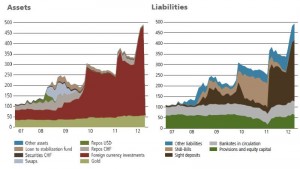
Since 2008 the balance sheet of the Swiss National Bank is 280% higher, this is the equivalent of 60% of Swiss GDP. So did most other central banks, too. But there is one big difference: The risk for the SNB is far higher, the SNB nearly exclusively possesses assets denominated in volatile foreign currency.
Read More »2014-01-15
2014-01-12
The 2010 QE2 is a reason why many emerging markets started to slow considerably in the course of 2012. We reckon that this weakness will continue. Bizarrely QE2 helped to reduce global imbalances.
Read More »2014-01-10
Another five months till Swiss inflation is higher? When the European economy starts to expand again, who will hike rates first, the SNB or the ECB? December Update According to Swiss Statistics the inflation rate remained stable at 0.1% y/y, while the inflation measured by the European HICP standard was +0.3% y/y, slightly higher than … Continue reading »
Read More »2014-01-07
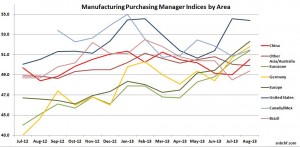
Manufacturing PMIs : most leading and important economic indicators.
Read More »2013-12-31
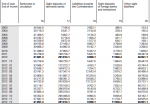

Blog entries on the SNB that got last updated in 2014
Read More »
Blog pages last updated in the year 2014 on the Swiss Franc.
Read More »
2013-12-28
In the early 1980s the Fed stopped the wage-price spiral and destroyed the gold price. Today main-stream economists have discovered that rising company profits compared to stagnating wages could an issue for the U.S. economy. For us this implies that the ultimate Fed goal will be to increase wages and inflation. Consequently the Fed has become the biggest supporter of gold and silver prices.
Read More »2013-12-19
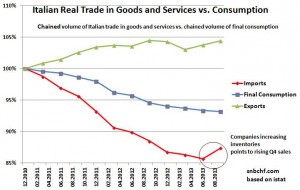
While the mainstream is still talking about potential riots in Italian streets, we rather see positive adjustments in the Italian economy.
Read More »
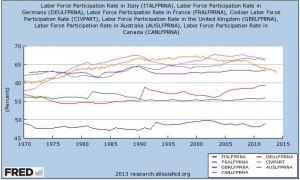
Higher exports show that Italy’s economy is trying to become a new German Companies seem to hide their competitiveness. A question remains: Will Italian companies really invest in Italy and create jobs?
Read More »2013-12-13

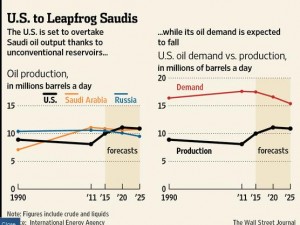
2013-12-09
The mandate of the Swiss National Bank is concentrated on price stability, i.e. less than 2% inflation and to avoid deflation.
Read More »2013-12-08
2013-12-07

2013-12-03
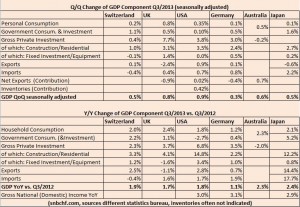
The Swiss GDP was again one of the strongest major economies. The quarterly growth rate in the third quarter was 0.5%, the yearly one 1.9%. U.S. GDP improved by 3.6% QoQ annualized. For comparison purposes, our figures are not annualized; hence the equivalent is 0.9% QoQ. In Japan and Switzerland private consumption rose by 0.1% …
Read More »2013-11-23
Fundamentals with highest importance: The HSBC Flash Purchasing Manager Index (PMI) for China weakened from 50.8 to 50.4. In particular, new export orders, output prices and employment started to decrease again, while output increased. The preliminary Markit manufacturing PMI for the United States edged up to 54.3 (vs. 52.3 expected), a 9-month high after the …
Read More »2013-11-19
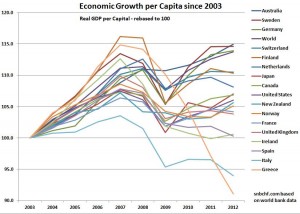
GDP Growth per Capita in Developed Nations in the following order: Australia Sweden Germany Switzerland Netherlands Japan Canada United States France United Kingdom Ireland Spain Italy Greece
Read More »
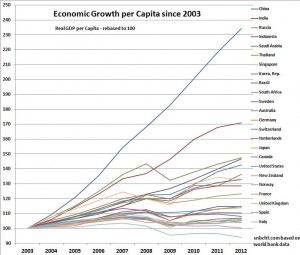
Mainstream economists speak of two Japanese lost decades(s) between 1990 and 2009. Often the United States and the UK are seen as leader in growth. Some statistics might confirm this: When we look on a more subtle criteria, namely GDP growth per capita, available at the world bank, we see a different picture. China and …
Read More »2013-11-18
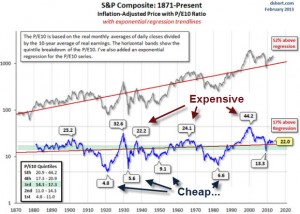
A list of relevant graphs for long-term price earnings ratios and the rising company profits in the last years.
Read More »2013-11-16
Fundamentals with highest importance: In Janet Yellen’s hearing at the Senate Banking Commission, the future Fed chair emphasized the need to provide support to the economic recovery and to overcome low inflation. Her speech supported equities, gold and US Treasuries. GDP in the Euro zone rose by 0.1% QoQ in line with expectations, but less …
Read More »2013-11-09
Fundamentals with highest importance: The U.S. GDP release for Q3, showed that despite the recent U.S. critique with Germany, the Americans are trying to follow the successful Germans: for the first time since Q1/2012 and Q2/2011 exports rose more than imports. GDP was up 2.8%, but not driven by consumption, it was mostly helped by …
Read More »2013-11-08

Says Thomas Jordan.
Need to wait to assess impact of ECB rate cut
Wasn’t totally surprised by the cut
Interest rates will remain low in Switzerland
Low rates may lead to property bubble risk which SNB will respond to if necessary
SNB monitoring property market which is already in difficult situation
I did wonder about the lack of movement in EUR/CHF yesterday considering that nearly every other euro pair took a hit. It’s either become the forgotten currency or there’s some sneaky SNB support that comes in on risk events.
2013-11-04
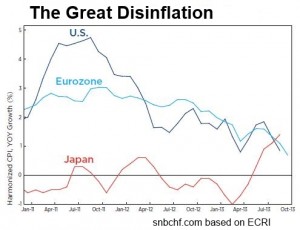
Recently investors moved out of bonds in the expectation that inflation will rise soon. But strangely inflation rates have continued to fall. The great disinflation continues.
Read More »
Feel free to click into the other categories “politics”, “business”, #chf, #snb in order to see more articles.
Read More »2013-11-02
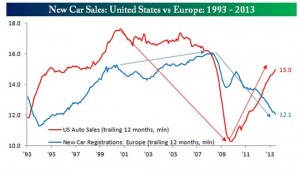
This week had a focus on – due to the government shut-down – the long awaited U.S. data: Highest importance: The ISM Manufacturing Purchasing Manager Index (PMI) for October came in at 56.4, higher than the 55 expected. The value for new orders and for production remained above 60 despite the government shutdown. The value …
Read More »2013-11-01
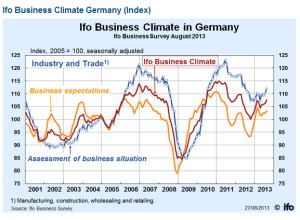
Our CHF and Gold News Bar on our home page explains daily CHF and gold price movements based on the most important fundamental indicators in a few sentences. Keep in mind that the only Swiss fundamental data that is able to move the CHF must come from the SNB and from Swiss inflation data – …
Read More »2013-10-30
UPDATE October 31, The official press release focused on the results for Q1 to Q3. The loss was 6.4 billion after a 7.3 bln. CHF loss in the first two quarters. Over all three quarters especially gold and the yen weakened the central bank’s positions. For the third quarter, it means that income was positive …
Read More »2013-10-28
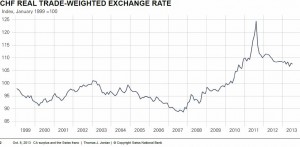
The SNB recently published the latest real effective exchange rate (REER). According to that the franc was only 7% overvalued against the base year 1999. Credit Suisse (CS) has taken some more factors than the REER under consideration: for them the fair value of the EUR/CHF is now 1.22, while the dollar was still undervalued. …
Read More »2013-10-27
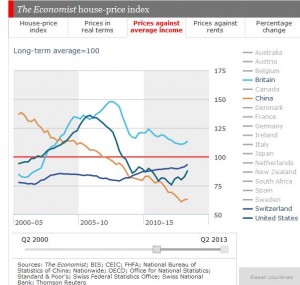
Major Fundamental Events The week contained a lot of important fundamental events, in particular Non-Farm Payrolls and preliminary “flash” PMI readings. Highest importance for FX rates Non-Farm Payrolls (NFPs) weakened to 148K, private NFPs to 126K, both against 180K expected. Especially the private NFPs were disappointing. The decrease in the unemployment rate from 7.3% …
Read More »2013-10-21
Weekly Overview of FX Rates Movements The week was driven by the following factors: Solid Chinese economic data including a 7.8% rise in GDP. The end of the debt ceiling debate, at least for now. The expectation by the Fed member Evans that the government shutdown has delayed Fed tapering. San Francisco Fed’s Williams …
Read More »2013-10-16
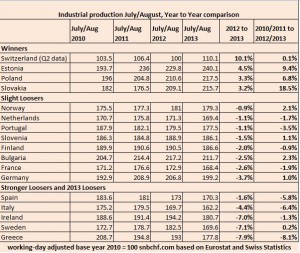
Swiss industrial production is rather insensitive to price changes and to the recent slowing of global demand thanks to the concentration on pharmaceuticals and luxury products. Based on Eurostat’s industrial production for July and August , we compared the values from 2010 to 2013 for these two summer months. This aggregated two-months comparison is …
Read More »2013-10-14
2013-10-13
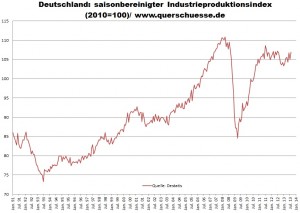
Our weekly summary of fundamental news on FX that aims to explains price movements, with particular emphasis on the possibly biggest mysteries: the gold price (GLD) and the Swiss franc (FXF) . Weekly Overview Hopes on a compromise between Obama and republicans on the U.S. debt ceiling and high U.S. initial unemployment claims sustained …
Read More »2013-10-08
SNB’s Jordan Responds to the Critique from the Peterson Institute: What They Forgot to Ask…
Read More »2013-10-06
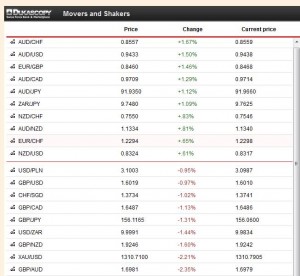
Our weekly summary of fundamental news on FX that aims to explains price movements, with particular emphasis on the possibly biggest mysteries: the gold price (GLD) and the Swiss franc (FXF) . The clear winner of the week was the Aussie, supported by a positive PMI and positive news from the RBA. In the previous …
Read More »2013-09-29

Italy, other peripheral economies and later France will follow Japan for a decade or more of balance sheet recession: stagnant wages, falling real estate prices and a reduction of private debt.
Read More »

(Originally written in 2012) We maintain that our claim that US energy independent by EIA are misleading. On the contrary, import costs for foreign oil will be the same in 2020 as today
Read More »
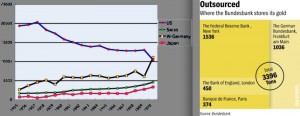
German, Swiss and Japanese gold reserves rose continously in the Bretton Woods system, whereas American and British reserves fell.
Read More »
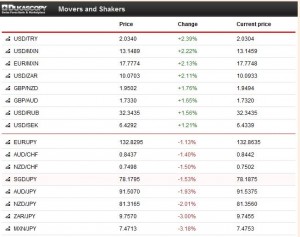
Weekly summary of fundamental news on FX with a focus on CHF and gold price movements. Weekly price movements The U.S. budget discussion and rather bad U.S. fundamental data made JPY and CHF the winners of the week. After weeks of improvements, the currencies of the Emerging Markets and carry trade currencies, like NZD, AUD …
Read More »2013-09-22
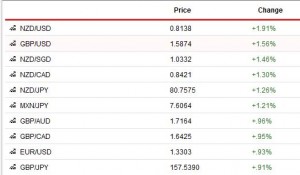
Weekly summary of fundamental news with a focus on CHF and gold price movements. Friday, September 20:The St. Louis Fed president James Bullard explained that the Fed was close to tapering 10 bln. $ and that markets overreacted after the FOMC with their strong performance. As a consequence the S&P500 inched down by 0.6% while …
Read More »2013-09-21
2013-09-20

2013-09-19
Or how to talk down and how to talk up an economy with wrong forecasts American and Swiss mentalities are very different, the Americans have the tendency not to care about the future a lot, the Swiss, however, do things only after careful consideration of potential risks. This tendency can be proven economically with …
Read More »2013-09-18
The main drivers of demand for Swiss francs are the euro crisis, but even more, the behavior of American investors, who go out of the dollar in the fear of further bad US economic data and of Quantitative Easing. This will push down the dollar, and both safe-havens like the CHF, gold or the Japanese …
Read More »2013-09-17
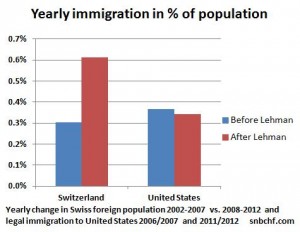
2013-09-15
The weekly summary of global fundamental news with focus on CHF and gold price movements. Friday, September 13:The leading news came from U.S. retail sales and the Michigan consumer sentiment. Retail sales were up +0.2% instead of 0.5% expected, sales excluding autos and gas +0.1% (vs +0.3% exp.) The Michigan consumer sentiment disappointed at 76.8 …
Read More »2013-09-11
Emerging markets: Years of strong increases in wages combined with tapering fears have taken its toll: Higher costs and lower investment capital available. EM Companies have issues in coping with developed economies. Some of them even need to shed jobs.
Read More »2013-09-04
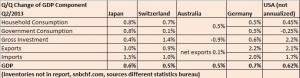
The Swiss GDP for Q2/2013 was in line with its peers in developed countries. The quarterly (not annualized) change was +0.5% compared to 0.6% for Japan and the United States, +0.7% for Germany and +0.5% for Australia. Swiss and Japanese growth was driven more by consumption, while the U.S. advances were based more on …
Read More »2013-09-01
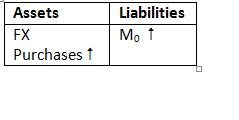
SNB did not intervene. Deposits of Swiss Post Finance had been reclassified from other sight liabilities to deposits of domestic banks.
Read More »2013-08-12

Submitted by Marc Chandler, Global Head of Currency Strategy, Brown Brothers Harriman The main tension in the foreign exchange market is between positions adjusting pressures, which are US dollar negative, and widely held ideas that the trajectory of growth and interest rate differentials favor the US, which is dollar positive. There are some important economic data due …
Read More »2013-08-11
It was obvious already at the latest SNB Monetary Policy Assessment, the SNB is becoming more and more hawkish. At the forefront is its ueber-hawk Jean-Pierre Danthine, the person responsible for the overheating Swiss housing market. He has now announced: SNB would end franc limit once it raises interest rates The Swiss National Bank will …
Read More »2013-08-08
According to Swiss statistics, the yearly change in the Swiss consumer price index has risen from -0.1% to 0%. The headline MoM figure fell by 0.4% due to the yearly sell-off in the retail sector. The difference between euro zone and Switzerland in terms of the European Harmonized Index of Consumer Prices HICP has … Continue reading »
Read More »2013-08-06
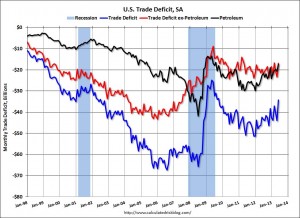
The United States trade balance has strengthened to a deficit of only -34.2 bln USD in June 2013. This is nearly half the record-high trade deficit of 62 bln. $ in August 2008 and not too far from record-lows of 26 bln. $ in July 2009, when oil was really cheap. In the first six …
Read More »2013-08-04
2013-08-03
Five myths about libertarians The specter of libertarianism is haunting America. Advocates of sharply reducing the government’s size, scope and spending are raising big bucks from GOP donors, trying to steal the mantle of populism, being blamed for the demise of Detroit and even getting caught in the middle of a battle for …
Read More »2013-08-02
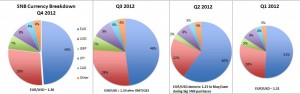
We regularly publish the SNB asset structure by currency, rating & duration, they might be a template for the tactical asset allocation in these dimensions (CHF certainly excluded) for other fixed income and/or rather conservative asset managers. here the newest data Total Balance Sheet and Liabilities The total balance sheet size decreased from 511 bln. …
Read More »
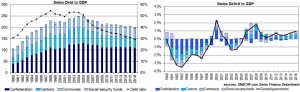
In this analysis we describe why the long-lasting financial cycle of debt reduction is one key driver of the EUR/CHF exchange rate. We claim that EUR/CHF can rise more strongly only when the competitiveness of the European periphery increases. When this happens, then debt will be reduced and both public and private deficit spending will stop.
Read More »2013-07-30
The SNB currently owns 56% of the Swiss net international investment position (“NIIP”). In the year 2007 this number was only 12%. Is the central bank implicitly nationalizing the Swiss international companies?
Read More »

UPDATE: July 30th, 2013: Our estimate for the quarterly loss missed the reality by 1 billion francs. The quarter results: 18.3 billion francs loss. The loss for H1 was 7.3 billion CHF. July 1st 2013: We estimate that the Swiss National Bank (SNB) obtained a loss of 17.3 billion francs in the second quarter 2013. …
Read More »2013-07-27

2013-07-26
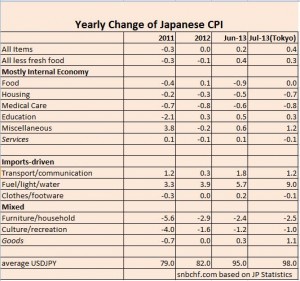
While the FT says: Abenomics is succeeding in bringing inflation back to Japan. The preferred core CPI measure, which excludes volatile food prices, rose a higher-than-anticipated 0.4 per cent in June (year-over-year), the highest reading since November 2008 and the first positive reading since April 2012. (The reading was flat in May). Overall inflation …
Read More »2013-07-25
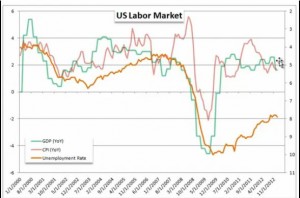
2013-07-24
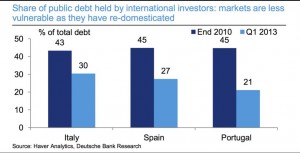
Still in summer 2013, too much debt was an issue. By 2014 things have changed: Europeans have too many savings.
Read More »2013-07-23
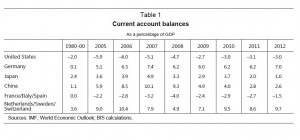
Some extracts from BIS Working Papers No 419 Caveat creditor: The Bank for International Settlement stresses the importance of getting “overlending” under control.
Read More »2013-07-21
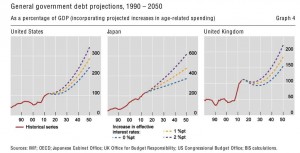
In this second part of our series we provide arguments why the widely expected strong dollar period might not come. We look at the most important economic indicators that might justify a stronger dollar: the ISM manufacturing index and the interest rate differences between the U.S. and Europe.
Read More »2013-07-18
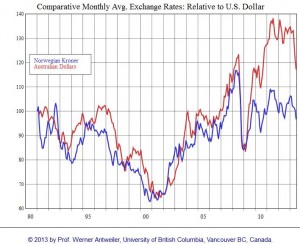
2013-07-17
The Swiss ZEW investor sentiment has risen to 4.8 by 2.6 points, news that do not influence markets. More interesting is the following: Swiss ZEW Investor Survey Sees 1.20 per Euro Cap Gone within 2 Years * Majority see no change in euro/franc for next 6 months (Reuters) – The Swiss National Bank will most …
Read More »2013-07-09
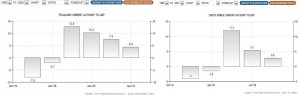
We examine the relationship between strong dollar phases and austerity in other parts of the world. Between 1983 and 1985 one reason for the strong dollar were high real interest rates in the U.S. after the defeat of the Great Inflation period, the enforced austerity in Southern America and cheap commodity prices caused by generally …
Read More »2013-07-08
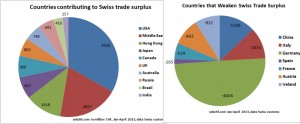
Swiss industrial production rose by 3% in the first quarter 2013 compared with the same quarter of the previous year. Turnover rose by 3.7%. Details
Read More »2013-07-06
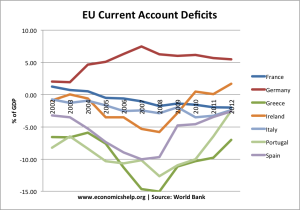
2013-07-05
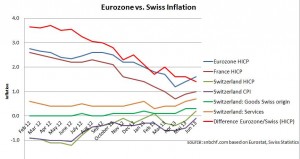
The yearly change of the Swiss consumer price index has risen from -0.5% to -0.1%, the end of deflation is near. Swiss inflation measured with the European standard HICP has even improved to +0.2% y/y. Details
Read More »2013-07-04
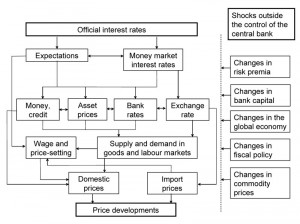
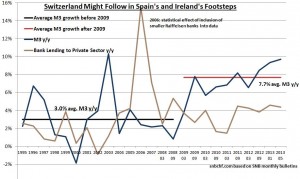
In the Euro zone bank lending is contracting, M3 is rising very slowly. As opposed to that, Swiss bank lending is currently rising by 4.4% per year, M3 is increasing by 10% per year.
Read More »2013-07-03
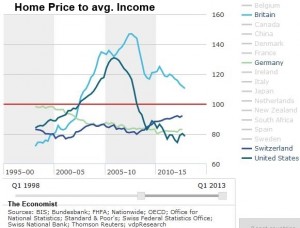
Based on four different data source, we find out that Swiss home price to income ratio is small in global comparison. Therefore we wonder why the SNB must contain home price rises, but the Fed must artificially increase them.
Read More »2013-06-27
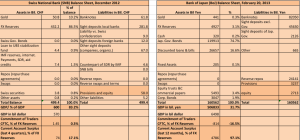
2013-06-24

2013-06-22
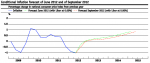
At the end of May, SNB president Jordan admitted that the EUR/CHF floor will not raised (here also cited by Bloomberg): “We cannot arbitrarily manipulate our currency. In an even worse crisis situation this would be disastrous and counterproductive. The floor must be legitimized. The current minimum exchange rate is realistic and has helped the Swiss economy.”
Read More »2013-06-21

The Swiss National Bank (SNB) delivered a, for her standards, very hawkish monetary assessment with the focus on the risks in the financial sector. This does not come as a surprise for us. Each time, after the United States has recovered from a crisis – just like now – inflation and risks increased in Switzerland. …
Read More »2013-06-20
Via CNBC Against the backdrop of increasing home prices and the prospect of much higher mortgage rates, it’s a “great time” to sell, Spencer Rascoff, CEO of online real estate marketplace Zillow, told CNBC on Thursday. That is, if you can find a place to buy, he added. “As mortgage rates inevitably come from …
Read More »2013-06-19

Totalitarian regimes, like China, fear bubbles and revolutions. Strangely, these regimes help to prevent asset bubbles, and the resulting unequal distribution of wealth between rich asset owners and the poor without assets. Today’s FT article shows how Chinese authorities fear the bubble and the revolution. China cash crunch deepens as PBOC withholds funding Short-term interbank …
Read More »2013-06-17
Economic experts and even rating agencies remain in dis-accord about the height of Chinese total debt and if this will continue to slow the Chinese economy.
Read More »2013-06-16
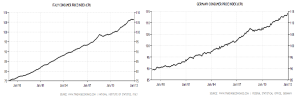
Disinflation Finally Starting in Italy The Swiss site preisbarometer.ch is run by the Swiss Consumer Association. Their price data shows that a food basket is 46% more expensive when compared between the German “Kaufland” shop and the Swiss “Coop”. Going to France into “Leclerc” gives you an advantage of 38% against Coop. However, for a …
Read More »2013-06-14
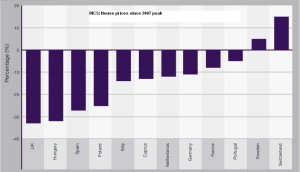
2013-06-13
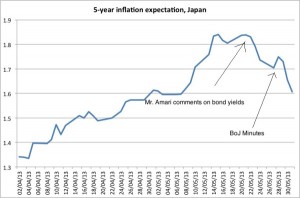
Abenomics has failed It was doomed from the very beginning. You cannot create out of risk-averse Japanese risk-tolerating Americans. Public Japanese opinion puts enormous pressure on BoJ policy and on the government; the risks of rising JGB yields are too high. Japanese hate volatility, the government cannot risk its funding. The emphasis on the word …
Read More »2013-06-12
2013-06-11
Imagine wages and factor prices are stable. Hence deflation means productivity growth: Higher quantities bought for a lower price. Low inflation or even deflation is the Swiss success story for decades and the success story for the United States recently. The Pigou effect seems to be saving the US economy, just as it did in …
Read More »
SNB Vice Chairman Jean-Pierre Danthine is undoubtedly the most hawkish member of the governing board, an opposite personality to the rather interventionist and Keynesian hedge fund manager Philip Hildebrand. Danthine has perfectly understood that times for the SNB might get hard again in 2014. Jean-Pierre Danthine has made some comments recently: – Swiss franc stays …
Read More »2013-06-09
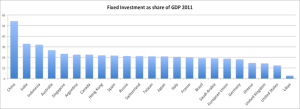
We believe in the Chinese economy, but it has just gone into a cyclical and a exchange-rate induced slowing. Any Cassandra views like recently by Charles Dumas, chief strategist of Lombard Research, but also some of Richard Koo’s earlier views, that there will be a burst of the Chinese housing bubble, are exaggerated. Markets Insight: …
Read More »2013-06-08

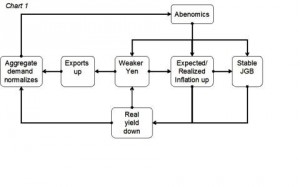
Hedge funds worldwide have been counting on a rise and subsequent fall in USDJPY, and conditions remain intact for that to happen, though not to the extremes that many once expected.
Read More »2013-06-07
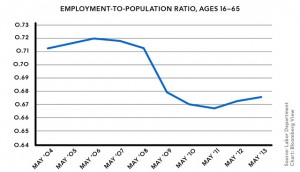
Employment growth since Dec ’07: Oz +8.1%, Switzerland +6.9%, Germany +5.8% Canada +4.3% Sweden +2.6% UK +0.9% Dutch +0.7% USA -2.1% Japan -2.3% Italy -3.1%
Read More »2013-06-06
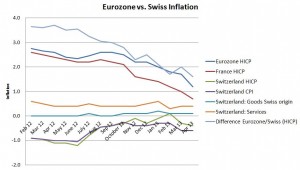
Cheaper energy prices and long-lasting contracts help against inflation. Swiss inflation increased by 0.1% against April. According to Swiss Statistics, on a year basis, the CPI fell by 0.5%. Major reasons for lower figures were the 6.3% YoY decrease in energy prices, 4.5% YoY lower clothes and footwear price and technological improvements in communication that caused … Continue reading »
Read More »2013-06-05
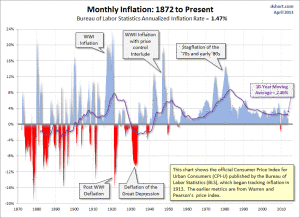
We name the main drivers of disinflation and manipulators of the CPI: Markets, central banks, investors, governments, statisticians, ageing, entrepreneurs, global competition, and last but least the euro.
Read More »2013-06-04
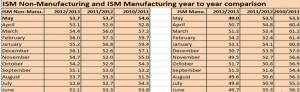
Questions to George Dorgan Is there any chance that the SNB or other central banks could follow the BOJ and just depreciate the currency? George Dorgan: What did the BoJ do? Monetary easing and talk down the yen in a mercantilist style. A central bank is able to talk down a currency only if there …
Read More »2013-06-03
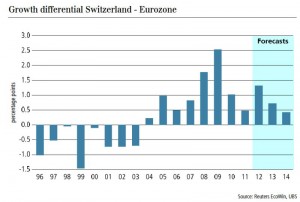
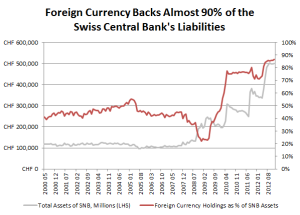
we slowly move into an inflationary environment and prices of German Bunds and US Treasuries are falling…. ECB and Fed interest rates seem to be nailed to zero for years.
Read More »
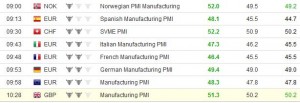
The Swiss, Norway, the UK and Germans are in the lead, while, despite improvements, France, Italy and Spain are still lagging (details).
Read More »2013-06-01

Precisely at the moment when the dollar undergoes a secular bashing with a 6% loss against the yen and 3% against the euro, Pictet publish their “secular dollar bull era” video and recommend investors to avoid gold. “Secular movements” in currency markets are mostly driven by current account (CA) surpluses or deficits, while housing …
Read More »2013-05-30
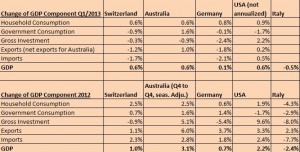
Update June 26: The Swiss economy has grown more quickly than the United States in Q1 2013. Japan is in the lead of the global comparison with 1.0% quarterly growth, Australia and Switzerland follow with 0.6%, the US has 0.45% QoQ (or 1.8% annualized), Germany 0.1% and Italy slowed by -0.5%. Weakest currency, strongest …
Read More »
Yesterday’s German CPI has given a first insights of what is coming these years: German inflation. For years excessive risk averseness put pressure on German yields. Most recently, energy prices helped to push down inflation and on German yields possibly for a last time. But many ignore that the main reason for inflation are rising …
Read More »2013-05-29
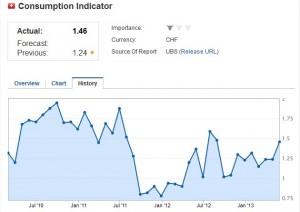
UPDATE, February 2014 According to the latest data from the SECO,Swiss GDP rose by 2% in 2014 and not by 0.9% as the UBS predicted. Once again the Swiss economy seems to be stronger than expected. UBS’s consumption indicator for April came out at 1.46 (details). This number seems at odds with the weak private …
Read More »2013-05-28
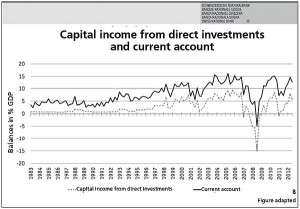
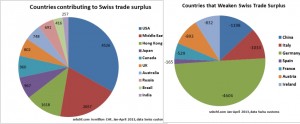
The Swiss trade balance for goods clearly indicates its global orientation. Switzerland has a trade surplus with the US, Canada, the UK and many emerging markets. Swiss exports are mostly luxury products and pharmaceuticals. The total surplus for the 4 first months in 2013 was 7.7 billion CHF, about 1.2% of GDP, annualized around …
Read More »2013-05-27

2013-05-25
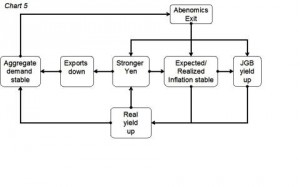
Response to Prof. Nick Rowe, Carleton University, Canada and Lars Christensen, the leading “Market Monetarist“. Nick Rowe: Is the Bank of Japan trying to push down bond yields? Well, yes and no. Yes, it is fighting a battle to push down bond yields, but that battle is part of a wider war for economic recovery. And …
Read More »2013-05-24
2013-05-23
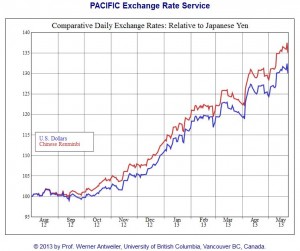
Everybody is wondering why China is currently so weak, with a HSBC manufacturing in contractionary territory. No wonder, the main competitor in electronics and many more products,the Japanese yen has appreciated by nearly 40%. While China has to fight years-long appreciation of wages, the Japanese profit on years-long deflation and cheaper costs. At the …
Read More »2013-05-22
From FT Alphaville: Excess reserves do not mean banks are not lending, and enforcing negative rates may do more harm than good because it is ultimately contractionary rather than expansionary.
Read More »
2013-05-20
Switzerland’s banking secrecy is under threat. EU finance ministers have agreed to put pressure. Jim Rogers EU leaders should address the real problems – like their own unchecked spending habits. Video
Read More »2013-05-19

Investment “bubbles” have been inflating and bursting for hundreds of years.
Read More »2013-05-18
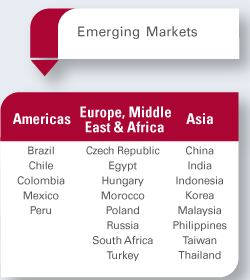
Perfect charts by Goldman’s Jim O’Neill that help to understand the former and future growth of different emerging, “growth markets”, the BRICS. We criticise his partially over-optimistic views.
Read More »
Beautiful charts by Goldman’s Jim O’Neill that help to understand the former and future growth of different emerging, “growth markets”, the BRICS. We criticise his partially over-optimistic views.
Read More »2013-05-17
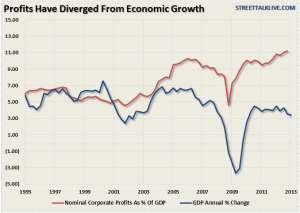
Disconnect between Wall Street and Main Street. While asset prices are inflated by continued Fed interventions, boosting profits widening the wealth gap between the top 20% of Americans and the rest.
Read More »2013-05-13
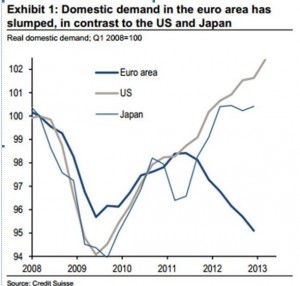
The Fed’s excessive monetary easing QE2 caused an inflationary period, that created a balance of payments crisis during which the Eurozone members were obliged to introduce excessive austerity measures.
Read More »2013-05-10
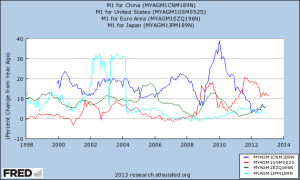
The so-called “inflation lie” : money printing does not create inflation. The cyclical slowing in emerging markets shows that it actually did cause inflation, just not in developed economies yet.
Read More »2013-05-09
Swiss inflation unchanged in April against March. The inflation difference between the Euro area and Switzerland on a new low. While in early 2012 it was near 4%, if has shrunk now to 1.6%. Details
Read More »2013-05-02

Italy will follow Japan for decade(s) of balance sheet recession. There is one mean to avoid it. The periphery should use current positive market sentiments and low inflation to exit the euro zone.
Read More »2013-04-30
We regularly publish the SNB asset structure by currency, rating & duration, they might be a template for the tactical asset allocation in these dimensions (CHF certainly excluded) for other fixed income and/or rather conservative asset managers. Composition of SNB Forex Reserves, Q1/2013 With the strong results of 11.2 billion francs, the SNB reduced the …
Read More »2013-04-29
Despite the weaker franc, sight deposits at the SNB are still rising. Last week they increased by 300 million CHF – details here. For us the SNB is not buying euros, but traders are taking more and more derivative (carry trade or FX positions) against the franc that do not show up in the sight …
Read More »2013-04-28
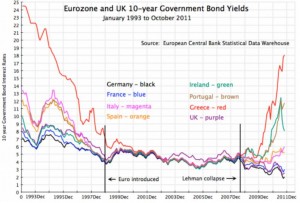
Most recently the Bundesbank critised the ECB decision to reduce Italian yields contained in the OMT program. To put things into perspective: Germany paid 5% interest for 10 years government bonds between 1996 and 2002. This at average inflation-adjusted GDP growth rates of 0.5%. But there was no ECB that was buying German bonds …
Read More »
2013-04-25
2013-04-22
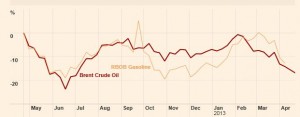
Chinese economy is weaker, the Brent oil price under 100$ , the German DAX near 7500, the USD/JPY near 100, the Australian dollar is dipping. Most assets that are positively correlated to CHF are weaker. Time for EUR/CHF to rise?
Read More »
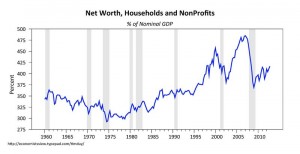
About the trade-off between economic recovery and financial stability In the recent post on gold prices, we maintained that the Fed will raise interest rates far later than most FOMC members admit. This would imply that the years of financial repression will continue and investors will push up asset prices, incl. gold, instead. Many libertarians …
Read More »2013-04-16
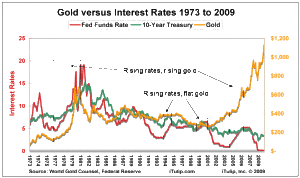
Having identified the 6 fundamental price factors previously we speak about the gold-silver ratio. We explain which fundamental factors speak for an increase of gold and silver prices and which don’t.
Read More »2013-04-12
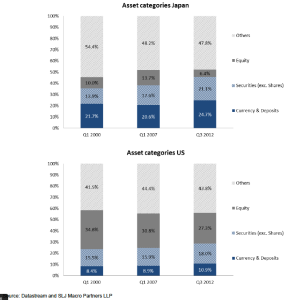
By Stephen Jen (via Itau Global Connections). Bottom line Now that the Bank of Japan will be led by a team of super-doves, the mechanism through which a more aggressive BOJ could influence the yen is through capital flows. We have used the analogy of a two-stage rocket to describe how USDJPY could be propelled. …
Read More »2013-04-11
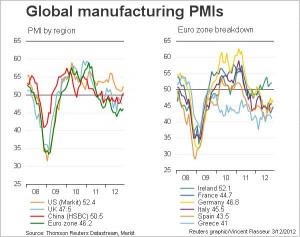
Manufacturing Purchasing Manager Indices (PMIs) are considered to be the leading and most important economic indicators. August 2013 Update Emerging markets: Years of strong increases in wages combined with tapering fears have taken its toll: Higher costs and lower investment capital available. EM Companies have issues in coping with developed economies. Some of them …
Read More »2013-04-10
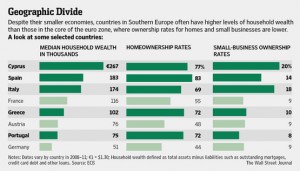
Cheap ECB rates and rising home prices helped to enrich Southern Europeans between 1999 and 2007. Germany’s middle-class and poor, most of them not owning a home, were the ones that financed it.
Read More »2013-04-09
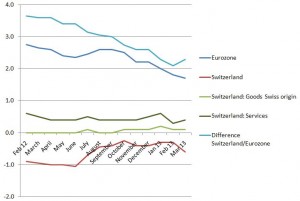
Swiss inflation edged up 0.2% MoM when seasonal effects on clothes and footware were corrected. On a year basis, the CPI fell by 0.6%. Major reason were the falling energy prices, details
Read More »2013-04-05
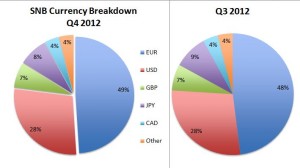
In March 2013, the foreign currency reserves of the Swiss National Bank (SNB) rose by 8 bln. CHF from 437 bln. to 445 bln. mostly thanks to valuation gains on US dollar, sterling and Canadian dollar. full details
Read More »2013-04-04
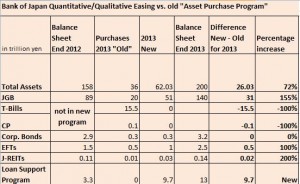
The Bank of Japan has introduced the expected “massive” quantitative and qualitative easing programme. “Quantitative” means increase of quantities of JGBs bought, “qualitative” the purchase of more ETFs, REIT and the loan support program.
Read More »2013-04-03

The U.S. economy regularly improves between October and April, this year additionally fueled by “unlimited” quantitative easing, weaker gas prices and higher competitiveness thanks to a stronger Chinese yuan and weaker Asian economies. Update 2013: The Case-Shiller index continued to climb in April 2013; it became clear that this year the “Sell in May” …
Read More »2013-03-31
Wolfgang Schäuble has become the evil genius of the euro crisis. He has understood that the Cyprus crisis won’t lead to a bank-run and collapse of capital markets. We all know that the US is now recovering.
Read More »2013-03-28
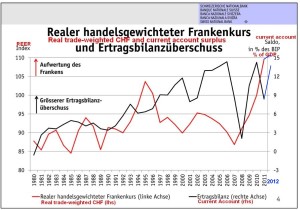
According to latest IMF data the Swiss current account surplus rose from 49 billion CHF in 2011 to 80 billion in 2012, this is from 8.5% of GDP to 13.5%. Details
Read More »2013-03-27
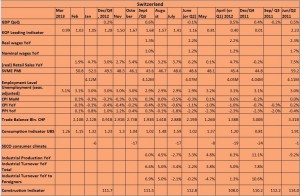
Switzerland continues to see a robust economy, even if the leading KOF indicator fell to 0.99 after highs of 1.68 in September. On other side, real and nominal wages continue to increase. As opposed to the KOF value, the UBS consumption indicator is rising. This shows that the internal economy is able to balance …
Read More »
We have insisted in several posts that the northern euro zone is very reluctant to continuously bail out the periphery and in particular its banks. The euro group chief Dijsselbloem has confirmed this now.
Read More »2013-03-25
The SNB published the weekly monetary data for the week of the “Cyprus crisis”: SNB sight deposits are slightly up 400 million francs, mostly due to local banks. Details
Read More »
UPDATE March 25 The final compromise: via Reuters TOP NEWS Detail of EU/IMF bailout agreement with Cyprus Sun, Mar 24 22:19 PM EDT BRUSSELS (Reuters) – Cyprus clinched a last-ditch deal with international lenders on Monday for a 10 billion euro ($13 billion) bailout that will shut down its second largest bank and inflict heavy …
Read More »2013-03-23

The initial compromise The Cyprus compromise combines a 10 billion € bailout with European, basically German tax-payers money, that also obliges rich account owners (9.9% levy) – rich Russians and Brits – and poorer account owners (6.75% levy) – Cypriot tax-payers money – to take part in the deal. Initial reactions from Zerohedge over Keynesian mainstream …
Read More »2013-03-22
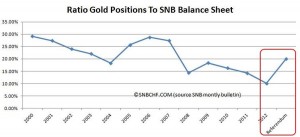
If the upcoming referendum “Save our Swiss gold” wins, the SNB must increase gold holdings from 10% to 20% of its balance sheet. Gold purchases and/or sales of fiat money implies an end of CHF cap.
Read More »2013-03-20
The International Monetary Fund (IMF) judges “that the SNB’s net revenue is subject to large fluctuations, and sizeable losses could occur if an appreciation of the Swiss franc was to take place before foreign exchange interventions were unwound.”
Read More »2013-03-19
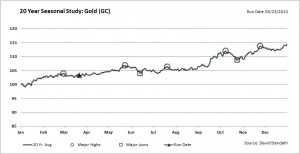
Gold came under pressure in early February when stock market strength but also U.S. gas prices rose. US purchases, however, help to improve foreign economies and therefore also the gold price.
Read More »2013-03-18
The SNB published the weekly monetary data for the week before the Cyprus event: SNB sight deposits are slightly up 250 million francs, mostly due to other sight deposits (companies, the Swiss confederation, foreign banks) while local banks reduced their deposits slightly. Details
Read More »
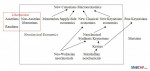
2013-03-16
Nicosia will impose a 9.9 percent one-off levy on deposits above 100,000 euros in Cypriot banks. This constitutes maybe the final stage of the euro crisis, with the very last country to be rescued. Or will it be a new escalation and may be the most dangerous one, a bank-run? How many Cyprus clients managed …
Read More »2013-03-15

Producer prices and “real mean reversion” for currencies show that the yen is currently fairly valued. Many momentum factors could, however, speak for some further weakening, while seasonality favours an appreciation. For us, the US dollar is back as the preferred funding currency. The real mean reversion for currencies Some economists, like Goldman’s O’Neill, in the case …
Read More »
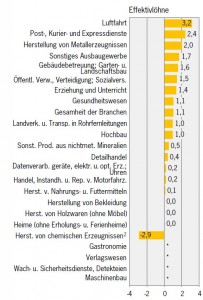
No signs of the so often mentioned “deflationary pressures” by the SNB.
According to Swiss statistics hourly wages rose by 1.1% in the year 2012, while they went up by 1.0% in 2011. More details
Read More »2013-03-14
In its monetary assessment the SNB maintains the EUR/CHF floor and warned against further risks in the euro zone. The SNB has downgraded the inflation path to -0.2% (previously-0.1%) in 2013 and +0.2% (+0.4%) in 2014.We do not completely agree.
Read More »
In our series about emerging markets, we name some that are overheating and could face increases of government bond yields due to higher inflation and weaker current accounts. At the same time, banks are aggressively selling emerging market bonds as possibility to achieve high yields. Tristan Hanson, head of asset allocation at Ashburton Asset …
Read More »2013-03-13
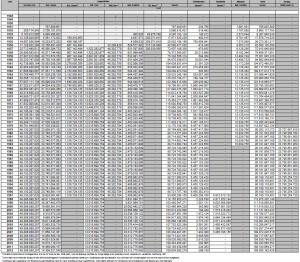
The German Bundesbank decided to opt for full transparency of their gold reserves and their whereabouts since the second world war. Our details:
Read More »2013-03-09
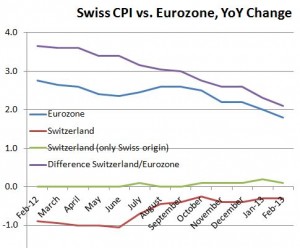
The gap has fallen from 3.7% in February 2012 to 2.1%. Swiss CPI is rising on monthly basis, but still negative with 0.3% YoY.
Read More »2013-03-07
We regularly publish the SNB asset structure by currency, rating & duration, they might be a template for the tactical asset allocation in these dimensions (CHF certainly excluded) for other fixed income asset managers. Moreover we publish the yield on investment. Composition of SNB Forex Reserves, Q4 2012 The Swiss National Bank (SNB) saw …
Read More »
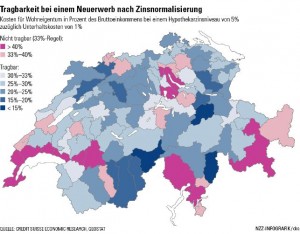
A new study by Credit Suisse claims that the SNB needs to hike interest rates in order to avoid excessive risk taking in real estate markets; in particular around the centers of Geneva and Zurich, but also in the Southern Swiss cantons with lower income, but high real estate prices. More details
Read More »2013-03-05
Hedge Funds have lost their power. This year has shown that their only remaining possibility to gain easy money is a concerted action with some of their friends manipulating currency markets, calling it “currency wars” and creating an unholy alliance with the dovish prime minister Abe. Some of the biggest U.S. hedge-fund investors have made …
Read More »
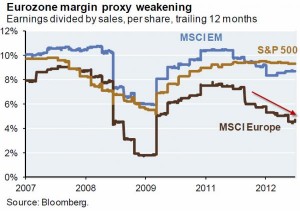
Italy overtook Japan with the worst real GDP growth of all advanced economies since 1991 (0.79% per year, an amazing and sad distinction). Italians and French are clearly getting tired of austerity.
Read More »
A list of relevant graphs for the long-term price earnings rations and different stock market returns over the last 2 years. Moreover we show the return of the S&P 500 for each of the year.
Read More »2013-02-28

Wir sind beeindruckt von dem Leitartikel der Weltwoche, der doch ganz unserem Gedankengut entsprochen hat. Der deutsche Kanzlerkandidat Steinbrück hat der deutschen Demokratieverachtung und EU-treuen Überheblichkeit dann noch das i-Tüpfelchen hinzugefügt. “Zwei Clowns haben gewonnen.“ Von Roger Köppel, Die Weltwoche Demokratie ist, wenn es anders herauskommt, als Meinungsführer, Journalisten und tonangebende Politiker gedacht haben. …
Read More »

The U.S. housing market is the main driver for risk on/off movements and therewith implicitly of the gold price. We state charts, e.g. Shiller Home Price Index and U.S. New Home Sales statistics, arguments in favour of a housing recovery and the counter-arguments.
Read More »2013-02-27
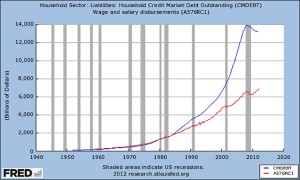
Collection of 6 sources showing: Housing Market Index,Home Inventory, S&P/C-Shiller, New Home Sales&Prices and Ratio to Population, MBS Purchases by the Fed, Household Liabilities and Dependency Ratio.
Read More »

Krugman in the 1990s: “France represents the most extreme case of “eurosclerosis”: of “ludicrously overregulated” labor markets and overprotected jobs. These issues and the unsuited German monetary policies to create the euro were the source of France’s troubles.” View Craig Willy’s blog.
Read More »2013-02-26

Deutsche und Schweizer Medien sind oft vereint mit den Europäischen Leadern, Deutschen Exporteuren und den Finanzmärkten im Kampf gegen den gemeinsamen Feind, Silvio Berlusconi, das Enfant Terrible, das Gegenteil der Schweizer Bescheidenheit- und “Bloss nicht zu laut”-Etikette. Berlusconi soll Schuld sein am Abstieg Italiens seit den 90igern, obwohl auch die Linke mit Romani Prodi zweimal …
Read More »2013-02-25
SNB sight deposits are rising again, by 700 million CHF in one week. But the amount of cash in form of bank notes and coins has risen by 10% since September. It seems that the central bank is now not only virtually printing (via sight deposits) but also physically. SNB liabilities reached a new record high. Details
Read More »2013-02-24
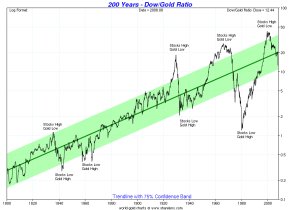
We reckon that a sustained US recovery will make it possible that the eurozone splits up. Today’s Italian elections are maybe the start of an upcoming Italian euro exit.
Read More »2013-02-23

Central Bank data show that the Swiss National Bank (SNB) remains the only central bank that strongly participated in currency wars with FX intervention, while the Japan was just verbal intervention.
Read More »2013-02-22
From FT Alphaville: Excess reserves do not imply that banks are not lending, enforcing negative rates may do more harm than good because it is ultimately contractionary rather than expansionary.
Read More »2013-02-21

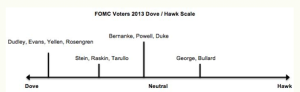
We remind readers that the voting members of the 2013 FOMC are strongly leaning towards dovish policy (see details of its composition). Dovish economists have a common understanding: the reverse Volcker moment implies that QE3 is open-ended.
Read More »2013-02-18

Most recent Swiss inflation data show that several items have risen by 1% in one month. Former ECB member Lorenzo Bini Smaghi claims that a currency war would lead to financial repression even by central banks that predominantly concentrate on price stability – like the SNB. A must read on the FT.
Read More »2013-02-16
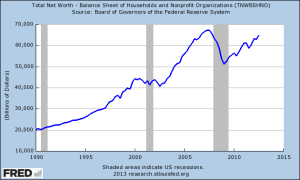
The Fed’s plan is recreate an asset bubble, so that economic actors have enough time to forget about the latest one and adjust their rational expectations about low future growth to the upside. Read the Circle Bastiat.
Read More »
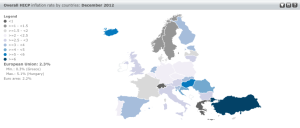
2013-02-13
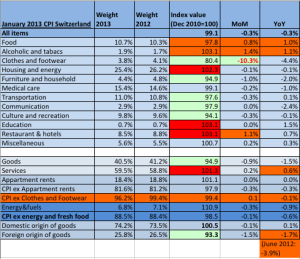
UPDATE February 2013 inflation data: The inflation figures for February showed the upwards movement we expected. On monthly basis inflation rose by 0.3%. The Swiss CPI is getting closer and closer to the one of the euro zone. We explain the January 2013 data on Swiss inflation and indicate which components drive the consumer …
Read More »2013-02-12

Submitted by Mark Chandler, from marctomarkets.com Last week the euro was the weakest of the major currencies and the recently beaten up sterling and yen were the strongest. A similar pattern was also evident in the dollar-bloc. The New Zealand dollar had been the strongest and last week had was the weakest, with the …
Read More »2013-02-11
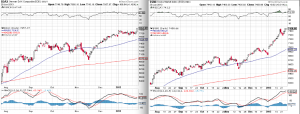
The latest improvement in U.S. unemployment and good PMIs, finally let the sight deposits (money supply) at the SNB fall by 800 million francs in week ending on February 1 and 400 million for the one of Feb 8 . See the recent history of sight deposits.
Read More »2013-02-10
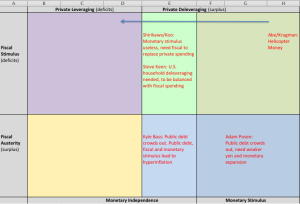
We give an overview of opinions of leading economists that want to help Japan out of deflation. Paul Krugman, Richard Koo, Adam Posen and Kyle Bass.
Read More »

Thoughts on the Japanese Currency Debasement (part 3) In previous posts we looked on the following aspects of the recent Japanese currency debasement: Overview: What different leading economists – Paul Krugman, Richard Koo, Adam Posen, Kyle Bass – think about the Japanese currency debasement and the way to more private spending and investing instead of …
Read More »2013-02-09
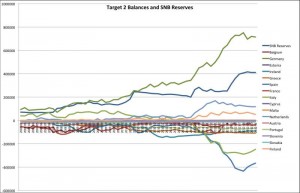
We show that Target2 imbalances and the SNB currency reserves represent the same issues, namely current account surpluses/deficits and capital flight. Therefore it makes sense to compare them, in total and by inhabitant.
Read More »
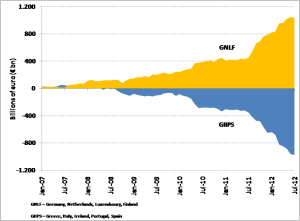
As we explain here, , Target2 balances and SNB currency reserves represent the same concept, namely capital flight (in a positive and negative sense) and current account imbalances. While Target2 numbers for Germany and Northern Europe go down, SNB reserves remain the same, only 3 billion CHF away from record highs.
Read More »2013-02-07
The U.S. economy regularly improves between October and March. This year the improvement was a bit earlier thanks to QE3. By March the economy already weakened according to the latest ISM PMIs.
Read More »
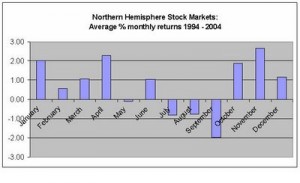
The U.S. economy regularly improves between October and March. The SNB should use the moment to sell some currency reserves. From May on, the typical seasonal effects will push the SNB into a defense.
Read More »2013-02-06

Still in September, SNB’s Zurbrügg was speaking of negative rates and deflationary risks in Switzerland. At that meeting we told him that deflationary risks were absurd given rising M1/M3, higher salaries and strongly rising home prices . Now he admits that negative rates will not come.
Read More »2013-01-31

In 2012, austerity, the commitment of ECB and Fed and the weak euro helped to reduce peripheral yields, current account and partially fiscal deficits. The euro zone has possibly won the war. Now the weak countries need to win the peace, namely generate growth via competitiveness says Hans Werner Sinn in FAZ.
Read More »2013-01-30
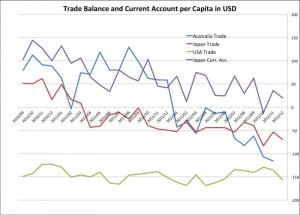
In our first part on Japans currency debasement, we look on three aspects, government bond yields, current account balances and potential hyper-inflation which causes yields to rise strongly.
Read More »2013-01-28
While FX traders and some hedge funds are long EUR/CHF and some short covering happened, sight deposits show a different picture. They rise again, this time with 100 million francs (see details) in one week. Risk-off investors are not convinced yet that the euro crisis is finished, while other investors keep profit of the rising SMI and Swiss real estate prices.
Read More »2013-01-27
While UBS and a certain Mr Draghi are still warning that a bankruptcy would trigger a bank run on European banks, Mr Schäuble and we do not believe in such bollocks any more. See why Cyprus should replicate the Icelandic success.
Read More »
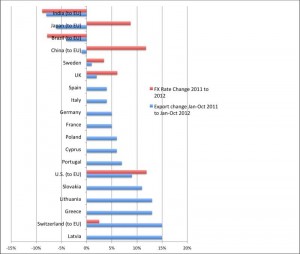
Eurostat recently published the European exports, imports and trade balance for the first ten months of 2012 compared to 2011. These show heavy improvements for the Southern member states but also a strong dependency on a weak euro.
Read More »2013-01-26
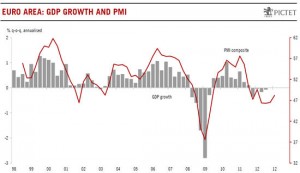
Manufacturing PMIs are considered to be the leading and most important economic indicators. After a strong slowing in summer 2012 and the Fed’s QE3, this is the fourth month of improvements in global PMIs January 25th Expansion-contraction ratio: There are 15 countries that show values above 50 and 14 with values under 50. Positive-negative-change ratio: …
Read More »2013-01-24

Nouriel Roubini and Deutsche Bank’s Sanjeev Sanyal are quite pessimistic about future global and Chinese growth. They think that we need to wait a long time for the Chinese consumer that should boost global growth.
Read More »
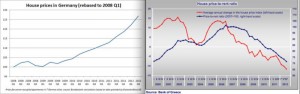
When the Swiss National Bank introduced the 1.20 lower limit, it wanted to eliminate the deflationary risks for Switzerland. For a certain period, namely when a global recession was looming in Autumn 2011, and the Swiss franc was hovering around 1.10, this risk was really present. In this post we would like to know if …
Read More »2013-01-23
We show that Target2 imbalances and the SNB currency reserves represent the same issues, namely current account surpluses/deficits and capital flight. Therefore it makes sense to compare them, in total and by inhabitant.
Read More »2013-01-21
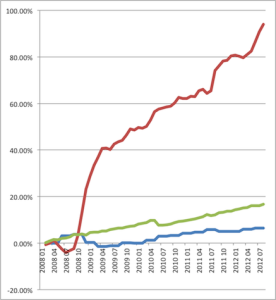
While FX traders and some hedge funds go long the EUR/CHF, sight deposits at the SNB rise by 2 bln. francs (see details) in one week, M3 by nearly 10 bln. (nearly 2%) francs in one single month (see details). In normal circumstances this would imply upcoming rate hikes (see explanation).
Read More »2013-01-19
While we blamed FX traders, that were waiting months for some good European news to push down the CHF, Pictet finds some more explanations.
Read More »
The newest paper by McCulley and Poszar “Helicopter Money: or how I stopped worrying and love fiscal-monetary cooperation” presents fiscal policy and monetary policy along these two criteria
Read More »2013-01-17

The Swiss National Bank (SNB) obtained a profit of around 6 billion francs for the year 2012 (full statement). The profit was reduced from 16.9 billion francs between Q1 and Q3 2012, which means that in Q4/2012 the bank had a loss of around 10.9 billion francs. The profit in gold fell from 6.2 billion …
Read More »
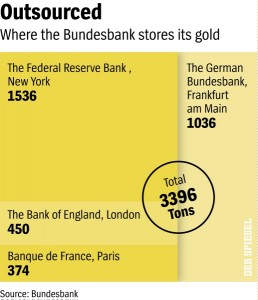
During the Bretton Woods system, Germany managed to obtain current account surpluses. They converted these surpluses into gold. At the time they bought it at 35$ per ounce at a relatively cheap price – at the end of the 1960s the price was augmented to 42$. At the end of the 1960 and with …
Read More »2013-01-14
While markets are long EUR/CHF and FX traders are playing currency games against each other, the SNB had to buy additional 1 billion CHF of reserves last week. In the first January week they possibly started first sterilizations, see details.
Read More »
According to Bloomberg, at least prime minister Abe is taking the nuclear option and is following the SNB in buying foreign assets. This is a huge change in global monetary policy.
Read More »2013-01-13
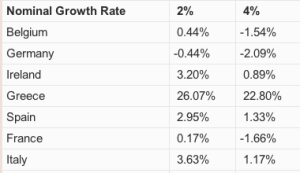
Primary surplus is the difference between government revenues and expenditures excl interest. Debt is reduced if rel. primary surplus is higher than debt multiplied by interest minus GDP growth.
Read More »
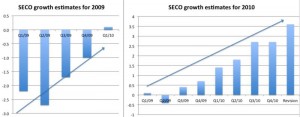
Or how to talk down an economy with wrong forecasts Read the introductory post here, if you haven’t yet. Details of SECO forecasts In the following we give the details about the SECO, the Swiss government economic agency’s, forecasts. Forecast Q1/2009 Sharp recession in 2009, gradual stabilization in 2010 Bern, 17.03.2009 – Economic …
Read More »2013-01-11
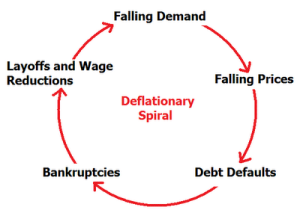
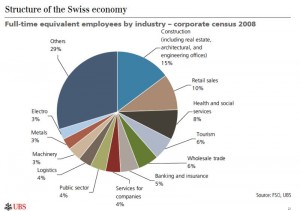
The same as every year in December/January: Swiss media and economists are doomsaying. This time they claim that the banking industry and the UBS job losses will bring Switzerland into trouble. Once again they do not understand that the Great Recession was only to a small part a banking crisis, but it was mostly a …
Read More »
After UBS and CS introduced negative interest rates for big clearing accounts, ZKB changes general conditions for a potential introduction of negative rates even for ordinary savers. Time to get in contact with Geneva cash storing warehouses? More about the ZKB move on Reuters.
Read More »

Recently we reported on SNB losses of 1.85 bil. CHF in just one day and on our estimate of 5 bil. CHF loss in Q4/2012. But now good news: the SNB made a profit of 10 million on Nokia – i.e. 0.2% of the Q4 loss reversed. More on Cash
Read More »2013-01-10
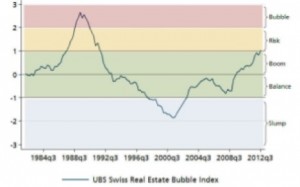
Why there is no real estate bubble in Switzerland yet and why the SNB will help to create one With the current recovery in the United States the discussion in Switzerland switched from a discussion about the EUR/CHF floor to the Swiss real estate boom, the so-called “housing bubble”. It seems that the Swiss …
Read More »

Potential losses due to money printing are for the Fed: 1.2% of GDP, Bundesbank: 5% of GDP, SNB: 12% of GDP.
Read More »2013-01-08
2013-01-06
The SNB will not be able to realize a fixed currency peg over the long-term. The consequence would be that Switzerland loses its competitive advantage, lower Swiss rates, if it follow euro inflation.
Read More »
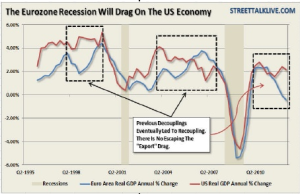
Or why we do not believe in the American economy. Like every year in Q4, analysts proudly present the end of the great recession: 2009: The big picture: The Great Recession is Over! Long Live the Ordinary Recession …. 2010: Mish Global Trend Analysis: The Great Recession is Over; Bad News: It Doesn’t Feel Like …
Read More »2013-01-04

Switzerland and Japan are currently the leaders in currency manipulation, now even in front of the Fed and far ahead of the leader until 2009, China. Hear the interview with Guardian’s Ambrose Evans-Pritchard on World Radio Switzerland.
Read More »
2012-12-31
2012-12-30
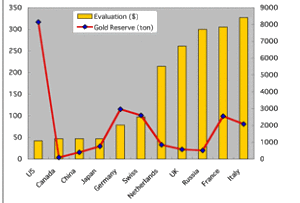
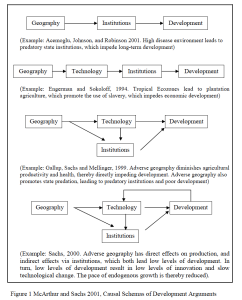
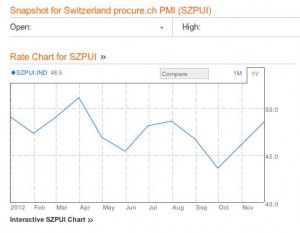
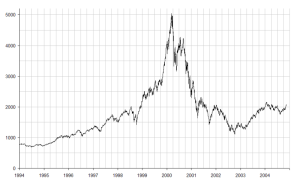
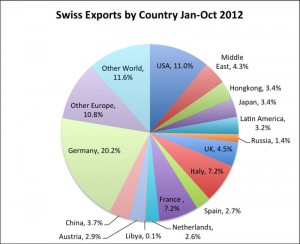
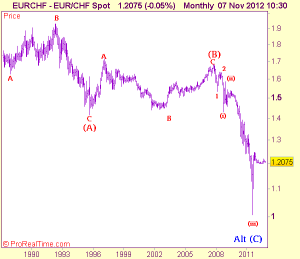
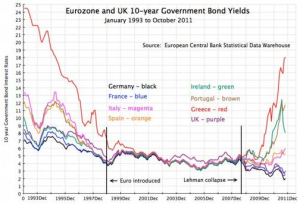
Central banks often want to follow two targets: low inflation and low unemployment. to achieve both criteria they look for a formula that incorporates both
Read More »
The link gives an overview about the upcoming SNB events.
Read More »

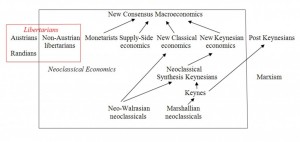
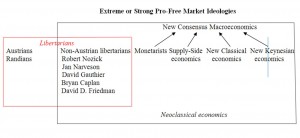

The balance of payments leads to many confusions because definitions vary. For example, the IMF’s definition is different from the usual or historical definition. Secondly, the relationship between the balance of payments and reserve assets is difficult to grasp, especially in the IMF definition. Thirdly the origin of “errors and omissions” is often unclear. Therefore …
Read More »
Between 2011 and 2017, the reduction of debt , the hunt on the rich and investment into countries with low debt will become the main rational expectation and the determinant of the next financial cycle.
Read More »
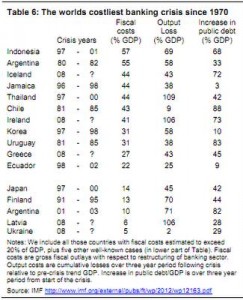
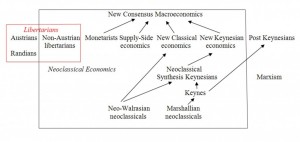
Along the double mandate of the federal reserve, monetarists can be divided into. – traditional monetarists that focus on a slow increase of money supply in order to avoid price inflation. – Market monetarists that want to target growth and income instead of inflation.
Read More »
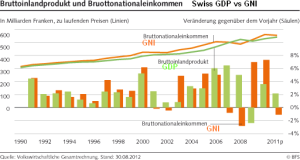
History of SNB monetary policy assessments vs. the Swiss gross national product (GDP) and gross national income (GNI).
Read More »
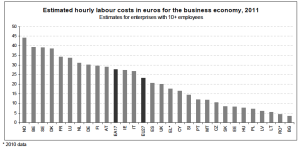
Two ways for building the Northern euro, exit of Southern members or slow creation of Northern euro with currency interventions of central banks.
Read More »2012-12-29
2012-12-28
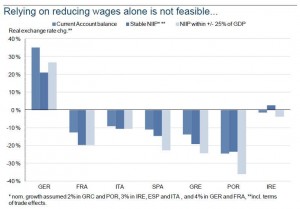
The must-read Goldman analysis on Zerohedge: it is not enough to reduce wages in Greece or Spain. These countries will see lost decade(s). Completely in-line with our analysis that production costs rise more quickly in the periphery than in Germany despite falling real wages. Here our synthesis that a Northern Euro would reduce imbalances and suffering.
Read More »2012-12-27
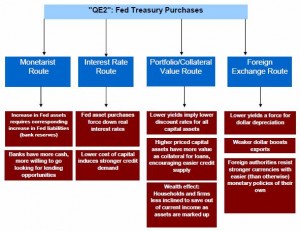
The main drivers of demand for Swiss francs are the euro crisis, but even more, the behavior of American investors, who go out of the dollar in the fear of further bad US economic data and of Quantitative Easing. This will push down the dollar, and safe-havens like the CHF, gold or the Japanese Yen up. …
Read More »

John Cassidy’s remarkable interview with the Nobel Prize winner Paul Samuelson maybe best describes the rise and fall of Keynesian economics.
Keynesians led the world to two of its most unfortunate experiences, the 1970s stagflation and to the sub-prime bubble.
2012-12-26

Aymo Brunetti, the former chief economist of the SECO, the Swiss national bureau of economy, says that Switzerland must exit the peg against the euro in two or three years time. This is in line with our analysis of upwards and downwards drivers of Swiss inflation. We judged that in 2 or 3 years time, upwards drivers will clearly outweigh downwards drivers. Details about Brunetti’s interview on Tagesanzeiger.
Read More »
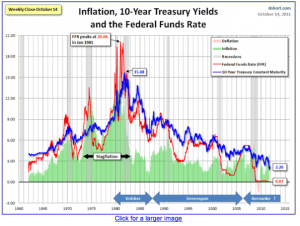
Government bond yields under 10 years for safe-havens are close to zero. In April 2013, even 20 year bond yields are less than 3%, What can explain this bubble of the century? Update August 16, 2013: So, 10-year Treasury yields have ended the day closer to 3 per cent. But not as close as they … Continue reading »
Read More »2012-12-22
Similarly as European leaders knew what they were doing with the euro, namely introducing a not feasible currency, Swiss National Bank did between 2005 and 2008, namely the absolutely wrong thing.
Read More »2012-12-21
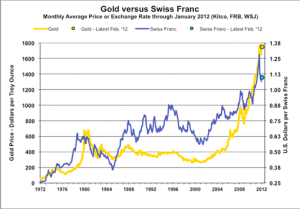
In yesterday’s post we focused on several economic events that weakened the position of the Swiss National Bank (SNB). In this extended replacement post, we give several reasons for recent movements in the gold price and explain the correlation between German economic data, gold and the Swiss franc. IFO data shows that Germany will not …
Read More »2012-12-20

Eventually the euro will be abolished, a Northern Euro introduced: politicians and their economic advisors might just be waiting for a calm moment, especially with upcoming German inflation.
Read More »
Manufacturing PMIs are considered to be the leading and most important economic indicators. Since the Fed’s QE3, this is the third month of improvements in global PMIs after a strong slowing in summer 2012. January 25th Expansion-contraction ratio: There are as many countries that show values above 50 as under 50. Positive-negative-change ratio: 18 countries …
Read More »2012-12-19
To us, the big theatre surrounding Greece was just a preview of a much bigger crisis that will happen in the coming years in Spain, the upcoming Spanish lost decade(s). Greece was an absolutely desperate case; therefore, everything was quick. It took just two years till we arrived at the official sector participation and yearly German transfer …
Read More »2012-12-18
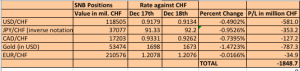
After the disappointing US current account data, traders have realized which countries have strong trade balances, namely Germany and Switzerland (see here for our details on the ever rising Swiss trade surplus), additionally fueled the good German IFO data. Both the euro and the Swissie strongly rose against the dollar. Due to Abe’s pressure on the …
Read More »

Charles Wyplosz, Professor of International Economics, Graduate Institute, Geneva repeats our arguments in “Who says No to Austerity, Says Yes to the Northern Euro“ about the impossibility of getting out of the common currency – recession – austerity – cycle. Similar as we do, he proposes a public debt haircut, an end of austerity and a decentralization of remaining debt. We go one step further, we want to break not only austerity but also the current form of the common currency. Read more on Prof. Wyplosz entry on VOX.
Read More »2012-12-17
The UBS Swiss real estate bubble index has reached the risk zone again.More on UBS.
Read More »
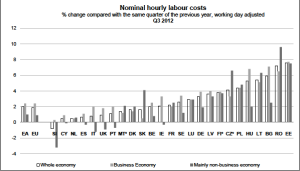
In our post we look on two questions concerning competitiveness for the European periphery: When will local production be cheaper than imported products? Do people have the money to buy these local products? It does not help reducing labor costs if local production costs still more than imported products. The second aspect is: even if …
Read More »
The four best “recession” indicators, in form of coincident economic indicators, can be seen at Doug Short/Advisor Perspectives Update September 2013 Update December 21th, 2012 We observe the following: US indicators point upwards, when the rest of the world is slowing. After capital left many emerging markets and Europe, this capital helps the United States …
Read More »2012-12-16

Some must reads: According to the Economist the biggest time bomb in the euro zone crisis is France.
We wonder why the United States and Britain, that have same weak trade balances, the same weak competitiveness and a debt overhang, shouldn’t have a problem?
Just because France must do austerity according to the German Fiscal Compact wish, and the US and Britain do not need to do this?
Or like Ray Dalio called it, are the US and Britain doing a beautiful deleveraging? Or is financial repression and accumulation of debt a real danger?
Read More »2012-12-15
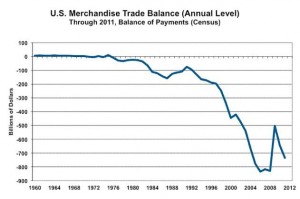
The ISM PMI under 50 shows that the United States are in contraction as for industrial production. The dollar is simply too strong. The Americans consume, but the US trade deficit gets bigger. The Chinese, Japanese, Germans and some global US firms take the profits on it. Today a worth-reading propaganda paper came out.
Read More »
Five facts you need to know about China’s currency manipulation Ezra Klein. Washington Post
Read More »
The discussion about the future of the Euro: Among a Post-Keynesian, a European Etatist, an Austrian economist and an advocate of a Northern Euro on the French website www.atlantico.fr. The French paper is asking: “Sommet européen : créer un euro du Nord est-il le seul moyen de sauver l’Europe de l’austérité ?” Is the creation of …
Read More »2012-12-14
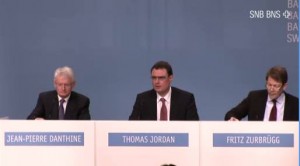
The SNB decided to maintain the floor at 1.20 and the Libor target between 0% and 0.25%. As we expected in our outlook on the assessment, there were still important downwards drivers of inflation after the strong appreciation of the franc. Therefore, the SNB has moved its inflation expectations downwards for 2013 to minus 0.1% …
Read More »2012-12-13

The main drivers for demand for Swiss francs are the Euro crisis, but even more the behavior of American investors, who go out of the dollar in the fear of further bad US economic data and in the fear of Quantitative Easing. This usually pushes down the dollar and inflation hedges like the Swiss franc and …
Read More »2012-12-12
On Thursday, December 13th, 2012, at 09.30 CET, the Swiss National Bank (SNB) holds its quarterly monetary policy assessment meeting. As we explained in the “drivers of Swiss inflation” post, inflation pressures will remain subdued for the next 2-3 years, because the effects of the quick rise of the franc and weakening global growth need to …
Read More »2012-12-11
Im Gegensatz zu Hongkong mit dem USD/HKD-Peg kann die Schweiz ein Currency Board, einen fixen Kurs zum Euro nicht für Jahre durchhalten. Die Gründe auf snbchf.com
Read More »
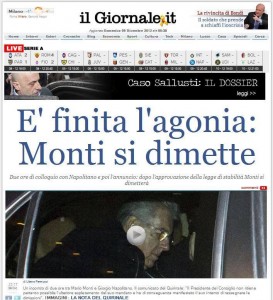
Claudio Messora, one of most well known critics during the “Reign of the spread” between Italian and German bonds.He happy about the return of democracy.
Read More »

Italian Prime Minister Mario Monti passed 30 billion euros ($40.3 billion) in tax hikes (17 billion), pension and spending cuts (13 billion).
Read More »
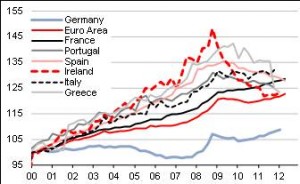
With ECB’s OMT & “conditionality”, that requires austerity and implicitly reduction of salaries in European periphery, Merkel & German economists have created consequences similar to a gold-standard.
Read More »2012-12-10

The idea that the euro has “failed” is dangerously naive. The euro is doing exactly what its progenitor planned for it to do. According to Robert Mundell, the creator of the Optimum Currency Zone concept, the euro would really do its work when crises hit. Removing Keynesian monetary and fiscal juice to pull a nation out of recession. More about this evil genius on Guardian.
Read More »2012-12-09
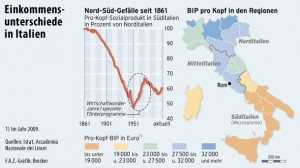
Wie eine Währungsunion Italiens Süden verarmen ließ
Vor 150 Jahren wurde in ganz Italien die Lira eingeführt. Der reiche Norden blieb reich. Der Süden stürzte ab.
mehr in der FAZ
Read More »2012-12-07

Switzerland is well known as the country, where even central bankers were allowed to do insider trading. Instead the whistle blowers get problems with the courts. Some new cases of insider trading include UBS, General Electric and Valiant, see the article on cash. At the same time, an initiative for more for transparency on income of politicians, does not have success.
Read More »
Like often in global economic downturns, the demand for Japanese cars and electronics has fallen in Q3, especially due to European purchasers. Additionally fueled by a row with China, the current account has become negative. Is Japan doomed because the yen will fall and bond yields will rise? Details
Read More »

For the Austrian public, the Greek crisis shows that 21% of politicians and so-called experts do not have the required economic skills, 60% say that these elites were simply lying
Details on ORF. Latest Austrian poll shows 32% anti euro parties (FPÖ, Stronach, BZÖ).
Read More »2012-12-06
The history of EU reforms, bailouts during the euro crisis and the German perspective on them
Read More »2012-12-05
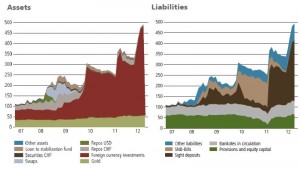
According to the SNB balance sheet and the SNB data delivery to the IMF, the central bank lost 8.4 billion francs of equity in the months of October and November, the equivalent of 1.5% of Swiss GDP. Details SNBCHF.COM
Read More »
A discussion in the investor forum made clear how currency speculators currently help the SNB to maintain the floor against normal investors. A situation that was different in August/September 2011, when the SNB had to fight against these speculators. A discussion in the investor forum Seeking Alpha: part one Based on our analysis of …
Read More »2012-12-04

The must read “Italy is a better bond bet than Britain” on the Financial Times. Unicredit CEO Nielsen implicitly confirms our latest post on global and European imbalances that can be solved only with a Northern Euro and our post why the UK needs to be downgraded similar as France. Both the UK and Italy have the same weak current account, weak investment position and slow growth. They should play together in the Southern euro league.
Read More »2012-12-03
Credit Suisse and UBS will charge negative interests for cash clearing clients above a threshold. Last year such was worth 150 bps, this year on 28 bps. See the official news at FT Alphaville
Read More »

Given that most farmers are rather old, he says that the world should be very grateful to speculators that bet on food prices, this helps to obtain the required younger farmers. Jim Rogers has exchanged all his euros into francs, he thinks that the EUR/CHF peg will fall soon. Tagesanzeiger (German or English)
Read More »
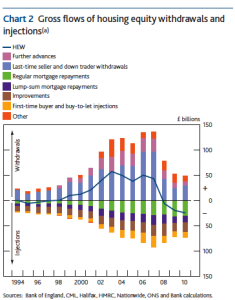
The American-Taiwanese economist Richard Koo, is the chief-economist of the Nomura Research Institute. In his theory of the Balance Sheet Recession he distinguishes between the “Yang” phase of the economy and the “Yin” phase (the so-called “balance sheet recession”). In “Yang” times companies want to increase profit and people consume a big part of their pay …
Read More »

Ein herrlicher Kommentar von Wolfgang Vontobel über die Unfähigkeit der OECD-Ökonomen, korrekte Vorhersagen und wirtschaftliche Rezepte zu erarbeiten und Selbstkritik zu üben.
Read More »2012-12-02
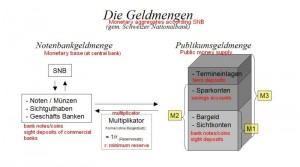
2012-12-01
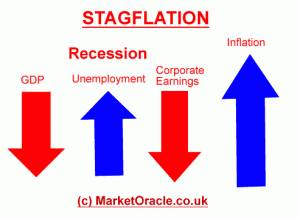
Keeping Greece in euro zone, eurocrats or better “euro morons” have successfully avoided a weak drachma and a following Greek hyperinflation. Instead they successfully created stagflation. Currently European HICP inflation is at 2.5%, far above the max. 2.0% official ECB mandate, but the euro is becoming weaker and weaker. German salaries are rising with 2.6% …
Read More »

Don’t sell economic stability to buy economic growth,” warned Tomáš Sedláček, chief macroeconomic strategist at CSOB Bank. Sedláček’s unconventional view is that our problem is not lack of growth but too much of it. See more at the CFA Institute Blog.
Read More »
Nach dem starken Anstieg des Frankens in den letzten Jahren, sagten Ökonomen wie O’Neilly von Goldman Sachs oder die der Schweizerischen Nationalbank (SNB), dass die Schweizer Währung überbewertet wäre. Einige benutzen den “Big Mac Index”, den OECD-Kaufkraftsparitätsindex oder Kaufkraftparitäten auf der Basis von Konsumentenpreisen als Beweis. Wir zeigen, dass aber nur die Kaufkraftparität aufgrund von …
Read More »
Credit Suisse and UBS will charge negative interests for cash clearing clients above a threshold. Last year such news was worth 250 bps, on December 3 only 28 bips. One remembers August 26, 2011, when UBS only spoke of negative interests and consequently EUR/CHF rose from 1.1420 to 1.1688. At the time FX traders …
Read More »

Obama mag zwar das kleinere Übel für die USA und den Weltfrieden sein, er ist aber das weit grössere Übel für die Schweiz. SNBCHF.COM
Read More »
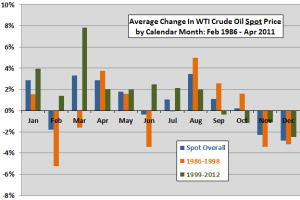
Evidence from simple tests supports perhaps some belief that crude oil tends to have strong and weak months of the year, Q4 is often the weakest quarter and Q1 and Q2 the best.
Read More »
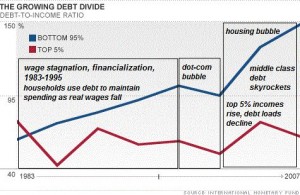
In our manifesto we criticized that central banks created inequality. They pushed asset prices upwards from which only the rich informed investor could take profit. The middle class was left with an over-indebted home.
With the upcoming end of this Joseph cycle even the rich are not able to increase their income. Harvard Business Review.
2012-11-29
2012-11-28

Ludwig Poullain: Das Ende des Euro rückt näher. Er treibt Völker wieder auseinander. Neid, Missgunst, Verachtung, selbst Hass sind wieder lebendig geworden.
Read More »2012-11-26
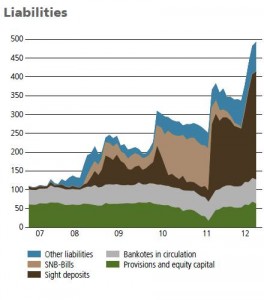
Total sight deposits at the SNB rose by nearly 1 billion to 374 bn francs in the week ending on November 23th. “Other sight deposits”, the ones of foreign banks and Swiss companies, fell by one billion francs, but the ones of local institutes increased by nearly 2 billion francs.
See full detail on our explanation, historical and our expected development of these SNB monetary data.
Read More »2012-11-25

Der Bundesparteitag der Piratenpartei Deutschland, ist für jeden, der auf Basisdemokratie setzt, ein sehr aufregender Anlass für jeden, auch wenn die Ziele der Partei sich nicht unbedingt mit den eigenen politischen Zielen decken.
Die Piratenpartei Deutschland ist eine basisdemokratische Denkfabrik, ganz im Gegensatz zu vielen anderen Parteien, die von einer parteipolitischen Oligarchie, Lobbyisten der Wirtschaft und der Medienlandschaft beherrscht werden.
2012-11-21
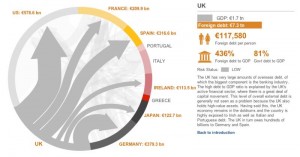
Who Downgrades France MUST downgrade the UK, too After Moody’s downgraded France, we are waiting the next major sovereign to suffer the same fate. According to the must-read interactive graph on the BBC, France now has a medium risk of default, but the UK is still in risk status “low”. According to the BBC, each citizen …
Read More »2012-11-19
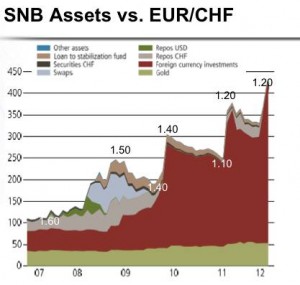
Total sight deposits at the SNB rose by 0.5 billion to a total of 373 bn. francs in the week ending on November 16th. “Other sight deposits”, the ones of foreign banks and Swiss companies, fell by 600 million francs, but the ones of local institutes increased by more than 1 billion francs.
See full detail on our explanation, historical and our expected development of these SNB monetary data.
2012-11-17

The Texas Congressman — and three-time presidential candidate — said goodbye in farewell remarks on the House floor Wednesday. Must watch these videos. On Washington Post
Read More »

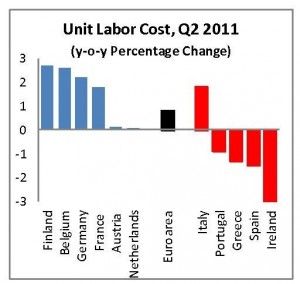
Currently European HICP inflation is at 2.5%, far above the 2.0% official ECB mandate, but the euro is becoming weaker and weaker. German salaries are rising with 2.6% per year. At the same time, the ECB cannot hike interest rates, because it wants to provide cheap money to the periphery. The periphery continues to buy German products, even …
Read More »2012-11-15
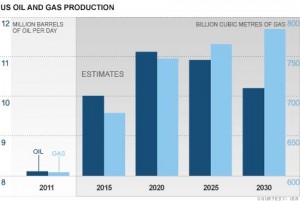
Saxo Bank, recently called for quitting long Gold and “being scared” trades.
For them shale gas & oil is the game changer for the United States. It should make the US the leader for global growth in the next years. The International Energy Association (IEA) declared that the US would be energy-independent by 2030.
Today a nice article about the history of wrong IEA forecasts came out:
Before getting too excited about the IEA’s forecast of US oil production leadership…
Moreover environmentalists do not stop to protest against the fracking techniques.
Read More »2012-11-13

Der „In-einer-Demokratie-herrscht-das-Volk“-Mythos wäre durch nichts nachhaltiger zu entzaubern gewesen als durch den seit Jahren aufgeführten Eiertanz um Griechenland- und Eurorettung, durchgeführt durch eine Bankenoligarchie, die dem unwissenden Bürger immer wieder mit Endzeitdrohungen kommt, sollte das kleine Griechenland die Eurozone verlassen. Die Endzeit erreichen wir nun, weil sich die Deutschen vor lauter Angst vor ESM und Target2 weigern zu konsumieren.
Buchempfehlung: „Wenn die Demokratie zusammenbricht“
Read More »
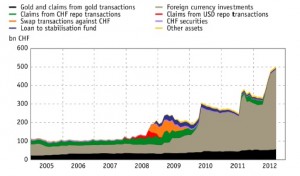
UBS wealthy clients and hedge funds are moving into shorts of EUR/CHF. The pressure on the SNB might become challenging. See more on Euromoney.
Read More »2012-11-12
Manufacturing PMIs are considered to be the most leading and important economic indicators. Jim O’Neill, Chairman of Goldman Sachs Asset Management, believes the PMI numbers are among the most reliable economic indicators in the world. BlackRock’s Russ Koesterich thinks it’s one of the most underrated indicators. Global Purchasing Manager Indices for the manufacturing industry December 3, 2012 …
Read More »2012-11-10
Der Ausschuss fordert: Die kurzfristige Durchführung frühzeitiger einmaliger Schuldenschnitte von Staatsschulden in der Europäischen Union. Eine effektive Restrukturierung und wenn nötig, Rekapitalisierung maroder Banken. Mehr direkt bei der Piratenpartei
Read More »2012-11-08
Steen Jakobsen, chief economist of Saxo Bank followed our bullishness on US dollar and our shorts on golds and silver of the beginning of October when gold was trading around 1780. At the time, Steen was writing his column, we have already realized some gains on silver and gold shorts. Steen seems to be content with …
Read More »
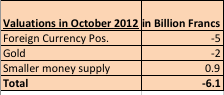
The Swiss National Bank (SNB) had valuation losses of around 6 billion francs in October due to the weaker EUR/CHF exchange rate and a weaker gold price.
Read More »2012-11-07
Walter Wittmann, Buchautor und emeritierter Wirtschaftsprofessor. Auf cash.ch
Read More »
Barack Obama war und ist der präferierte Kandidat vieler Schweizer. Obama scheint der Mann von Welt zu sein, während vom konservativen Mitt Romney eher feindselige Politik gegen Russland, China und Iran zu erwarten ist. Daher sind die Neutralität- und Frieden-liebenden Schweizer eher auf Obamas Seite. Aber auch wirtschaftspolitisch scheinen viele Eidgenossen Obama zu mögen. …
Read More »2012-11-06

Central banks are buying masses of gold reserves. If this game continues we will end up again in the global gold standard. MktGeist Blog
Read More »
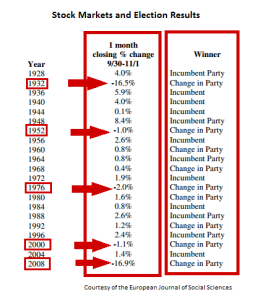
An interesting correlation of stock markets performance in the month before the US presidential elections suggest that there will a change in party, hence Romney wins. alessiorastani.com
Read More »2012-11-04
Peter Schiff Interviews Marc Faber. Peter Schiff Blog
Read More »2012-11-03
The Swiss National Bank’s cap on the franc of 1.20 per euro remains the right policy tool for now and talk of dropping it is premature, Chairman Thomas Jordan said. See Reuters
Read More »
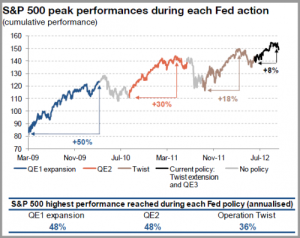
The Shrinking Half Life Time of Central Banks Actions: Zerohedge
Read More »2012-11-02
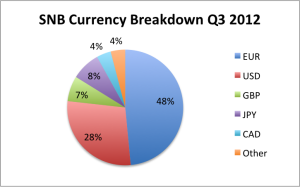
SNB Q3 Profits: 10 billion francs The Swiss National Bank (SNB) radically reduced its euro share, in the third quarter from 60% to 48%, and bought US dollars and sterling instead. In the second quarter, however, it increased the euro share from 51% to 60% and concentrated on buying euros. Given that the EUR/USD was …
Read More »2012-11-01
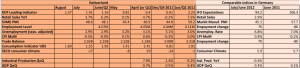
Euro Crisis Has Affected Germany, Switzerland Still Immune Most Recent Events The Swiss SVME PMI has risen from 43.9 to 46.1. This PMI is dominated by machinery, metallurgical and electric equipment exporters organized in the Swissmem organization. As opposed to the chemical industry, they were not innovative enough to adapt to the stronger franc; but …
Read More »2012-10-31

Trend Follower Ashraf Laidi Loses Against the Contrarian Investor SNB The currency strategist Ashraf Laidi recently evoked a EUR/USD exchange rate of 1.35 thanks to the risk appetite after the easing operations of the Fed and the ECB. We show that he and the masses of his Forex rooters actually traded against a big central …
Read More »
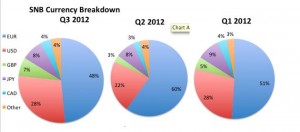
Composition of SNB Forex Reserves, Q3 2012 The Swiss National Bank (SNB) reduced the share of euros in the third quarter substantially from 60% in Q2 to 48% in Q3 and increased dollar and pound positions. The SNB bought 80 billion euros or more when the common currency was trading around 1.24$, especially at the end of …
Read More »2012-10-30
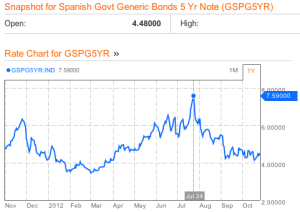
We think that the Swiss National Bank invested far more in Italian and Spanish bonds than analysts like Standard and Poor’s expected and was able to front-run ECB decisions. This new style of hedge funds, formerly called “central banks”, can refinance at zero percent and is able to show a lot better performance than the …
Read More »2012-10-29
Seasonal effects, the good months for the SNB and the US economy, but weaker ones for emerging markets and Switzerland Despite the seasonal effects between October and March, the SNB is not able to sell currency reserves consistently. Traditionally the USD gets stronger and stocks rise over the autumn months till January. This year’s stocks appreciation was possibly already anticipated …
Read More »2012-10-26
Swiss and German Economic Indicators, October 2012 Both Swiss and German economic indicators show continued signs of stability, but the German situation has become worse and might affect the Swiss. Especially low unemployment, rising real wages and strong trade balances are signs of robustness. Despite that, Germany’s industrial production is weaker than last year, …
Read More »2012-10-23
A couple of months ago the euro traded close to EUR/USD 1.20 and the whole world was betting on its breakdown. Once the euro downtrend ended thanks to QE3, OMT and euro zone current account surpluses, the common currency did not stop to appreciate against the yen and reached levels of EUR/JPY 104 and above. …
Read More »2012-10-22
Or how Swiss exporters are able to widen their margins thanks to the SNB currency manipulation Last week the Swiss export data for the third quarter was released. The news agency report was simple: Exports from Switzerland fell by a real 8.0 percent in September to 16.49 billion Swiss francs ($17.87 billion), the Federal …
Read More »
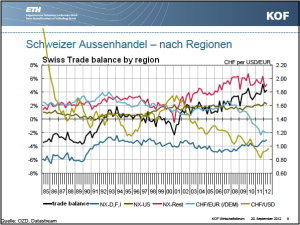
Seasonal effects, the good months for the SNB and the US economy, but weaker ones for emerging markets and Switzerland Given that the seasonal effects between October to March have started, the SNB might be able to sell some currency reserves. Traditionally both the USD gets stronger and stocks rise over the autumn months till January. This year’s stocks appreciation was …
Read More »

Submitted by Mark Chandler, from marctomarkets.com Our big picture view is that the US dollar is carving out an important bottom, after selling off in Q3 as policy makers moved to reduce the extreme tail risks. The position adjustment that inspired among investors appears to have largely run its course.This bottoming of the dollar is …
Read More »2012-10-21
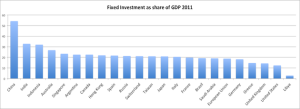
After a slowing in Chinese growth this year, economists recently stated that a hard landing has been avoided and that the economy might have bottomed out. Marc Faber has changed his mind and considers buying Chinese stocks. Also Sprach Analyst provides the following data: Sequential growth rates since Q1 through Q3 were 1.5%, 2.0% and 2.2% respectively, or in annualised annual rate, 6.16%, 8.24%, and 9.09% respectively. Compared that with the year-on-year growth of 8.1%, 7.6% and 7.4%.
Read More »2012-10-19
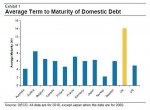
This page is the top page for several articles on bonds.
Read More »2012-10-18

Some ten days ago, we examined in detail why the monthly job data was no conspiracy as Jack Welch maintained, but simply flawed. Similarly as David Rosenberg we said that the way the BLS obtains data for the household survey was error-prone. Gluskin Sheff’s David Rosenberg That the 7.8 percent jobless rate takes it to the …
Read More »2012-10-15
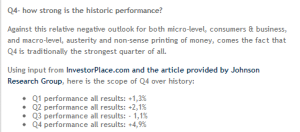
Seasonal effects, the good months for the SNB and the US economy, but weaker ones for emerging markets and Switzerland, have started Given that the seasonal effects between October to March have started, the SNB might be able to sell some currency reserves. Traditionally both the USD gets stronger and stocks rise over the autumn months till January. This year’s stocks …
Read More »2012-10-14
In the latest poll, 74.8 percent of the Norwegian population says no to EU membership, while 17.2 said they would vote yes in any referendum. 7.9 percent have not decided. Seven out of ten voters of the ruling party do not share the party’s views on the EU and would have voted no in a possible referendum, …
Read More »2012-10-12
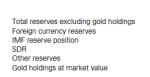
This link on the SNB website shows the data the central bank provides to the International Monetary Fund (IMF). It shows the SNB Forex and gold reserves in the last month. It is so-called “IMF Special Data Dissemination Standard (SNB Data)” It is released together with the international investment position, some monetary aggregates and the balance of payments two weeks after …
Read More »2012-10-11
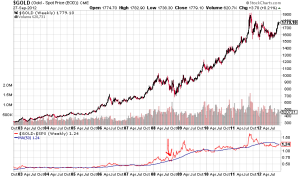
As we predicted on October 5 or one day later on DailyFX, metals have started their descent, silver lost one dollar, from levels around 35$ last week to 34$ now. Marc Faber joins our view and says that asset prices are quite vulnerable. “I’m not 100% in cash, for the simple reason that I could …
Read More »2012-10-09
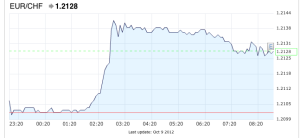
Strange movement in the EUR/CHF in the Asian session today The Asian session was a risk-on session, it recovered some of yesterday’s losses. After yesterday’s rather good HSBC services PMI, Shanghai Composite was up today by 1.97%. Therefore safe-havens like the yen and the Swissie were under pressure. At first, some Forex traders …
Read More »2012-10-08
Seasonal effects, the good months for the SNB and the US economy, but weaker ones for emerging markets and Switzerland, have started Given that the seasonal effects between October to March have started, the SNB might be able to sell some currency reserves. Traditionally the United States and the USD dollar become stronger and stocks rise over the autumn months …
Read More »

Submitted by Mark Chandler, from marctomarkets.com The Price of Protection We have been tracking the deterioration in the technical condition of the major foreign currencies in this weekly note for the past three weeks. The euro’s recovery, off the support we identified here last week near $1.2800, should not overshadow the fact that the dollar’s …
Read More »2012-10-07
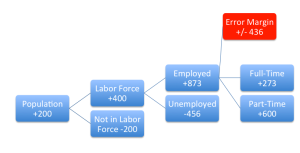
Conspiracy ? Huge Differences Between the Payrolls Report and the Household Survey based on the extracts of Robert Oak, Noslaves.com and his blog on Economic Populist It’s a conspiracy! The BLS is trying to swing the election! They’re cookin’ de books! By now you’ve seen the claims, accusations and mumblings by the pundits, press, twitter and blogosphere. So …
Read More »2012-10-05
The most famous investors Marc Faber and Jim Rogers were in a common interview on CNBC. Marc Faber is of our position, whereas Jim Rogers is still bullish on commodities. Marc points out that China’s bench mark stock index the Shanghai Stock Exchange Composite Index was at 6100 in 2007 even as it …
Read More »2012-10-01

Standard and Poor’s critique of the Swiss National Bank, Part 2, extracts from our full report As many readers of our blog know, we are not the best of friends with the current Swiss National Bank (SNB) policy: we recently published a paper claiming that the SNB will go bankrupt and …
Read More »
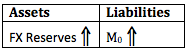
Seasonal effects, the good months for the SNB and the US economy, but weaker ones for emerging markets and Switzerland, have started Given that the seasonal effects between October to March have started, the SNB might be able to sell some currency reserves. Traditionally the United States and the USD dollar become stronger over the autumn months till …
Read More »2012-09-26
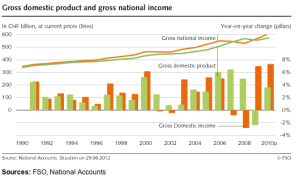
Part 1: Swiss investments abroad [This paper includes some of the S&P critique, but also aims to clarify some of S&P’s misleading points] Last Thursday Thomas Moser, a member of the Swiss National Bank (SNB) governing council, said that one of the main reasons for the strong franc is the conversion of Swiss foreign incomes …
Read More »2012-09-25
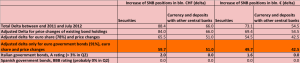
In the full report we explain in detail how one can analyze the balance sheet of the Swiss National Bank (SNB) based on several sources of information, for example the monthly bulletin, which shows the changes of the SNB balance sheet and the quarterly distribution of the SNB assets including the information about FX …
Read More »2012-09-24
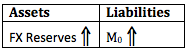
The most recent SNB monetary data show that more and more companies are increasing their deposits at the central bank at a quicker speed than local banks. Might this be missing trust in the Swiss banking system ?
Read More »2012-09-21
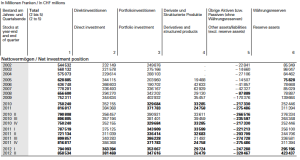
Swiss Gross National Income (GNI) rises by 1.8% in Q2, after Q1 +0.5% According to the latest SNB Monthly Bulletin, the Swiss net international investment position (NIIP) has improved by 64.5 billion francs. The Gross National Income (GNI) rises by 1.8% in Q2. The SNB currency reserves rose by 128 Bln. Francs in the …
Read More »2012-09-19
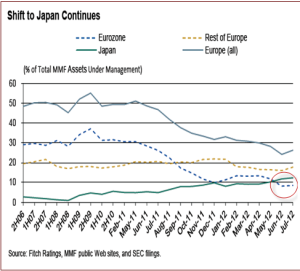
Abstract We determine the main criteria with which markets evaluate currency prices. We focus on explaining the differences between the carry trade era (or like Ben Barnanke called it “The Great Moderation”) and the period after the financial crisis. Our research shows that each one of the following three main preconditions must be fulfilled, …
Read More »
Die grossen Schweizer Franken-Mythen: Die SNB kann Gewinne durch die Währungsreserven erzielen Letzten Sonntag behauptete der frühere Nationalbank-Direktor Niklaus Blattner in der Sonntagszeitung: “Nach der Ankündigung von EZB-Direktor Mario Draghi kann kein Zweifel mehr bestehen, dass der Euro fortbestehen und Griechenland in der Währungsunion bleiben wird.” Draghi, Direktor der Europäischen Zentralbank (EZB), …
Read More »2012-09-17
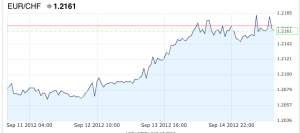
Recently we have observed the upward movement of all euro pairs. They have marked more or less continuously higher highs and higher lows thanks to massive support from the central banks ECB, Fed and SNB (ignore Sunday 16th) The first euro pair to finish this upwards trend is traditionally the EUR/CHF. …
Read More »2012-09-14
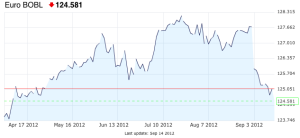
Citibank judges that the Swiss National Bank (SNB) does not need a peg anymore. The EUR/CHF exchange rate would be now over 1.20 even if exposed to the free market. Yesterday we showed that the upward move in the EUR/CHF is just the behavior of some euphoric Forex traders. In the meantime we see a completely …
Read More »2012-09-13
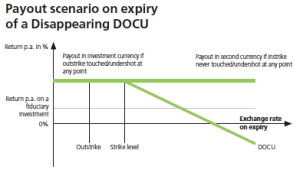
Isn’t it wonderful to have a strong central bank like the SNB sitting behind you when trading Forex? Losses are limited to the floor of 1.20 and in the meantime you can gain forward swaps with the higher euro zone interest rates. Today the Swiss National Bank (SNB) decided in its monetary policy assessment …
Read More »2012-09-12
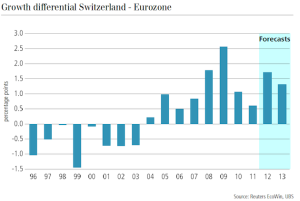
A bit breathlessly…. The next SNB rumor story comes from the so-well established Wall Street Journal, its columnist Nick Hastings. WSJ: The Swiss National Bank was bold before. And the central bank would be well advised to be just as bold again. When the SNB announced just over a year ago that it was setting a …
Read More »2012-09-10
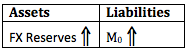
As we expected in our post “What’s this crazy movement in EUR/CHF ? SNB Floor Hike ?“, long-time investors, global macro funds and US investment banks are moving into gold and the Swiss franc again. The SNB had to buy euros and print new Swiss francs of around 5 billion francs last week, as …
Read More »
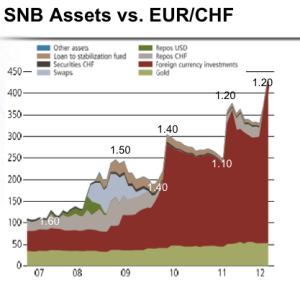
On Friday there was a big movement in the EUR/CHF. First it went up to 1.2154, fell later down to 1.2080 in the main American trading and rose again to 1.21 in the low-volume trading time. We repeat our entry from Friday, because we continuously updated the post after new developments, e.g. after the …
Read More »2012-09-03
In this post we show that the risks the Fed, the ECB and the Bundesbank incur are far smaller than the one the Swiss SNB takes. The Fed has “just” an inflation risk, that could cost 200 billion US$, 1.2% of US GDP. The ECB and Bundesbank have the risk that the euro zone splits …
Read More »2012-08-31
Germany’s stance in the euro crisis: More than ESM will not be possible for many years updated on August 31, 2012 German politicians and the German Bundesbank believe that the Euro crisis can be only solved by supply side reforms as formulated in the Euro Plus Pact, reforms that were already successfully introduced during the Thatcher/Reagan era in the …
Read More »2012-08-30
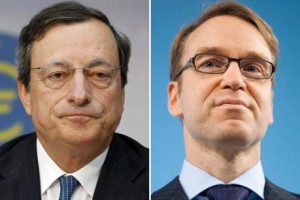
Even in the unlikely case of a fiscal union, the conflict “Draghi against Weidmann”, between the ECB and the Bundesbank will continue for years. The ECB mandate and european inflation figures do not allow for excessive ECB rate cuts or for state financing via the printing press, but Draghi wants to help his struggling …
Read More »2012-08-29
Swiss vs. German Economic Indicators, August 2012 Both Swiss and German economic indicators show continued signs of stability. Especially low unemployment, good retail sales and strong trade balances are signs of robustness. The German trade surplus has improved compared to last year, whereas the strong franc harmed the Swiss trade surplus just a bit. …
Read More »2012-08-27
Today Thomas Jordan gave a quick interview in the Swiss television. Everything was so well prepared and as sterilized. Thomas Jordan learned all answers by heart and was answered the questions about one second after the question was asked. It reminded me of an interview in Soviet television with former Soviet leader Leonid Brezhnev. Each …
Read More »
The Jackson Hole Symposium is traditionally a meeting of global central bankers, here the 2010 attendance list. This year it takes place between August 30 and September 1. Central bankers assemble The annual economic symposium for central bankers staged by the Federal Reserve Bank of Kansas City begins in Jackson Hole, Colorado (until September 1). …
Read More »2012-08-23
Here a follow-up of our contribution on Seeking Alpha written on August 15th, with the title “Are Markit PMIs really reliable?“. We recommended to go long the euro and the Swiss franc against the US dollar and sterling, because the Markit PMIs were not in line with trade balance data. Previously we suggested in …
Read More »2012-08-22

Berkeley Professor Brad DeLong has delivered a nice allegorical entry in his type pad on a quick Quantitative Easing. Letting speak old greek mythological figures he hides his personal opinion. A half now completely written platonic dialogue on what the Federal Reserve is Doing — or not Doing — Right Now DeLong explains the …
Read More »2012-08-21
We are currently looking for a curator that takes over the euro macro category. The Euro Crisis and its Reasons, details and chronology, German economists ,Eurobonds, fiscal or banking union,Who Says No to Austerity, Says Yes to the Northern Euro Ways to the Northern Euro
Read More »
2012-08-16
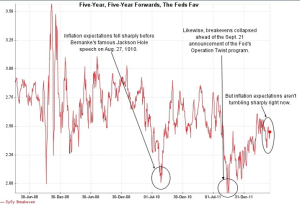
At this year’s Jackson Hole symposium, Ben Bernanke promised to help the economy via further easing if needed. We doubt his promises because because the Fed might contradict their inflation targets. Current levels of around 2 % for the consumer price inflation excluding food and energy (“core CPI“) and the deflator of the GDP …
Read More »2012-08-15
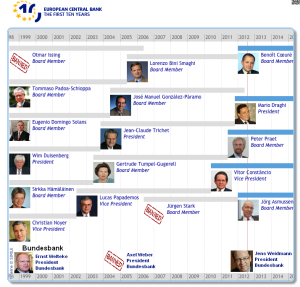
There are already three former European central bankers who criticize more or less openly the European Central Bank (ECB).
Read More »2012-08-10
We well remember when the über-bailouter of the Financial Times Wolfgang Münchau claimed that except some old economy professors like Otmar Issing nobody in Germany would like to abolish the euro. According to Münchau the euro can be saved only via a fiscal and a banking union. The response to Münchau’s post could be …
Read More »2012-08-07
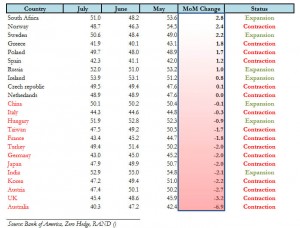
updated August 05,2012 We publish a detailed analysis of global PMIs and compare them with the main risk indicators S&P500, Copper, Brent and AUD/USD some days after most PMIs came out. Abstract: Thanks to positive US consumer confidence, stock markets are highly valued, whereas the Purchasing Manager Indices (PMIs) for the manufacturing industry are contracting …
Read More »
Dank der seit dem Winter immer noch positiven amerikanischen Konsumentenstimmung, steigen die Aktienmärkte weiter, während die Einkaufsmanager-Indizes der Fertigungswirtschaft sich schon seit 3 Monaten abwärts bewegen. Wie kommt dass die Aktienmärkte heute wesentlich höher als im September 2011 stehen, obwohl die Konjunkturdaten, insbesondere in der Fertigungswirtschaft wesentlich schlechtere Zahlen als damals liefern ? Dies obwohl …
Read More »2012-08-01

Dirk Müller: Die Strasse wird das Euro-Aus erzwingen
Read More »2012-07-31
More Chatter About The EUR/CHF Peg The FT reports that Switzerland is ‘new China’ in currencies Chatter that the SNB was buying 3 billion francs worth of euros per day. “The picture is one of a central bank that’s not coping with how much money is coming in,” said Kit Juckes, foreign currency analyst at Société …
Read More »

Mit dem SNB Zwischenbericht heute wurde es klar, dass die Schweizerische Nationalbank 77% der im zweiten Quartal um 125 Milliarden Franken erhöhten Devisenreserven in Euro investiert hat. Die Abhängigkeit vom Euro ist so gross geworden, so dass die Schweiz gezwungen sein könnte, ein Teil der Eurozone zu werden, wenn sie einen riesigen Verlust vermeiden will. …
Read More »
The SNB forces each Swiss to invest 73% of each one’s yearly income into Euros. Reason enough to join the Euro zone ?
Read More »
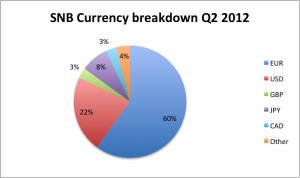
The Swiss National Bank (SNB) reported a profit of 6.5 billion Swiss Franc for the first half year (H1). After a loss of 1.7 bln. francs in the first quarter (Q1), it had a 8.2 billion profit for the second quarter (Q2). The Q2 SNB results of 8.2 bln. CHF were less than our …
Read More »2012-07-26
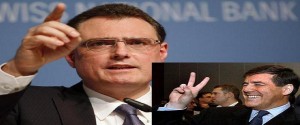
On July 31st the Swiss National Bank will publish interim results for the second quarter 2012. Already now we offer an estimate to our readers. Our estimate does not cover the central bank’s Forex trading results, they are difficult to estimate. A central bank is not a day trader, therefore the influence should be limited. …
Read More »
Am 31. Juli um 7.30 Uhr wird die Schweizerische Nationalbank (SNB) den Zwischenbericht für das zweite Quartal 2012 herausgeben. Wir offerieren unseren Lesern schon jetzt eine Schätzung. Wir rechnen mit einem Gewinn von 10,65 Milliarden CHF dank der starken Erhöhung der Devisenreserven in den Monaten Mai und Juni und der Abschwächung des Franken gegenüber dem US-Dollar, …
Read More »2012-07-24
Six Reasons Why Italy May Exit Before Spain
1) Rise of the Five Star Movement
2) 44% of Italians view the euro negatively, only 30% favorably. That is biggest negative spread in the eurozone. In Spain more view the euro positively than negative, albeit by a small 4 percentage point spread.
2012-07-22
Silvio Berlusconi ist “endlich” zurück und Kandidat seines “Polo della Liberia (PDL) für die Wahlen 2013. Premierminister Monti, der nicht vom Volk, sondern von den Finanzeliten gewählt wurde, soll bis zum Frühjahr 2013 regieren, könnte aber aber auch früher zurücktreten. Aufgrund einer Umfrage im Juni würde die Anti-Euro-Bewegung “5 Stelle” 20,6% in Wahlen erhalten, Berlusconi’s …
Read More »2012-07-20
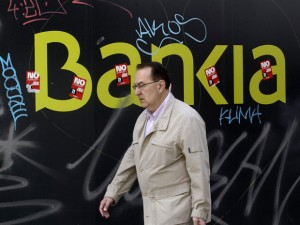
Here the full text of the European’ Commission’s Memorandum of Understanding with Spain regarding the bailout of the Spanish banking sector released earlier today.
Memorandum of Understanding on Financial-Sector Policy Conditionally
2012-07-18
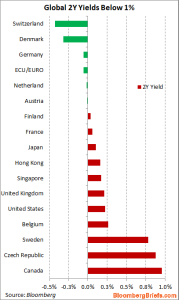
After the first time End May, the German Schatz turns negative:
German June 2014 Schatz Average Yield -0.06% vs 0.10% on June 20
Swiss Eidgenossen 2yrs still at -0.4%
2012-07-15
Die Aufklärung für den mündigen Bürger über ESM, Eurobonds, Schuldengemeinschaft und Generationengerechtigkeit. Nehmen Sie sich die Zeit und Sie können die kommende Politik Merkels und den weiteren Verlauf der Eurokrise voraussehen, möglicherweise sogar mit ihrem Investment .
Read More »2012-07-12
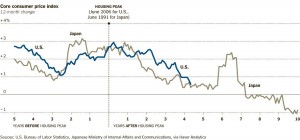
At a time of speculations about global deflation, we show an interesting and very different aspect. Our CPI and wage data comparison among different developed countries, shows that Switzerland and Japan will see both inflation, whereas other countries like Australia will see disinflation.
Read More »2012-07-11

The German constitutional court will need up to 3 months for the injunction. Weidmann’s critic on the ESM in detail. Estimations of German liability between 900 bln. and 2 trillion EUR.
Read More »
Deutsches Verfassungsgericht braucht 3 Monate für seinen Eilentscheid, der nun eine halbe Hauptsachenentscheidung ist. Die Wahl im Gericht zwischen der system-relevanten Bank ESM und dem “Herausschmeissen” der Südländer aus dem Euro und vieles aus dem Verfassungsgericht.
Read More »2012-07-10

What is the injunction procedure of the German constitutional court exactly about. What are the arguments of the Anti-ESM and the Pro-ESM fractions ?
Read More »2012-07-08
Zwei Initiativen für Kleinanleger um das Geld/Gold vor den Mächtigen zu retten Der Ökonom Detlev Schlichter der “Österreichischen Schule” hat einen Vortrag beim “Verein Goldfranken” gehalten. Hier der äquivalente Vortrag auf Englisch beim Adam-Smith-Institut in den USA. Die Kritik an der Boom und Bust Politik der Nationalbanken.
Read More »2012-07-06
The Swiss National Bank would realize a loss of 31 bln. francs, if it accepted a EUR/CHF exchange rate of 1.10 instead 1.20 and if we assume that the Swissie also appreciates against the dollar and other currencies
Read More »
Currently only in english.
Read More »
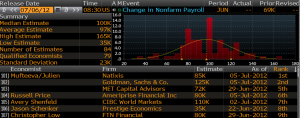
A detailed comparison of Non-Farm Payroll estimators from six different sources, like Bloomberg, ISM, Department of Labor and ADP.
Read More »
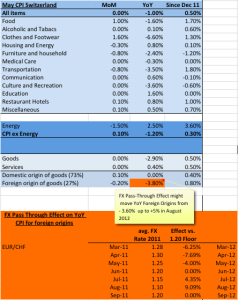
Slowing energy prices (MoM -4.2%) and seasonal effects for clothes and footwear (MoM -2.8%) drove Switzerland in a slight deflation on monthly basis again.
Read More »2012-07-04
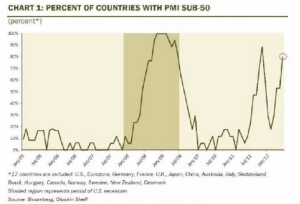
updated July 4,2012 This page inside our macro data menu contains global PMIs compared with the main risk indicators S&P500, Copper, Brent and AUD/USD as of the day after most PMIs came out. JP Morgan’s Global PMI: Click for details inside the table, History of composite PMI
Read More »

Voters are strongly against many other European utopias The newest poll of the Forsa institute, here in the left-wing Stern and the conservative Welt, shows that Germans are strongly against Eurobonds and many more European “utopias”, as we called it. The German chancellor Angela Merkel recently connected her life with the fulfillment of the voters wish to …
Read More »2012-07-02

Wolfgang Münchau endorsed many of our arguments Wolfgang Münchau, Financial Times, has endorsed many of our arguments of our Friday’s opinion about the Euro summit where we stated that there was nothing really new. Münchau even claims that “The real victor in Brussels was Merkel.”
Read More »2012-06-30

SNB In A Bind With Euro Holdings Today’s reserve data showed skyrocketing reserves at the Swiss National Bank as they defend the EUR/CHF floor. Reserves were at 365B francs at the end of Q2 compared to 245B at the end of March, with all the growth coming in the final two months of the quarter … Continue reading »
Read More »2012-06-29

At the euro summit today there was essentially nothing what was really surprising. We wonder what markets are so excited about.
Read More »
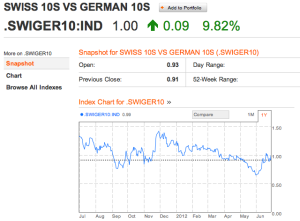
The spread between the Swiss government Eidgenossen bond against the Germany 10yrs. Bund will see further gain in the future, after the Euro summit opened the door for ESM direct financing of banks. Differences between EFSF and ESM explained
Read More »2012-06-27
German chancellor Angela Merkel today confirmed the content of our article that Eurobonds are pure utopia. She vows “No Eurobonds as Long as I Live”.
Read More »2012-06-25

The win for the pro-bailout parties in the Greek elections was no win for the Swiss National Bank (SNB), even if the fear of an immediate bank-run and extreme money flows into Switzerland are avoided. Also the fact that QE3 is not coming in the next weeks did not help the SNB.
Read More »2012-06-24

The German “Der Focus”,one of the most successful weekly magazines, titles “Can Merkel stop the Eurobonds ?” Der Focus claims that Eurobonds have the following issues:
Read More »2012-06-22
Eurobonds are light years away.Germany wants the following order: 1) Euro Plus Pact 2) Fiscal Compact 3) ESM 4) Political union 5) Fiscal union 6) Eurobonds
Read More »2012-06-21
2012-06-20
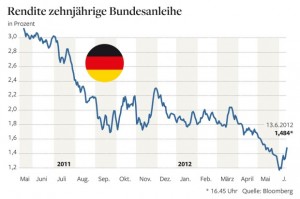
In the latest post we started discussing the implications of a German euro exit for the Swiss National Bank, this time we will look on another risk: The rising German Bund yields.
Read More »2012-06-14

Will the SNB printing policy lead to inflation and a housing bust when Germany leaves the Euro ? Recently the voices for a German euro exit have become louder and louder. The most recent voice comes from Biderman , the FT says that the rise of German Bunds holds the secret how the eurozone crisis will …
Read More »2012-06-13
2012-06-12
Steen Jakobsen sees 25% percent chance that the floor breaks and if it does it breaks to parity. Last week Thomas Jordan removed any hopes on a hike of the EUR/CHF and invited smart money and hedge funds to a no-risk, high return game on the Swiss franc, which these gratefully accepted. After Morgan Stanley …
Read More »
2012-06-11
Here a quick list of some of our Twitter followers:
Marc Faber Blog @marcfaberblog FOLLOWS YOU
Marc Faber is an investor and economist known for his spot-on assessment of the world economy. He also manages his own investment company, Marc Faber Limited.· http://marcfaberblog.com
economie_suisse @economie_suisse FOLLOWS YOU
La principale organisation faîtière de l’économie suisse
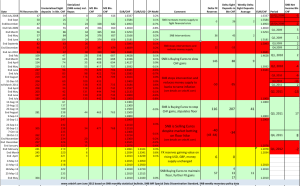
According to the newest monetary data, in the week ending June 8th, the unsterialized money supply (as measured in sight deposits of domestic and foreign banks and deposits by the Swiss confederation) increased by 14 billion Swiss francs.
Read More »
2012-06-10
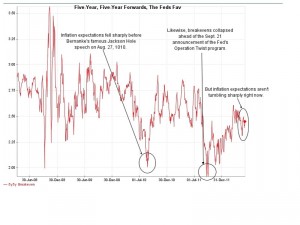
The main drivers for demand for Swiss francs are the Euro crisis, but even more the behavior of American investors, who go out of the dollar in the fear of further bad US economic data and in the fear of Quantitative Easing. This will push down the dollar and safe-havens like the CHF, gold or the …
Read More »
How the SNB Chairman Jordan has invited hedge funds and smart investors to a risk-free, high-return guaranteed investment in Swiss francs A wrap-up of Swiss newspapers for non-German literates In parallel to the start of the UEFA Euro 2012, the Swiss National Bank and its policy towards the EUR/CHF exchange rate has become a political …
Read More »2012-06-09
The “Sell in May, come back in October” effect It is the same seasonal anomaly nearly every year: The statistically flawed (see here and here) Non-Farm Payrolls (NFP) report delivers some good winter readings with 200K new jobs, this time additionally fuelled by a weather effect; biased data that let hard-core Keynesian policy makers doubt Okun’s law. Consequently the stock markets rally …
Read More »2012-06-07
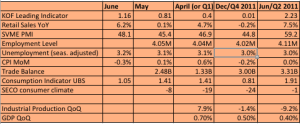
2012-06-06
2012-06-05
2012-06-04
The most recent money supply data from the Swiss National Bank (SNB) has shown increases of huge amounts. As compared with its loss of 19 bln. francs in 2010 (3% percent of the Swiss GDP), the central bank printed tremendous 17.3 bln. in the week ending in June 1st and 13 bln. in the one …
Read More »2012-06-02
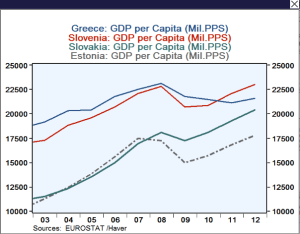
Words heart on German street in 2010 during the first Greek bailouts were that Germany should obtain the Greek islands as collateral if Greece is not able to pay back the debt to Germany. But even today German n-tv is reporting about many Greek real estate brokers that are currently delling islands. If it is not that type …
Read More »2012-06-01
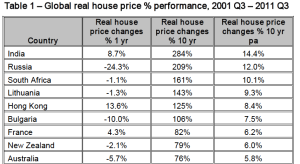
Still a draft, From Barnaul, Siberia, Russia Inna, 28, is a high-school teacher, she has one child. Her monthly salary is 8’500 Russian Rubel, about 257 USD. Similarly as many state employees her salary is very low. Recently the state doubled the salary of policemen and soldiers from 20’000 RUB to 40’000 RUB. A main …
Read More »2012-05-31
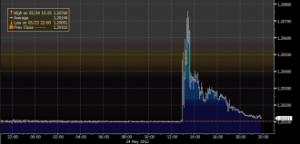
FT A Wee Bit Late To The Party… Notices Europeans have been buying Swiss francs and dollars. Who knew? By Jamie Coleman || May 30, 2012 at 19:43 GMT AUD/USD, NZD/USD Dragged Higher As EUR Recovers As Gerry mentioned earlier, the talk of a rescue fund for EZ banks seems to have set off some short covering …
Read More »2012-05-30
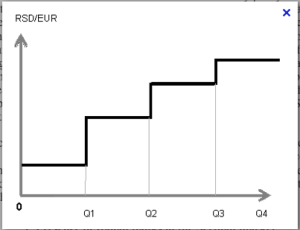
There are currently rumors going on on CNBC that the SNB is planning something this night. As we explained here, the SNB had to strongly restart the printing press and printed tremendous 13 bln francs in one week. Moreover, they probably sold some of their in Q4 2011 and Q1 2012 acquired GBP, JYP and …
Read More »
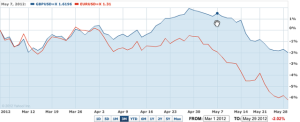
As explained in our previous post, at least till May 4th the Swiss National Bank could have been a net buyer of GBP, USD and JPY selling Euros off their balance sheet. In the week of May 11, QE3 talk came up together with a bad Phily Fed reading. From then the SNB had to acquire …
Read More »2012-05-29

The game for the Swiss National Bank seems to have changed completely. Again the central bank had increase money supply, as measured by deposits at the SNB by local banks and other sight deposits, this time even by 13219 mil. francs (source). This money printing implies that the SNB had to buy in Euros in …
Read More »2012-05-27
For the first time the chairman of the Swiss National Bank Jordan has admitted that the EUR/CHF floor of 1.20 will not be raised. In an interview with the Swiss Sonntagszeitung, here also cited by Bloomberg, he said:
Read More »2012-05-24
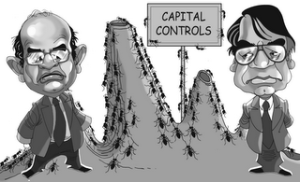
Exactly when the US had a relatively good Markit Flash PMI, rumors are sent out that deposits in CHF for foreigners should be taxed. To send out this rumor together with good US data seems to be intentional. According to Banque CIC the SNB has declined to comment. We remember the last SNB meeting when similar rumors circulated.
Read More »
Or why the biggest opponents of the SNB are not Weltwoche and the SVP (Swiss People’s Party) but the Federal Reserve
Read More »
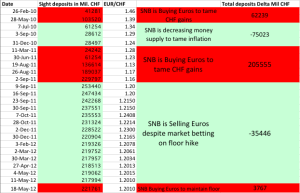
Some economists have claimed that the Swiss National Bank (SNB) will be always able to maintain the floor. As opposed to George Soros’ defeat of the Bank of England, the SNB is able to print money ad infinitum, whereas the BoE had limited currency reserves to support sterling. The question, however, is where this “infinitum” …
Read More »
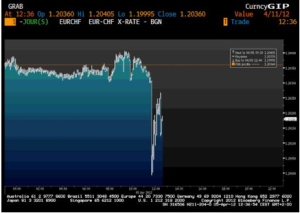
As we have showed in a preceding post, the SNB seems to have decided the peg the franc to the euro at 1.20. Therefore the SNB traders were actively selling euros and buying francs even close to the floor limit of 1.20. But then in the beginning of April some Asian traders managed to push the …
Read More »2012-05-22
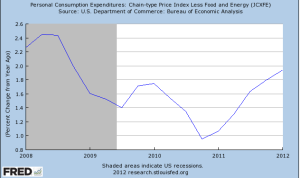
Just some simple words about the vicious cycle of the US economy and the consequences on the US dollar: A stronger USD will not rescue the US economy, quite the contrary. US companies will not hire in the US, but outsource or hire overseas. If they hire in the US, due to the high number …
Read More »2012-05-20
As also noticed by Credit Suisse, the Swiss National Bank had to buy euros and sell Swiss francs in the week of May 11th to May 18th. Their recent easy strategy to sell euros and buy Swiss Francs and to diversify from euros into other currencies may not continue.
Read More »
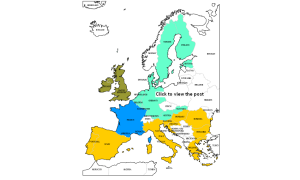
A retrospective from the year 2030 on two decades of failed european integration policy and 10 years of successful disintegration policy The following essay shows that currency regimes come and go over the time. Nothing is stable with the time, especially the use of a currency. What has never happened in history is the use …
Read More »
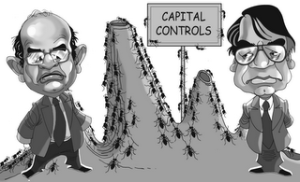
A former SNB chief economist says that capital controls are impossible, just empty words. In case of a Euro break-up the Swissie must rise together with USD, GBP and JPY An article, surprisingly from the usually left-wing Tagesanzeiger, more or less closely translated with some additional remarks.
Read More »2012-05-19
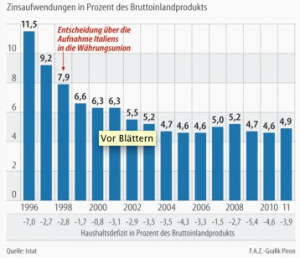
Just a little wrap-up of two tweets read in 5 minutes, to which I finally added a bit more out of my recent Tweets. One Tweet: The British finance minister Osborne has emphasized that the euro zone needs to protect its peripheral economies. “The whole of Europe needs to become more competitive and productive. That …
Read More »2012-05-12
The years 2009 to 2011 have seen four institutions that created bubbles in commodity, stock and real estate markets. 2008 and 2009 saw the massive Keynesian interventions by the US state and the Chinese government. In 2009 the first Quantitative Easing measures enabled a first flood of hot money into Emerging Markets. Summer 2010 witnessed …
Read More »2012-05-10
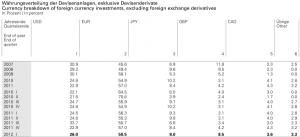
We reckon that the central bank has introduced an automatic peg mechanism which obliges them to buy euros at exactly 1.2010 and sell euros above this level (reasons and details here). If they sold more euros than they bought, they are happy to have offloaded some items of their overloaded balance sheet. If they bought more euros than they sold, however, there are some “superfluous” euros. Instead putting these euros on their balance sheet, they might sell these superfluous euros against the other SDR currencies USD, GBP and JPY, which pushes the euro down against this currency basket – something that German and Swiss exporters will appreciate.
Read More »2012-05-06
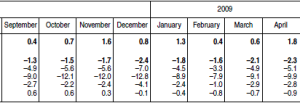
The unreliable Non-Farm Payrolls has far too much importance Interesting to see that markets needed two relatively bad NFPs to really believe that their main indicators, the “Non-Farm Payroll” reports were strongly biased in January and February by a positive weather effect. HFT algorithms that highly influence stock market prices, are not able to take …
Read More »2012-05-01
Why the big Q1 loss of the SNB was actually a big win for the central bank Anybody watching the EUR/CHF exchange rate this year was wondering why the volatility the pair saw last year had completely left. The pair slowly fell from 1.2156 over 1.2040 at the end of Q1 to 1.2014 today. FX …
Read More »2012-04-30
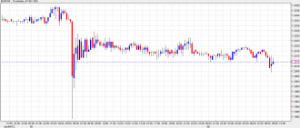
EUR/GBP: If You Want To Know Why Its Falling, Have A Look At The SNB Thanks Goose for the reminder that the SNB released figures on its FX reserves holdings and these showed a marked increase in GBP holdings. This has been a constant theme over the last few weeks/months, the SNB buys EUR/CHF in the marketplace …
Read More »2012-04-27
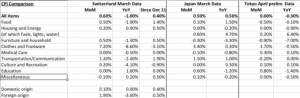
4 future scenarios for the Swiss franc and the Japanese yen For many people it is astonishing that the Swiss franc continuously rises against the euro, especially when markets are up. Is the CHF no safe-haven any more ? This year the Japanese yen has strongly fallen against the major currencies. Together with the upturn …
Read More »2012-03-31
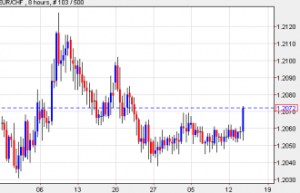
Nomura Touts EUR/CHF Longs Strategists there advise going long around the current levels, they say the floor will not break. They target 1.24. I have to agree. To me, it’s a question of buying low or buying a bit lower. By Adam Button || March 30, 2012 at 14:50 GMT EUR/CHF Touches One-Month Low Bounced off …
Read More »2012-03-27
2012-03-25
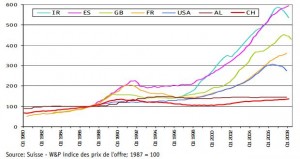
Abstract In the following article we will explain which types of crisis occur in the euro area and will argue that this crisis will last at least another fifteen years. (1) Competitiveness crisis: Before the euro introduction peripheral countries regularly saw their currency depreciate against the German Mark and helped them to increase their competitiveness. …
Read More »2012-03-21
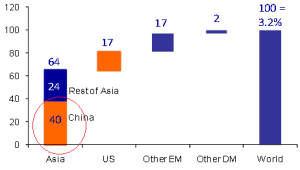
Content : What Determines FX Rates? Purchasing Power Parity, Real Effective Exchange Rate, Balance of Payments Model, (Reverse) Carry Trade, Asset Market Model, Real Mean Reversion, lots more
Read More »2012-03-14
Between November 2011 and January 2012 mostly left-wing politicians and trade unions wanted the EUR/CHF floor to be risen to 1.30 or 1.40 and uttered their wishes regularly in the Swiss newspapers, triggering many FX traders to speculate on this hike. Recently these demands have become more silent even if some UBS analysts still see the floor to …
Read More »2012-02-28
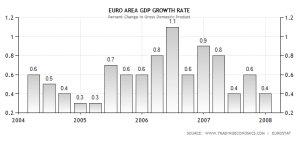
Our analysis from February 2012 shows astonishing accurateness: It predicted that the euro would not rise against CHF and that the commodity currencies were overvalued and subject to correction.
Basic foreign exchange theory, the SNB price stability mandate and strong fundamentals for Switzerland and bad ones for the peripheral countries of the euro zone speak for the thesis that the EUR/CHF exchange rate might never go over the level of around 1.22 or 1.23 again. Therefore the SNB will need to think about an exit strategy from the current floor. Moreover, it predicted the break-down of commodity currency, because they were clearly overvalue in 2012, but the Swiss franc was not.
Read More »2012-02-26
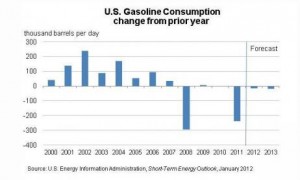
Oil prices Oil prices will rise quickly this year along with the recovery, the Iran issues and last but not least driven by investor demands of yield, implemented in the HFT algos. Interestingly the Iran issues already existed in December, but oil prices were falling, at that moment investors did not believe in a global recovery yet, …
Read More »2012-02-08

2012-02-05
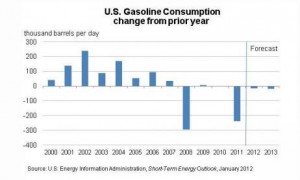
In recent posts Keynesians were criticized that hikes in the monetary base like Quantitative Easing (QE2) failed to lift the US economy, but it was the debt ceiling that helped to restore confidence in the US and that austerity can lead to GDP growth. Paul Krugman angrily replied that “even a huge rise in the …
Read More »2012-02-02
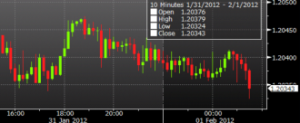
EUR/CHF Busy Doing Jack; Jordan Gobbing Off Later EUR/CHF sits at 1.2048, some 7 pips easier from when I started out. Barrier option interest sits at 1.2025 and ofcourse 1.2000. SNB interim head honcho Jordan speaks later this evening (18:30 GMT) in Zurich. Might be giving instructions on how to make his favourite alpine muesli …
Read More »2012-01-31
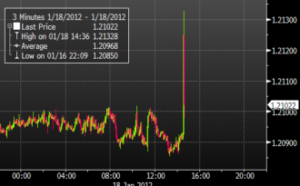
1.2034 The EUR/CHF Low As Risk-Off Resumes 1.2025 barrier supposedly in play while the 1.2000 peg below will act as a magnet if broken. There is something about the forex mindset that prompts markets to reach out and touch things that are not meant to be touched. EUR/US fell to 1.3063, triggering a few …
Read More »2012-01-11
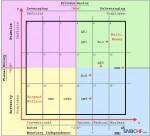
2012-01-10
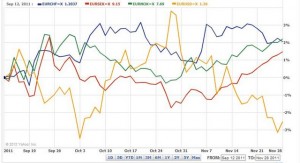
After the announcement of the floor in the EUR/CHF pair, many predicted the Swedish and the Norwegian Krone to take the place of the Swiss Franc as European save-haven against the Euro turmoil (http://on.ft.com/pKSJ1V). Both countries possess a low level of debt, positive trade balance and very competitive economies.
Read More »2011-12-31
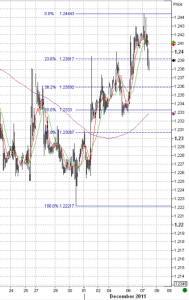
Four Trades For 2012: #2 Sell The Swiss Franc I bought EUR/CHF shortly after the 1.20 peg was introduced and have held it ever since. My only regret has not been trading the range more aggressively. At this point everyone has an opinion of the SNB so I won’t try to convince the bears. Personally, …
Read More »2011-12-18
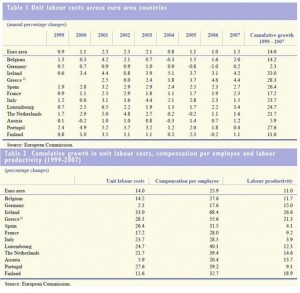
The Wirtschaftswoche reports about the real reasons of ECB Chief economist Jürgen Stark’s resignation. The reasons are rather political, namely a protest against European governments:
Read More »2011-12-14
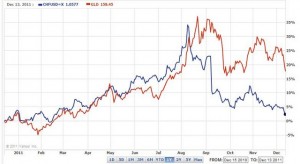
Many participants in the FX markets seem to be sure that the SNB will lift the EUR/CHF flow to 1.25 Here the pros and the cons:
Read More »2011-11-30
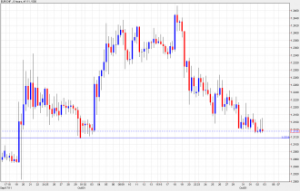
Rumour Of A Softer KOF Swiss Leading Indicator… Expected 0.63 vs previous 0.80, but the number now being touted is 0.35 EUR/CHF is getting a leg up on this around 1.2283 now from 1.2260 earlier By Pete Jackson || November 30, 2011 at 10:21 GMT Large Corporate Bids In EUR/CHF…. At 1.2250 I’m told it relates to …
Read More »2011-10-31
October 2011 Looks Like Market Exercising The Free EUR Put The SNB Bought For It EUR/CHF has been under pressure for the the last two weeks despite Herculean efforts by the EU/IMF to bailout the euro zone. It looks as if the market is taking up the SNB on its offer the buy unlimited …
Read More »2011-09-30
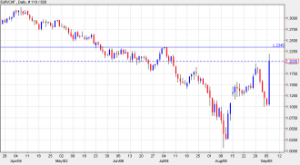
SNB Spotted In The Cross Today… Traders say the SNB was seen on the bid in lumpy size on the quick slide toward 1.2120 shortly after the open of US equity cash markets at 13:30. We’ve quickly bounced to 1.2170. By Jamie Coleman || September 30, 2011 at 14:20 GMT Category: All, Americas, Mkt Talk, Regions || Tags: EUR/CHF || 0 comments || Add …
Read More »2011-08-31
EUR/CHF Kicked Lower Again Hitting a new low this week of 1.1545 and is down over 300 pips on the day. The moved largely initiated by a major swiss name earlier apparently in conjunction with a hedge fund. Comments from the Swiss Econ Min over the last hour hardly helping matters, after the govt aid package …
Read More »2011-07-31
ForexLive Asian Market Open EUR/USD is trading around 1.4390 and USD/JPY is at 77.20 as the market awaits the latest developments out of Washington. Risk pairs like EUR/JPY and EUR/CHF are likely to be whippy this morning as the headlines hit the newswires. Good luck out there. By Sean Lee || July 31, 2011 at 20:49 … Continue reading »
Read More »2011-06-30
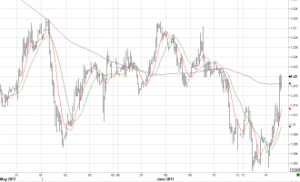
Specs Scrambling For Cover In EUR/CHF The Armageddon trade is being taken off in dramatic size in thin-month-end markets, driving EUR/CHF above 1.2200. USD/CHF is nearing resistance at 0.8440. Traders not talk of significant interest from real money accounts to buy both USD/CHF and USD/JPY at the fixing at 15:00 GMT. The danger now is … Continue reading »
Read More »2011-05-31
May 2011 ForexLive Asian Market Open: Analysis With Fries Just brilliant Jamie Australian GDP this morning and the market is now gearing itself for a poor number after yesterday’s data and weekend comments from the Treasurer. China is selling rallies in AUD/USD and Middle East Sovereigns are buying big dips; sounds like a recipe for medium … Continue reading »
Read More »2011-05-27
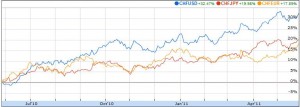
May. 27th 2011 Extracts from the history of the Swiss franc (May 2011) This month, the Swiss Franc touched a record high against not one, but two currencies: the US dollar and the Euro. Having risen by more than 30% against the former and 20% against the latter, the franc might just be the world’s …
Read More »2011-05-07
2011-04-30
Quick Look At The Order Board EUR/USD: At least two sizeable barriers at 1.4550; light stops immediately above 1.4555; decent-sized offers near 1.4600 AUD/USD: Decent-sized bids from option players 1.0610/20 USD/JPY: Solid bids 82.00, 81.80, 81.50. Offers still solid 83.10, 83.30 and somewhat larger near 83.50. EUR/GBP: Heavy stops above .8950 EUR/CHF: Moderate buying interest near …
Read More »2011-03-31
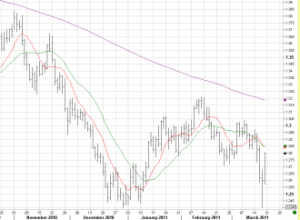
March 2011 Swiss KOF Leading Growth Indicator 2.24 In March Up from revised 2.19 in February (initial 2.18.) Stronger than median forecast of 2.15. Bit of a surprise. EUR/CHF lower, presently at 1.2978. By Gerry Davies || March 30, 2011 at 09:39 GMT EUR/USD: Look To The Crosses For Guidance EUR/JPY has made a significant move …
Read More »2011-03-03
2011-02-28
February 2011 EUR/USD Outlook EUR/CHF looks like its forming important technical support at 1.2700 and should go higher. EUR/GBP and EUR/JPY are best described as choppy but the EUR/AUD is also exhibiting some ‘basing’ tendencies. With the USD in sell mode, the path of least resistance for EUR/USD would seem to be up. It will not …
Read More »2011-02-06
Feb. 6th 2011 Extracts from the history of the Swiss franc (February 2011) The second half of 2010 witnessed a 20% rise in the Swiss Franc (against the US Dollar), which experienced an upswing more closely associated with equities than with currencies. It has managed to entrench itself well above parity with the Dollar, and …
Read More »2011-01-31
ForexLive Asian Market Open: Risk Aversion To The Fore Fears of an escalation of the troubles in Egypt and a possible spread throughout the region have led to some risk aversion in early interbank trade. EUR/JPY is trading at 111.40 after closing at 111.75 on Friday night, USD/JPY is trading just below 82.00, and EUR/CHF …
Read More »2010-12-31
Hildebrand Unable To Unload ‘Burden’ Of Record Franc As GDP Seen Slowing Bloomberg article. EUR/CHF down at 1.2595 from early 1.2635. Just reading UBS forex strategists say they are bearish the cross, focusing on 1.2439 ahead of 1.2283. They see resistance at 1.2714. They also forecast a fall in USD/CHF. See break through support at …
Read More »2010-12-29
Dec. 29th 2010 Extracts from the history of the Swiss franc (December 2010) In the last two weeks, the Swiss Franc rose to record highs against not one, not two, but three major currencies: the US Dollar, Euro, and British Pound. The Franc is now entrenched well above parity against the Dollar, and is …
Read More »2010-11-30
EUR/CHF Continues Lower Presently down at 1.3055 from early 1.3090, having been as low as 1.3037 so far. Earlier I was reading comments made by UBS economist Huenerwadel, who said “At least from a fundamental point of view and aware of the increased long CHF positioning, very little speaks in favour of a materially higher EUR/CHF …
Read More »2010-11-29
2010-10-31
EUR/CHF Up On Day; Talk Of 1.3700 Option Interest EUR/CHF up at 1.3680 from early 1.3635. Talk of 1.3700 option interest. Guess we should expect some defensive selling to kick in then. By Gerry Davies || October 27, 2010 at 09:11 GMT Cititechs Cut Long EUR/GBP Position As I wrote yesterday, I thought this was a bad …
Read More »2010-10-14
The SNB has already tried a lot to weaken the franc. A (google) translation of a list of capital controls of the Never Mind the Markets blog. The fear of the economic effects Brake by an overvalued franc increases. Massive interventions by the Swiss National Bank (SNB) with € purchases are now ineffective fizzles. Does it …
Read More »2010-09-30
Cable Showing Signs Of Tiredness Cable rallied above 1.5900 in the early European rush to sell EUR/GBP but the sharp fall since doesn’t bode well for the short term bulls. I personally have exited most of my long position and will look to reinstate towards 1.5500. GBP/CHF once again halted at the major 1.5360 low … Continue reading »
Read More »2010-09-09
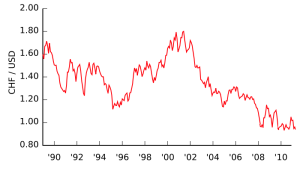
Sep. 9th 2010 Extracts from the history of the Swiss franc (September 2010) In the year-to-date, the Swiss Franc has risen 3% against the Dollar, 15% against the Euro, and more than 5% on a trade-weighted basis. It recently touched a record low against the Euro, and is closing in on parity with the …
Read More »2010-08-31
ForexLive Asian Market Open: CHF, JPY Up; GBP Down EUR/CHF will begin the new month at fresh record lows and this may encourage some of the bigger macro funds to join in the rout, those that aren’t already involved that is. I think it was Paul Tudor-Jones who said that his best trades often came … Continue reading »
Read More »2010-07-31
EUR/CHF Hit Again EUR/CHF has been hit again, down at 1.3535 from early 1.3580. Recently there has been talk of the Swiss National Bank selling the cross, something I for one certainly can’t substantiate. Also yesterday there were rumours of a September rate hike in Switzerland. All very murky. The EUR/CHF cross selling has helped pressure EUR/USD, which is … Continue reading »
Read More »2010-06-30
EUR/CHF Firmer EUR/CHF up at 1.3260 from early 1.3210. Move comes as Hungary official says government plans loan deal with IMF. Large German name seen buying the cross. By Gerry Davies || June 30, 2010 at 06:45 GMT Euro Profit Taking Rebound The euro has found some buying support across the board on profit taking. I …
Read More »2010-06-22
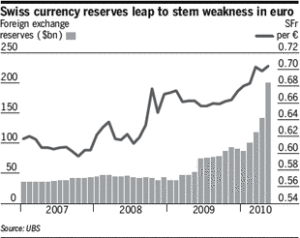
Jun. 22nd 2010 Extracts from the history of the Swiss Franc (June 2010) The Swiss National Bank (SNB) has apparently admitted (temporary) defeat in its battle to hold down the value of the Franc. ” ‘The SNB has reached its limits and if the market wants to see a franc at 1.35 versus the euro, …
Read More »2010-05-31
ForexLive Asian Market Open: EUR Worries Return The big Sovereign players couldn’t get enough of the EUR when it was at 1.40 and now it looks like they can’t get out quick enough. The BIS has been a regular seller on behalf of other central banks, the SNB are quietly trying to offload what they …
Read More »2010-04-30
April 2010 Quick Look At The Order Books AUD/USD: stops below .9135 and again below .9070 USD/JPY: solid bids 92.70, stops below 92.40, heavy semi-official bids expected at 91.50 ( I’m hearing of “massive” stops below 90.50 so if market gets on a roll lower keep this level in mind) EUR/USD: looks like the order …
Read More »2010-03-31
, March 2010 Big Barrier Eyed In EUR/CHF Traders report a large barrier option is in play at the 1.4200 level in EUR/CHF. Nothing attracts price action like a big barrier. The owner of the option wants to protect his investment while the bank that sold the option wants to knock it out to erase …
Read More »2010-03-22
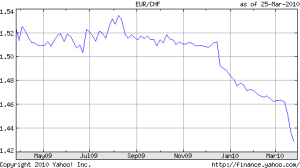
Mar. 26th 2010 Extracts from the history of the Swiss Franc (March 2010) One of the clear victors of the Greek sovereign debt crisis has been the Swiss Franc, which has risen 5% against the Euro over the last quarter en route to a record high. 5% may not sound like much until you …
Read More »2010-02-28
January, February 2010 EUR/CHF Steady As A Rock EUR/CHF sits at 1.4632, seeing very steady trade. I guess we should note that the SNB quite likes intervening on a Friday. By Gerry Davies || February 26, 2010 at 08:19 GMT Rumours Of SNB Help EUR/CHF Higher The EUR/CHF has popped from 1.4630 to 1.4675 on rumours …
Read More »2010-01-26
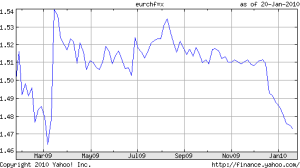
Jan. 26th 2010 Extracts from the history of the Swiss Franc Pull up a 1-year chart of the Euro against the Swiss Franc, and you’ll quickly notice a salient trend: the exchange rate has hovered slightly above €1.50 since last March, with three notable deviations. The first occurred last March, when the Swiss National Bank (SNB) …
Read More »2009-12-31

December 2009 EUR/CHF Selling Off EUR/CHF is down at 1.4835 from an early 1.4865, the swissy bulls happy to probe for signs of meaningful SNB interest. Many are voicing surprise at the lack of interest being show by the Swiss National Bank to curtail the recent burgeoning swissy strength. There is talk of 1.4800 barrier …
Read More »2009-11-30
November 2009 Asian FX Market Open: Price Action Suggests That There’s More To Come As I wrote yesterday, the market moves reminded me of 12 months ago when risk aversion was in full flow and this has continued throughout the European session. As Lilac mentioned after the FTSE fell by over 3%, we could be …
Read More »2009-10-31
A market view history of the EUR/CHF from the website ForexLive October 2009 Cue The Jaws Music EUR/CHF is trading below 1.5100, presently at 1.5090, very nearly at 1.5o80 where the SNB is last said to have intervened………. More Signs Of US And Global Recovery The US GDP number was yet another sign of a global economic recovery …
Read More »2009-10-30
A market view history of the EUR/CHF from the website ForexLive September 2009 Market Settles Down After More NZD-Led Volatility As Jamie said earlier, it’s amazing that an economy half the size of Norway’s can lead the market by the nose and it has now done so for the second successive day. NZD/USD rose almost …
Read More »2009-09-29
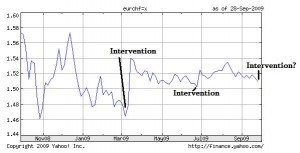
Sep. 29th 2009 Extracts from the history of the Swiss Franc (September 2009) After a brief “hiatus,” the Swiss Franc is once again rising, and is now dangerously close to the $1.50 CHF/EUR “line in the sand” that spurred the last two rounds of Central Bank Intervention.Both from the standpoint of the Swiss …
Read More »2009-08-31
A market view history of the EUR/CHF from the website ForexLive August 2009 Swiss KOF Leading Indicator Much Stronger Than Expected The Swiss KOF leading indicator for August has come in at -0.04 from a revised -0.85 in July, much stronger than the median forecast of -0.60. The indicator’s m/m rise in August is the strongest …
Read More »2009-07-31
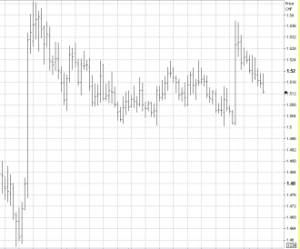
A market view history of the EUR/CHF from the website ForexLive July 2009 EURCHF Offers 1.5250 Im hearing that EURCHF offers at 1.5250 are lined up ready to defend the level. There was an attempt to take it higher on Friday after the German IFO number but failed. 1.5250 is proving to be quite a level. …
Read More »2009-07-17
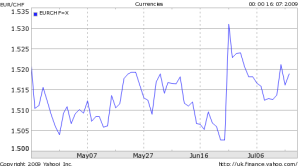
Jul. 17th 2009 Extracts from the history of the Swiss franc (July 2009). When the Swiss National Bank (SNB) intervened three weeks ago in forex markets, the Swiss Franc instantly declined 2% against the Euro. Since then, the Franc has risen slowly, and it’s now in danger of touching the “line in the sand” of …
Read More »2009-06-30
A market view history of the EUR/CHF from the website ForexLive June 2009 Don’t Get Too Fancy- Most Of The Clues Are Face-Up On The Table EUR/USD: big option play has tied the market in for the last 2 weeks and there are 2 more to go we believe. 1.3750/1.4250 range on the wide but …
Read More »2009-06-26
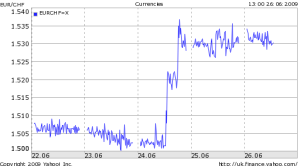
Jun. 26th 2009 Extracts from the history of the Swiss franc (June 2009) Back on March 12, the Swiss National Bank issued a stern promise that it would actively seek to hold down the value of the Swiss Franc (CHF) as a means of forestalling deflation. The currency immediately plummeted 5%, as traders made …
Read More »2009-06-18

Extracts from the History of the Swiss Franc Courtesy on EasyForex.com SNB rate decision June 18th 2009 Written by Michael J. Malpede Wednesday, 17 June 2009 18:23 GMT The Swiss National Bank (SNB) will hold its monetary policy meeting on Thursday June 18th.The SNB is expected to hold rate policy steady at 0.00%-0.75%.Recent Swiss economic …
Read More »2009-05-31
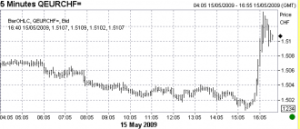
A market view history of the EUR/CHF from the website ForexLive May 2009 BIS And SNB Expected To Be Buying EUR/CHF On 1.50 Handle Dealers expect to see bids appearing from either the Swiss National Bank or the Bank for International Settlements if EUR/CHF dips back towards 1.5050. By Sean Lee || May 28, 2009 at 04:03 …
Read More »2009-04-30
A history of the EUR/CHF from the website ForexLive April 2009 Selling EUR/CHF Seems Akin To Poking Billy Goat Gruff With A Sharp Stick It seems to me selling the EUR/CHF cross down here is akin to poking the elder billy goat gruff with a sharp stick. You get it, Alpine meadows, goat herds….(Ok I know … Continue reading »
Read More »2009-03-31
A history of the EUR/CHF from the website ForexLive March 2009 Be Warned, April Fools Day Don’t believe everything you hear today as somebody might be having you on! The CHF is making a comeback and it’s imminent demise, which I have been forecasting, is obviously greatly exaggerated. EUR/CHF is back under 1.5100 and no sign … Continue reading »
Read More »2009-03-17
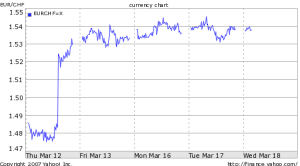
Extracts from the history of the Swiss franc (March 2009). Mar. 17th 2009 Last week, the Forex Blog concluded a post on the Swiss Franc by suggesting that the Swiss National Bank (SNB) could artificially depress the value of its currency, which had “not just posted strong gains against the eurosince late August …
Read More »2009-03-11
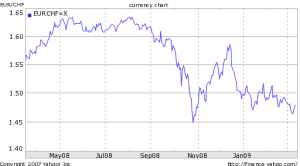
Mar. 11th 2009 Extracts from the history of the Swiss franc (March 2009). Most of the “safe haven” talk in forex circles has focused on Japan and the US. Switzerland, meanwhile, has also attracted is fair share of risk-averse investors, who are piling into Franc-denominated assets, despite the deteriorating Swiss economic situation. In fact, …
Read More »2009-02-28
Swissy Sees Some Slight Improvement Swissy is seeing some slight improvement in afternoon trade, the EUR/CHF cross presently down at 1.4900 from the 1.4990 session high posted earlier. The general flight to perceived safety, with gold fast approaching $1,000, will be playing a part with swissy’s safe haven premium coming into play. However how …
Read More »2009-01-29
Jan. 29th 2009 Extracts from the history of the Swiss franc (January 2009). The Swiss Franc is in the same boat as the US Dollar and Japanese Yen, benefiting from an increase in risk aversion and an unwinding of carry trade positions. In other words, the currency rising on the back of the sound monetary …
Read More »2008-07-31
Jul. 31st 2008 Extracts from the history of the Swiss franc (July 2008). As the credit crisis has unfolded, the Dollar has remained (relatively) strong, especially considering the deteriorating state of its economy. The reason for this, of course, is that in times of crisis, investors flock to perceived safe havens, such as the …
Read More »2005-11-30
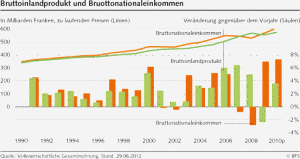
Deutliche Unterschiede bei Bruttonationaleinkommen (BNE) und Bruttoinlandsprodukt (BIP) Im Gegensatz zu Irland und Luxemburg, wo das BIP wesentlich grösser als das BNE ist, ist es mit der Schweiz umgekehrt. Aufgrund der globalen Aktivitäten der Schweizer Firmen wuchs das BNE in den letzten Jahren wesentlich stärker als das BIP. Die einzige Ausnahme sind 2007 und 2008, …
Read More »2005-10-05
Extracts from Think Spain. October 2005. Foreign companies who manufacture cars in Spain are facing a fresh crisis. In addition to the problems of VW subsidiary Seat, various others are being forced to take decisions about the renewal of a number of different models which are reaching the end of their life-cycles. While …
Read More »2003-08-11
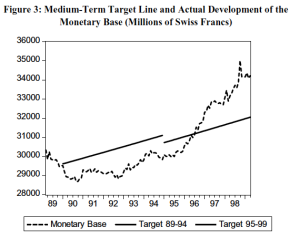
Some background statistics on the Swiss monetary policy in the 1970s from Swiss Monetary Targeting 1974-1996: The role of internal policy analysis. More details and monthly data on inflation here.
Read More »1979-08-30
Une secrète contribution de “Le Temps”, juste pour les francophones parmi nos abonées. Il y a trente-quatre ans, la Banque nationale suise avait déjà défendu un taux de change pour le franc suisse. Plongée dans les archives et rappel du contexte perturbé qui a poussé la Suisse jusqu’à cet extrême LES LIENS Les trois …
Read More » On Swiss National Bank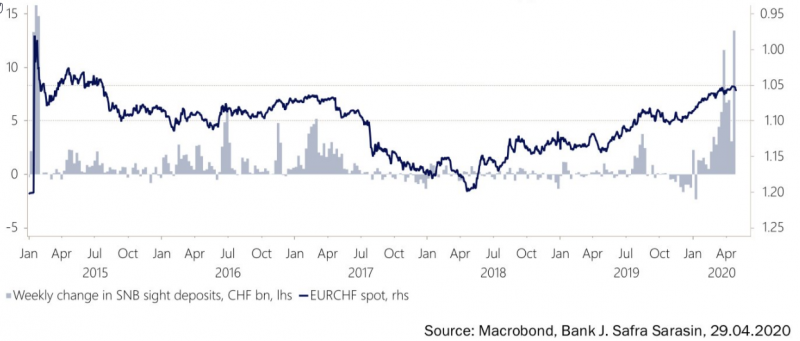
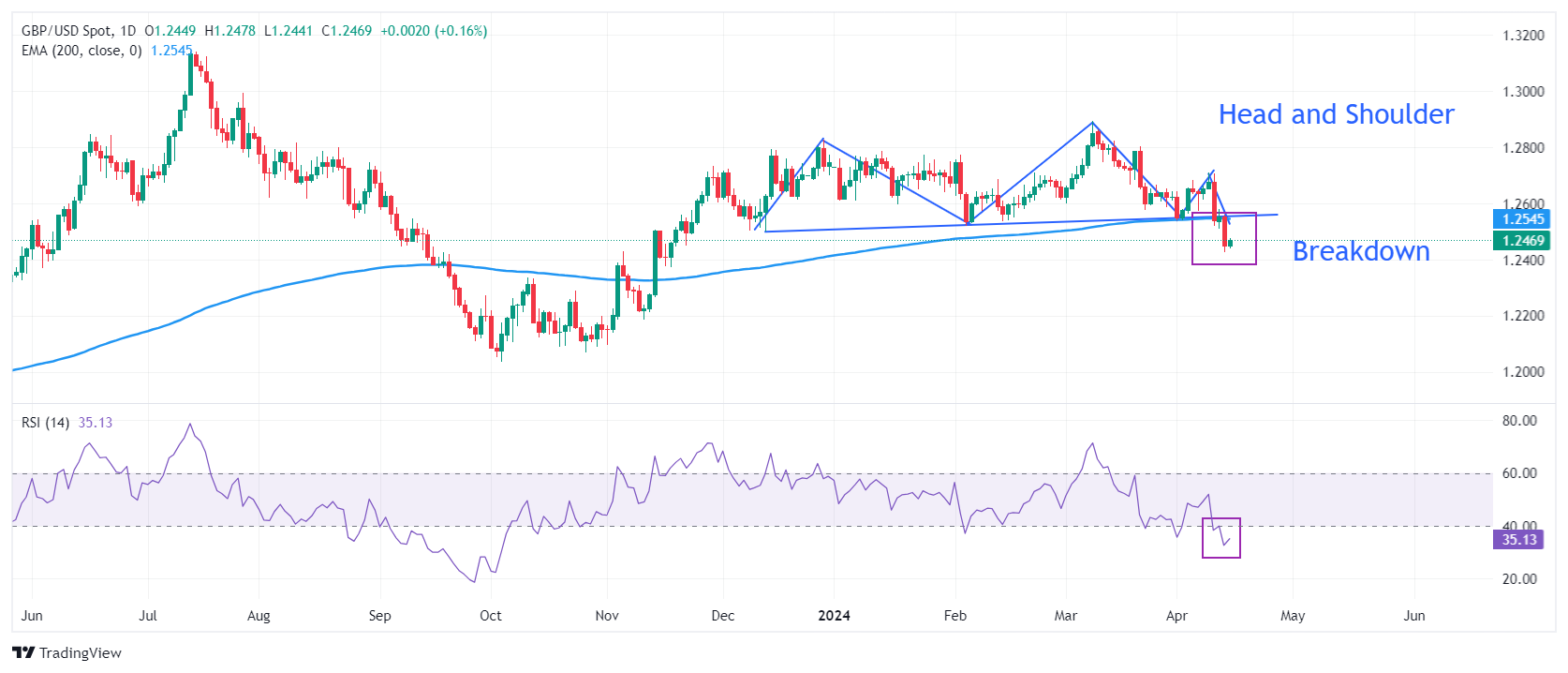
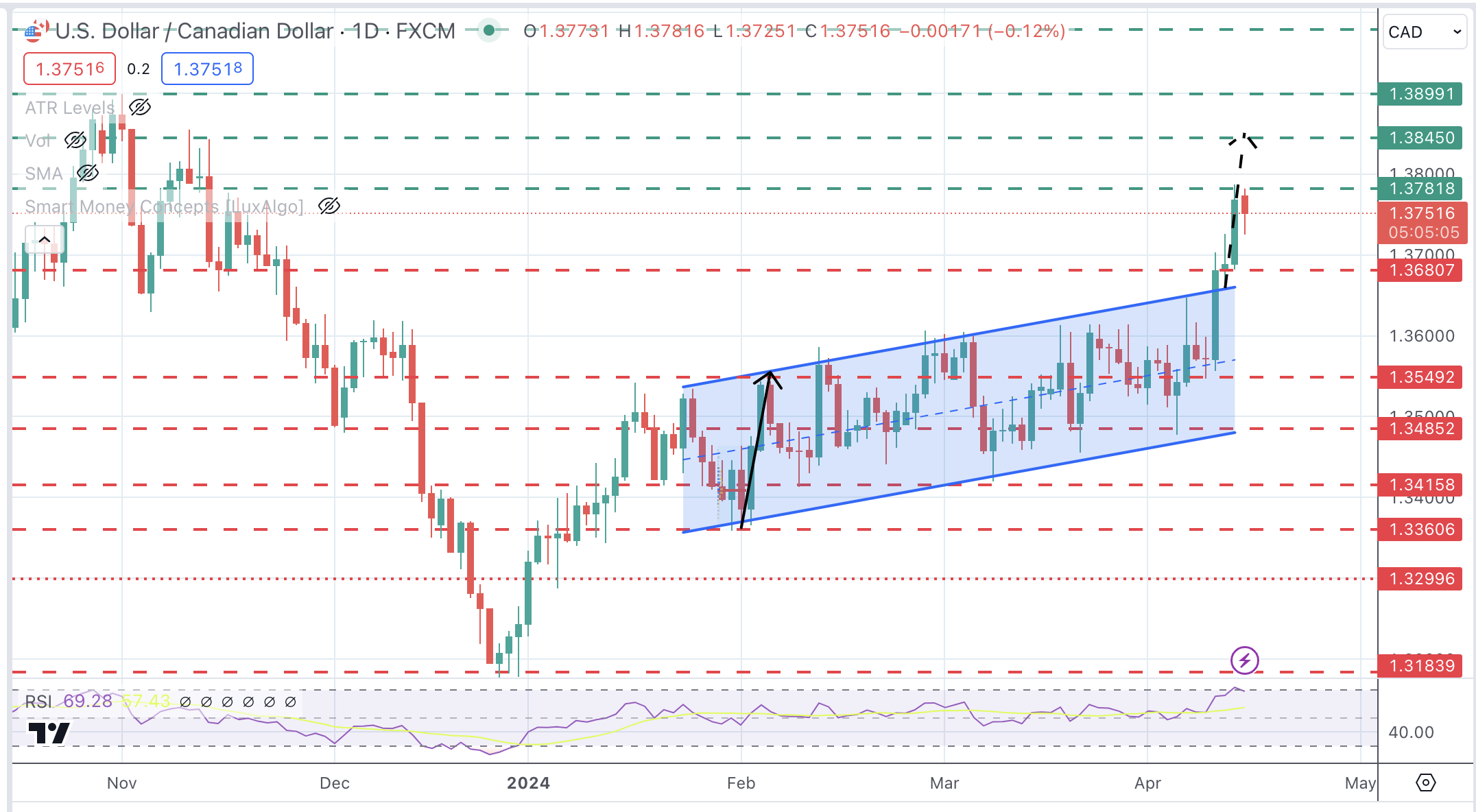 Main SNB Background Info