



Lance Roberts

Lance Roberts

Finally, financial news that makes sense. Lance Roberts, the host of "StreetTalkLive", has a unique ability to bring the complex world of economics, investing and personal financial wealth building to you in simple, easy and informative ways but also makes it entertaining to listen to at the same time.

Articles by Lance Roberts

A Bear Market Is A Good Thing.

One of my favorite writers for the WSJ is Spencer Jakab, who recently penned an article explaining why a bear market is not necessarily a bad thing. He starts with a quote from “The Godfather.” ““These things gotta happen every five years or so, ten years. Helps to get rid of the bad blood…been ten …

Continue reading »

Read More »

Year-End Rally Begins

🔎 At a Glance 💬 Ask a Question Have a question about the markets, your portfolio, or a topic you’d like us to cover in a future newsletter? 📩 Email: [email protected]🐦 Follow & DM on X: @LanceRoberts📰 Subscribe on Substack: @LanceRoberts We read every message and may feature your question in next week’s issue! 🏛️ …

Continue reading »

Read More »

Market Bubbles: A Rational Guide To An Irrational Market

We’re hearing it everywhere: AI is in a bubble. The surge in capital, the parabolic stock charts, and the bold claims from CEOs all have a familiar rhythm. Nvidia’s valuation has soared, along with AI-related startups raising billions with little to no revenue. Investment in data centers, chips, and infrastructure is happening at a scale …

Continue reading »

Read More »

Capex Spending On AI Is Masking Economic Weakness

The U.S. economy’s recent growth has a distinctive engine: large‑scale capital expenditures (capex) tied to artificial intelligence (AI). Firms such as Microsoft, Alphabet (Google), Meta Platforms, and Amazon have announced massive investments in data centers, servers, networking equipment, and AI infrastructure. As noted by Investing.com: “Artificial intelligence is consuming capital faster than investors can recalibrate. …

Continue reading »

Read More »

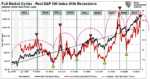
Full Market Cycles: Half Bull and Half Bear

Last week, we discussed the importance of “math” as it relates to valuations and noted the importance of understanding “full market cycles.” To wit: “The math on forward return expectations, given current valuation levels, does not hold up.  The assumption that valuations can fall without the price of the markets being negatively impacted is also grossly flawed. …

Continue reading »

Read More »

Economic Reacceleration: A Contrarian View

Over the past two weeks, we’ve addressed a persistent question: if the data signals weakness, why hasn’t the recession arrived? In “Slowdown Signals: Are Leading Indicators Flashing Red?” we examined the cracks forming beneath the economy’s surface. From deteriorating leading indicators to credit stress and cooling employment metrics, the evidence supported a cautious stance. In …

Continue reading »

Read More »

Forward Return And The Importance Of Math

During strongly trending bull markets, investors often overlook the importance of math in predicting forward returns. Such is easy to do when the market just seemingly continues to rise without regard to fundamentals. The current environment is also heavily influenced by the impact of “passive indexing,” which has distorted market dynamics as well. However, none …

Continue reading »

Read More »

“Money Printing” By The Fed: Fact Or Fiction?

I recently penned an article on “Money Supply Growth,” which elicited a very thoughtful response from Garrett Baldwin via Substack. He argued that labeling Federal Reserve operations as “money printing” is not rhetoric, but rather a reality. He points to Ben Bernanke’s 2010 interview, where Bernanke described how the Fed marks up digital accounts. But …

Continue reading »

Read More »

Investor Dilemma: Pavlov Rings The Bell – Draft

Classical conditioning teaches us a valuable lesson regarding the current investor dilemma. Pavlov’s research discovered a basic psychological rule: when a neutral stimulus is repeatedly paired with a reward‑stimulus, eventually it will trigger the same response even when the reward is absent. The famed experiment by Ivan Pavlov illustrated that dogs would salivate at the …

Continue reading »

Read More »

Gold Myths Luring Investors Into Risk

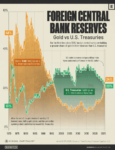
In case you haven’t heard, precious metals, particularly gold, have risen sharply this year. Of course, whenever any asset class experiences a more speculative melt-up, investors are quick to rationalize why “this time is different.” In stocks, it is about “artificial intelligence” and “data centers.” The cryptocurrency community believes all fiat currencies will fail and …

Continue reading »

Read More »

The Most Dangerous Era In History

We live in what Brett Arends claimed as “The Dumbest Stock Market In History,” but I believe it is potentially the most dangerous era. That phrase is not hyperbole as it reflects structural distortion, extreme valuations, and an investor base intoxicated by momentum and narrative. The MarketWatch piece puts it bluntly: “At one level, there …

Continue reading »

Read More »

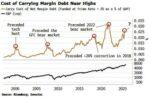
Retail Leverage Goes to Extremes

🔎 At a Glance 💬 Ask a Question Have a question about the markets, your portfolio, or a topic you’d like us to cover in a future newsletter? 📩 Email: [email protected]🐦 Follow & DM on X: @LanceRoberts📰 Subscribe on Substack: @LanceRoberts We read every message and may feature your question in next week’s issue! 🏛️ …

Continue reading »

Read More »

Money Supply Growth: A Thesis With A Fatal Flaw

Recently, MarketWatch ran a provocative headline: “When the world’s largest asset manager and the Bond King both agree: Run to gold, silver, and bitcoin.” The article highlighted how Larry Fink’s BlackRock and Jeffrey Gundlach, often dubbed the “Bond King,” see deficits and “money printing” as reasons for investors to escape fiat currencies and pile into …

Continue reading »

Read More »

Speculative Bull Runs And The Value Of A Bearish Tilt

The recent market crack certainly woke up the more complacent bullish investors. Of course, the complacency was warranted, given the recent market surge, conversations about “TINA” (There Is No Alternative), and how “this time is different.” But that is what a speculative bull run looks and feels like. However, deep inside, you know there are …

Continue reading »

Read More »

The Psychology Of Investing In A Zero-Risk Illusion

Every market cycle eventually changes investor psychology to believe risk has been conquered. The storylines may change, from “this time it’s different” to “the Fed has our back,” but the psychology does not. When markets rise steadily and volatility remains low, investors confuse stability with safety. That’s precisely the illusion forming in markets today. The …

Continue reading »

Read More »

ChatGPT Gives Financial Advice On Volatile Markets

Following Friday’s selloff amid the resurgence of tariff threats on China, I asked ChatGPT a simple question: ” How to Stay Calm In The Stock Market?” That simple question generated an engaging and humorous take on financial advice for navigating volatile markets. In this week’s post, I thought it would be helpful to review ChatGPT’s advice …

Continue reading »

Read More »

Corporate Profits: A Reading Without Rose-Tinted Glasses

If you want to understand where we are in the cycle, skip the noise and follow profits. Corporate profits are the lifeblood of investment, hiring, and market returns. Crucially, linkage to the real economy is very tight. In the national accounts (NIPA), the BEA’s “profits from current production” (with inventory valuation and capital consumption adjustments) …

Continue reading »

Read More »

Bear Market Losses – A Dangerous Illusion

When bear market losses occur, headlines talk in percentages: “The market dropped 20 %.” Investors nod. A 20 % decline sounds manageable, historical, and expected. As Ben Carlson recently penned: “Bear markets have some symmetry to them, at least in the short-term. In the long term, bull markets versus bear markets are asymmetric. Things are not balanced. Look at …

Continue reading »

Read More »

Promised Recession…So Where Is It?

Over the past three years, the economic conversation has been a “promised recession.” If you read the headlines, tracked economist surveys, or even listened to Wall Street strategists, you would have assumed a downturn was imminent. Many investors, bloggers, and YouTubers have had a “parade of horribles” promising a recession is just on the horizon.The logic was …

Continue reading »

Read More »

RSI (Relative Strength Index): Timing The Next Correction

In the world of technical analysis, there is one reliable indicator for measuring market risk. The relative strength index (RSI) measures overextension (in either direction). Developed by J. Welles Wilder in 1978, the RSI is a momentum oscillator. As such, it measures the velocity and magnitude of price changes, plotting those on a scale from 0 …

Continue reading »

Read More »

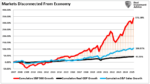
Markets Detached From Economic Fundamentals

At a Glance Ask a Question Have a question about the markets, your portfolio, or a topic you’d like us to cover in a future newsletter? Email: [email protected] Follow & DM on X: @LanceRoberts Subscribe on Substack: @LanceRoberts We read every message and may feature your question in next week’s issue!

Read More »

Slowdown Signals: Are Leading Indicators Flashing Red?

Lately, there’s been a growing sense of confidence among investors that the U.S. economy has dodged the proverbial bullet. Despite a historic rate-hiking cycle by the Federal Reserve, two years of stubborn inflation, and signs of strain in global trade, the dominant Wall Street narrative is now a curious mix of “soft landing,” “no landing,” …

Continue reading »

Read More »

Markets: Bullish Vs Bearish Case

Just recently, Scott Rubner of Citadel Securities wrote an excellent piece discussing the bull versus the bear case for the markets. You look at the markets today and see a tension between expectation and reality. On one hand, equities—especially tech and growth—are pushing to fresh highs. Optimism about rate cuts, AI and productivity gains, global …

Continue reading »

Read More »

Data Centers And The Power Grid: A Path To Debt Relief?

Could data centers and the power grid be America’s next “renaissance?” With the U.S. national debt exceeding $37 trillion and interest payments surpassing defense spending, many articles have been written about the “debt doomsday” event coming. Such was a point we made in “The Debt and Deficit Problem.” “In recent months, much debate has been …

Continue reading »

Read More »

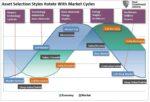
Invest Or Index – Exploring 5-Different Strategies

Investing is about choices. Every investor faces the same challenge: how to grow wealth while controlling risk. Over the years, distinct approaches have proven effective, though none guarantee success. Some strategies require patience. Others demand discipline in timing and execution. A few provide stability and income. There is no right or wrong way to invest, …

Continue reading »

Read More »

Covered Call Strategies Gone Wild

🔎 At a Glance 💬 Ask a Question Have a question about the markets, your portfolio, or a topic you’d like us to cover in a future newsletter? 📩 Email: [email protected]🐦 Follow & DM on X: @LanceRoberts📰 Subscribe on Substack: @LanceRoberts We read every message and may feature your question in next week’s issue! 🏛️ …

Continue reading »

Read More »

Corporate Earnings Slowdown Signaled By Employment Data

The latest employment data strongly warned of a potential corporate earnings slowdown ahead. This is the first time we have warned about the employment data and its impact on corporate earnings. In May, we penned “Employment Data Confirms Economy Is Slowing.” wherein we stated: “Given the importance of consumption in the economy and that employment (production) must come …

Continue reading »

Read More »

Why Diversification Is Failing In The Age Of Passive Investing

Diversification has been the backbone of “buy and hold” strategies for the last few decades. It was a boon to financial advisors who couldn’t actively manage portfolios, and it created a massive Exchange-Traded Funds (ETFs) industry that allowed for even further simplification of investing. The message was basic: “Buy a basket of assets, dollar cost …

Continue reading »

Read More »

Using MACD To Manage Portfolio Risk

🔎 At a Glance 💬 Ask a Question Have a question about the markets, your portfolio, or a topic you’d like us to cover in a future newsletter? 📩 Email: [email protected]🐦 Follow & DM on X: @LanceRoberts📰 Subscribe on Substack: @LanceRoberts We read every message and may feature your question in next week’s issue! 🏛️ …

Continue reading »

Read More »

Why Keynes’ Economic Theories Failed In Reality

A recent post from Daniel Lacalle, “How Keynesians Got The US Economy Wrong Again,” exposed the widening gap between John Maynard Keynes’ economic theory and reality. Despite the confident forecasts of leading Keynesian economists, the U.S. economy in 2025 continues to defy expectations. The Federal Reserve’s tightening cycle failed to trigger the widely predicted “hard …

Continue reading »

Read More »

Portfolio Risk Management: Accepting The Hard Truth

Alfonoso Peccatiello recently wrote an interesting piece on portfolio risk management, starting with a quote from Steve Cohen: ‘’I compile statistics on my traders. My best trader makes money only 63 percent of the time. Most traders make money only in the 50 to 55 percent range. That means you’re going to be wrong a …

Continue reading »

Read More »

Energy Price As An Economic Indicator

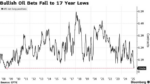
What are energy prices telling us about the economy? A recent article on Bloomberg noted that: “Hedge funds slashed their bullish position on crude to the lowest in about 17 years as risks of additional sanctions on Russian crude oil waned, bringing concerns about a global supply glut back to the fore. Money managers’ net-long position on …

Continue reading »

Read More »

“Buy Every Dip” Remains The Winning Strategy…For Now

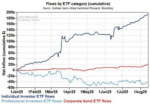
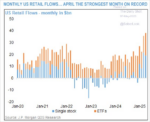
“Buy Every Dip” has lately been the “Siren’s Song” for this market. Such is seen in the flows into ETFs over the course of this year. Retail investors treat pullbacks as temporary noise, and their behavior borders on mechanical. Every sell-off is seen as an opportunity, not a warning. Meanwhile, institutional managers sit it out. …

Continue reading »

Read More »

US Economy: Recent Data Suggests Risk To Earnings

The latest economic data suggests the US economy is decelerating. That means growth is slowing, jobs are shrinking, and households are spending less. As we showed in a recent #BullBearReport, economic growth, inflation, and personal consumption are trending lower. Unsurprisingly, with job growth weakening, consumer sentiment also took a hit in the latest report, with …

Continue reading »

Read More »

Excess Bullishness & 10-Rules To Navigate It

There is little doubt that excess bullishness has invaded the general market psyche. Just a couple of months following the market decline in March and April, where sentiment turned exceedingly bearish, the S&P 500 hovers near its highs. Furthermore, analysts are rushing to raise price targets to 7,000 or more.

Read More »

Insider Selling Reveals Fallacy Of Buyback Theory

Mainstream commentary repeats a simple refrain: “Buybacks return capital to shareholders.” The logic sounds convincing. A company reduces its outstanding shares, giving each shareholder a larger slice of the earnings pie. But as I’ve discussed in past work like “Stock Buybacks Aren’t Bad, Just Misused,” the reality is more complex. If corporate buybacks were an …

Continue reading »

Read More »

Meme Stock Trading & Livermore’s Approach To Speculation

Meme stock trading has returned in force. As discussed last week, the fear of missing out (FOMO) continues to dominate investor sentiment. The meme stock movement is again dominated by speculative retail trading driven by online forums, social media hype, and short-term momentum. Unlike GameStop and AMC in 2021, the current cycle revolves around names …

Continue reading »

Read More »

US Economic Growth Shows Cracks

🔎 At a Glance 💬 Ask a Question Have a question about the markets, your portfolio, or a topic you’d like us to cover in a future newsletter? 📩 Email: [email protected]🐦 Follow & DM on X: @LanceRoberts📰 Subscribe on Substack: @LanceRoberts We read every message and may feature your question in next week’s issue! 🏛️ …

Continue reading »

Read More »

The Debt And Deficit Problem Isn’t What You Think

In recent months, much debate has been about rising debt and increasing deficit levels in the U.S. For example, here is a recent headline from CNBC: The article’s author suggests that U.S. federal deficits are ballooning, with spending surging due to the combined impact of tax cuts, expansive stimulus, and entitlement expenditures. Of course, with …

Continue reading »

Read More »

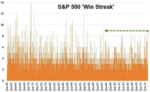
Bull Streak Ends As August Begins

As the turn of the calendar occurred on Friday, the bull streak for the market since the April lows ended. Such was not unexpected, and the correction has been a topic of discussion in our #DailyMarketCommentary over the last two weeks. To wit: “While the overall backdrop remains bullish, including stable economic growth and earnings, …

Continue reading »

Read More »

Debasement: What It Is And Isn’t.

Over the past year, financial headlines continue to flood investors with doomsday predictions about the U.S. dollar. Whether it’s social media influencers waving “dollar collapse” charts or YouTube personalities warning about debasement, the noise has become deafening. The narrative is seductive: inflation is out of control, the government is printing money, and the dollar is on its last legs.

Read More »

Portfolio Benchmarking: 5-Reasons Underperformance Occurs

When markets decline—especially after long periods of sustained growth—the familiar advice resurfaces: “Be patient. Stay invested. Ride it out.” The rationale? The market always goes up over time. But there’s a critical flaw in this narrative. Your portfolio and a portfolio benchmark are entirely different things. And portfolio benchmarking, or the constant comparison of your …

Continue reading »

Read More »

Retail Data Sends A Warning

🔎 At a Glance 💬 Ask a Question Have a question about the markets, your portfolio, or a topic you’d like us to cover in a future newsletter? 📩 Email: [email protected]🐦 Follow & DM on X: @LanceRoberts📰 Subscribe on Substack: @LanceRoberts We read every message and may feature your question in next week’s issue! 🏛️ …

Continue reading »

Read More »

Is Private Equity A Wolf In Sheep’s Clothing?

In July 2007, just before the financial crisis erupted, Citigroup CEO Chuck Prince summed up Wall Street’s dangerous exuberance: “When the music stops, in terms of liquidity, things will be complicated. But as long as the music is playing, you’ve got to get up and dance. We’re still dancing.” Eighteen years later, Wall Street is …

Continue reading »

Read More »

Retail Speculation Is Back With A Vengeance

Retail speculation is once again gripping the markets. A recent Wall Street Journal article highlighted how the latest retail gambling vehicle—zero-days-to-expiration (0DTE) options—has exploded in popularity. According to CBOE, trading volumes in these contracts have surged nearly sixfold over the past five years, with retail traders now accounting for more than half of all transactions. …

Continue reading »

Read More »

Company Buybacks Are Surging

🔎 At a Glance 💬 Ask a Question Have a question about the markets, your portfolio, or a topic you’d like us to cover in a future newsletter? 📩 Email: [email protected]🐦 Follow & DM on X: @LanceRoberts📰 Subscribe on Substack: @LanceRoberts We read every message and may feature your question in next week’s issue! 🏛️ …

Continue reading »

Read More »

China’s Economic Demise And Its Impact On The U.S.

Few are as candid and historically accurate as hedge fund manager Kyle Bass when identifying structural breaks in the global economy. In a recent interview, Bass painted a grim but telling picture of China’s economic condition, warning: “We are witnessing the largest macroeconomic imbalances the world has ever seen, and they are all coming to …

Continue reading »

Read More »

Relative Returns Or Absolute. What’s More Important?

A couple of years ago, I wrote about absolute versus relative returns. Given the latest market run, I am getting a lot of questions about chasing returns, and individuals comparing themselves to the S&P 500 index. Historically, trying to beat a benchmark index leads to poor outcomes. However, understanding absolute and relative returns can help …

Continue reading »

Read More »

Q2-2025 Earnings Season Preview

Next week, the Q2-2025 earnings season will begin in earnest as a barrage of S&P 500 companies report, starting with the Wall Street money center banks on Tuesday and Wednesday. Since earnings drive the market by supporting investor expectations, what […] The post Q2-2025 Earnings Season Preview appeared first on RIA.

Read More »

The Bull Market Is Alive And Well

The bull market is alive and well, even amid widespread talk of the “death of U.S. exceptionalism.” Early 2025 saw a sharp shift in investor sentiment. Concerns over erratic trade policy, soaring debt, and weakening dollar pressure challenged America’s long-standing market dominance. Markets fell sharply in April and May, feeding a narrative of declining “US …

Continue reading »

Read More »

SLR: Could It End The Bond Bear Market

On June 25th, the Federal Reserve quietly announced a significant change to the Supplementary Leverage Ratio (SLR). While the headlines were muted, the implications for the U.S. Treasury market were anything but. For sophisticated investors, this technical shift marks a subtle but powerful pivot in monetary mechanics. It could create demand for Treasuries, improve market …

Continue reading »

Read More »

The Fed’s “Transitory” Mistake Is Affecting Its Outlook

In 2023 and 2024, the Fed was under intense public and media scrutiny for calling the post-pandemic surge in inflation “transitory.” Critics argued that the Fed’s failure to anticipate the persistence and severity of rising prices undermined its credibility. Yet, with the benefit of hindsight and historical context, the Fed’s position wasn’t entirely misguided. Inflation …

Continue reading »

Read More »

Iran Stuck By U.S.: Markets, Risk, and Rational Investing

Over the weekend, the U.S. launched strikes against Iran’s nuclear facilities. Currently, I only have the details reported by major mainstream outlets. However, given that stock market futures are trading sharply lower on Sunday, I wanted to get something in print before the market opens relating to navigating this event over the next few days.

Read More »

Oil Price Rise, Not Tariffs, Will Cause CPI To Tick Up

Inside This Week’s Bull Bear Report Back To Extreme Optimism Last week, we discussed that the bull rally continues despite all of the negative narratives lately, from tariffs to the deficit to the potential onset of WWIII. “The market’s bullish trend continued this week, and it is rapidly approaching all-time highs.

Read More »

The Dollar’s Death Is Greatly Exaggerated

The narrative surrounding the “dollar’s death” as the world’s reserve currency has been on the rise recently. However, this happens whenever the dollar declines relative to other currencies. We previously wrote about the false claims of the “dollar’s death” in 2023 (see here, here, and here). The recent decline in the dollar relative to other currencies is well within historical norms.

Read More »

The Iran-Israel Conflict And The Likely Impact On The Market

The Iran-Israel conflict and equity markets are now in sharp focus. As direct strikes escalated in June 2025, global financial markets responded immediately. Israel’s airstrikes on Iranian nuclear and energy infrastructure triggered retaliatory missile and drone attacks from Iran. The Dow dropped nearly 2%, the S&P 500 lost over 1%, and oil prices surged by …

Continue reading »

Read More »

The Deficit Narrative May Find Its Cure In Artificial Intelligence

Lately, the “deficit narrative” has dominated much of the financial media, particularly those channels that are continual “purveyors of doom.” In this post, we will discuss the “deficit narrative,” the likely outcomes, and why the cure for the deficit may be found in Artificial Intelligence. The “deficit narrative” has dominated the media lately as President …

Continue reading »

Read More »

The Bull Rally Continues

Inside This Week’s Bull Bear Report Risk/Reward Favors Patience I am traveling this weekend, so we are producing our weekly report a day early. As such, some charts using end-of-week data are using either Thursday or mid-Friday prices. All report will return to normal next week. Let’s start with where we left off last week.” …

Continue reading »

Read More »

“Buying The Dip” – Here’s A Technical Way To Do It

Recently, I did an interview about “buying the dip” in the market, which generated many comments. Most were, “You’re stupid; the market is going to crash,” but one comment deserved a more thorough discussion. “When buying the dip, how do you know when to do it, or not?” That is the right question. Of course, you will never know …

Continue reading »

Read More »

Stock Market Performance As Summer Arrives

Inside This Week’s Bull Bear Report Breakout! Next Stop, Previous Highs Last week, we discussed the successful test of the 200-DMA. “Most notably, this past week was the successful test of the 200-DMA. The pullback to that previous broken resistance level and subsequent bounce highly suggests that the April correction is complete and that market …

Continue reading »

Read More »

Does Consumer Spending Drive Earnings Growth?

It would seem evident that most investors would understand that consumer spending drives economic growth, ultimately creating corporate earnings growth. Yet, despite this somewhat tautological statement, Wall Street appears to ignore this simple reality when forecasting forward earnings. As discussed recently, S&P Global’s current estimates show earnings are growing far above the long-term exponential growth …

Continue reading »

Read More »

Buying Stocks Is Always Hard

Buying stocks is always hard. Particularly during corrections. Or, near market peaks. Or, when stocks are falling. And when they are rising. Oh, buying stocks is also tricky when valuations are high. And when they are low. You get the point. There is never the right time when it comes to buying stocks. I recently …

Continue reading »

Read More »

The Narratives Change. Markets Don’t.

Inside This Week’s Bull Bear Report A Successful Test Last week, we discussed how this seems to be an “unstoppable” bull market. However, that doesn’t mean markets won’t pause before attempting to move higher. As we noted last week, the consolidation was expected. “Even with Bessent’s comments, that market remains overbought in the short term, …

Continue reading »

Read More »

Ray Dalio Is Predicting A Financial Crisis…Again.

Ray Dalio, the former head of Bridgewater Associates, is back in the media, trying to stay relevant by claiming the “deficit has become critical.” “ “It’s like … I’m a doctor, and I’m looking at the patient, and I’ve said, you’re having this accumulation, and I can tell you that this is very, very serious, and …

Continue reading »

Read More »

The Stealth Bear Market

Is this a “stealth” bear market? Of course, you may be asking yourself what I mean by that. Historically, bear markets have tended to be pretty evident, as highlighted in the chart below. These bear markets are often more protracted affairs that lead to investors developing profoundly negative sentiment towards markets. This article will use …

Continue reading »

Read More »

An Unstoppable Bull Market?

Inside This Week’s Bull Bear Report Even Trump Can’t Kill The Rally Last week, we discussed how the rally had repaired much of the previous damage following the correction. As we noted: “This past week, the market continued its advance. There is little reason to be bearish with key overhead resistance levels broken. However, as …

Continue reading »

Read More »

The Anchoring Problem And How To Solve It

Market perspective is essential in avoiding investing mistakes. With the media constantly pushing a “Markets In Turmoil” narrative, it’s no wonder that investor sentiment recently reached some of the lowest levels since the financial crisis. The following chart is the z-score of the retail and professional investor sentiment composite index of bullish sentiment. Notably, we …

Continue reading »

Read More »

Moody’s Debt Downgrade – Does It Matter?

This morning, markets are reacting to Moody’s rating downgrade of U.S. debt. For those promoting egregious amounts of “bear porn,” this is nirvana for fear-mongering headlines that gain clicks and views. However, as investors, we need to step back and examine the history of previous debt downgrades and their outcomes for both the stock and …

Continue reading »

Read More »

Recession Probabilities Decline

Inside This Week’s Bull Bear Report The “Can’t Stop, Won’t Stop” Rally Last week, we discussed how the rally had repaired much of the previous damage following “Liberation Day.” However, we also made competing cases for the bulls and bears on the market’s next move. “It is always difficult to say whether this is a ‘bear market’ rally while you are in the midst of it.

Read More »

Corporate Stock Buybacks – Do They Affect Markets?

Fisher Investments recently wrote an interesting article asking whether corporate stock buybacks affect markets. Here is their conclusion: “Yes and no? Stocks move on supply and demand. Stock buybacks, where a company buys and takes shares off the market, theoretically reduce supply.

Read More »

A Bear Market Rally? Or, Just A Correction?
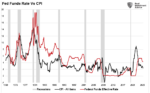

Assessing a bear market rally proves challenging when you experience it firsthand. It is only in hindsight that the complete picture reveals itself to investors. Of course, after a bear market rally, investors tend to review their investments and speculate on what they should have done differently.

Read More »

Earnings Revision Shows Sharp Decline

The #RealInvestmentReport is our weekly newsletter which covers our thoughts on the current market environment, the risk to capital relative to the market, and how we are positioned currently. It includes our MacroView, analysis on markets and sectors, and our 401k plan manager tool. The post Earnings Revision Shows Sharp Decline appeared first on RIA.

Read More »

Employment Data Confirms Economy Is Slowing

While coming in much stronger than expected, the latest employment data confirmed what we already suspected: the economy is slowing. The reason the employment data is so important is that without employment growth, the economy stalls. It takes, on average, […] The post Employment Data Confirms Economy Is Slowing appeared first on RIA.

Read More »

“Resistance Is Futile” – For Both Bulls And Bears

“Resistance is futile” was a sentence that struck fear in the hearts of Trekkie fans during “Star Trek: The Next Generation,” specifically in both of the “Best Of Worlds” and “First Contact” episodes. In those episodes, the “Starship Enterprise” crew encountered a species called the “Borg.” The Borg’s primary purpose was to achieve “perfection” by assimilating other beings …

Continue reading »

Read More »

Economic Decline Gains Momentum

Inside This Week’s Bull Bear Report Market Runs Into Resistance Last week, we discussed that the market backdrop improved markedly following commentary from the White House that eased concerns about tariffs. To wit: “The market rallied above the 20-DMA this past week as investors found some “silver linings” to the ongoing tariff dispute. Despite China …

Continue reading »

Read More »

The Awards You Never Get When Investing

In investing, success is often judged by numbers—returns on investment, percentage gains, and the ability to outperform benchmarks like the S&P 500. However, some investors frequently pursue a peculiar set of ”awards” without realizing the pitfalls they embody. These unspoken goals, while tempting, rarely lead to sustainable investment success. If there were awards for some of these …

Continue reading »

Read More »

Correction Continues – The Value Of Risk Management

Despite the recent rally, the correction continues. While wanting to “buy the dip” is tempting, there has been enough technical damage to warrant remaining cautious in the near term. As we have discussed, managing risk requires discipline and the emotional ability to navigate more volatile markets until a more straightforward path for risk-taking emerges. The …

Continue reading »

Read More »

Spock And The Logic Based Approach To Volatility

Inside This Week’s Bull Bear Report Market Finds Some Hope Last week, we discussed the issue with the spat between President Trump and the Federal Reserve chairman, Jerome Powell. As noted then: “While the markets await the next Federal Reserve meeting, the uncertainty over monetary policy weighs on markets as much as the uncertainty about tariffs.

Read More »

The Death Cross And Market Bottoms

In financial markets, few technical patterns generate as much attention and anxiety as the death cross. This ominous-sounding term refers to a crossover on a price chart when a short-term moving average, most commonly the 50-day moving average (50-DMA), drops below a long-term moving average, usually the 200-day moving average (200-DMA). The “death cross” is a fantastic …

Continue reading »

Read More »

Is Risk Off Positioning Signaling A Market Low?

Inside This Week’s Bull Bear Report Trump Reignites Fed Feud Last week, we discussed the “tariff reprieve” that sent stocks ripping higher in the 3rd largest one-day advance on record. “As we said last week, any good news would cause the market to rally sharply. On Wednesday, President Trump announced a 90-day pause on the …

Continue reading »

Read More »

Inflation Risk Is Subsiding Rapidly

Inflation risk has been a significant topic of discussion in the mainstream media for the last few years. Such is unsurprising given that inflation spiked following the pandemic in 2020 as consumer spending (demand) was shot into overdrive from stimulus payments and production (supply) was shuttered. To understand why that occurred, we need to revisit …

Continue reading »

Read More »

Yield Spreads Suggest The Risk Isn’t Over Yet

In November last year, I discussed the importance of yield spreads, historically the market’s “early warning system.” To wit:” “Yield spreads are critical to understanding market sentiment and predicting potential stock market downturns. A credit spread refers to the difference in yield between two bonds of similar maturity but different credit quality. This comparison often …

Continue reading »

Read More »

Basis Trade Sent Yields Soaring – Is It A Warning?

Inside This Week’s Bull Bear Report Tariff Reprieve Sends Stocks Surging Last week, we noted that the market was not expecting retaliation from China. “Rather than coming to the table to negotiate, China responded with a reciprocal 34% tariff on the U.S. plus export controls on rare earth metals needed for technological production. China is …

Continue reading »

Read More »

The Consumer Is Tapping Out

The recent implementation of tariffs has the media buzzing about increased recession odds as the consumer faces potentially higher costs. While recent economic reports, like the latest employment report, still show robust growth, those data points run with a lag that hasn’t yet caught up with reality. As we have discussed, the American consumer is …

Continue reading »

Read More »

The Market Crash – Hope In The Fear

Last week, we noted that “nothing good happens below the 200-DMA,” and the tariff-induced market crash this past week confirmed that statement. However, we also noted that over the last 30 years, previous failures at the 200-DMA have also often been buying opportunities. That is unless some ”event” of magnitude creates a massive shift in analysts’ estimates. …

Continue reading »

Read More »

The “Liberation Day” Tariffs Crash The Market

Inside This Week’s Bull Bear Report The “Liberation Day” Crash Last week, we noted that it would not be uncommon for the market to retest recent lows. That is what happened on Monday morning before rallying sharply off that level. However, that rally was short-lived as President Trump’s “Liberation Day” on Wednesday afternoon liberated the …

Continue reading »

Read More »

The Stock Market Warning Of A Recession?

A Wall Street axiom states that the stock markets lead the economy by about six months. While not a perfect predictor, the stock market reacts to investor expectations about future corporate earnings, economic activity, interest rates, and inflation. When sentiment shifts due to anticipated weakness in any of these areas, equity prices often decline, reflecting …

Continue reading »

Read More »

Failure At The 200-DMA

In last week’s post, “Is the correction over?” we wrote about the potential for a rally back to the 200-DMA. However, the failure of that test increased short-term concerns. As we noted in that post, there were early indications of buyers returning to the market. To wit: “The chart below has four subpanels. The first …

Continue reading »

Read More »

Sellable Rally Or “Buy The Dip”

Inside This Week’s Bull Bear Report Failure At The 200-DMA Last week, we noted that the market performance, while distressing as of late, has been well within regular correctionary market cycles from a historical perspective. To wit: “While Trump’s tariffs and bearish headlines currently dominate investors’ psychology, we must remember that corrections are a normal …

Continue reading »

Read More »

Stagflation Panic: A Misdiagosed Media Spin

Following the latest Federal Reserve meeting, there was a massive surge in media headlines stating “stagflation.” The media’s stagflation panic is unsurprising as it elicits memories of the late 1970s during the Arab oil embargo. Of course, a “stagflation” is excellent fodder for clicks and views as it scares the “bejeebers” out of people. Over the last …

Continue reading »

Read More »

Is The Correction Over?

Inside This Week’s Bull Bear Report Is A Bottom Beginning To Form? Last week, we noted that the market performance, while distressing as of late, has been well within regular correctionary market cycles from a historical perspective.

Read More »

Retail Investor Buys The Dip Despite Bearish Sentiment

It has been an interesting correction. The average retail investor was “buying the dip” despite having an extremely bearish outlook. This is an interesting point because, as shown, the retail investor used to be considered a ”contrarian indicator” as they were prone to be driven by emotional behaviors that led them to “buy high and sell low.” …

Continue reading »

Read More »

Sell Off Accelerates As Recession Fears Emerge

Inside This Week’s Bull Bear Report Market Volatility Spikes Last week, we discussed that the market continues to track Trump’s first Presidential term as he launched a trade war with China. “However, despite the deep levels of negativity, the current correction is well within the context of the volatility seen during Trump’s first term as …

Continue reading »

Read More »

Stupidity And The 5-Laws Not To Follow

Human stupidity is the one thing you can rely on in financial markets. I recently read a great piece by Joe Wiggins at Behavioral Investment, which discusses why “Investing is hard.” The entire article is worth reading, but here are the five key reasons investors often fail at investing: These are great points, particularly now that …

Continue reading »

Read More »

CFNAI Index Suggests Economy Is Slowing

Inside This Week’s Bull Bear Report February Weakness And The Outlook For March Last week, we discussed that continued bullish exuberance and high levels of complacency can quickly turn into volatility. Over the previous week, the market fell sharply following news of a potential viral outbreak in China and more concerns about tariffs from the …

Continue reading »

Read More »

CAPE-5: A Different Measure Of Valuation

One of the most referenced valuation measures is Dr. Robert Shiller’s Cyclically Adjusted Price-Earnings Ratio, known as CAPE. Valuations have always been, and remain, an essential variable in long-term investing returns. Or, as Warren Buffett once quipped: “Price Is What You Pay. Value Is What You Get.” One of the hallmarks of very late-stage bull …

Continue reading »

Read More »

Estimates By Analysts Have Gone Parabolic

Just recently, S&P Global released its 2026 earnings estimates, which, for lack of a better word, have gone parabolic. Such should not be surprising given the ongoing exuberance on Wall Street. As noted last week, correlations between all asset classes, whether international or emerging markets, gold or bitcoin, have all gone to one. Unsurprisingly, rationalizations …

Continue reading »

Read More »

Margin Balances Suggests Risks Are Building

Inside This Week’s Bull Bear Report New Coronavirus Discovery Shakes Markets Last week, we discussed that continued bullish exuberance and high levels of complacency can quickly turn into volatility. As we noted then, introducing an unexpected, exogenous event can soon lead to a price decline if investors begin to reprice forward expectations. On Friday, that …

Continue reading »

Read More »

The Tariff Risk Isn’t In Inflation (Part II)

For Part 1 on “Tariff Risk” read: Tariff Impact Not As Bearish As Predicted. In “Trumpflation” we discussed why the tariff risk was not inflation. To wit: “Today, globalization and technology give consumers vast choices in the products they buy. While instituting a tariff on a set of products from China may indeed raise the …

Continue reading »

Read More »

Retail Exuberance Sets Market Up For A Correction

Last week, we discussed the surge in retail exuberance in the market following the election of President Trump. “The market defies more negative news because retail investors continue to step in and “buy the dip.” In our recent Bull Bear reports, we discussed the push by retail investors, but looking at retail sentiment is quite …

Continue reading »

Read More »

The Stability-Instability Paradox

Inside This Week’s Bull Bear Report Market Shakes Off Inflation Data I am back from traveling, and we have a good bit to catch up on since our last report. If you missed it, I provided an update on Tuesday, updating all the weekly technical and statistical data we produce. Most noteworthy in that report was …

Continue reading »

Read More »

The Impact Of Tariffs Is Not As Bearish As Predicted

There are many media-driven narratives about the impact of tariffs on the economy and the markets. Most of them are incredibly bearish, predicting the absolute worst possible outcomes. For fun, I asked ChatGPT what the expected impact of Trump’s tariffs will likely be. Here is the answer: “One of the immediate consequences of increased tariffs …

Continue reading »

Read More »

Bull Bear Report – Technical Update

I could not produce our weekly Bull Bear Report this past weekend as I presented at Michael Campbell’s Moneytalks Conference in Vancouver. However, I wanted to use today’s technical update to review some of the statistical analysis we produce each week in that commentary. Such is mainly the case given last Monday’s “tariff” shock and …

Continue reading »

Read More »

Forecasting Error Puts Fed On Wrong Side Again

The Federal Reserve’s record of forecasting has frequently led it to respond too late to changes in economic and financial conditions. In the most recent FOMC meeting, the Federal Reserve changed its statement to support a pause in the current interest rate-cutting cycle. As noted by Forbes: “The policy-setting Federal Open Market Committee agreed unanimously …

Continue reading »

Read More »

Tariffs Roil Markets

Over the weekend, President Trump announced tariffs of 25% on both Canada and Mexico, as well as a 10% tariff on China. Such was not unexpected, as contained in the Trump tariff Executive Order {SEE HERE}. Specifically, that order stated: “[Sec 2, SubSection (h)]: Sec. 2. (a) All articles that are products of Canada as defined …

Continue reading »

Read More »

The Clock Has No Hands

Inside This Week’s Bull Bear Report Administrative Note – No Newsletter Next Week Next weekend, I am flying to Vancouver to deliver the keynote address at Mike Campbell’s annual Moneytalks Conference. As such, I won’t be able to produce a newsletter next week. I appreciate your patience, and the full newsletter will return the following …

Continue reading »

Read More »

Bullish Exuberance Returns As Trump Takes Office

Bullish exuberance is returning to the markets and the economy in a big way following the Presidential election. Such is particularly the case with recent executive orders signed by Trump, which fulfill Trump’s promises to “Make America Great Again.” Given that short-term market dynamics are driven primarily by sentiment, as investors, we can not dismiss …

Continue reading »

Read More »

DeepSeek DeepSinks Bullish Exuberance

On Monday, markets were rocked by news that a Chinese Artificial Intelligence model, DeepSeek, performed better than expected at a lower development cost. As we noted in our Daily Market Commentary yesterday: “The 3% panic sell-off on the Tech-heavy Nasdaq-100 futures is focused on the view that China’s DeepSeek AI model rollouts show AI products …

Continue reading »

Read More »

Inauguration Sends Confidence Surging Higher

Inside This Week’s Bull Bear Report January Barometer On Track Last week, we noted that with the first five days of January making a positive return, such set the “January Barometer” in motion. If you missed our previous discussions, we reviewed the historical precedents of “So goes January, so goes the month.” “However, even with …

Continue reading »

Read More »

Do Money Supply, Deficit And QE Create Inflation?

I recently debated with Michael Pento, who made an interesting statement that increases in the money supply, the deficit, and a return to quantitative easing (QE) will lead to 1970s-style inflation. The recent experience of inflation in 2021 and 2022 would seem to justify such a view. However, is that historically the case, or was …

Continue reading »

Read More »

Are Return Expectations For 2025 Too High?

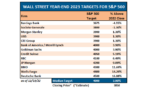
In a recent post, I discussed Wall Street’s return estimates for 2025 for the S&P 500 index. To wit: “We have some early indications of Wall Street targets for the S&P 500 index, and, as is always the case, they are optimistic for the coming year. The median estimate is for the market to rise …

Continue reading »

Read More »

Gardening Guide To Better Portfolio Returns In 2025

As we head into 2025, investors are giddy over the market returns of the last two years. As shown, the annual returns, while elevated, have come with only average volatility along the way. However, while most analysts and investors expect 2025 to be another bullish year, there is always a risk of a more disappointing …

Continue reading »

Read More »

Technical Bounce On Inflation Data

Inside This Week’s Bull Bear Report Administrative Note I am publishing the report a day early as we are holding our Economic and Investment Summit tomorrow morning. As such, all the data in this report is either as of Thursday’s close or early Friday morning. Therefore, any erroneous conclusions will be corrected in Monday’s Daily …

Continue reading »

Read More »

Tactically Bearish As Risks Increase

In last week’s discussion with Thoughtful Money, I noted that we are becoming more “tactically bearish” as we progress into 2025. While we have remained primarily bullish in equity positioning over the last two years, several risks are now worth considering. However, it is critical to note that being “tactically bearish” does NOT mean we …

Continue reading »

Read More »

Consolidation Continues

Inside This Week’s Bull Bear Report One Week Left To Get Your Tickets Don’t miss the opportunity to get your tickets for the 2025 Economic and Investing Summit. Seating is extremely limited, and this year’s event is almost sold out. We have set aside time to visit with attendees one-on-one to answer your burning questions …

Continue reading »

Read More »

Investor Resolutions For 2025

I publish an updated version of my New Year “investor” resolutions yearly. The purpose of the process is to take an annual inventory of what I did and did not do over the last year to improve my portfolio management practices. As with all resolutions made at the beginning of a new year, it is not uncommon …

Continue reading »

Read More »

“Curb Your Enthusiasm” In 2025

“Curb Your Enthusiasm,” which ran its series finale last year, starred Larry David as an over-the-top version of himself in a comedy series that showed how seemingly trivial details of day-to-day life can precipitate a catastrophic chain of events. The show never failed to deliver a laugh but also reminded me that unexpected events can …

Continue reading »

Read More »

2024 Review – Another 20% Year. What’s Next?

Inside This Week’s Bull Bear Report Last Chance For Early Bird Registration Since New Year’s fell in the middle of the week, I am extending the “Early Bird Discount” for our upcoming RIA 2025 Economic Summit through Sunday for our weekly newsletter readers. Don’t miss the opportunity to get your tickets for the 2025 Economic …

Continue reading »

Read More »

The Rules Of Bob Farrell – An Updated Illustrated Guide

In a recent discussion on TheRealInvestmentShow, Bob Farrell and his 10 investment rules were discussed, which elicited several email questions asking, ”Who is Bob Farrell, and where are these rules?”. I often forget how old I have become, and the investing legends of my youth are no longer there and are lost to the sands of time. …

Continue reading »

Read More »

Is Optimism Too Optimistic For 2025?

Inside This Week’s Bull Bear Report Last Chance For Early Bird Registration Get your tickets for the 2025 Economic and Investing Summit before prices increase on January 1st. Seating is very limited. Did Santa Get Stuck In The Chimney? Last week, we discussed that the selloff heading into Christmas was the setup for the beginning …

Continue reading »

Read More »

Affordable Care Act & The Inflation Of Healthcare

When the Obama Administration first suggested the Affordable Care Act following the Financial Crisis, we argued that the outcome would be substantially higher, not lower, healthcare costs. It is interesting today that economists and the media complain about surging healthcare costs with each inflation report but fail to identify the root cause of that escalation. …

Continue reading »

Read More »

Our Christmas Wish To You

We want to take this opportunity to wish you, your family, and your loved ones a very merry and joyful Christmas. We also want to say “Thank You” for all of your support, loyal readership, and the friends we have made through sharing ideas over the last year. While it may be deemed “politically incorrect” these days to say such …

Continue reading »

Read More »

Our Christmas Wish To You

We want to take this opportunity to wish you, your family, and your loved ones a very merry and joyful Christmas. We also want to say “Thank You” for all of your support, loyal readership, and the friends we have made through sharing ideas over the last year. While it may be deemed “politically incorrect” these days to say such …

Continue reading »

Read More »

Santa Claus Rally Or Did The Fed Steal Christmas?

Inside This Week’s Bull Bear Report Powell & A Government Shutdown Hits Stocks Last week, we noted the ongoing market churn that could last into this week’s Fed meeting. To wit: “That certainly seemed the case this past week, with the market trading being fairly sloppy. Attempts to push the market higher were repeatedly met …

Continue reading »

Read More »

Prediction For 2025 Using Valuation Levels

It’s that time of year when Wall Street polishes up its crystal balls and predicts next year’s market returns. Since Wall Street never predicts a down year, these forecasts are often wrong and sometimes very wrong. For example, on December 7th, 2021, we wrote an article about the predictions for 2022. “There is one thing …

Continue reading »

Read More »

Permabull? Hardly.

I never thought someone would label me a “Permabull.” This is particularly true of the numerous articles I wrote over the years about the risks of excess valuations, monetary interventions, and artificially suppressed interest rates. However, here we are. “Lance, you are just another permabull talking your book. When this market crashes you will still be telling …

Continue reading »

Read More »

Trump Election Sends NFIB Optimism Surging

Inside This Week’s Bull Bear Report First Comes The Fed, Then Santa Last week, we discussed that the risk to the markets was the annual portfolio rebalancing process. To wit: “With the year-end approaching, portfolio managers need to rebalance their holdings due to tax considerations, distributions, and annual reporting. For example, as of this writing, …

Continue reading »

Read More »

Economic Indicators And The Trajectory Of Earnings

Understanding the trajectory of corporate earnings is crucial for investors, as these earnings significantly influence stock valuations and market performance. Economic indicators such as Gross Domestic Product (GDP), the Institute for Supply Management (ISM) Manufacturing Index, and the Chicago Fed National Activity Index (CFNAI) provide valuable insights into the economic environment that shapes company profitability. …

Continue reading »

Read More »

2025 – Do Economic Indicators Support Bullish Outlooks?

Inside This Week’s Bull Bear Report Everybody Is Very Bullish Last week, we discussed how speculation and leverage have returned in earnest to the market as investors rush to take on increasing levels of risk. With markets rising steadily all year, it is unsurprising to witness investors lulled into an elevated sense of complacency. Stocks, …

Continue reading »

Read More »

The Kalecki Profit Equation And The Coming Reversion

Corporations are currently producing the highest level of profitability, as a percentage of GDP, in history. However, understanding corporate profitability involves more than glancing at quarterly earnings reports. At its core, the Kalecki Profit Equation provides a valuable framework, especially when exploring the reasons behind today’s elevated profit margins and what could disrupt them. James …

Continue reading »

Read More »

Leverage And Speculation Are At Extremes

Financial markets often move in cycles where enthusiasm drives prices higher, sometimes far beyond what fundamentals justify. As discussed in last week’s #BullBearReport, leverage and speculation are at the heart of many such cycles. These two powerful forces support the amplification of gains during upswings but can accelerate losses in downturns. Today’s market environment shows …

Continue reading »

Read More »

Extreme Speculation Has Returned

Inside This Week’s Bull Bear Report A Note Of Thanksgiving While belated, we sincerely hope you had a happy and fulfilling Thanksgiving holiday. In the words of Henry David Thoreau, “I am grateful for what I am and have. My Thanksgiving is perpetual.” All of us at RIA Advisors and Real Investment Advice are grateful …

Continue reading »

Read More »

Credit Spreads: The Markets Early Warning Indicators

Credit spreads are critical to understanding market sentiment and predicting potential stock market downturns. A credit spread refers to the difference in yield between two bonds of similar maturity but different credit quality. This comparison often involves Treasury bonds (considered risk-free) and corporate bonds (which carry default risk). By observing these spreads, investors can gauge …

Continue reading »

Read More »

Market Forecasts Are Very Bullish

Inside This Week’s Bull Bear Report A Holiday Rally Is Likely Last week, we discussed the impact of the Trump Presidency on the financial markets based on expectations of tax cuts, tariffs, and deregulation. Since then, the ”Trump Trade” went into full swing, pushing the markets higher; however, as we noted, that the trading had gotten a …

Continue reading »

Read More »

“Trumpflation” Risks Likely Overstated

With the re-election of President Donald Trump, the worries about tariffs and pro-business policies sparked concerns of “Trumpflation.” Inflation has been a top concern for policymakers, businesses, and everyday consumers, especially following the sharp price increases experienced over the past few years. However, growing evidence shows inflationary pressures continue to ease significantly, paving the way …

Continue reading »

Read More »

Yardeni And The Long History Of Prediction Problems

Following President Trump’s re-election, the S&P 500 has seen an impressive surge, climbing past 6,000 and sparking significant optimism in the financial markets. Unsurprisingly, the rush by perma-bulls to make long-term predictions is remarkable.

Read More »

“Trump Trade” Sends Investors Into Overdrive

Inside This Week’s Bull Bear Report A Pause That Refreshes? Last week, we discussed that with the election over and the Federal Reserve cutting interest rates, many market headwinds were put behind us. To wit; “As a result, the market surged higher, hitting our year-end target of 6000 on Friday. Furthermore, since election day, the …

Continue reading »

Read More »

Paul Tudor Jones: I Won’t Own Fixed Income

Paul Tudor Jones recently voiced concerns that rising U.S. deficits and debt and increasing interest rates could lead to a fiscal crisis. His perspective reflects the long-standing fear that sustained borrowing will trigger inflation, raise interest rates, and eventually overwhelm the government’s ability to manage its debt obligations. In short, his thesis is that interest …

Continue reading »

Read More »

Exuberance – Investors Have Rarely Been So Optimistic

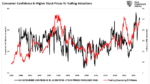
Investor exuberance has rarely been so optimistic. In a recent post, we discussed investor expectations of returns over the next year, according to the Conference Board’s Sentiment Index. To wit: “Consumer confidence in higher stock prices in the next year remains at the highest since 2018, following the 2017 “Trump” tax cuts.” (Note: this survey was …

Continue reading »

Read More »

Exuberance – Investors Have Rarely Been So Optimistic

Investor exuberance has rarely been so optimistic. In a recent post, we discussed investor expectations of returns over the next year, according to the Conference Board’s Sentiment Index. To wit:

“Consumer confidence in higher stock prices in the next year remains at the highest since 2018, following the 2017 “Trump” tax cuts.“ (Note: this survey was completed before the Presidential Election.)

We also discussed households’ allocations to equities, which, according to Federal Reserve data, have reached the highest levels on record.

In that article, we discussed the risk associated with high levels of investor exuberance.

“Risk isn’t always what it seems. When the market feels the safest, that’s often when it’s often the riskiest. Think about it — when everything is

Read More »

Election Over. Now What For The Market.

Inside This Week’s Bull Bear Report S&P 6000…Already? Last week, we discussed the expected derisking heading into an uncertain election. “There is an important lesson in this week’s action. Over the last several weeks, we have warned about the weakening of momentum and relative strength and the triggering of the MACD ‘sell signal.’ However, many …

Continue reading »

Read More »

Trump Presidency – Quick Thoughts On Market Impact

The prospect of a Trump presidency has led to much debate and speculation about how markets might react. Depending on what policies are eventually passed, there are potential risks and opportunities in both the stock and bond markets. While the market surged immediately following the election, many potential future headwinds may impact returns from economic …

Continue reading »

Read More »

Trump Presidency – Quick Thoughts On Market Impact

The prospect of a Trump presidency has led to much debate and speculation about how markets might react. Depending on what policies are eventually passed, there are potential risks and opportunities in both the stock and bond markets. While the market surged immediately following the election, many potential future headwinds may impact returns from economic growth, monetary and fiscal policy, and geopolitical events.

Here are some quick thoughts about what we at RIA Advisors think about the stock and bond markets in 2025.

Stock Markets

Upside Potential: During the Trump presidency, he will focus on ensuring the Tax Cut and Jobs Act, passed in 2017, does not sunset in 2025, which will keep corporate tax rates at 21%. However, it is not unlikely that he will also push for a new

Read More »

Election Day! Plan For Volatility

With Election Day finally here, markets are bracing for potential volatility. History shows that the stock market can react unpredictably to election outcomes, especially when the results are unclear or contested. In past elections, sudden policy shifts, political uncertainty, or contentious outcomes caused heightened volatility—making it essential to prepare your portfolio now to weather whatever …

Continue reading »

Read More »

Election Day! Plan For Volatility

With Election Day finally here, markets are bracing for potential volatility. History shows that the stock market can react unpredictably to election outcomes, especially when the results are unclear or contested. In past elections, sudden policy shifts, political uncertainty, or contentious outcomes caused heightened volatility—making it essential to prepare your portfolio now to weather whatever the day brings.

The S&P 500 has averaged a 7% gain during U.S. presidential election years since 1952. While a 7% gain is far from disastrous, it is also well short of the 22% gain this year. Of course, investors need to remember that past performance does not guarantee future returns, and there have only been 18 presidential elections since 1952.

Notably, this is the best election-year

Read More »

The Presidential Election Cometh

Inside This Week’s Bull Bear Report One The Greatest Risk-Adjusted Returns…Ever Last week, we discussed the break of the rising wedge pattern. “Unsurprisingly, the market stumbled a bit this past week, breaking the “rising wedge” pattern to the downside. However, the market continues to find buyers at the 20-DMA as portfolio managers are unwilling to …

Continue reading »

Read More »

Corporate Buybacks: A Wolf In Sheep’s Clothing

Corporate buybacks have become a hot topic, drawing criticism from regulators and policymakers. In recent years, Washington, D.C., has considered proposals to tax or limit them. Historically, buybacks were banned as a form of market manipulation, but in 1982, the SEC legalized open-market repurchases through Rule 10b-18. Although intended to offer companies flexibility in managing …

Continue reading »

Read More »

Corporate Buybacks: A Wolf In Sheep’s Clothing

Corporate buybacks have become a hot topic, drawing criticism from regulators and policymakers. In recent years, Washington, D.C., has considered proposals to tax or limit them. Historically, buybacks were banned as a form of market manipulation, but in 1982, the SEC legalized open-market repurchases through Rule 10b-18. Although intended to offer companies flexibility in managing capital, buybacks have evolved into tools often serving executive interests over broader shareholder value.

This article explores the mechanics of buybacks, how they impact markets, and whether they truly return capital to shareholders—or merely enrich insiders.

The Rise of Corporate Buybacks: By the Numbers

Since 2003, U.S. corporations have spent over $11 trillion on share repurchases. Corporate

Read More »

Key Market Indicators for November 2024

Key market indicators for November 2024 present a complex but opportunity-filled environment for traders and investors. Following the first phase of Federal Reserve rate cuts and growing global uncertainties, the technical landscape suggests several notable shifts. Let’s explore the key market indicators to watch.

Note: If you are unfamiliar with basic technical analysis, this video is a short tutorial.

Seasonality and Breakout Patterns

As discussed recently, Seasonality is a crucial key market trend in November. Historically, the stock market transitions from the weaker summer months into a stronger end-of-year rally, often dubbed the “Santa Claus Rally,” beginning mid-December. On a rolling 6-month basis, November to April has both the highest percentage returns and the

Read More »

Lower Forward Returns Are A High Probability Event

I was emailed several times about a recent Morningstar article about J.P. Morgan’s warning of lower forward returns over the next decade. That was followed up by numerous emails about Goldman Sachs’ recent warnings of 3% annualized returns over the next decade.

While we have previously covered many of these article’s points, a comprehensive analysis is needed. Let’s start with the overall conclusion from JP Morgan’s article:

“The investment bank’s models show the average calendar-year return for the S&P 500 could shrink to 5.7%, roughly half the level since World War II. Millennials and Generation Z might not enjoy the robust returns from U.S. stocks that helped swell the retirement accounts of their parents and grandparents.”

While such a statement may seem obvious to

Read More »

Seasonality: Buy Signal And Investing Outcomes

Seasonality has long influenced stock market trends, offering insights into predictable cycles of strength and weakness throughout the year. Yale Hirsch, the creator of the Stock Trader’s Almanac, is one of the most well-known contributors to studying these patterns. His research has highlighted that certain periods of the year consistently present better opportunities for investors to generate returns, while other times warrant caution.

The adage ” Sell May and Go Away “ is a common topic of discussion that many investors are familiar with. The historical analysis supports that the market tends to be the weakest of the year during the summer months. Hirsch’s Stock Trader’s Almanac introduced the idea that the stock market follows a seasonal rhythm, where certain times of the year

Read More »

Bastiat And The “Broken Window”

In times of disaster and destruction, a common narrative often emerges that rebuilding efforts will lead to economic growth. The idea that repairing damage and replacing destroyed goods creates jobs that spur consumption and stimulate economic activity is tempting. However, as French economist Frédéric Bastiat explained in his famous “Broken Window Theory,” this reasoning is fundamentally flawed. Rather than generating net economic benefits, destruction diverts resources and wealth that could have been used for more productive purposes, ultimately stifling real economic growth.

Recent events, particularly the devastation caused by Hurricanes Helene and Milton in 2024, provide a clear example of why destruction does not create long-term economic prosperity. Despite the short-term boost

Read More »

Greed And How To Lose 100% Of Your Money

In the movies, greed is a trait often exhibited by the rich and powerful as a means to an end. Of particular note is the famous quote from Michael Douglas in the 1987 movie classic “Wall Street:”
“The point is, ladies and gentlemen, that greed, for lack of a better word, is good.

Read More »

GDP Report Continues To Defy Recession Forecasts

The Bureau of Economic Analysis (BEA) recently released its second-quarter GDP report for 2024, showcasing a 2.96% growth rate. This number has sparked discussions among investors and analysts, particularly those predicting an imminent recession. There are certainly many supportive data points that have historically predicted recessionary downturns. The reversal of the yield curve inversion, the 6-month rate of change in the leading economic index, and most recently, consumer confidence warn of a recessionary onset.

However, despite these warning signs, the U.S. economy continues to show resilience, defying many bearish forecasts. This article will explore the recent GDP report, the risks to continued growth, and potential investing opportunities.

Defying Recession Calls: The

Read More »

How Howard Marks Thinks About Risk…And You Should Too

When most people hear the word “risk,” they think about wild market swings, scary headlines, and losing money overnight, but Howard Marks, Co-Chairman and Co-Founder of Oaktree Capital Management, takes a different approach. In his new video series How to Think About Risk, Marks digs deep into what risk is and how investors should handle it. Spoiler alert: It’s not just about volatility.

The CFA Institute recently summarized the video stream, but I wanted to elaborate on some of Howard Mark’s views.

Let’s break down some key lessons from Marks that can help you rethink your investing approach to risk.

Risk Isn’t Just Volatility

One of the biggest takeaways from Marks’ series is the idea that risk and volatility aren’t the same thing. For years, many investors (and academics)

Read More »

Election Outcome Presents Opportunity For Investors

As the November 2024 election draws near, the election outcome will profoundly affect the financial markets. Whether Donald Trump or Kamala Harris wins the presidency, each administration will bring distinct policies creating investment opportunities and potential risks for investors.

Read More »

The “Everything Market” Could Last A While Longer

We are currently in the “everything market.” It doesn’t matter what you have probably invested in; it is currently increasing in value. However, it isn’t likely for the reasons you think. A recent Marketwatch interview with the always bullish Jim Paulson got his reasoning for the rally.

“It is this cocktail of ‘full support’ at the front end of a bull market which commonly has created an ‘Everything Market’ during the early part of a new bull. That is, for a period, almost everything simultaneously rises – value, growth, small, large, defensive, and cyclical stocks – and usually by a lot.

Short rates are falling, bond yields have declined, money growth is rising, fiscal stimulus has again expanded, and disinflation is still evident; and because of this new and overwhelming

Read More »

Tax Cuts – An Examination Of The 2017 TCJA Impact

An analysis of Presidential Candidate Trump’s policy proposals recently suggests that tax cuts will increase the deficit. While the raw analysis is correct, as it subtracts the potential for reduced tax collections from the tariff revenue, it ignores the impact on economic growth.

There is much rhetoric about the impact of tax cuts, mostly centering around “only benefitting the rich.” While it may seem that “the rich” are the ones who benefit, there are two important points to consider. First, “the rich” already pay most of the taxes. The Tax Foundation shows that the top 10% of income earners paid 59.1% of taxes. The top 25% of income earners comprised nearly 70% of all tax revenue, with the top 50% paying 97% of all taxes.

Of course, such begs the question of those

Read More »

50 Basis Point Rate Cut – A Review And Outlook

Last week, the Federal Reserve made a significant move by cutting its overnight lending rate by 50 basis points. This marks the first rate cut since 2020, signaling the Fed is aggressively supporting the economy amid a backdrop of softening economic data. For investors, understanding how similar rate cuts have historically impacted markets and which sectors tend to benefit is key to navigating the months ahead.

In this post, we will explore the historical market performance following similar 50-basis-point rate cuts, highlight the best-performing sectors and market factors after such cuts, and outline three critical risks investors should be aware of heading into year-end.

Historical Outcomes To Rate Cuts

A 50-basis-point rate cut, especially the first one, is an aggressive

Read More »

Market Declines And The Problem Of Time

When stock markets rise, the bullish narrative tends to dominate, overlooking the potential impact of market declines. This oversight stems from two main problems: a basic misunderstanding of math and time’s critical role in investing. Every year, I receive the following chart as a counterargument when discussing the importance of managing risk during a portfolio’s life cycle. The chart shows that while the average bull market advance is 149%, the average bear market decline is just -32%.

So, why bother managing risk when markets rise 4.7x more over the long term than they fall?

As with any long-term analysis, one should quickly realize the most critical issue for every investor—time.

The Reality of Long-Term Stock Market Returns

Yes, since 1900, the stock market has

Read More »

Momentum Investing Gives You An Edge, Until It Doesn’t

Since 2020, momentum investing has generated significantly better returns than other strategies. Such is not surprising, given the massive amounts of stimulus injected into the financial system. However, Brett Arends for Marketwatch noted in 2021 that momentum investing can give you an edge.

Read More »

Labor Market Impact On The Stock Market

The August jobs report highlighted a critical reality: the labor market is cooling off. While the headline figures seemed decent, the underlying data reveals clear warning signs that worker demand is slowing. Investors should pay attention because the link between employment and its impact on the economy and the market is undeniable. While often overlooked, as we will discuss, there is an undeniable link between economic activity and corporate earnings. Employment is the driver of a consumption-based economy. Consumers must produce first before consuming, so employment is critical to corporate earnings and market valuations. We will discuss these in order.

Slowing Labor Market: The First Red Flag

The August jobs report indicated that job creation has slowed dramatically,

Read More »

S&P 500 – A Bullish And Bearish Analysis

The S&P 500 index is a critical benchmark for the U.S. equity market, and its performance often dictates investor sentiment and decision-making. Between November 1, 2022, and September 6, 2024, the S&P 500 experienced a significant rally but not without volatility. Currently, investors have very mixed views about where markets are heading next as concerns of a recession linger or what changes to monetary policy will cause.

However, as investors, we must trade the market we have today. Therefore, using technical analysis, we can explore bullish and bearish market dynamics to assist us in managing risk more effectively. This blog will outline three bullish and bearish perspectives using momentum, relative strength, and other key technical indicators. Finally, we will conclude with five

Read More »

Technological Advances Make Things Better – Or Does It?

It certainly seems that technological advances make our lives better. Instead of writing a letter, stamping it, and mailing it (which was vastly more personal), we now send emails. Rather than driving to a local retailer or manufacturer, we order it online. Of course, we mustn’t dismiss the rise of social media, which connects us to everyone and everything more than ever.

Economists and experts have long argued that technological advances drive U.S. economic growth and productivity. As innovations emerge, they play a crucial role in shaping the economy, improving efficiency, and enhancing productivity across various sectors. From artificial intelligence to automation, the benefits of technological progress are widespread and profound.

For example, automation and artificial

Read More »

Risks Facing Bullish Investors As September Begins

Since the end of the “Yen Carry Trade” correction in August, bullish positioning has returned with a vengeance, yet two key risks face investors as September begins. While bullish positioning and optimism are ingredients for a rising market, there is more to this story.

Read More »

Japanese Style Policies And The Future Of America

In a recent discussion with Adam Taggart via Thoughtful Money, we quickly touched on the similarities between the U.S. and Japanese monetary policies around the 11-minute mark. However, that discussion warrants a deeper dive. As we will review, Japan has much to tell us about the future of the U.S. economically.

Let’s start with the deficit. Much angst exists over the rise in interest rates. The concern is whether the government can continue to fund itself, given the post-pandemic surge in fiscal deficits. From a purely “personal finance” perspective, the concern is valid. “Living well beyond one’s means” has always been a recipe for financial disaster.

Notably, excess spending is not just a function of recent events but has been 45 years in the making. The government started

Read More »

Overbought Conditions Set Up Short-Term Correction

As noted in this past weekend’s newsletter, following the “Yen Carry Trade” blowup just three weeks ago, the market has quickly reverted to more extreme short-term overbought conditions.

Note: We wrote this article on Saturday, so all data and analysis is as of Friday’s market close.

For example, three weeks ago, the growth sectors of the market were highly oversold, while the previous lagging defensive sectors were overbought. That was not surprising, as the growth sectors of the market were the most exposed to the “Yen Carry Trade. “

We saw much the same in the Risk Range Analysis (Note: both sets of analysis presented are published weekly in the Bull Bear Report).

As explained in the weekly report:

Two critical points. First, three weeks ago, many sectors and

Read More »

Red Flags In The Latest Retail Sales Report

The latest retail sales report seems to have given Wall Street something to cheer about. Headlines touting resilience in consumer spending increased hopes of a “soft landing” boosting the stock market. However, as is often the case, the devil is in the details. We uncover a more troubling picture when we peel back the layers of this seemingly positive data. Seasonal adjustments, downward revisions, and rising delinquency rates on credit cards and auto loans suggest a more cautious view. The consumer—the backbone of the U.S. economy—may be in more trouble than the headline numbers indicate.

The Mirage of Seasonal Adjustments

The July retail sales report showed a sharp increase of 1.0% month-over-month, surpassing expectations. However, while that number supports the idea of a

Read More »

Market Decline Over As Investors Buy The Dip

The market’s 8.5% decline during August sent shockwaves through the media and investors. The drop raised concerns about whether this was the start of a larger correction or a temporary pullback. However, a powerful reversal, driven by investor buying and corporate share repurchases, halted the decline, leading many to wonder if the worst is behind us.

However, the picture becomes more nuanced as we examine the technical levels and broader market conditions. While the recent bounce suggests the market decline may be over, risks remain—particularly with the November election looming. Let’s dive into the details.

The August Decline: What Caused It?

August has historically been volatile for markets; this year was no exception. A combination of factors drove the S&P 500’s 8.5% drop:

Read More »

Economic Growth Myth & Why Socialism Is Rising

I was recently asked about the seemingly strong “economic growth” rate as the Federal Reserve prepares to start cutting rates.

“If economic growth is so strong, as noted by the recent GDP report, then why would the Federal Reserve cut rates?”

It’s a good question that got me thinking about the trend of economic growth, the debt, and where we will likely be.

Since the end of the financial crisis, economists, analysts, and the Federal Reserve have continued to predict a return to higher levels of economic growth. The hope remains that the Trillions of dollars spent during the pandemic-driven economic shutdown will turn into lasting organic economic growth. However, the problem is that while the artificial stimulus created a surge in inflationary pressures, it did little to spark

Read More »

Are Mega-Caps About To Make A Mega-Comeback?

Are the “Mega-Cap” stocks dead? Maybe. But there are four reasons why they could be staged for a comeback. The recent market correction from the July peak certainly got investors’ attention and rattled the more extreme complacency. As we noted previously:

“While there have certainly been more extended periods in the market without a 2% decline, it is essential to remember that low volatility represents a high “complacency” with investors. In other words, the longer the market moves higher without a significant correction, the more confident investors become. They respond by raising their allocations to equities (risk) and reducing their allocations to cash (safety).”

As repeatedly discussed in June and July, a 5-10% correction is normal and occurs almost

Read More »

UBI – Tried, Tested And Failed As Expected

A Universal Basic Income (UBI) sounds great in theory. According to a previous study by the Roosevelt Institute, it could permanently increase the U.S. economy by trillions of dollars. While such socialistic policies sound great in theory, history, and data, they aren’t the economic saviors they are touted to be.

What Is A Universal Basic Income (UBI)

To understand why the theory of universal basic income (UBI) is heavily flawed, we need to understand what UBI is.

“Basic income, also called universal basic income (UBI), is a public governmental program for a periodic payment delivered to all citizens of a given population without a means test or work requirement. Basic income can be implemented nationally, regionally, or locally, and is an unconditional income sufficient to meet

Read More »

Yen Carry Trade Blows Up Sparking Global Sell-Off

On Monday morning, investors woke up to plunging stock markets as the “Yen Carry Trade” blew up. While media headlines suggested the sell-off was due to fears of a recession, slowing employment growth, or fears over Israel and Iran, such is not the case.

Read More »

The Sahm Rule, Employment, And Recession Indicators

Economist Claudia Sahm developed the “Sahm Rule,” which states that the economy is in recession when the unemployment rate’s three-month average is a half percentage point above its 12-month low. As shown, the latest employment report has triggered that indicator.

So, does this mean a recession is imminent? Maybe. However, we can now add this indicator to the long list of other recessionary indicators, also flashing warning signs.

As discussed in “Conference Board Scraps Its Recession Call,” the Leading Economic Index (LEI) has a long history of accurately predicting recession outcomes. As we showed, each previous decline in the 6-month rate of change in the LEI from the Conference Board has aligned with a recession. We are currently in one of the most extended periods on record

Read More »

The Bull Market – Could It Just Be Getting Started?

We noted last Friday that over the previous few years, a handful of “Mega-Capitalization” (mega-market capitalization) stocks have dominated market returns and driven the bull market. In that article, we questioned whether the dominance of just a handful of stocks can continue to drive the bull market. Furthermore, the breadth of the bull market rally has remained a vital concern of the bulls.

Read More »

Immigration And Its Impact On Employment

Is immigration why employment reports from the Bureau of Labor Statistics (BLS) continue defying mainstream economists’ estimates? Many are asking this question as the U.S. experiences a flood of immigrants across the southern border.

Read More »

Blackout Of Buybacks Threatens Bullish Run

With the last half of March upon us, the blackout of stock buybacks threatens to reduce one of the liquidity sources supporting the bullish run this year. If you don’t understand the importance of corporate share buybacks and the blackout periods, here is a snippet of a 2023 article I previously wrote.

Read More »

Digital Currency And Gold As Speculative Warnings

Over the last few years, digital currencies and gold have become decent barometers of speculative investor appetite. Such isn’t surprising given the evolution of the market into a “casino” following the pandemic, where retail traders have increased their speculative appetites.

Read More »

Presidential Elections And Market Corrections

Presidential elections and market corrections have a long history of companionship. Given the rampant rhetoric between the right and left, such is not surprising. Such is particularly the case over the last two Presidential elections, where polarizing candidates trumped policies.

Read More »

Valuation Metrics And Volatility Suggest Investor Caution

Valuation metrics have little to do with what the market will do over the next few days or months. However, they are essential to future outcomes and shouldn’t be dismissed during the surge in bullish sentiment. Just recently, Bank of America noted that the market is expensive based on 20 of the 25 valuation metrics they track.

Read More »

Fed Chair Powell Just Said The Quiet Part Out Loud

Regarding the surprisingly strong employment data, Fed Chair Powell said the quiet part out loud. The media hopes you didn’t hear it as we head into a contentious election in November. Over the last several months, we have seen repeated employment reports from the Bureau of Labor Statistics (BLS) that crushed economists’ estimates and seemed to defy logic. Such is particularly the case when you read commentary about the state of the average American as follows.

Read More »

Giant Corporations Are Causing Inflation?

“Giant corporations are using inflation as cover to raise their prices & boost their profits. In industry after industry, we have too little competition & companies have too much power to increase prices. I’ve been calling out this corporate profiteering & price gouging” – Sen. Elizabeth Warren

Read More »

High Inflation May Already Be Behind Us

High inflation has captured the headlines as of late particularly as CPI recently hit the highest levels since 1981. Some are even suggesting we will face hyperinflation. However, while inflation is certainly present, the question to be answered is whether it will remain that way, or if the worst may already be behind us?

Read More »

Hiking Rates Into Peak Valuations Is A Mistake

Hiking rates into a wildly overvalued market is potentially a mistake. So says Bank of America in a recent article.

Optimists expecting the stock market to weather the rate-hike cycle as they’ve done in the past are missing one important detail, according to Bank of America Corp.’s strategists.While U.S. equities saw positive returns during previous periods of rate increases, the key risk this time round is that the Federal Reserve will be “tightening into an overvalued market,” the strategists led by Savita Subramanian wrote in a note.“The S&P 500 is more expensive ahead of the first rate hike than any other cycle besides 1999-00,” they said.” – Yahoo Finance

While many media experts suggest that investors should not be concerned about rate hikes, BofA makes a very valid point

Read More »

Sell Energy Stocks? The Time May Be Approaching

“Sell Energy Stocks” Was Originally Published At Marketwatch.com

Sell energy stocks? Such certainly seems counter-intuitive advice given high oil prices, geopolitical stress, and surging inflation. However, some issues suggest this could indeed be the time to “sell high.”

Before we go further, it is essential to state that I am not recommending selling energy stocks in total. As is always the case, portfolio management is about minimizing risk and preserving capital. Reducing energy exposure by selling portions of existing positions is more prudent.

As shown, there is a high correlation between the price of oil, the energy sector as represented by SPDR Energy ETF (XLE,) and even oil stocks like Exxon Mobil (XOM.) Therefore, if oil prices decline, energy stocks will also.

Read More »

Market Selloff Into January

The market selloff into January rattled investors as concerns of “So Goes January, So Goes The Year” began to dampen expectations. Combined with a more aggressive stance from the Federal Reserve, rising inflation, and a reduction in liquidity, investor concerns seem to be well-founded.

Read More »

Technically Speaking: Hedge Funds Ramp Up Exposure

The “Fear Of Missing Out” has infected retail and hedge funds alike as they ramp up exposure to chase performance. We have previously discussed the near “mania” of retail investors taking on exceptional risk in various manners. From increasing leverage, engaging in speculative options trading, and taking out personal loans to invest, it’s all evidence of overconfident investors.

Read More »

#MacroView: Capitalism Does Not Equal Corporatism – Pt. 1

U.S. Recessions/Banking Crises, 1812 - 2007

Furthermore, let’s understand what these debates are really about. The debates over capitalism aren’t about Mike Jones, who operates the local auto mechanic repair shop. Nor Annie Smith, the operator of a personal training studio. Mike and Annie are taking advantage of a capitalist economy. Capitalism provides the ability to earn more wealth than paid employment.

Read More »

Technically Speaking: If Everyone Sees It, Is It Still A Bubble?

Concern of Stock Market Bubble, 2016 - 2021

“If everyone sees it, is it still a bubble?” That was a great question I got over the weekend. As a “contrarian” investor, it is usually when “everyone” is talking about an event; it doesn’t happen.
As Mark Hulbert noted recently, “everyone” is worrying about a “bubble” in the stock market.

Read More »

#MacroView: Are Stocks Cheap, Or Just Another Rationalization?

Are stocks “cheap,” or is this just another bullish “rationalization.” Such was the suggestion by the consistently bullish Brian Wesbury of First Trust in a research note entitled “Yes, Stocks Are Cheap.” To wit:

“The Fed remains highly accommodative, there are trillions of dollars of cash on the sidelines, vaccines have reached over 50% of Americans, and the economy is expanding rapidly. Some valuations have been stretched, but the market as a whole remains undervalued. As a result, we remain bullish and are lifting our targets.”

Yes, it is true the Fed remains highly accommodative, which has undoubtedly pushed asset prices higher. In fact, financial conditions recently reached a historic low, which suggests elevated asset valuations ironically.

We have busted the “myth of cash on the

Read More »

All Inflation Is Transitory. The Fed Will Be Late Again.

In this issue of “All Inflation Is Transitory, The Fed WIll Be Late Again.“

Market Review And Update
All Inflation Is Temporary
The Fed Should Be Hiking Now
Portfolio Positioning
#MacroView: No. Bonds Aren’t Overvalued.
Sector & Market Analysis
401k Plan Manager

Follow Us On: Twitter, Facebook, Linked-In, Sound Cloud, Seeking Alpha

Catch Up On What You Missed Last Week
 

Market Review & Update
Last week, we said:

“The market is trading well into 3-standard deviations above the 50-dma, and is overbought by just about every measure. Such suggests a short-term ‘cooling-off’ period is likely. With the weekly ‘buy signals’ intact, the markets should hold above key support levels during the next consolidation phase.” 

“As shown above, that is what is currently occurring. While

Read More »

The 4.0 percent Rule Is Dead. What Should Retirees Do Now?

Interest Rates, 1998 - 2020

The 4% Rule Is Dead. A recent article by Shawn Langlois via MarketWatch pointed out this sobering fact but is one we have discussed previously. Retirees have long counted on being able to retire on their assets and take out 4% each year. However, a little more than 20-years later, the “death of the withdrawal rate” has arrived. What should retirees do now?

Read More »

The Theory Of MMT Falls Flat When Faced With Reality (Part II)

Debts, Deficits & Economic Growth, 1901-2015

If you missed Part-1 of our series on the “Theory Of MMT Falls Flat When Faced With Reality,” start there. In Part-2, we complete our analysis of the theory and the potential ramifications. The premise of our discussion was this recent explanation of “Modern Monetary Theory” by Stephanie Kelton.

Read More »

The Savings Rate Conundrum

Median Disposable Income and Debt Ratio, 1967 - 2015

The economy is booming. Employment is at decade lows. Unemployment claims are at the lowest levels in 40-years. The stock market is at record highs and climbing. Consumers are more confident than they have been in a decade. Wages are finally showing signs of growth.

Read More »

The Psychological Impact Of Loss

SP500-MarketUpdate

For the third time in four weeks, the market was closed on Monday due to a holiday. Not only is this week shortened by a holiday, it is also coinciding with the annual Billionaire’s convention in Davos, Switzerland and the Presidential inauguration on Friday. Increased volatility over the next couple of days will certainly not be surprising.

Read More »

End Of The Bond Bull – Better Hope Not

Is this time different?

It’s been really busy as of late to cover all of the topics I have wanted to address. One topic, in particular, is the bond market and the ongoing concerns of a “bond bubble” due to historically low interest rates in the U.S. and, by direct consequence, historically high bond prices.

Read More »

Fed GDP Projections

“It is not surprising the Fed once again failed to take action as their expectations for economic growth were once again lowered. In fact, as I have noted previously, the Federal Reserve are the worst economic forecasters on the planet.

Read More »

Intriguing Eruditions: The weak month of the stock market

On Tuesday, I noted the end of summer and the entrance into one of the weakest months of the year statistically speaking. “We can confirm BofAML’s point by looking at the analysis of each month of September going back to 1960 as shown in the chart below.”

Read More »

Weekend Reading Negative Rates: The Coin Flip Market

As summer begins to fade, and kids return to school, the focus once again turns to the annual event of Central Bankers in Jackson Hole, Wyoming. However, if you only looked at the market as a gauge as to the excitement of the event, well it must have been one pretty boring after-party.

Read More »