







Permanent link to this article: https://snbchf.com/2021/08/flood-role-gold/
 On Swiss National Bank
-
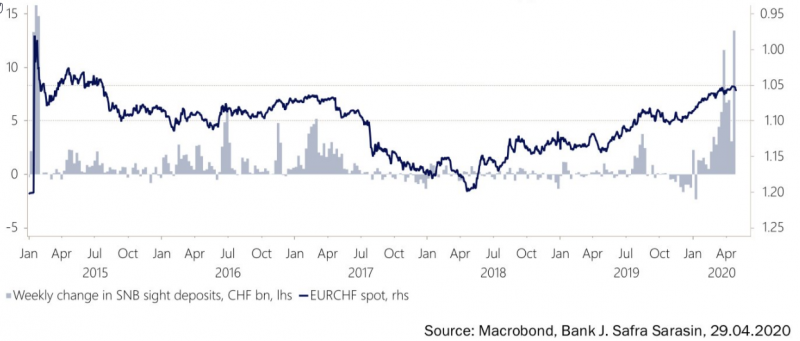
SNB Sight Deposits: decreased by 2.2 billion francs compared to the previous week
-
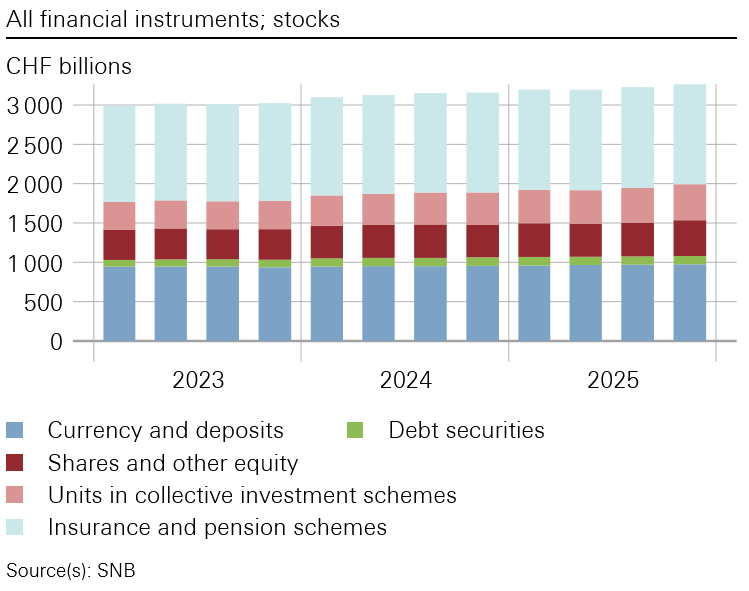
Household wealth in 2025
-
Heads up for NZD and CHF traders, RBNZ Gov Breman and SNB Chair Schlegel to speak
-
Swiss franc appreciation has led to tighter monetary conditions – SNB minutes
-
SNB’s Chairman Schlegel: A few months of negative inflation wouldn’t be a problem
Main SNB Background Info

Featured and recent
-
 SNB Sight Deposits: decreased by 2.2 billion francs compared to the previous week
 -
 Corrections vs. Bear Markets: Why 20% Declines Are Obsolete
 -
 -40 Kilo! Ricarda Lang feiert Abnehmerfolg! Das Internet feiert!
 -
 Steuerrecht digitalisieren mit KI – eine gute Idee?
 -
 Why Switzerland is launching a charm offensive in Southeast Asia
 -
 Ex-Raiffeisen bank CEO fined for tax evasion
 -
 The price of gold matters, but availability matters more.
 -
 FATAL: EU Chefdiplomatin blamiert ganz Europa! China außer sich!
 -
 India’s situation shows why physical gold is different from paper exposure.
 -
 ZUGRIFF auf dein Vermögen: So schützen sich INSIDER
More from this category
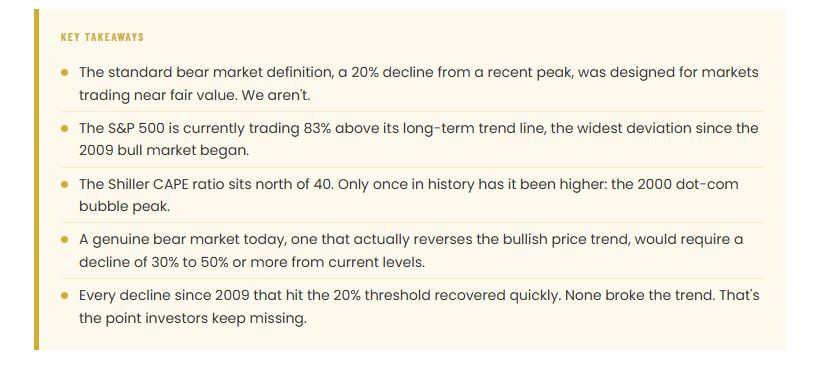 Corrections vs. Bear Markets: Why 20% Declines Are Obsolete
25 May 2026
- Why Switzerland is launching a charm offensive in Southeast Asia
25 May 2026
 Ex-Raiffeisen bank CEO fined for tax evasion
25 May 2026
 Gotthard rail tunnel overhaul costs pile up
24 May 2026
 Problems are synonymous with opportunity for entrepreneur Lucas Rondez
 24 May 2026
 Former Swiss banker ‘faces CHF1 million tax evasion charge’
24 May 2026
- Price Inflation Is Getting Worse
23 May 2026
- A Schumpeterian Analysis of the Eurobond Scandal through Rothbard’s Cui Bono
23 May 2026
- Mises’s Theory of Nations Applied to Immigration and Borders
23 May 2026
- Thomas Massie election: Losing the battle, winning the war
23 May 2026
 Week Ahead: US Economic Resilience Supports the Dollar
23 May 2026
- War, Easy Money, and the Working-Class Squeeze
23 May 2026
 SpaceX IPO: Should I Buy It, Or Wait?
23 May 2026
 Aromat, from Switzerland to the townships of South Africa
23 May 2026
- How Social Contract Theory Became State Apologetics
22 May 2026
- The Economic Problem Behind Zohran Mamdani’s Government Grocery Plan
22 May 2026
- RMP is Not QE
22 May 2026
- The Great Reversal: How Social Contract Theory Became State Apologetics
22 May 2026
- After 75 Years, Human Action Is Still the Standard for Understanding Economics
22 May 2026
 Stocks and Bonds Rally Despite the Apparent Lack of Progress in the Middle East
22 May 2026
The Changing Role of Gold
Published on August 20, 2021
Stephen Flood
My articles My videosMy books
Follow on:
Under the Bretton Woods monetary system, central banks could exchange their US dollar reserves for gold. This also ended the gold fixed price of US$35 per ounce.
This week we explore the two questions that concluded last week’s article: What role can gold serve in the international financial system in the future? And why do central banks continue to increase their gold reserves?
Starting with the latter question of why central banks continue to increase their gold reserves?
This is an important factor in the gold market and therefore a topic we have discussed before – see our post from July 8: Central Banks Plan to Increase their Gold Reserves in 2021 – Here’s Why, for example.
The net demand from central banks has been positive since 2010 and collectively central banks hold over 35,000 metric tonnes of gold. This accounts for approximately a fifth of all gold ever mined.
.
Market to Crash by 80%
Watch David Hunter on GoldCore TV
Gold and its Primary Role
An article posted on Reuters by World Gold Council sums it up as: One of gold’s primary roles for central banks is to diversify their reserves. The banks are responsible for their nations’ currencies. However, these can be subject to swings in value depending on the perceived strength or weakness of the underlying economy.
At times of need, banks may be forced to print more money, Since interest rates, the traditional lever of monetary control, have been stuck near zero for over a decade. This increase in the money supply may be necessary to stave off economic turmoil. However, at the cost of devaluing the currency.
Gold, by contrast, is a finite physical commodity whose supply can’t easily be added to. As such, it is a natural hedge against inflation.
As gold carries no credit or counterparty risks, it serves as a source of trust in a country, and in all economic environments. Making it one of the most crucial reserve assets worldwide, alongside government bonds.
For more on central banks gold holdings see the dashboard below:
Central Bank Gold Holdings Interactive Charts
Therefore, the bottom line is that central banks are buying gold for many of the same reasons you and I are buying gold. Gold cannot be ‘printed’ by the Fed, the ECB, or any other central bank. In other words, this means gold is not subject to debasement.
And gold has attractive portfolio characteristics. In a central bank portfolio consisting of only a few currencies that might qualify as reserve currencies (i.e., the dollar, the euro and the yen), gold provides excellent diversification characteristics. For example, gold is very inversely correlated to the US dollar, meaning that in general if the US dollar goes down that the price of gold increases.)
Gold and the International Financial System
Turning to the first question of what role can gold serve in the international financial system in the future?
Also, the fact that many central banks are again interested in gold for reserve purposes suggests that a new, semi-official, role for gold could emerge in the future.
One example of a role for gold is future inclusion in the basket of currencies that make up the International Monetary Fund’s (IMF) Special Drawing Rights (SDR) currency basket.
The SDR is an IMF-sponsored currency basket. Presently includes the dollar, yen, pound, euro, and renminbi (the basket weights of each are determined by the size of GDP, trade, etc.).
When first introduced in 1968 the SDR was meant to supplant the role of both the dollar and gold in central bank reserves. The SDR was initially referred to as ‘paper gold’, and its initial value was set equal to one US dollar.
Full story here Are you the author?Follow on:
No related photos.
Tags: central-banks,Commentary,Currency,economy,Featured,Finance,Gold,gold market,gold news,gold price,Gold prices,inflation,Investing,newsletter,Precious Metals,silver,World Gold Council