








Category Archive: 5) Global Macro
Weekly Market Pulse: What Now?
The yield curve inverted last week. Well, the part everyone watches, the 10 year/2 year Treasury yield spread, inverted, closing the week a solid 7 basis points in the negative. The difference between the 10 year and 2 year Treasury yields is not the yield curve though. The 10/2 spread is one point on the Treasury yield curve which is positively sloped from 1 month to 3 years, negatively sloped from 3 years to 10 years and positively sloped again...
Read More »
Read More »
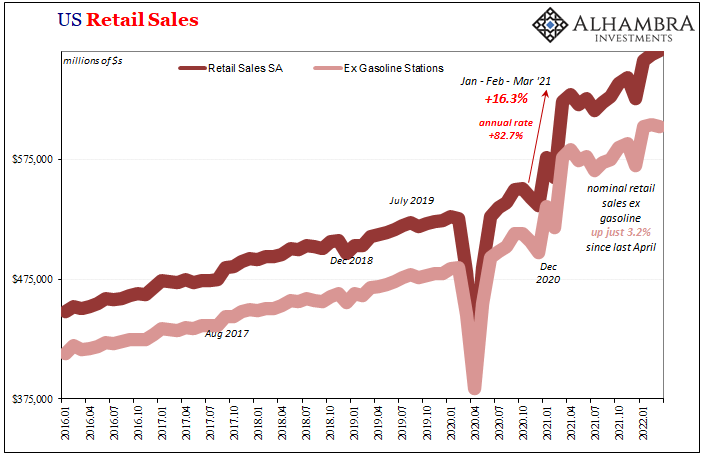
The Short, Sweet Income Case For Ugly Inversion(s), Too
A nod to just how backward and upside down the world is now. The economic data everyone is made to pay attention to, payrolls, that one is, in my view, irrelevant. As is the consumer price estimates from earlier this week, the PCE Deflator. That’s another one which receives vast amounts of interest even though it is already old news.
Read More »
Read More »
It’s All the Aliens’ Fault
As for our central banks' defaulting on their lines of credit with the Martian Central Bank--that's another
alien intervention we'll live to regret.
I hope this won't shock the more sensitive readers too greatly, but I've discovered undeniable evidence that all
our planet's problems are the result of alien intervention. Yes, aliens exist and are actively intervening
in humanity's activities, to our great detriment.
Wars, plagues, The...
Read More »
Read More »
France 2022: How to predict an election | The Economist
For as long as elections have taken place someone has tried to predict what might happen. From polls to prediction models, uncertainty is always inevitable. What’s the best way to do it?
00:00 - What’s the best way to predict elections?
00:48 - How were elections predicted in the past?
02:36 - How do modern day polls work?
04:32 - Why polls miss the mark
07:14 - How does statistical modelling work?
08:30 - Our French election model
See the data...
Read More »
Read More »
Weekly Market Pulse: The Cure For High Prices
There’s an old Wall Street maxim that the cure for high commodity prices is high commodity prices. As prices rise two things will generally limit the scope of the increase. Demand will wane as consumers just use less or find substitutes. Supply will also increase as the companies that extract these raw materials open new mines, grow more crops or drill new wells.
Read More »
Read More »
We Can Only Hope For Another (bond) Massacre
To begin with, the economy today is absolutely nothing like it had been almost thirty years ago. That fact in and of itself should end the discussion right here. However, comparisons will be made and it does no harm to review them.I’m talking about 1994, or, more specifically, the eleven months between late February 1994 and early February 1995.
Read More »
Read More »
Cash from trash: could it clean up the world? | The Economist
The world is facing a growing waste problem, with 2bn tonnes produced last year alone. Is it possible to clean up this mess by turning trash into cash?
Read More »
Read More »
War in Ukraine: The Economist interviews President Zelensky | The Economist
Volodymyr Zelensky talks to The Economist’s editor-in-chief, Zanny Minton Beddoes, in his Kyiv complex dubbed “the fortress”. In a wide-ranging interview, the Ukrainian president discusses the state of the war, the international support he needs and what a Ukrainian victory would look like.
00:00 President Zelensky meets The Economist
00:44 Actor-turned-president: how did it happen?
03:53 Where was President Zelensky when the war started?
04:34...
Read More »
Read More »
SMART BOURSE – L’invité de la mi-journée : Thomas Costerg (Pictet WM)
Lundi 28 mars 2022, SMART BOURSE reçoit Thomas Costerg (Économiste sénior US, Pictet WM)
Read More »
Read More »
Calm Before the Storm?
Stocks don't vanish when sold; somebody owns the shares all the way to the bottom. These owners who refuse to sell because they have convinced themselves the next dip will be the hoped-for resumption of the bullish trend are called "bagholders."
Read More »
Read More »
War in Ukraine: is a peace deal possible? | The Economist
As negotiations between Russia and Ukraine continue, our experts discuss what conditions might encourage both sides to lay down their weapons—and how likely a peace deal really is.
00:00 - War in Ukraine: when will there be peace?
00:37 - What would a peace deal involve?
02:30 - What will happen to Ukrainian territory?
04:29 - What is the perspective from the Russian side?
08:04 - Is Putin’s legitimacy weakening?
Find all our coverage on the...
Read More »
Read More »
Autocracy’s Fatal Weakness
This desire for compliance and consensus dooms the autocracy to failure and collapse because dissent is the essence of evolutionary churn and adaptation. The various flavors of autocracy (theocracy, kleptocracy, dictatorship, etc.) look remarkably successful at first blush but they all share a fatal flaw.
Read More »
Read More »
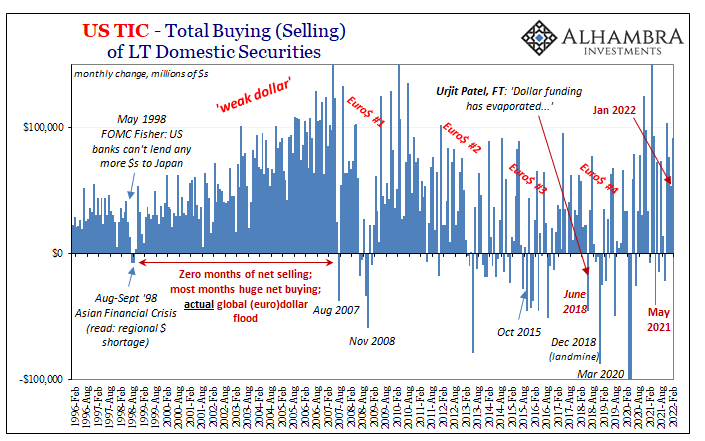
It Wouldn’t Be TIC Without So Much Other
With the Fed (sadly) taking center stage last week, and market rejections of its rate hikes at the forefront, lost in the drama was January 2022 TIC. Understandable, given all its misunderstood numbers are two months behind at their release. There were some interesting developments regardless, and a couple of longer run parts that deserve some attention.
Read More »
Read More »
Sustainable materials: is there a concrete solution? | The Economist
The construction industry is responsible for over a tenth of the world’s man-made carbon emissions, with concrete being the biggest culprit. How can we continue to build, without it costing the earth?
Film supported by @Infosys
00:00 - The trouble with rubble
00:55 - Construction is driving climate change
02:54 - The second most consumed resource on the planet: concrete
03:44 - Why concrete is so bad for the environment
04:40 - Cement...
Read More »
Read More »
How Healthcare Became Sickcare
The financialization of healthcare started two generations ago and is now in a run-to-fail feedback loop of insolvency. Long-time readers know I have been critical of U.S. healthcare for over a decade. When I use the term sickcare this is not a reflection on the hard work of frontline caregivers--it is a reflection of the financialization incentives that have distorted the system's priorities and put it on a path to insolvency.
Read More »
Read More »
Inversion Is The Real March Madness, Just Don’t Take It Literally
With such low levels of self-awareness, it isn’t surprising that the FOMC’s members continue to pour gasoline on the already-blazing curve fire. March Madness is supposed to be on the courts of college basketball, instead it is playing out more vividly across all financial markets.
Read More »
Read More »
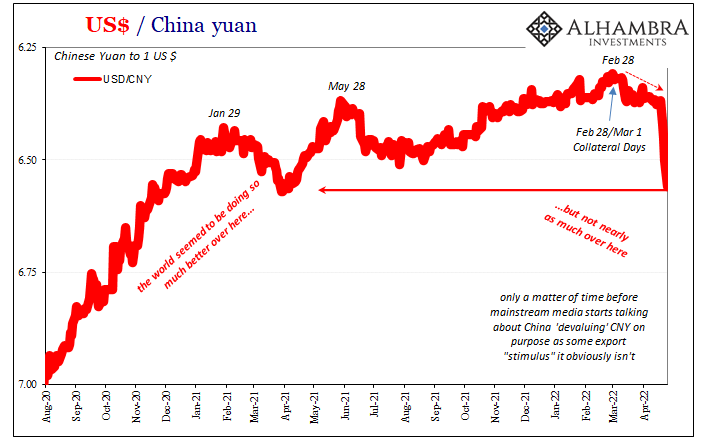
The Fed Inadvertently Adds To Our Ironclad Collateral Case Which Does Seem To Have Already Included A ‘Collateral Day’ (or days)
The Federal Reserve didn’t just raise the range for its federal funds target by 25 bps, upper and lower bounds, it also added the same to its twin policy tools which the “central bank” says are crucial to maintaining order in money markets thereby keeping federal funds inside the band where it is supposed to be. The FOMC voted to increase IOER from 15 bps to 40 bps, and the RRP from 5 bps to 30 bps.
Read More »
Read More »
Baby Boomer Retirement at Risk
The seven deadliest words in the English language—We’ve never done it this way before. And that certainly applies to Baby Boomers whose prospects for retirement are different than any preceding generation.
Read More »
Read More »
Global Crisis, National Renewal: A (Revolutionary) Grand Strategy by: Charles Hugh Smith
National Security is not just military force. In an age of scarcity, security is a degrowth economy of energy independence, social cohesion and civic virtue.
All nations, including the United States, face systemic crises that are reinforcing each other at an explosive point in history.
Read More »
Read More »
Media Attention All Over FOMC, Market Attention Totally Elsewhere
The Federal Reserve did something today, or actually announced today that it will do something as of tomorrow. And since we’re all conditioned to believe this is the biggest thing ever, I’ll have to add my own $0.02 (in eurodollars, of course, can’t be bank reserves) frustratingly contributing to the very ritual I’m committed to seeing end.We shouldn’t care much about the Fed.
Read More »
Read More »