









Category Archive: 5) Global Macro
Global Warm-Ongering: What Happens If Trump Takes US Out Of Paris Agreement?
For all the shock, horror, and aghast of global warm-ongers, comes a startling revelation: It’s Irrelevant if US Pulls Out of Paris Accord. Donald Trump has sent his clearest message yet about his plans for reshaping US policy on global warming by choosing a chief environmental regulator who has questioned the science of climate change.
Read More »
Read More »
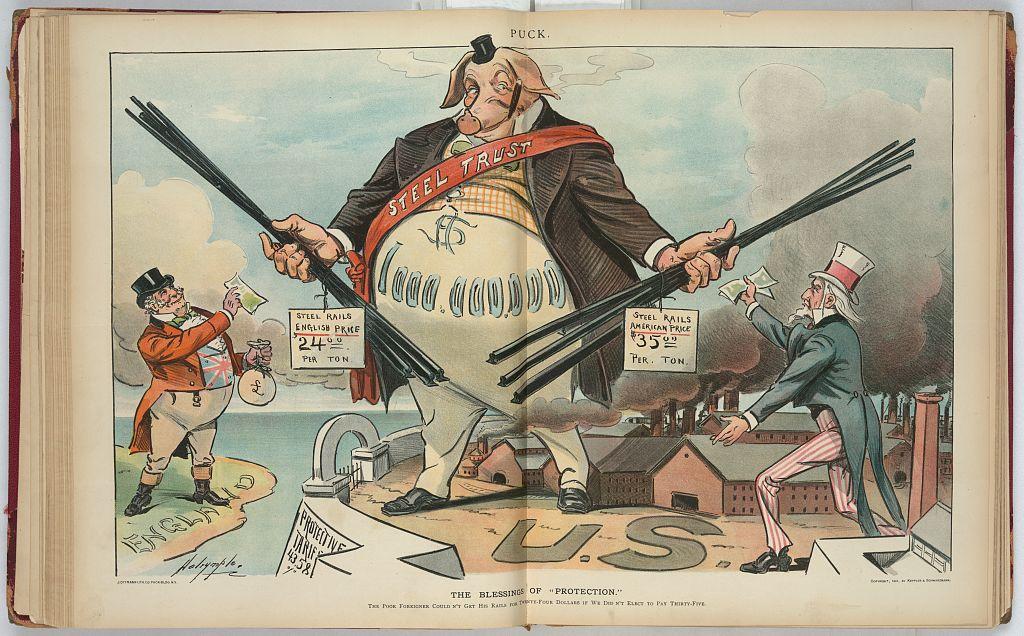
Donald Trump’s protectionism would be devastating for American business
Our editor-in-chief Zanny Minton Beddoes discusses the president-elect’s proposed trade policies and how they could end up hurting the very people he is purporting to help.
Read More »
Read More »
Banning the bomb? America and Russia’s nuclear anniversary | The Economist
On December 8th 1987 American President Ronald Reagan and Soviet General Secretary Mikhail Gorbachev signed the Intermediate-Range Nuclear Forces Treaty—agreeing to ban an entire class of nuclear weapon. Nearly 30 years on, tensions and recriminations continue to define the relationship between the world’s two biggest nuclear powers Click here to subscribe to The Economist on …
Read More »
Read More »
Populism in America: “Follow the Money”
If you want to understand today's populism, don't look to the mainstream media's comically buffoonish propaganda blaming the Russians: look at the four issues listed below. One of the most disturbing failures of the mainstream media in this election cycle was its complete lack of historical context for Trump's brand of populism.If you consumed the mainstream media's coverage of the campaign and election, you noted their obsession with speech acts...
Read More »
Read More »
Our “Gaslight” Economy
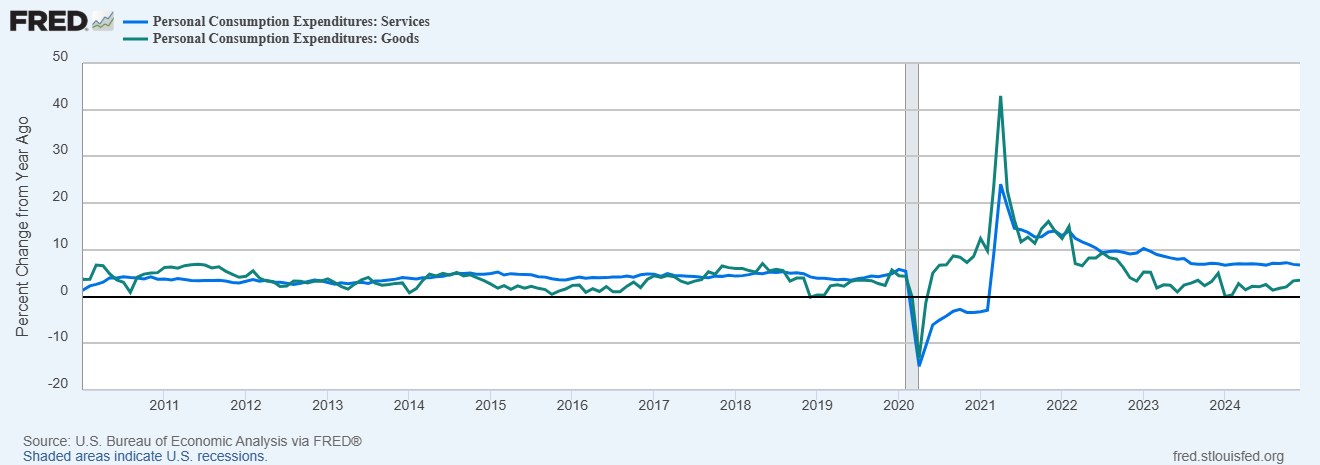
If you don't like what these charts are saying, please notify The Washington Post to add the St. Louis Federal Reserve to its list of Russian propaganda sites. Yesterday I described our gaslight financial system. Today we'll look at our gaslight economy. Correspondent Jason H. alerted me to the work of author Thomas Sheridan ( Puzzling People: The Labyrinth of the Psychopath), who claims to have coined the term gaslighting.
Read More »
Read More »
Personalised medicine could lead to a breakthrough in cancer in 2017 | The Economist
Cancer scientists will break new ground in 2017 with the approval of a tailored gene therapy called CAR-T. Next year could be the year for personalised medicine to go mainstream. Click here to subscribe to The Economist on YouTube: http://econ.trib.al/rWl91R7 What are the breakthroughs we’ll all be talking about in the year ahead? A new …
Read More »
Read More »
Trump’s twitter diplomacy: upending the old order, one tweet at a time
The American presidency can be used as a bully pulpit, but Donald Trump already has a social-media megaphone of his own. Chinese president Xi Xinping gets to hear it first hand in this week’s KAL cartoon. Click here to subscribe to The Economist on YouTube: http://econ.trib.al/rWl91R7 Daily Watch: mind-stretching short films every day of the …
Read More »
Read More »
Emerging Markets: Preview of the Week Ahead
EM remains a mixed bag. Despite the negative connotations of a rising US rate environment, EM gathered an element of stability last week as the dollar consolidated its recent gains. Rising commodity prices are also helping EM at the margin, with RUB and COP amongst the best last week on higher oil and CLP on higher copper.
Read More »
Read More »
Net National Savings Rate, the Best Alternative Indicator to GDP Growth
For us the Net National Savings Rate is the best alternative indictator to GDP growth. It is positively correlated with the change in wealth, with the establishment of future productive capacity, the price of government bonds and currency valuations. But today GDP growth is often negatively correlated to the Net Savings Rate. Hence GDP is often a less useful measure.
Read More »
Read More »
Beyond Income Inequality
Judging by the mainstream media, the most pressing problems facing capitalism are 1) income inequality, the basis of Thomas Piketty’s bestseller Capital in the Twenty First Century, and 2) the failure of laissez-faire markets to regulate their excesses, a common critique encapsulated by Paul Craig Roberts’ recent book and 2) the failure of laissez-faire markets to regulate their excesses, a common critique encapsulated by Paul Craig Roberts’ recent...
Read More »
Read More »
What a strong US dollar means for the world economy
Our editor-in-chief Zanny Minton Beddoes takes us behind this week’s cover to discuss the sharp rise of the dollar of late, and why its surge could pose problems for the world economy. For more videos, visit our YouTube channel https://www.youtube.com/theeconomist
Read More »
Read More »
Six Narratives on the Ascendancy of Trump
A remarkably diverse array of "explanations" of Donald Trump's presidential election victory have been aired, representing both the conventional political spectrum and well beyond.
Read More »
Read More »
Which country was the first to decriminalise all drugs? | The Economist
Today the UN commission on narcotic drugs meets in Vienna. It does so against a backdrop of increased decriminilisation in many parts of the world, but which was the first country to go all the way? Click here to subscribe to The Economist on YouTube: http://econ.trib.al/rWl91R7 Which country was the first to decriminalise all drugs? …
Read More »
Read More »
Are street drugs getting purer? | The Economist
Street drugs are getting purer. As part of the Daily Watch drugs week we explore the market forces contributing to the rise in potency Click here to subscribe to The Economist on YouTube: http://econ.trib.al/rWl91R7 Many drug users today are getting more than they may have bargained for. Why are people getting higher? It’s simple market …
Read More »
Read More »
The World If … drugs become legal
As part of the Daily Watch ‘drugs week’ we explore what the world might look like if legalisation replaces the failing war on drugs. Join Tom Wainwright, Britain editor of The Economist and author of Narconomics, as he predicts what would happen to the cartels Click here to subscribe to The Economist on YouTube: http://econ.trib.al/rWl91R7 …
Read More »
Read More »
Emerging Markets: Week Ahead Preview
EM ended last week on a somewhat firmer note, though we note divergences remain in place. For the week, ZAR and KRW performed the best while TRY and BRL were the worst. US jobs data Friday will draw some attention, though a December Fed rate hike is pretty much fully priced in.
Read More »
Read More »
Why Is the US Dollar Rising?
Note the apparent breakout above 100 and the constructive similarities to the 2014 breakout that was followed by a 20% increase in the purchasing power of the USD relative to other currencies.
Read More »
Read More »
The New Nobility Uses Political Correctness to Fragment the Precariats
Combine identity politics with political correctness, and the New Nobility/Oligarchy can laugh their way to the bank while their pawn-serfs fight over how many politically correct angels can dance on the head of a pin.
Read More »
Read More »
How Do We Create Value When Knowledge Is Almost Free?
Credentials are increasingly in over-supply; problem-solving skills are scarce. How do we create value in an economy that is increasingly dependent on knowledge? The answer is complicated by the reality that knowledge is increasingly digital and "unownable" and therefore almost free. Financialization as a substitute for creating value has run its course.
Read More »
Read More »