










Category Archive: 5) Global Macro
Auto Pressure Ramps Up
The Los Angeles Times today asked the question only the mainstream would ask. “Wages are growing and surveys show consumer confidence is high. So why are motor vehicle sales taking a hit?” Indeed, the results reported earlier by the auto sector were the kind of sobering figures that might make any optimist wonder.
Read More »
Read More »
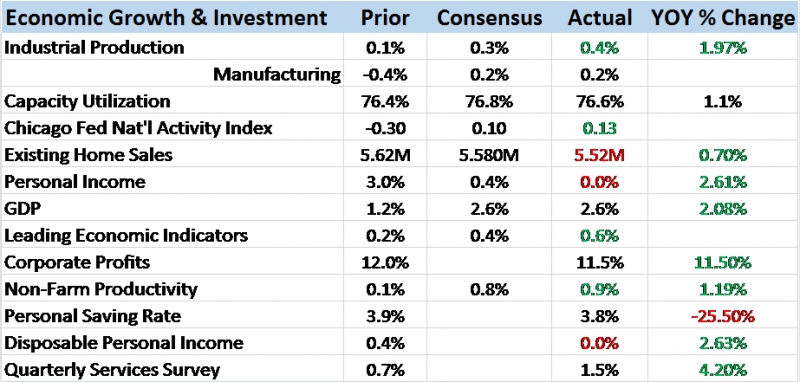
Bi-Weekly Economic Review
The economic reports since the last economic update were generally less than expected and disappointing. The weak growth of the last few years had been supported by autos and housing while energy has been a wildcard. When oil prices fell, starting in mid-2014 and bottoming in early 2016, economic growth suffered as the shale industry retrenched.
Read More »
Read More »
How many countries in the world are fully democratic?
What makes a democracy? Members of the public discuss what constitutes a democratic country, and how many true democracies exist. Click here to subscribe to The Economist on YouTube: http://econ.trib.al/rWl91R7 Daily Watch: mind-stretching short films throughout the working week. For more from Economist Films visit: http://films.economist.com/ Check out The Economist’s full video catalogue: http://econ.st/20IehQk Like …
Read More »
Read More »
Emerging Markets Preview
EM FX got some limited traction as the week closed, helped by stabilizing commodity prices. However, oil, copper, and iron ore have all broken important technical levels that suggest further weakness ahead. We also think the FOMC and jobs data support our view that the next Fed hike will be in June. This backdrop should keep EM on the defensive this week.
Read More »
Read More »
China: Blatant Similarities
Declines in several of the world’s PMI’s in April have furthered doubts about the global “reflation.” But while many disappointed, some sharply, it isn’t just this one month that has sown them. In China, for example, both the manufacturing and non-manufacturing sentiment indices declined to 6-month lows.
Read More »
Read More »
Emerging Markets: What has Changed
Relations between China and North Korea appear to be worsening. The THAAD missile shield has been deployed earlier than expected in South Korea. An amendment to India’s Banking Regulation Act gives the RBI more power to address bad loans. Tensions are rising between Czech Prime Minister Sobotka and Finance Minister Babis. Brazil pension reform bill was passed 23-14 in the lower house special committee.
Read More »
Read More »
This Is Not Expansion
Back in October, the Bureau of Economic Analysis released GDP figures that suggested what those behind “reflation” had hoped. After a near miss to start 2016, the economy had shaken off the effects of “transitory” weakness, mainly manufacturing and oil, poised to perform in a manner consistent with monetary policy rhetoric.
Read More »
Read More »
When Putin met Merkel: drawn by Kal
How does KAL, The Economist’s editorial cartoonist, bring to life political encounters? Watch him draw this week’s KAL cartoon Click here to subscribe to The Economist on YouTube: http://econ.trib.al/rWl91R7 Daily Watch: mind-stretching short films throughout the working week. For more from Economist Films visit: http://films.economist.com/ Check out The Economist’s full video catalogue: http://econ.st/20IehQk Like The …...
Read More »
Read More »
Clickbait: Bernanke Terrifies Stock Investors, Again
If you are a stock investor, you should be terrified. The most disconcerting words have been uttered by the one person capable of changing the whole dynamic. After spending so many years trying to recreate the magic of the “maestro”, Ben Bernanke in retirement is still at it.
Read More »
Read More »
Defining Labor Economics
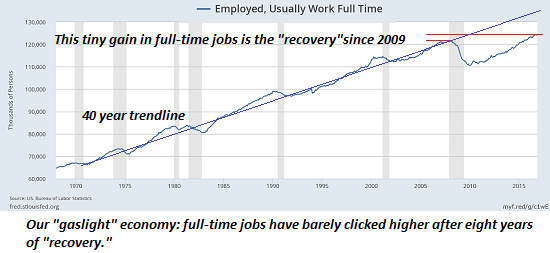
Economics is a pretty simple framework of understanding, at least in the small “e” sense. The big problem with Economics, capital “E”, is that the study is dedicated to other things beyond the economy. In the 21st century, it has become almost exclusive to those extraneous errands. It has morphed into a discipline dedicated to statistical regression of what relates to what, and the mathematical equations assigned to give those relationships some...
Read More »
Read More »
Birmingham, Alabama’s children helped change America’s laws on racial discrimination | The Economist
Gwendolyn Webb has been a civil rights activist since she was 14 years old. She tells us what happened when she took part in a seminal civil rights march in Birmingham, Alabama that turned the world’s attention to their struggle for equality Click here to subscribe to The Economist on YouTube: http://econ.trib.al/rWl91R7 How did a …
Read More »
Read More »
Emerging Markets: Week Ahead Preview
EM FX ended last week on a mixed note. Indeed, the week and the month were also very much mixed for EM, reflecting a variety of global and country-specific drivers impacting these countries. This week’s US jobs data could bring Fed tightening back as a major driver for EM.
Read More »
Read More »
Housing’s Echo Bubble Now Exceeds the 2006-07 Bubble Peak
A funny thing often occurs after a mania-fueled asset bubble pops: an echo-bubble inflates a few years later, as monetary authorities and all the institutions that depend on rising asset valuations go all-in to reflate the crushed asset class.
Read More »
Read More »
Emerging Markets: What has Changed
Moody’s moved the outlook on Vietnam’s B1 rating from stable to positive. Nigeria’s central bank introduced a new FX window for portfolio investors. Moody’s moved the outlook on Romania’s Baa3 rating from positive to stable. Central Bank of Russia accelerated its easing cycle. Central Bank of Turkey delivered a hawkish surprise. Brazil’s lower house easily approved the labor reforms, but popular resistance is rising.
Read More »
Read More »
‘Dollar’ ‘Improvement’
According to the headline TIC statistics, foreign central banks have in the past six months sold the fewest UST’s since the 6-month period ended November 2015. That may indicate an easing of “dollar” pressure in the private markets due to “reflation” sentiment.
Read More »
Read More »
Who Will Live in the Suburbs if Millennials Favor Cities?
Who's going to pay bubble-valuation prices for the millions of suburban homes Baby Boomers will be off-loading in the coming decade as they retire/ downsize?Longtime readers know I follow the work of urbanist Richard Florida, whose recent book was the topic of Are Cities the Incubators of Decentralized Solutions?(March 14, 2017).
Read More »
Read More »
PBoC: Mechanical Tightening PBoC is China Central Bank
The mainstream narrative as it relates to Chinese money is “tightening.” Having survived the economic downturn last year, we are to believe that the PBOC is once again on bubble duty. They raised their reverse repo rates, considered to be their policy benchmarks, three times up to mid-March.
Read More »
Read More »
To The Asian ‘Dollar’, And Then What?
The Bretton Woods system was intentionally set up to funnel monetary convertibility through official channels. The primary characteristic of any true gold standard is that any person who wishes can change paper claims into hard money. It was as much true in any one country as between those bound by the same legal framework (property).
Read More »
Read More »
The dim reality of South Africa’s new dawn | The Economist
In April 1994, South Africa held its first democratic elections and all races went to the polls to bury apartheid for good. But hopes of a new dawn have been tarnished by fraud and corruption at the highest levels. Click here to subscribe to The Economist on YouTube: http://econ.trib.al/rWl91R7 23 years ago this week, after …
Read More »
Read More »