






You earn more than your parents did, maybe significantly more. Yet, somehow, the life they built—the house, the retirement account, the sense of getting ahead—feels further away than ever.
Read More »
Tag Archive: newsletter
Manufactured debate: How coordinated networks are hijacking European news comment sections

Read More »
Cronyism and Regulatory Capture
As AI becomes a more important and visible part of our lives, the movement to regulate it also grows. The standard regulation narratives—that government regulates things in the name of the public interest—clearly do not fit the facts.
Read More »
Read More »
So entwickeln sich Bitcoin, Ripple & Co am Nachmittag am Kryptomarkt

Read More »
Appendix 2: On the Term “Liberalism”
Mises defends his use of the word: true liberalism is defined by private ownership of the means of production, and he explains why he keeps the name despite its distorted modern usage.
Read More »
Read More »
What the US soul means for the economy, and football

Read More »
Appendix 1: On the Literature of Liberalism
Mises's guided reading list of the essential works of liberal thought, from Hume, Smith, and Bentham onward, for readers who want to study the tradition in depth.
Read More »
Read More »
Chapter 5: The Future of Liberalism
Mises argues that modern civilization rests on liberalism and capitalism, and can be destroyed only from within—by the spread of antiliberal ideas, not by any outside enemy.
Read More »
Read More »
Chapter 4: Liberalism and the Political Parties
Why liberalism differs from interest-based parties, the crisis of parliamentary government, and the misleading charge that liberalism is merely the “party of capital.”
Read More »
Read More »
Chapter 3: Liberal Foreign Policy
Liberalism applied to world affairs: national self-determination, free trade and freedom of movement as the foundations of peace, and critiques of nationalism, imperialism, and colonialism.
Read More »
Read More »
Chapter 2: Liberal Economic Policy
The economic case for private property and the free market, including the impracticability of socialism, the failures of interventionism, and the problems of cartels, monopoly, and bureaucracy.
Read More »
Read More »
Chapter 1: The Foundations of Liberal Policy
The first principles of liberal politics—private property, freedom, peace, and equality before the law—with a critique of the doctrine of force, fascism, and the proper limits of government.
Read More »
Read More »
Introduction
Mises defines liberalism as a program for material welfare grounded in reason, ties it to capitalism, and examines the psychological roots of antiliberal resentment.
Read More »
Read More »
Preface to the English-Language Edition
Ludwig von Mises’s preface to the English edition: what classical liberalism is, why its program rests on private property, and how “liberal” came to mean nearly its opposite in America.
Read More »
Read More »
Foreword to Liberalism
Tom Woods frames Ludwig von Mises's book around a single question—when the state may legitimately initiate force—and the classical liberal’s insistence on a very high threshold for it.
Read More »
Read More »
The War System
"The main aim of American foreign policy is to impose the will of our ruling elite on the rest of the world."
Read More »
Read More »
The Economics and Ethics of Interest Rates
Aristotle called interest unnatural. Aquinas called it unjust. For centuries, the Church banned it. Guido Hülsmann argues they were wrong about the free market—but accidentally right about the fiat system.
Read More »
Read More »
Switzerland against global over-regulation of AI, says minister

Read More »
Renewed War Roils Markets

Read More »
Is This Country Having Its Socialist Moment?
Democratic socialist candidates are becoming a serious political challenge in Democratic Party primaries. Have Americans suddenly become convinced by the arguments in favor of command economies, or is there something deeper going on?
Read More »
Read More »
 On Swiss National Bank
-
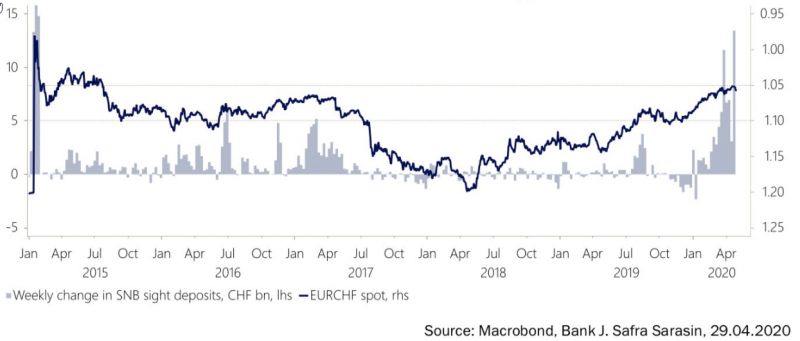
SNB Sight Deposits: is stable 0.0 billion francs compared to the previous week
-
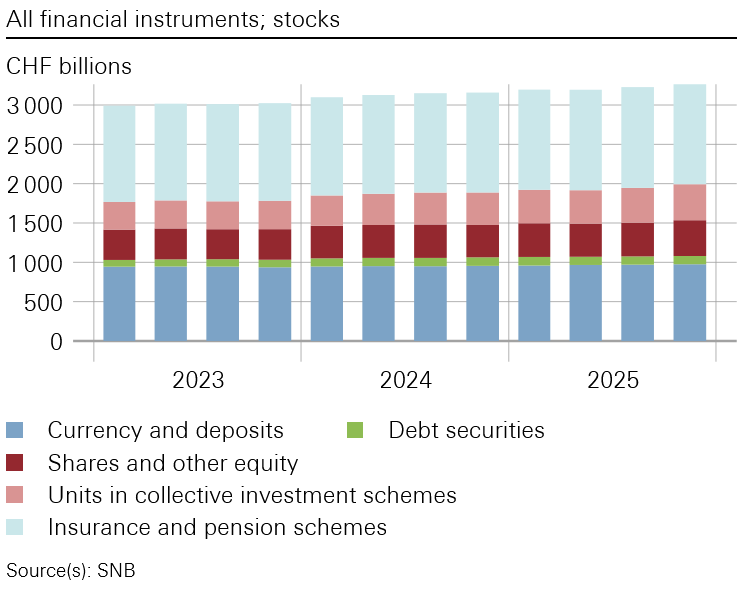
Household wealth in 2025
-
Heads up for NZD and CHF traders, RBNZ Gov Breman and SNB Chair Schlegel to speak
-
Swiss franc appreciation has led to tighter monetary conditions – SNB minutes
-
SNB’s Chairman Schlegel: A few months of negative inflation wouldn’t be a problem
Main SNB Background Info
Featured and recent
-
 Prices for cars drop in Switzerland thanks to Chinese brands
-
 SWISS CEO: ‘crises are becoming more frequent’
-
 China’s Trade Surplus Swells and the Market Awaits US CPI
-
 Swiss regulator fails PostFinance financial emergency plans
-
 Think Rates Are Peaking? Consider Mortgage-Backed Securities
-
 What The NFL Can Teach Us About Risk Management
-
 Court throws out CHF18m Swisscom fine in fibre-optic dispute
-
 Glencore starts secondary listing on Australian stock exchange
-
 Swiss health group Galderma acquires US skincare brand for $1.5bn
-
 Swiss rollercoaster maker investigates fatal US Six Flags accident
More from this category
 Prices for cars drop in Switzerland thanks to Chinese brands
14 Oct 2026
 SWISS CEO: ‘crises are becoming more frequent’
14 Oct 2026
 China’s Trade Surplus Swells and the Market Awaits US CPI
14 Oct 2026
 Swiss regulator fails PostFinance financial emergency plans
14 Oct 2026
 Think Rates Are Peaking? Consider Mortgage-Backed Securities
14 Oct 2026
 What The NFL Can Teach Us About Risk Management
14 Oct 2026
 Court throws out CHF18m Swisscom fine in fibre-optic dispute
14 Oct 2026
 Glencore starts secondary listing on Australian stock exchange
14 Oct 2026
 Swiss health group Galderma acquires US skincare brand for $1.5bn
14 Oct 2026
 Swiss rollercoaster maker investigates fatal US Six Flags accident
14 Oct 2026
 Swiss Re estimates CHF1.7 billion hailstone damage
13 Oct 2026
 EU gives Nestlé green light for water joint venture
13 Oct 2026
 Swiss alliance against Mercosur FTA kickstarts referendum challenge
13 Oct 2026
 Swiss banks are looking to hire fewer staff
13 Oct 2026
 Softer Rates, Heavier Dollar
13 Oct 2026
 OpenAI Rains On The Tech Parade
13 Oct 2026
 Heatwave hits Swiss chocolate maker sales
13 Oct 2026
 Swiss family business Wagner shuts down with 69 job losses
13 Oct 2026
 House prices continue to climb in Switzerland
12 Oct 2026
 Opponents deem proposed Swiss arms export rules ‘immoral’, ‘anti-Ukraine’
12 Oct 2026