








Category Archive: 5) Global Macro
Geopolitics and Degrowth
The Geopolitics of Degrowth holds that real power flows not from waste, centralization and coercion
but from decentralization, relocalization and the free flow of value.
Conventional geopolitics is all about more: more military power, more sanctions, more coercion,
more influence.
The Geopolitics of Degrowth is all about the the power of less: wasting less, consuming less,
needing less from other nations, reducing dependence on rivals,...
Read More »
Read More »
War in Ukraine: what will happen next? | The Economist
Russia’s war in Ukraine is likely to be Europe's most intense conflict since the second world war. What might happen next? And what will this war mean for the world? Our experts answer your questions.
Read our coverage of the war in Ukraine: https://econ.st/3pcnVPl
Sign up to our daily newsletter to keep up to date with the latest developments: https://econ.st/3sezh7h
What’s happening in Kyiv? Watch our correspondent’s take:...
Read More »
Read More »
Our Financial System Is Optimized for Sociopaths and Exploitation
Let's call this financial system what it really is: the MetaPerverse, a conjured world of self-serving cons. We live in a peculiar juncture of history in which truth has been banished as a threat to the maximization of private gain, i.e. the hyper-pursuit of self-interest. Evidence that supports a causal chain has been replaced by cherry-picked data that supports a self-serving narrative: both the evidence and narrative are manufactured to serve...
Read More »
Read More »
War in Ukraine: what’s happening in Kyiv? | The Economist
Vladimir Putin has ordered Russian troops to invade Ukraine. What’s happening now and how will the war unfold? The Economist’s correspondent, Richard Ensor, reports from the Ukrainian capital, Kyiv.
Read our coverage of the Ukraine crisis here: https://econ.st/3pcnVPl
Sign up to our daily newsletter to keep up to date with the latest developments: https://econ.st/3sezh7h
Will war in Ukraine lead to a wider cyber-conflict?...
Read More »
Read More »
The Red Warning
Now it’s the Russian’s fault. Belligerence surrounding Donbas and Ukraine, raw materials and energy supplies to Europe threatened by Putin’s coiled bear. Why wouldn’t markets grow worried?There’s always a reason why we shouldn’t take these things seriously, or quickly dismiss them out of hand as the temporary product of whichever political fear-of-the-day.
Read More »
Read More »
Our Leaders Made a Pact with the Devil, and Now the Devil Wants His Due
The unprecedented credit-fueled bubbles in stocks, bonds and
real estate are popping, and America's corrupt leaders can only stammer and spew excuses and empty promises.
Unbeknownst to most people, America's leadership made a pact with the Devil: rather than face the constraints
and injustices of our economic-financial system directly, a reckoning that would require difficult choices and
some sacrifice by the ruling financial-political elites,...
Read More »
Read More »
Green building: can mushrooms help? | The Economist
The construction industry is responsible for 11% of the world’s man-made CO2 emissions—due to its reliance on concrete and steel. What alternative materials could be used in the future?
Film supported by @Infosys
00:00 - What are some sustainable alternatives?
00:31 - Why is construction bad for the environment?
01:08 - The problem with concrete
02:00 - Promising alternatives to concrete
03:07 - Can mushrooms help construct buildings?
04:09 - The...
Read More »
Read More »
Russia and Ukraine: how will the West react? | The Economist
A Russian invasion of Ukraine could be imminent. What is at stake and how will the West respond? Shashank Joshi, The Economist's defence editor, answers your questions.
00:00 - What’s happening in Ukraine?
01:10 - Is Putin bluffing?
02:08 - Is Ukraine prepared for conflict?
03:00 - What’s at stake for both Ukraine and Russia?
04:00 - How would an invasion impact the world?
05:09 - Does this situation threaten peace elsewhere?
06:25 - How should...
Read More »
Read More »
How AI can make health care better | The Economist
AI has the power to transform health care. From more efficient diagnoses to safer treatments, it could remedy some of the ills suffered by patients. Film supported by @Maersk
00:00 - Can AI help heal the world?
00:45 - How can AI spot blindness?
04:01 - Protecting patients’ privacy
05:10 - How to share medical data safely
06:11 - Medical AI is rapidly expanding
08:02 - What do the sceptics say?
08.36 - Using AI for new medical devices
11:08 -...
Read More »
Read More »
How to make computers less biased | The Economist
You might think technology is the great leveller. But as AI and other data-driven innovations race farther and faster ahead, the automation of racial bias is causing growing concern.
00:00 - Can technology be racist?
00:50 - Bias in facial-recognition tech
03:50 - Why do data discriminate?
05:50 - What can be done?
07:00 - How can regulations help?
Sign up to The Economist’s daily newsletter to keep up with our latest stories:...
Read More »
Read More »
Disputed Borders: Russia v Ukraine | The Economist
Vladimir Putin has already annexed Crimea and plunged Donbas into war. Now, he has amassed 100,000 troops at the Ukrainian border. Why can’t Russia leave Ukraine alone?
00:00 - The world’s eyes are on Ukraine
00:55 - Russia and Ukraine’s shared history
02:08 - Caught between Russia and the West
04:04 - Ukraine’s post-independence struggles
06:30 - Putin’s domestic issues
07:47 - Will Putin invade Ukraine?
Find The Economist’s coverage on...
Read More »
Read More »
How Empires Die
When the state / empire loses the ability to recognize and solve core problems of security and fairness, it will be replaced by another arrangement that is more adaptable and adept at solving problems. From a systems perspective, nation-states and empires arise when they are superior solutions to security compared to whatever arrangement they replace: feudalism, warlords, tribal confederations, etc.
Read More »
Read More »
NFTs: are they worth the hype? | The Economist
In the past year a new trend in the crypto world has boomed: NFTs, or non-fungible tokens. They started as a way for digital artists to have ownership over their work but have transformed into a dizzying new multi-billion-dollar marketplace. Are they worth the hype?
00:00 - Are NFTs worth the hype?
01:38 - How to sell an NFT
03:24 - Where did NFTs come from?
04:51 - Why are NFTs so popular?
05:45 - NFTs in the artworld
07:04 - The risks in buying...
Read More »
Read More »
Weekly Market Pulse: Are We There Yet?
I’ll just get this out of the way right at the beginning. The question in the title of this post refers to the end of the ongoing stock market correction and the answer is likely no. There are no sure things in this business so it isn’t an unequivocal no, but based on history, the odds favor more weakness.
Read More »
Read More »
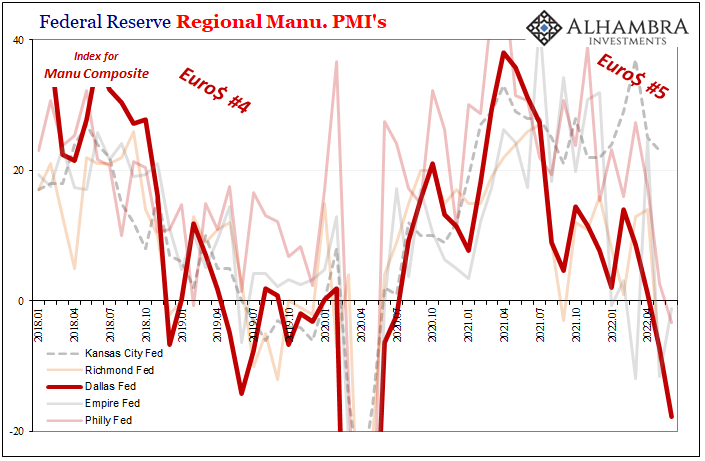
FOMC Goes With Unemployment Rate While This Huge Number Happens To Far More Relevant Economic Data
The first time I can consciously remember using the term landmine was probably here in February 2019. I had described the same process play out several times before, I had just never applied that term. There was all sorts of market chaos in the final two months of 2018, including a full-on stock market correction, believe it or not, leaving the inflation and recovery narrative in near complete tatters.
Read More »
Read More »
After Today’s FOMC, Yield Curve Is Already As Flat As It Was In Mar ’18 **Without A Single Rate Hike Yet**
It’s not hard to reason why there continues to be this conflict of interest (rates). On the one hand, impacting the short end of the yield curve, the unemployment rate has taken a tight grip on the FOMC’s limited imagination. The rate hikes are coming and the markets like all mainstream commentary agree that as it stands there’s nothing on the horizon to stop Jay Powell’s hawkishness.
Read More »
Read More »
Keeping warm, without warming the planet | The Economist
Humans are cranking up their thermostats at the expense of the planet. With the majority of global heating still powered by dirty fuels, are there greener solutions that won't cost the earth? Read more: https://econ.st/3g3GNeq
Film supported by @Infosys
00:00 - Heating the planet with domestic heating
01:06 - South Africa’s energy supply
02:59 - What is a heat pump and how does it work?
05:58 - The first step to decarbonising heating is...
Read More »
Read More »
Rückläufige US-Erdölvorräte lassen Ölpreise steigen
Die Vereinigten Staaten weisen sinkende Ölreserven auf. Dies führt zu einem Druck auf die Preise. Trotz eines Anstiegs der Rohölvorräte im jüngsten EIA-Bericht sind die kommerziellen Erdölvorräte in den USA in den meisten Wochen der letzten anderthalb Jahre zurückgegangen und liegen unter dem saisonalen Durchschnitt der letzten fünf Jahre und sogar unter dem Fünfjahresdurchschnitt vor der Pandemie.
Read More »
Read More »
Inflation Winners and Losers
The clear winners in inflation are those who require little from global supply chains, the frugal, and those who own their own labor, skills and enterprises. As the case for systemic inflation builds, the question arises: who wins and who loses in an up-cycle of inflation? The general view is that inflation is bad for almost everyone, but this ignores the big winners in an inflationary cycle.
Read More »
Read More »
The Hawks Circle Here, The Doves Win There
We’ve been here before, near exactly here. On this side of the Pacific Ocean, in the US particularly the situation was said to be just grand. The economy was responding nicely to QE’s 3 and 4 (yes, there were four of them by that point), Federal Reserve Chairman Ben Bernanke had said in the middle of 2013 it was becoming more than enough, creating for him and the FOMC coveted breathing space so as to begin tapering both of those ongoing programs.A...
Read More »
Read More »