





Category Archive: 5) Global Macro

Forget the V, W or L Recovery: Focus on N-P-B

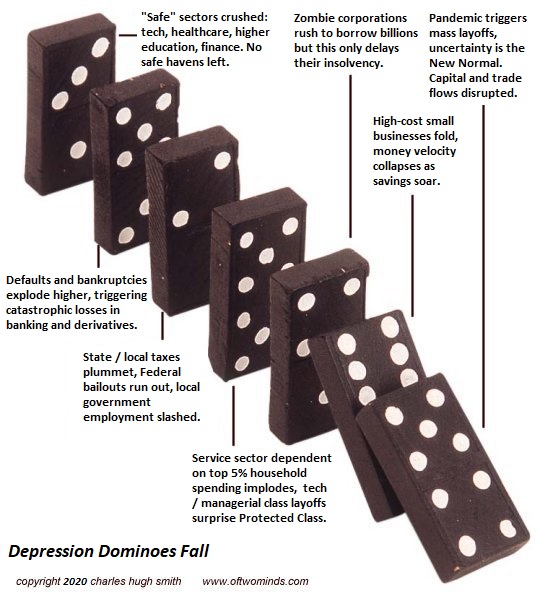
The only realistic Plan B is a fundamental, permanent re-ordering of the cost structure of the entire U.S. economy. The fantasy of a V-shaped recovery has evaporated, and expectations for a W or L-shaped recovery are increasingly untenable. So forget V, W and L; the letters that will shape the future are N, P, B: there is No Plan B.

Read More »

Wait A Minute, What’s This Inversion?

Back in the middle of 2018, this kind of thing was at least straight forward and intuitive. If there was any confusion, it wasn’t related to the mechanics, rather most people just couldn’t handle the possibility this was real. Jay Powell said inflation, rate hikes, and accelerating growth. Absolutely hawkish across-the-board.And yet, all the way back in the middle of June 2018 the eurodollar curve started to say, hold on a minute.

Read More »

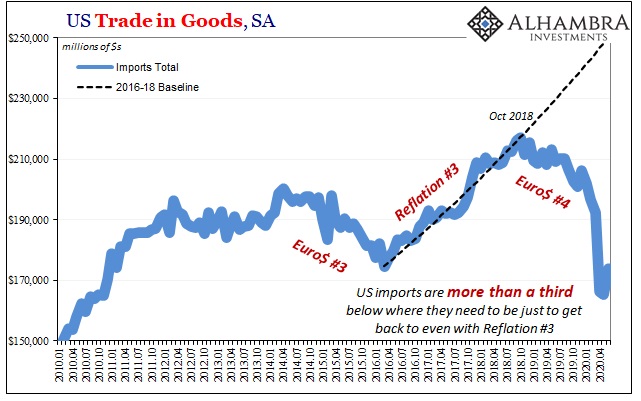
Recent Trade Developments Suggest Some Caution Ahead Warranted

There’s never a good time for a trade war. Yet here we are on the cusp of one between the US and the EU over unfair aircraft subsidies and comes at a time when renewed COVID-19 outbreaks are making the global economic outlook even cloudier. These developments suggest some caution ahead is warranted for risk assets like EM and equities.

Read More »

Not COVID-19, Watch For The Second Wave of GFC2

I guess in some ways it’s a race against the clock. What the optimists are really saying is the equivalent of the old eighties neo-Keynesian notion of filling in the troughs. That’s what government spending and monetary “stimulus” intend to accomplish, to limit the downside in a bid to buy time. Time for what? The economy to heal on its own.

Read More »

How to fix the United Nations | The Economist Podcasts

As the United Nations turns 75 years old, the world order it established has never been under greater strain. On “The Economist Asks” podcast, Antonio Guterres, the UN secretary-general, explains how—and why—international cooperation needs to be fixed. 00:31 - Mr Guterres, the UN turns 75 at a moment of multiple crises and new challenges. You’ve said yourself that these are “dark days”. How would you define the biggest challenges? 01:51 - If we...

Read More »

Dollar Firm as Risk-Off Sentiment Persists

Higher infection numbers in the US and other countries continue to fuel risk aversion across global markets; the IMF released more pessimistic global growth forecasts yesterday. The US has rekindled trade provocations against China through Huawei; weekly jobless claims will be reported; regional Fed manufacturing surveys for June will continue to roll out.

Read More »

Is Data Our New False Religion?

In the false religion of data, heresy is asking for data that is not being collected because it might reveal unpalatably unprofitable realities. Here's how every modern con starts: let's look at the data. Every modern con starts with an earnest appeal to look at the data because the con artist has assembled the data to grease the slides of the con.

Read More »

Covid-19: is working from home really the new normal? | The Economist

The covid-19 pandemic has accelerated a shift towards remote working. This could affect not just people’s working lives, but the shape of cities, gender equality and even how we measure time. Read more here: https://econ.st/3fXZVZ7 Further reading: Find The Economist’s most recent coverage of covid-19 here: https://econ.st/2Z4kI6C Sign up to The Economist’s daily newsletter to keep up to date with our latest covid-19 coverage:...

Read More »

Dollar Firm as Risk-Off Sentiment Returns

Risk-off sentiment has picked up from reports that the US will impose new tariffs against the EU; there’s also been a messy set of headlines regarding the virus contagion outlook in the US. The IMF will release updated global growth forecasts today; the dollar is benefiting from risk-off sentiment; another round of fiscal stimulus in the US is in the works.

Read More »

Covid-19: what you need to know about the second wave | The Economist

The world now faces the threat of a second wave of coronavirus outbreaks. Zanny Minton Beddoes, The Economist’s editor-in-chief, and Slavea Chankova, our health-care correspondent, answer your questions. Further reading: Find The Economist’s most recent coverage of covid-19 here: https://econ.st/2YU5Mrq Sign up to The Economist’s daily newsletter to keep up to date with our latest covid-19 coverage: https://econ.st/2V7o1sq The Economist...

Read More »

Restricted Market Trading Comments

There were minimal changes to the status quo as the week commences. Bangladesh has announced revised trading hours on the local exchanges. No change of status in Nigeria and Kenya as they both continue to face limited liquidity. Please see trading comments below.

Read More »

The Illusion of Control: What If Nobody’s in Charge?

The last shred of power the elites hold is the belief of the masses that the elites are still in control. I understand the natural desire to believe somebody's in charge: whether it's the Deep State, the Chinese Communist Party, the Kremlin or Agenda 21 globalists, we're primed to believe somebody somewhere is controlling events or pursuing agendas that drive global responses to events.

Read More »

Drivers for the Week Ahead

There are some indexing events this week that could add to market volatility; the IMF will release updated global growth forecasts Wednesday. The regional Fed manufacturing surveys for June will continue to roll out; Fed speaking engagements are somewhat limited this week.

Read More »

June 21, 2020


Read More »

For the Rich to Keep Getting Richer, We Have to Sacrifice Everything Else

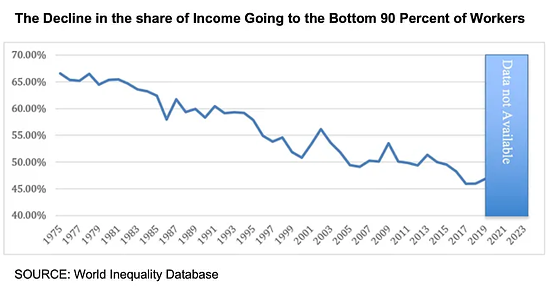
They're hoping the endless circuses and trails of bread crumbs will forever distract us from their plunder and the inequalities built into America's financial system.. The primary story of the past 20 years is the already-rich have gotten much richer, with destabilizing economic, social and political consequences. 

Read More »

Our Wile E. Coyote Economy: Nothing But Financial Engineering

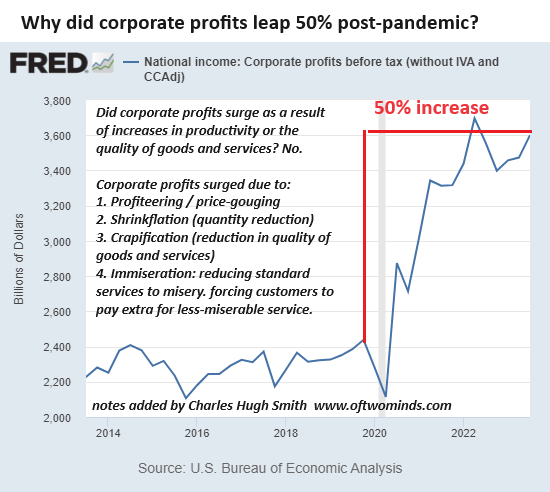
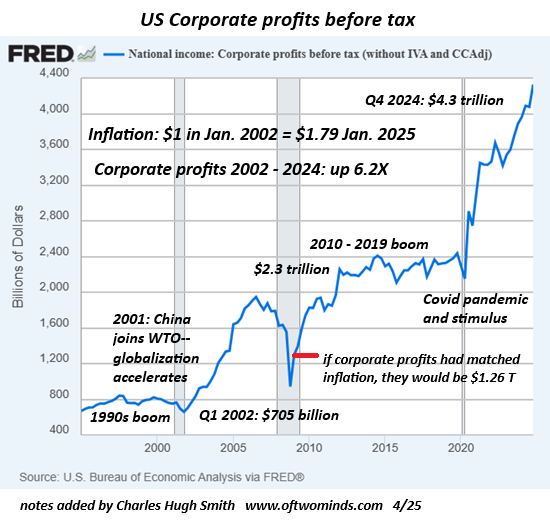
Ours is a Wile E. Coyote economy, and now we're hanging in mid-air, realizing there is nothing solid beneath our feet. The story we're told about how our "capitalist" economy works is outdated. The story goes like this: companies produce goods and services for a competitive marketplace and earn a profit from this production. These profits are income streams for investors, who buy companies' stocks based on these profits. As profits rise, so do...

Read More »

The Smallness of the Most Gigantic

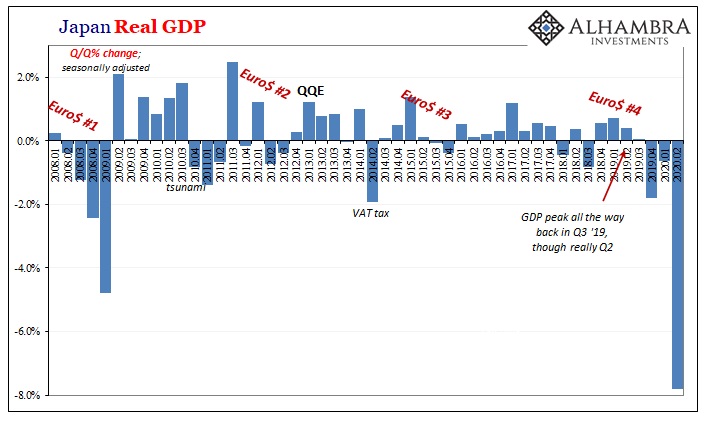
These numbers do seem epic, don’t they? It’s hard to ignore when you have the greatest percentage increase in the history of a major economic account. Just writing that sentence it’s difficult to deny the power of those words. Which is precisely the point: we already know ahead of time how the biggest economic holes in history are going to produce the biggest positives coming out of them.

Read More »

June 19, 2020


Read More »

The carbon cycle is key to understanding climate change | The Economist

Until a few hundred years ago there was a perfect balance of carbon dioxide in the Earth's atmosphere. Human activity has disrupted that balance. What can be done to restore it? Find our school briefings series here, including our recent climate explainers: https://econ.st/2BQkGqU Sign up to receive The Economist’s fortnightly newsletter to keep up to date with our latest coverage on climate change: https://econ.st/2APVAIj Find The Economist’s...

Read More »

Monthly Macro Monitor – June 2020

The stock market has recovered most of its losses from the March COVID-19 induced sell-off and the enthusiasm with which stocks are being bought – and sold but mostly bought – could lead one to believe that the crisis is over, that the economy has completely or nearly completely recovered. Unfortunately, other markets do not support that notion nor does the available economic data.

Read More »