
















Tag Archive: newsletter
Coronavirus: Swiss authorities not open enough in early weeks, says medical expert
The Swiss authorities should have been more open about what they did and didn’t know about the SARS-CoV-2 virus in the early stages, according to Bertrand Kiefer, doctor, ethicist and editor of the Swiss Medical Review.
Read More »
Read More »
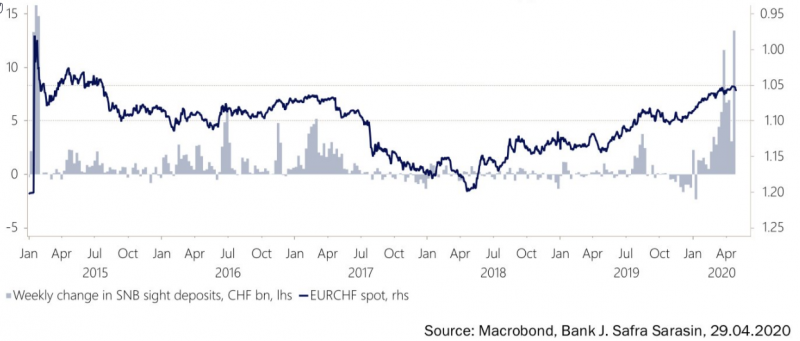
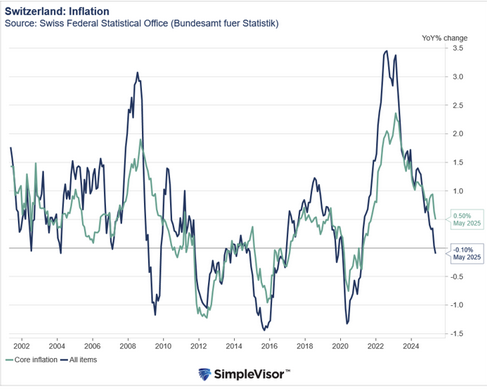
Swiss National Bank forecasts deflation until 2022
On 18 June 2020, the Swiss National Bank (SNB) said it would maintain its negative rate of interest (-0.75%) and remains willing to intervene more strongly in the foreign exchange market.
Read More »
Read More »
For the Rich to Keep Getting Richer, We Have to Sacrifice Everything Else
They're hoping the endless circuses and trails of bread crumbs will forever distract us from their plunder and the inequalities built into America's financial system.. The primary story of the past 20 years is the already-rich have gotten much richer, with destabilizing economic, social and political consequences.
Read More »
Read More »
WARNING: The U.S. Banking System ISN’T as Strong as Advertised
Despite a year of tumult on Wall Street and Main Street, the banking system seems to be holding up remarkably well… for now. Whereas previous financial crises were marked by a surge in bank failures, hardly any have gone under so far in 2020. The Federal Deposit Insurance Corporation (FDIC) reports that only 1% of FDIC-insured banks are on the “problem list” for financial weakness.
Read More »
Read More »
Does the Free Market Corrupt People?
The political theorist Michael J. Sandel is a popular teacher at Harvard, and his lectures circulate widely on YouTube and elsewhere. He attracted attention as a serious political theorist with his critical work on John Rawls, Liberalism and the Limits of Justice (1982). As most readers will know, I’m no fan of Rawls, and it’s easy to find poor arguments in his A Theory of Justice. But Sandel totally misunderstands him, and his attack on Rawls...
Read More »
Read More »
Coronavirus: cheap drug substantially cuts severe case death risk, according to large UK trial
A trial at Oxford University suggests an existing low cost drug can cut the risk of death from Covid-19 substantially. Tests involving 6,000 hospitalised Covid-19 patients suggest the drug can cut the risk of death for those on ventilators from 40% to 28%. For patients needing oxygen the risk of death could be cut from 25% to 20%.
Read More »
Read More »
Our Wile E. Coyote Economy: Nothing But Financial Engineering
Ours is a Wile E. Coyote economy, and now we're hanging in mid-air, realizing there is nothing solid beneath our feet. The story we're told about how our "capitalist" economy works is outdated. The story goes like this: companies produce goods and services for a competitive marketplace and earn a profit from this production. These profits are income streams for investors, who buy companies' stocks based on these profits. As profits rise, so do...
Read More »
Read More »
The War On Cash – COVID Edition Part II
The digital “toll” It doesn’t require too dark an imagination to realize the gravity of the concerns over the digital yuan. China is a true pioneer when it comes surveillance, censorship and political oppression and the digital age has given an incredibly efficient and effective arsenal to the state. Adding money to that toolkit was a move that was planned for many years and it is abundantly clear how useful a tool it can be for any totalitarian...
Read More »
Read More »
Coronavirus: the rising number of mild cases with symptoms lasting months
Those with mild Covid-19 symptoms are supposed to recover after two weeks. However, a rising number of relatively young people with mild cases report symptoms months later. Johns Hopkins Medicine says that those with mild cases of COVID-19 appear to recover within one to two weeks. For severe cases, recovery may take six weeks or more.
Read More »
Read More »
The Smallness of the Most Gigantic
These numbers do seem epic, don’t they? It’s hard to ignore when you have the greatest percentage increase in the history of a major economic account. Just writing that sentence it’s difficult to deny the power of those words. Which is precisely the point: we already know ahead of time how the biggest economic holes in history are going to produce the biggest positives coming out of them.
Read More »
Read More »
Why the European Recovery Plan Will Likely Fail
The €750 billion stimulus plan announced by the European Commission has been greeted by many macroeconomic analysts and investment banks with euphoria. However, we must be cautious. Why? Many would argue that a swift and decisive response to the crisis with an injection of liquidity that avoids a financial collapse and a strong fiscal impulse that cements the recovery are overwhelmingly positive measures.
Read More »
Read More »
SNB Monetary Policy Assessment June 2020 and Videos
The coronavirus pandemic and the measures implemented to contain it have led to a severe downturn in economic activity and a decline in inflation both in Switzerland and abroad. The SNB’s expansionary monetary policy remains necessary to ensure appropriate monetary conditions in Switzerland.
Read More »
Read More »
Weekly View – Reality check
The short-term pull-back in stock prices last week on the back of persistent virus concerns in the US and elsewhere shows the market remains jittery despite the massive run-up in prices since late March. May data from China showed a relatively fast rebound on the supply side of the economy, but a much slower take-off in consumption, suggesting a ‘reverse square root’ kind of recovery for economies rather than the ‘v’-shaped one markets have been...
Read More »
Read More »
Coronavirus: national lockdown not part of Switzerland’s second wave response plan
Switzerland’s federal government is against imposing nationwide restrictions to slow the spread of a second wave on infections, according to the NZZ am Sonntag newspaper. The federal government plan, which is under development, is more regional than the response to the first wave of infections and focuses decision making power at the cantonal level, reported the newspaper.
Read More »
Read More »
Monthly Macro Monitor – June 2020
The stock market has recovered most of its losses from the March COVID-19 induced sell-off and the enthusiasm with which stocks are being bought – and sold but mostly bought – could lead one to believe that the crisis is over, that the economy has completely or nearly completely recovered. Unfortunately, other markets do not support that notion nor does the available economic data.
Read More »
Read More »
The Fed’s Grand Bargain Has Finally Imploded
The Fed has backed itself not into a corner but to the edge of a precipice. Though the Federal Reserve never stated its Grand Bargain explicitly, their actions have spoken louder than their predictably self-serving, obfuscatory public pronouncements. Here's the Grand Bargain they offered institutional investors and speculators alike.
Read More »
Read More »
Why the New Economics Just Boils Down to Printing More Money
The essential fallacy of John Maynard Keynes and his early disciples was to cultivate the monetary equivalent of alchemy. They believed that paper money was a suitable means to alleviate the fundamental economic problem of scarcity. The printing press was, at any rate, under certain plausible conditions of duress, a substitute for hard work, savings, and cutting prices (Hazlitt 1959, 1960).
Read More »
Read More »
Swiss Trade Balance May 2020: signs of recovery in foreign trade
After its historic setback of the previous month, foreign trade recovered a few colors in May 2020. Imports posted a seasonally adjusted increase of 9.8% to 13.6 billion francs; however, they are still below their March 2020 level. Although exports fell again (-1.2%), they eased compared to April. The trade balance closed with a surplus of 2.8 billion francs.
Read More »
Read More »
SNB Preview
The Swiss National Bank meets Thursday. It is widely expected to maintain its current policy stances but is likely to push back against CHF strength. Here, we highlight here the potential choices that lie ahead for the SNB.
Read More »
Read More »
Coronavirus: latest antibody study suggests 10.8 percent of Geneva infected in first wave
A recently published update to the ongoing study in Geneva to assess the extent of SARS-CoV-2 infection suggests 10.8% of the population may have been infected in the first wave of infections. The study, which tests a sample of the population over time for IgG SARS-CoV-2 antibodies, started in early April 2020. The latest figures come from the fifth week of testing, which was concluded on 9 May 2020.
Read More »
Read More »