










Category Archive: 5) Global Macro

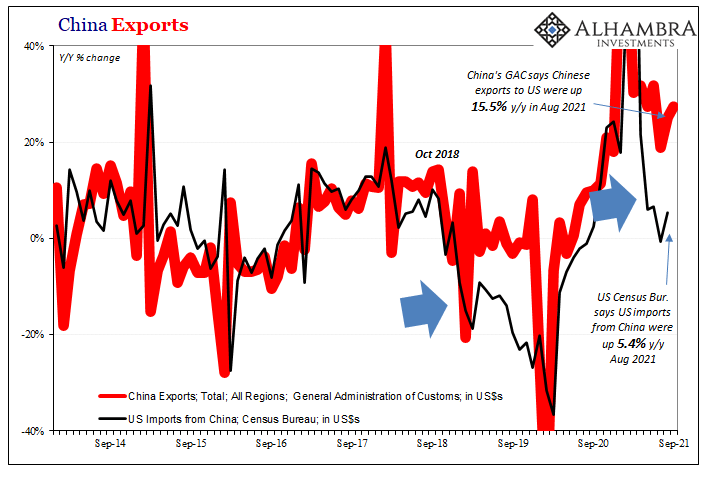
Looking Past Gigantic Base Effects To China’s (Really) Struggling Economy

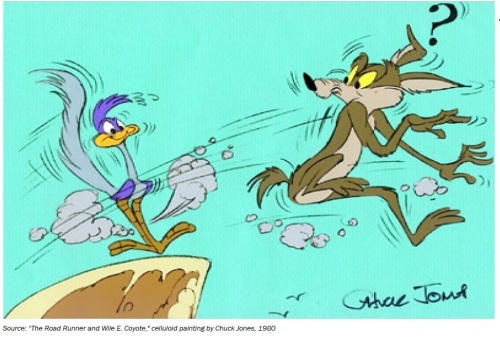
The Chinese were first to go down because they had been first to shut down, therefore one year further on they’ll be the first to skew all their economic results when being compared to it. These obvious base effects will, without further scrutiny, make analysis slightly more difficult.

Read More »

The Cannibalization Is Complete: Only Inedible Zombies Remain

Poor powerless Fed, poor starving cannibals, poor zombies turning to dust. That's the American economy once the curtains are ripped away. Setting aside the fictional flood of zombie movies for a moment, we find the real-world horror is the cannibalization of our economy, a cannibalization that is now complete.

Read More »

How to crunch covid-19 data | The Economist

Data analysis has been crucial to better understanding, tracking and preventing the spread of covid-19. The Economist's data journalists give an insider’s steer on how their analysis and presentation of data has shaped our coverage of the pandemic. See all our data journalism in The Economist's graphic detail section: https://econ.st/3qEZnMD Keep up to date with our data journalism by signing up to “Off the Charts,” our new weekly newsletter:...

Read More »

JOLTS Revisions: Much Better Reopening, But Why Didn’t It Last?

According to newly revised BLS benchmarks, the labor market might have been a little bit worse than previously thought during the worst of last year’s contraction. Coming out of it, the initial rebound, at least, seems to have been substantially better – either due to government checks or, more likely, American businesses in the initial reopening phase eager to get back up and running on a paying basis again.

Read More »

What Gold Says About UST Auctions

The “too many” Treasury argument which ignited early in 2018 never made a whole lot of sense. It first showed up, believe it or not, in 2016. The idea in both cases was fiscal debt; Uncle Sam’s deficit monster displayed a voracious appetite never in danger of slowing down even though – Economists and central bankers claimed – it would’ve been wise to heed looming inflationary pressures to cut back first.

Read More »

How covid-19 is boosting innovation | The Economist

Covid-19 has accelerated the adoption of technologies and pushed the world faster into the future. As businesses and organisations look towards the post-pandemic era, what lessons can be learned about innovation? Read more here: https://econ.st/3t6T7yM Chapters 00:00 - How has covid-19 boosted innovation? 01:20 - Drone deliveries 04:20 - How crises lead to innovation 06:47 - How restaurants have innovated 09:29 - Inequality between companies 10:48...

Read More »

4 Social Security Planning Steps BEFORE You’re Ready to Retire

Social Security is an important part of almost every retirement plan, whether you’ve saved enough or not. That’s why it’s important to know as much about your Social Security situation as possible. And you don’t want to wait until you’re about to retire to gather the facts and take appropriate steps. Social Security planning needs to start 5 years before your target retirement date.

Read More »

Deja Vu: Treasury Shorts Meet Treasury Shortages

Investors like to short bonds, even Treasuries, as much as they might stocks and their ilk. It should be no surprise that profit-maximizing speculators will seek the best risk-adjusted returns wherever and whenever they might perceive them.

Read More »

Too Busy Frontrunning Inflation, Nobody Sees the Deflationary Tsunami

Those looking up from their "free fish!" frolicking will see the tsunami too late to save themselves. It's an amazing sight to see the water recede from the bay, and watch the crowd frolic in the shallows, scooping up the flopping fish. In this case, the crowd doing the "so easy to catch, why not grab as much as we can?" scooping is frontrunning inflation, the universally expected result of the Great Reflation Trade.

Read More »

Nuclear power: why is it so unpopular? | The Economist

The meltdown at a nuclear power station in Fukushima, Japan, ten years ago stoked anxieties about nuclear energy. But nuclear is one of the safest, most reliable and sustainable forms of energy, and decarbonising will be much more difficult without it. Further content: Sign up to our newsletter about climate change: https://econ.st/38bLSO9 The Economist also has a new weekly newsletter, Simply Science: https://econ.st/3uWjw4b Find all our...

Read More »

There’s Two Sides To Synchronize

The offside of “synchronized” is pretty obvious when you consider all possibilities. In economic terms, synchronized growth would mean if the bulk of the economy starts moving forward, we’d expect the rest to follow with only a slight lag. That’s the upside of harmonized systems, the period everyone hopes and cheers for.

Read More »

About That +6.8 percent GDP Forecast: Remember That GDP = Waste

Any economy stupid enough to rely on the insane distortions of GDP "growth" as its primary measure will richly deserve a Darwin Award when it inevitably collapses in a putrid heap of squandered resources and capital.

Read More »

SMART BOURSE – L’invité de la mi-journée : Thomas Costerg (Pictet WM)

Lundi 1 mars 2021, SMART BOURSE reçoit Thomas Costerg (Économiste sénior US, Pictet WM)

Read More »

What “Normal” Are We Returning To? The Depression Nobody Dares Acknowledge

Perhaps we need an honest national dialog about declining expectations, rising inequality, social depression and the failure of the status quo. Even as the chirpy happy-talk of a return to normal floods the airwaves, what nobody dares acknowledge is that "normal" for a rising number of Americans is the social depression of downward mobility and social defeat.

Read More »

Three Things About Today’s UST Sell-off, Beginning With Fedwire

Three relatively quick observations surrounding today’s UST selloff.1. The intensity. Reflation is the underlying short run basis, but there is ample reason to suspect quite a bit more than that alone given the unexpected interruption in Fedwire yesterday.

Read More »

Iran v America: what’s behind the feud? | The Economist

Iran and America’s decades-long feud has led to hostage-taking, sanctions and proxy wars that have shaped the Middle East. What is behind the feud, and can it be resolved? Chapters 00:00 - The history of the feud 01:01 - 1951-53: The Persian Oil Crisis 02:04 - The 1953 coup 04:11 - 1978-1979: The Iranian revolution 05:12 - 1979-81: The hostage crisis 06:58 - 1980-88: The Iraq-Iran war 09:06 - 1983: US embassy bombing 09:50 - Hizbullah 11:00 - The...

Read More »

Oil and Debt: Why Our Financial System Is Unsustainable

How much energy, water and food will the "money" created out of thin air in the future buy? Finance is often cloaked in arcane terminology and math, but the one dynamic that governs the future is actually very simple.

Read More »

Nine Percent of GDP Fiscal, Ha! Try Forty

Fear of the ultra-inflationary aspects of fiscal overdrive. This is the current message, but according to what basis? Bigger is better, therefore if the last one didn’t work then the much larger next one absolutely will. So long as you forget there was a last one and when that prior version had been announced it was also given the same benefit of the doubt.

Read More »

For The Dollar, Not How Much But How Long Therefore How Familiar

Brazil’s stock market was rocked yesterday by politics. The country’s “populist” President, Jair Bolsonaro, said he was going to name an army general who had served with Bolsomito (a nickname given to him by supporters) during that country’s prior military dictatorship as CEO of state-owned oil giant Petróleo Brasileiro SA. Gen. Joaquim Silva e Luna is being installed, allegedly, to facilitate more direct control of the company by the federal...

Read More »

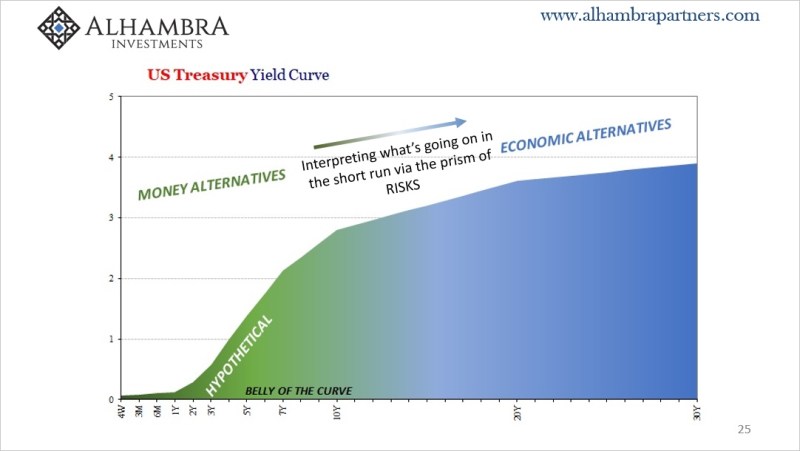
What Might Be In *Another* Market-based Yield Curve Twist?

With the UST yield curve currently undergoing its own market-based twist, it’s worth investigating a couple potential reasons for it. On the one hand, the long end, clear cut reflation: markets are not, as is commonly told right now, pricing 1979 Great Inflation #2, rather how the next few years may not be as bad (deflationary) as once thought a few months ago.

Read More »