







 by
by Lance Roberts
My articles My offerMy siteAbout meMy videosMy books
Follow on:TwitterSeeking AlphaFacebookAmazon
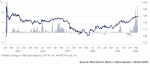
| The market may be misreading the Fed’s ability to cut rates in the near future, especially after Kevin Warsh officially takes over as Fed Chairman in June. The current inflation backdrop, driven heavily by the Iran-related oil shock, leaves the Fed with very little flexibility despite ongoing market hopes for easier monetary policy. Expectations for rate cuts that were previously priced into this year now have mostly been pushed into next year. Even though equity markets remain optimistic that the Fed will eventually become more accommodative, the Fed simply cannot justify cutting rates right now. A major point is the relationship between the Fed funds rate and the 2-year Treasury yield. The 2-year Treasury is trading slightly above the Fed funds rate, signaling that markets are already pricing in restrictive conditions and persistent inflation risks. In that environment, aggressive easing would risk undermining inflation credibility. There is also the internal policy shift happening at the Fed itself. The departure of Stephen Moran, who had advocated consistently for aggressive 50bp rate cuts, materially changes the tone of the committee. His removal eliminates one of the strongest voices pushing for immediate easing. At the same time, expect Warsh to be more cautious and pragmatic. He shouldn’t be considered strongly dovish, but there is “no way” he cuts aggressively in the current environment. Instead, Warsh may act similarly to Powell: maintain current rates, avoid overreacting, and acknowledge that much of the inflation problem is outside the Fed’s direct control. That creates a Fed that is not necessarily hawkish, but “less dovish.” The removal of dissenting voices advocating immediate cuts means the committee consensus is now more firmly centered around holding rates steady for longer. The deeper macroeconomic concern now centers on oil prices and their delayed impact on consumer demand, as high oil prices act as a hidden tax on consumers. Because consumer spending accounts for roughly 70% of the U.S. economy, sustained increases in gasoline and energy costs gradually erode purchasing power throughout the broader economy. We may eventually see “consumption destruction.” Even though markets are currently rallying and rising asset prices are boosting the wealth effect, the economic damage is still occurring quietly in real time beneath the surface. The Fed’s real problem may emerge after the Iran conflict eventually stabilizes. Once oil supply normalizes and crude prices fall, headline inflation pressures could quickly ease. On the surface, this would appear positive for the Fed, as inflation would begin to cool naturally. However, the economic damage from months of elevated energy costs may only begin to appear at that exact moment. As a result, economic growth could slow materially just as inflation finally starts to fall. In that scenario, the Fed could suddenly shift from being unable to cut rates to potentially needing aggressive rate cuts later to counteract weakening growth and falling inflation. 📺Full episode: Catch Lance Roberts daily on The Real Investment Show: https://www.youtube.com/@TheRealInvestmentShow |
You Might Also Like
 The Berkshire War Chest: A Crisis Hedge?
2026-04-08
Berkshire Hathaway now sits on $373 billion in Cash. They have enough to buy 480 companies in the S&P 500. For context, this is the largest cash stockpile since 2008. At that time, Berkshire used its cash not to buy stocks on the open market but largely to offer companies private deals that ordinary investors …
 4-7-26 AI Advertising Explained: How Brands Win Inside ChatGPT
2026-04-06
AI is changing how consumers discover businesses, make decisions, and trust information.
Lance Roberts visits with Joseph Levi, Co-founder & CEO of Noise Media, about how advertising inside AI platforms like ChatGPT and Claude.AI could reshape marketing, SEO, and brand building.
#AIAdvertising #ChatGPTMarketing #FutureOfSearch #DigitalMarketingStrategy #AIForBusiness
 2-25-26 Q & A Wednesday: Straight Talk About Your Money
2026-02-25
Welcome to Q & A Wednesday: Straight Talk on Your Money — a live, unscripted Q&A show pulled directly from our YouTube chatroom. No canned slides. No rehearsed talking points. Just practical, plain-English answers to real-world money questions with Lance Roberts and Danny Ratliff.
Lance & Danny tackle topics like retirement planning, Roth vs. traditional decisions, tax-smart withdrawal strategies, Social Security timing, portfolio risk management, diversification, income planning, cash vs. investing, debt payoff frameworks, and how to think through market volatility without wrecking your long-term plan. We also discuss the “why” behind common financial rules of thumb—what holds up, what doesn’t, and how to tailor decisions to your situation.
Hosted by RIA Advisors Chief Investment
 Is China Really Dumping US Treasuries?
2026-02-23
“China is dumping US Treasuries to get out of the dollar.” This claim has been circulating the mainstream feeds lately, with the narrative that the “end of the dollar is near,” or “the US will lose its funding base” and the “bond yields will surge.” But are those claims valid? Such is what we will …
 4 Percent Inflation: The Case For And Against
2026-02-20
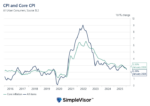
In a recent white paper, The Risk Of Higher US Inflation In 2026, Adam Posen and Peter Orszag argue that inflation could exceed 4 percent by year’s end. To wit, they lead the article as follows: In our view, however, this optimism is premature. We think it is more likely that inflation will surprise to …
 2-19-26 Dalio at Davos: Calm Markets, Hidden Currents
2026-02-19
Ray Dalio’s Davos comments aren’t a “next-week collapse” call—they’re a long-cycle warning: rising debt supply can eventually force higher yields and tough policy trade-offs. Meanwhile, the S&P 500 looks calm on the surface, but sector/factor dispersion and low correlations show a fierce rotation under the hood. Lance Roberts & Michael Lebowitz examine the calm index ≠ calm market—watch dispersion and correlations for the next regime shift.
Hosted by RIA Advisors Chief Investment Strategist, Lance Roberts, CIO, w Portfolio Manger, Michael Lebowitz, CFA
Produced by Brent Clanton, Executive Producer
0:00 – INTRO
0:19 – Economic Reports Show Benefits of AI Data Centers
5:17 – Why The Dow Jones Index Matters Now
9:20 – WalMart Quarterly is Proxy for Staples
12:30 – Why WalMart Valuation
 Market Sector Review: Extreme Market Bifurcation
2026-02-16
Since the beginning of the year, we have discussed the “reflation trade” and its impact on specific market sectors. This past weekend’s newsletter also showed some of these more extreme returns in various market sectors since the beginning of the year. To wit: “Despite what seemed like a rough week in the market, it really wasn’t as …
 2-12-26 The Contrarian View on The Value Rally
2026-02-12
In this short video, Lance Roberts & Michael LebowitzI explain how value stocks were deeply hated just months ago. Since then, capital has rotated aggressively into defensive “value” names, pushing many to extreme overbought levels.
Ironically, several of these stocks, including $WMT $PG and $PEP, now trade at elevated multiples, making them expensive by traditional metrics.
Be careful chasing the crowd. Focus on where money is likely to move next.
📺Full episode:
Catch me daily on The Real Investment Show: https://www.youtube.com/@TheRealInvestmentShow
Tags: Featured,newsletter















1 pings