




Ray Dalio and Bloomberg’s Francine Lacqua Discuss Life, Debt & Global Crisis

2025-10-29
The U.S.’s debts are on the edge of becoming unmanageable to the point where it could default if conditions are not changed.
But this problem isn’t a unique one. It has happened many times in history, which is why I believe studying the past is so important. The same cycles repeat over and over again, and there are important lessons we can learn from those experiences.
I recently met with Bloomberg @markets ahead of the UN Ocean Conference to discuss our debts, the possibility of global crisis, and the importance of investing in our oceans.
If you’re interested in learning more about our collective debt burden — and what steps we can take to solve these issues — I explain my thinking in my new book, How Countries Go Broke: The Big Cycle.
I hope you will read it and let me know your
Ray Dalio Explains Gold v. Fiat Currencies
2025-09-23
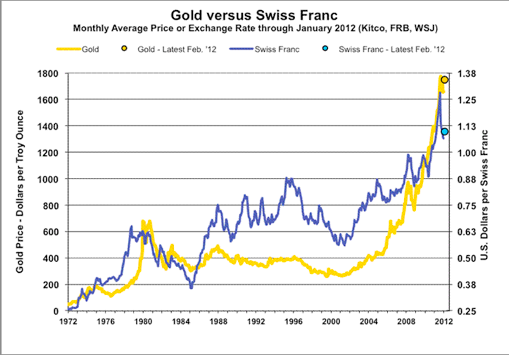
Gold is now the second largest reserve currency, behind the US dollar.
To understand why, you need to look at the history of fiat currencies (like the dollar) and hard currencies (like gold).
The way I see it, we’re currently facing a classic currency devaluation similar to what we saw in the 1970s or the 1930s. In both of those cases, fiat currencies around the world all went down together — and also went down in relationship to hard currencies, like gold.
If events today follow a similar pattern, that makes hard currencies an attractive asset to hold.
At least, that’s how it looks through my eyes. I’m curious to hear what you think.
You can watch the full conversation here: ?feature=shared
My Biggest Failure Became My Strength
2025-08-20
One principle that I’ve really learned is “Pain + Reflect = Progress.”
Ray Dalio Explains Money Vs Credit
2025-07-30
In an advanced economy, credit does more good than bad. But it’s important to remember that borrowing creates cycles — and if the cycle goes up, it eventually needs to come down.
I explain why this is particularly important today in my new book, How Countries Go Broke.
But if you’d like more context on how all of these pieces come together, I recommend you watch my 30-minute explainer “How the Economic Machine Works” here: &t=1444s
#principles #howcountriesgobroke #economics #credit
Ray Dalio Talks with CNBC’s Squawk Box About How the System Breaks Down Once a Lifetime
2025-07-16
The world order is now changing in a way that I described in my book and video Principles for Dealing with the Changing World Order. For a complete picture I encourage you to read the book or you can watch the animated video on my channel.
#raydalio #principles #politics #economics
What Happens When a Country Accumulates Too Much Debt?
2025-07-11
History shows us that having too much debt during an economic downturn leads to a classic, self-reinforcing cycle where:
1) The empire can no longer borrow the money to repay its debts
2) It prints a lot of new money, which devalues the currency and raises inflation
3) Living standards decline, leading to the rise of political extremism
4) Turbulent economic conditions undermine productivity and there is conflict about how to divide the shrinking resources
5) Populist leaders emerge pledging to take control and bring about order
#principles #raydalio #history #debt
The Challenge of Absolutist Politics
2025-07-02
After spending time in Washington, DC discussing the budget deficit with senior people on both sides of the aisle, it’s clear to me that we are unlikely to change the debt trajectory we’re on and avoid the painful consequences.
While virtually everyone agrees on the need to address our debt problem in a balanced way that includes tax increases and cuts to benefits, they also agree that they cannot speak up because politics have become absolutist.
We must find a solution around absolutist pledges like, ”I will not raise taxes,” or “I will not reduce benefits,” when they are desperately needed.
Dalio’s 3% 3 Part Solution to Decrease the Deficit
2025-06-16
The US is approaching the end of the long-term debt cycle. There are 3 levers we can pull to bring the deficit down to ~3% of GDP and mitigate our debt burdens: 1) reducing spending, 2) increasing taxes, and 3) lowering interest rates.
While we need to consider each of these levers, I recently discussed why reducing interest rates will ultimately have the greatest impact on the budget deficit with @the_IMF.
You can learn more about my proposed 3% 3-part solution to the US debt crisis in my new book, How Countries Go Broke: The Big Cycle, available now wherever books are sold.
#principles #howcountriesgobroke #economics
9 pings
Skip to comment form ↓