










Category Archive: 9a.) Real Investment Advice

3-24-26 What A 200-Day Breakdown REALLY Means

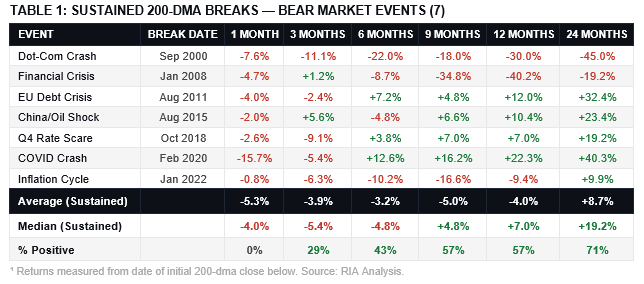
The 200-day moving average (200DMA) is one of the most important long-term trend indicators. Price breaking below it often triggers automatic selling. However, a break below the 200-day doesn’t automatically mean a bear market. Most breaks are brief and occur within ongoing bull trends, with markets recovering fairly quickly. The real risk comes from sustained breaks tied to deeper macro issues like credit stress or inflation shocks. Without...

Read More »

3-24-26 Asset Allocation, Benchmarks, and High-Yield Debt Traps

Lance Roberts and Jon Penn tackle the most pressing portfolio questions investors and retirees are asking right now: Challenge the assumption that older investors should automatically shift to ultra-conservative allocations Whether every account in a multi-account household needs the same investment strategy why Roth IRAs may warrant a more aggressive growth posture How much weight each equity position should carry, and how many stocks is too...

Read More »

Corporate Debt Tranches: Why Issuers Are Slicing Jumbo Deals

According to a recent analysis by the Wall Street Journal, corporate treasurers are fundamentally shifting how they approach the capital markets to navigate record-breaking supply. Rather than offering debt in monolithic blocks, firms are increasingly utilizing multiple corporate debt tranches to better manage investor demand. This strategic shift has pushed the average number of pieces …

Read More »

3-21-26 Candid Coffee – Ask Us Anything

Are you retirement-ready — or just retirement-adjacent? In this month's Candid Coffee, Richard Rosso & Danny Ratliff tackle your biggest questions on taxes, income, risk management, and wealth protection so you can retire with clarity and confidence. From Roth conversions and HSA strategies to variable annuities, derivatives, and trusts, we cover the full spectrum of retirement planning in plain English — no jargon, no sales pitch, just candid...

Read More »

3-23-26 Oil Down Big — Here’s Why Markets Are About To Shift

#Oil just dropped 10%+, easing one of the market’s biggest pressures: inflation. As #crudeoil falls, bond yields—previously overbought—are likely to reverse lower, shifting the macro backdrop. This move wasn’t about headlines alone, but positioning unwinding after extremes. In the short term, technicals and sentiment drive markets more than fundamentals. If oil continues lower, it could support equities $SPX $QQQ and reset key trades,...

Read More »

3-23-26 200-DMA Broken – Bear Market or Buy Signal?

The S&P 500 just broke its 200-day moving average. Is this a bear market signal or a historic buying opportunity? The answer depends on a clear set of warning indicators – and right now, only two of six are flashing red. Lance Roberts comments in real-time as news of a delay in miliary strikes on Iran power stations affects pre-market action. Lance also breaks down every 200-DMA break since 2000, separating the seven sustained crashes from...

Read More »

The 200-DMA Just Broke: What Every Investor Should Know

There are hundreds of technical indicators that market analysts track, but only one gets a live television chyron the moment it breaks. The 200-day moving average (200-DMA) is the single most widely followed technical level in global financial markets, and the reason isn't mystical; it's institutional. Quant funds, pension allocators, programmatic traders, systemic funds, and …

Read More »

The LENDX Liquidity Trap

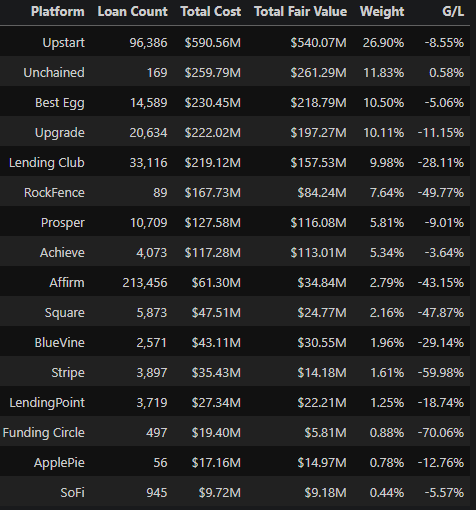
The Stone Ridge Alternative Lending Risk Premium Fund (LENDX) is the latest to face liquidity pressure amid growing concerns about private credit. As an interval fund, LENDX’s shares aren’t publicly traded, so investors who want out must tender their shares for repurchase by the fund quarterly. Last Thursday, the $2.4 billion fund told clients that …

Read More »

3-21-26 The Truth About This Market Selloff

Despite ongoing war in the Middle East, this selloff isn’t a crash but a normal correction after a massive run we had, driven by valuation reset and unwinding of speculative excess. Markets regularly pull back 5–10%, especially after strong gains. Fear narratives miss the point—corrections end eventually. The real edge is staying disciplined, managing risk, and being ready to deploy capital when opportunities emerge as valuations normalize and...

Read More »

CDX: Credit Spreads Are Flashing A Warning

🔎 At a Glance 🏛️ Market Brief - A Tough Market Week This week gave investors a brief exhale — and then took it back as Monday opened with genuine relief after news broke that a U.S.-led coalition would escort tankers through the Strait of Hormuz. On that news, oil pulled back sharply, the S&P … Continue reading...

Read More »

3-20-26 The Private Credit Trap Nobody Saw Coming

Private credit promised higher returns with lower volatility, but that stability came from illiquidity, not lower risk. Investors accepted lockups to earn the premium, yet now want out as conditions shift. The problem is these assets can’t be sold quickly without losses, forcing funds to gate withdrawals. Years of excess capital and competition also created a bubble, with weaker underwriting and mispriced risk, just like 2008 but in a...

Read More »

3-20-26 Tax Strategies That Actually Save You Money

Most people think about taxes once a year. Smart investors think about them every year. RIchard Rosso & Sarah Buenger break down the critical difference between tax preparation and true tax planning, and why that distinction could be worth thousands of dollars to your portfolio over time. We'll walk through real-world anonymous case studies from our client work, including how we helped one client sell nearly half of a concentrated stock...

Read More »

The Bear Market Hiding Beneath The Calm Surface

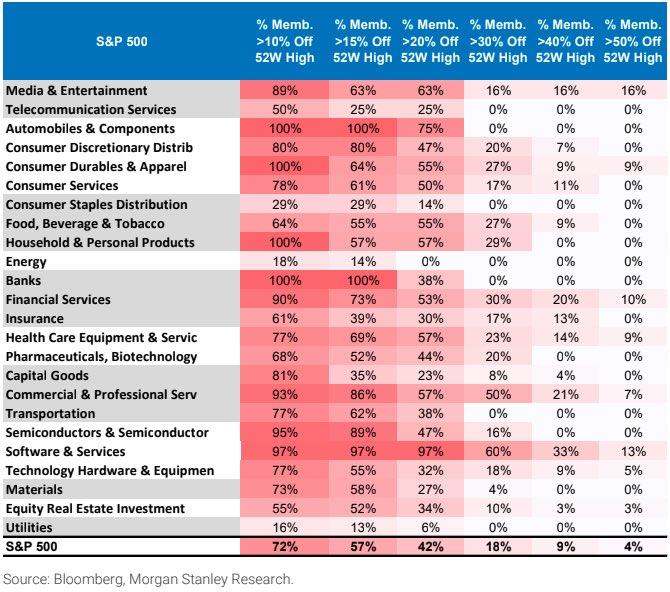
Many investors consider a 20% drawdown or more to be a bear market. Based solely on that definition, the table below, courtesy of Morgan Stanley, shows that 42%, or over 200 of the S&P 500 members, are in a bear market. For context, the S&P 500 is only down 4% from its 52-week record high, … Continue reading »

Read More »

The Dollar’s Plumbing: Conspiracy Vs. Data

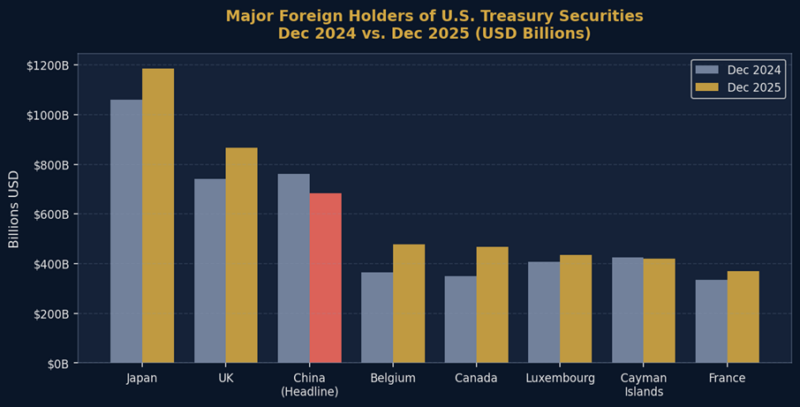
Every few months, a headline appears declaring that the U.S. dollar’s reign as the world’s reserve currency is over. China is dumping Treasuries. Central banks are hoarding gold. The BRICS are building a new monetary order. The sanctions that froze $300 billion of Russia’s reserves in 2022 proved, the argument goes, that dollar-denominated assets are …

Read More »

3-19-26 The Fed Is STUCK… And It’s Worse Than You Think

It’s not just about rates — it’s about uncertainty + second-order effects. Oil acts like a tax on consumers. They start spending less elsewhere. That hits earnings, growth, and markets. At the same time, oil can still keep inflation elevated. So you get a messy combo: slowing growth + sticky inflation = policy paralysis. With this uncertainty, the Fed has no clear path forward. For now, they are in wait-and-see mode, watching how conflicting...

Read More »

3-19-26 Will The Fed Backstop Exuberance Again?

The private credit market has exploded from under $500 billion a decade ago to $1.2 trillion domestically and $1.7 trillion globally — and stress is building fast. Lance Roberts & Michael Lebowitz break down exactly what private credit is, who the major players are, and why rising credit stress could force the Federal Reserve's hand — even if inflation and unemployment don't justify it. #PrivateCredit #FederalReserve #CreditMarkets...

Read More »

A Fed Balancing Act: Oil, Iran, Slower Growth

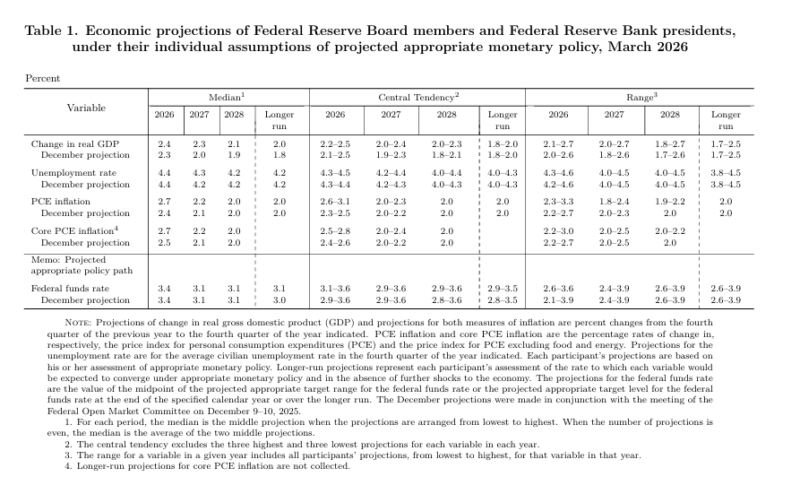
Few Fed meetings in recent memory have presented the FOMC with a more uncomfortable set of competing signals than yesterday's. The Iranian conflict and its impact on oil and oil-dependent product prices have created the potential for an inflationary impulse, yet higher oil prices would likely slow economic activity, leading to higher unemployment. As if …

Read More »

3-18-26 Risk Management Rule #1:Once You’ve Won… Quit Playing

William Bernstein’s principle, “once you’ve won, quit playing,” is about protecting capital, not chasing more. Most investors give back gains by taking extra risk after success. When you’re up big, lock in profits, reduce exposure, and preserve what you’ve earned. You don’t have to exit completely, but you do need to shift from aggressive growth to disciplined risk management. 📺Full episode: Catch me daily on The Real Investment Show:...

Read More »

3-18-26 Q&A Wednesday: Open Season

Got a financial question you have been afraid to ask? Lance Roberts & Danny Ratliff break down the most pressing financial topics shaping markets and personal finance decisions right now. We open with an analysis of current selling pressure and what it signals for equity markets, then dive deep into why credit spreads deserve your attention as a leading indicator of risk. We make the case for why waiting for S&P 6,900 could cost you...

Read More »

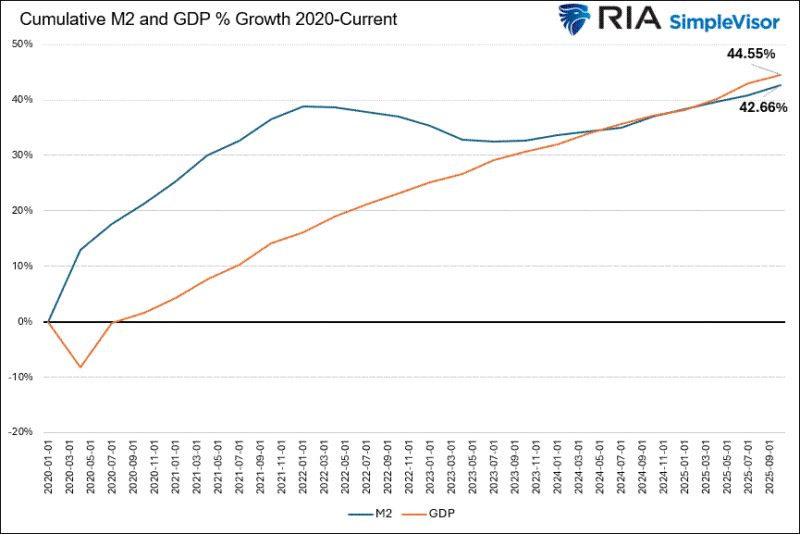
M2 Money Supply: Is 45% Growth Really Inflationary?

A client sent us the quote below from Michael Oliver of Momentum Structural Analysis and asked for our comments regarding gold and the growth of the M2 money supply: "...if you are taking profits in gold and putting that into cash Dollars, thinking that’s a good idea, then go to the St. Louis Fed’s site … Continue...

Read More »