







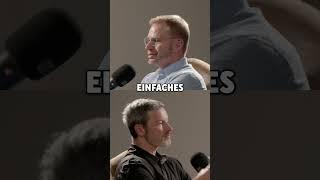
| After studying over 500 years of history, I’ve found there are really only three things you need to do to build a healthy society. First, educate your young people well—not just to be capable, but to be civil. If you have capable, civil people in a productive society, that’s a big part of the battle. Second, the finances must be sound: earn more than you spend and have more assets than liabilities. And third, don't get into a war—internally or externally. If you can do those three things, you can have a prosperous, self-reinforcing society. #principles #us #society |

You Might Also Like
 Ray Dalio on What Has Changed in the United Sates in the Last 10 Years
2026-02-11
The changes in the US over the last decade — rising inequality, massive deficits, and a shifting global outlook — are not isolated events. They are all interconnected and part of a dynamic that has occurred many times before for largely the same reasons.
Understanding the mechanics at play matters far more than reacting to any short-term noise.
Studying these patterns can help you understand why populism of the right and the left is rising around the world, and why so many find it difficult to resolve their seemingly irreconcilable differences.
At least, that’s how I see it. I’m curious to hear if you agree.
 What Happens When a Country Accumulates Too Much Debt?
2026-02-10
All empires since the Dutch have used capitalism to create a virtuous cycle that leads to an empire’s demise.What happens when an empire can no longer borrow the money necessary to repay its debts? History shows us that having too much debt during an economic downturn leads to a classic, self-reinforcing cycle where:
1) The empire can no longer borrow the money to repay its debts
2) It prints a lot of new money, which devalues the currency and raises inflation
3) Living standards decline, leading to the rise of political extremism
4) Turbulent economic conditions undermine productivity and there is conflict about how to divide the shrinking resources
5) Populist leaders emerge pledging to take control and bring about order
Ultimately, this failure to control the anarchy is when
 Ray Dalio on Gold as a Reserve Currency
2026-01-23
We need to talk about money — what it is, how it works, and what its value is.
When it comes to gold, some people view it as a commodity to speculate on. But it’s so much more than that. It’s the second largest reserve currency in the world. And it’s an important hedge against risks to fiat currencies.
 Ray Dalio Explains Debt Cycles
2026-01-08
So much of our current political and economic climate can be explained by debt cycles— and how those cycles build on each other over time.
I explain why in my new book, How Countries Go Broke.
But if you’d like more context on how all of these pieces come together, I recommend you watch my 30-minute explainer “How the Economic Machine Works” on YouTube.
You can watch the full video here:
&t=1444s
#principles #howcountriesgobroke #economics #debt
 Embrace the Mechanics of Reality
2026-01-07
What has always mattered most to me is getting as close to the truth as possible. You can’t make good decisions without good facts, and you can’t get good facts without being radically open-minded and willing to look at reality as it really is—not as you wish it to be.
In this conversation, I talk about why grounding your thinking in evidence, clear principles, and honest reflection is the foundation for meaningful work and meaningful relationships. When you let the facts speak louder than your ego, you make better choices, build better teams, and create better outcomes.
The world is constantly changing. The only way to keep up is to learn, evolve, and stay anchored in truth. That’s been my approach for decades—and it’s more important now than ever. @BloombergPodcasts
 Easy Money Seems like Cure All— Until It’s Not
2025-12-03
Easy money is a cure all, until it’s not. It’s hard to know when you have to put on the brakes and when things might pop.
Today, the stock market is at its peak, gold is through the roof, and the wealth gap continues to increase. And in terms of what comes next, it looks like we’re going to see a significant easing of monetary policy along with less regulation.
I recently sat down with CNBC’s Andrew Ross Sorkin to discuss all of this and more. You can find the full video at the link in the comments.
Tags: Featured,newsletter,Ray Dalio





















24 pings
Skip to comment form ↓