



 by
by Marc Chandler
My articles My offerMy siteAbout meMy videosMy books
Follow on:LinkedINTwitterSeeking AlphaAmazon

After yesterday’s sharp losses, the US dollar is mostly consolidating with a firmer bias against the G10 currencies. The yen is the exception. The unexpected post-election gains have been extended through the local session and the European morning. The very long-end of the Japanese yield curve also extended its counter-intuitive rally, with the 30- and 40-year yields lower for the 5-6th consecutive session. While the dollar appeared to react strongly to China’s warnings about US Treasury exposure, the bond market appears to have largely ignored it. The US 10-year yield has eased below 4.20%, the previous cap, which has closed below only once since mid-January.
The busy week for US data begins today with the import/export prices, the Q4 Employment Cost Index, and December retail sales. Strong auto sales and heavy holiday-discounting likely underpinned consumption. The Atlanta Fed’s GDP tracker estimates that the US economy grew by more than 4% in Q4, for the second consecutive quarter. Meanwhile, the Fed funds futures have a cut fully discounted at the first meeting Warsh will chair if the confirmation hearings are timely and not disrupted by the ongoing investigation of the Powell for misleading Congress over cost overruns of the HQ renovations.
Prices
G10
• The euro settled at $1.1815 before the weekend and did not trade below $1.1810 yesterday. With yesterday’s surge the euro recouped half of what it lost since the January 27 multi-year high near $1.2080. It poked above $1.1925 in North America yesterday but has held below it so far today, while holding above $1.1895. There are options for 1.2 bln euros at $1.1910 that expire today. The next retracement objective is around $1.1960.
• The dollar posted a large outside down day against the Japanese yen. It traded on both sides of the pre-weekend range and settled below last Friday’s low. The last time the greenback had an outside down day against the yen was January 23, following the Fed’s rate check, reportedly on behalf of the US Treasury. Yesterday, the dollar fell a little through the JPY155.60 area, which corresponded with a (38.2%) retracement of its rally from the January 27-28 low slightly ahead of JPY152.00. Follow-through selling pushed it to almost JPY155 today. It stalled in front of the next retracement objective, around JPY154.90. Below it, thee is scope toward JPY154.25.
• Despite the questions about Prime Minister Starmer’s tenure, sterling rallied smartly on the back of the dollar’s broad weakness. After a slow start to the session, sterling found better traction and approached $1.37 in the North American session. It remains below there today as it consolidates as much as half of a cent lower. Options for GBP360 mln expire at $1.37 today. Sterling’s gains carried it to the halfway mark its roughly $1.3510-$1.3870 trading range since January 27. The next area of technical note is around $1.3730, last week’s high and the next retracement target.
• The US dollar reached CAD1.3725 ahead of the weekend, where it met sellers that took it down to CAD1.3625. The greenback took another leg down yesterday, testing CAD1.3560. It gave back more than (61.8%) of its bounce from the end of January. It slipped slightly below CAD1.3550 today before steadying. There may be nearby support around CAD1.3540, but the risk extends back to those late January lows near CAD1.3480.
• The Australian dollar posted a bullish outside up day before the weekend and was bought from nearly the start to the end of yesterday’s session. It was the first session in three years that the Aussie did not trade below $0.7000. It set a new three-year high, 1/100 of a cent below $0.7100, where options for A$1.15 bln expire today. It is holding today as the Australian dollar consolidates down to around $0.7065.
EM
• Mexico reported another small rise in headline and core inflation last month, seemingly helping the peso remain bid. The dollar fell to about MXN17.1545 a few hours after the CPI but stabilized and recovered to back to MXN17.23. The greenback was turned down from the MXN17.56-57 area at the beginning and at the end of last week. On the other hand, shelf has formed in the MXN17.10-12 area. So far, today, the US dollar has been confined to a range slightly below MXN17.18 to MXN17.2175.
• The offshore yuan reached its best level since May 2023 yesterday. The dollar traded down to almost CNH6.9150 and took another leg down toward CNH6.9050. It has been slightly over two weeks now that the PBOC has fixed the dollar below CNY7.0. It was set at a new low today (CNY6.9458 vs. CNY6.9523 yesterday). The RMB has not just appreciated against the dollar, but it has also risen against most regional currencies, and such as against the South Korean won, and Taiwanese dollar, it has risen by more than it has against the greenback. There are two large unknowns: motivation and extent of the campaign.
• The dollar remains in last Friday’s range against the Indian rupee (~INR90.1750-INR90.8550). Equity purchase s by foreign investors, who have been active sellers previously may be helping the rupee stabilize in the generally soft US dollar environment.
Other Markets
• Global equities are higher today. The large bourses in the Asia Pacific region but Australia forged ahead, with the Nikkei and Taiex 2% gains leading the MSCI’s regional index to a record high. The Stoxx 600 in Europe is edging higher, in what could be the seventh advancing session in the past eight. The S&P 500 and Nasdaq futures are slightly firmer.
• Bonds are rising too. Benchmark 10-year yields are mostly 1-2 bp lower in Europe. French bonds do not appear to have been impacted by Bank of France Governor Villeroy’s decision to step down in June instead of October 2027. This gives President Macron the power to name a successor as opposed to the winner of next year’s election, for which the centrists are being squeezed from both sides. Meanwhile, today is the sixth consecutive session that Japan’s 30-year bond yield decline and the fifth straight session that the 40-year yield eased. During this run, the 30-year yield is off about 15 bp and the 40-year yield is off more than 20 bp. The 10-year US Treasury yield is slipping below 4.20%. It has settled once below there since mid-January.
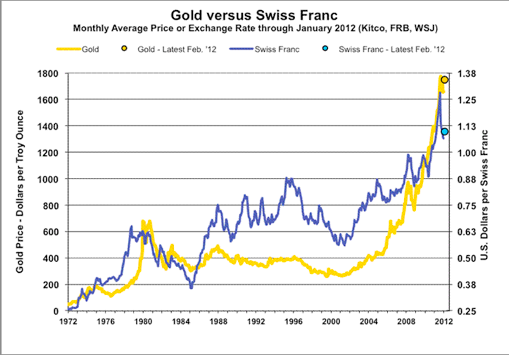
• Gold is consolidating inside yesterday’s range (~$4964.5-$5086.4). Silver has been confined to the upper end of yesterday’s range and held above $80.
• March WTI is trading quietly in a roughly $63.85-$64.70 range. US warned that American-flagged ships should avoid Iranian waters when passing through the Strait of Hormuz, despite ongoing talks.
Data
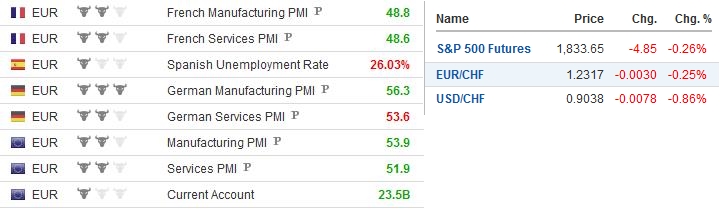
• The plethora of US high frequency data points kick off in earnest today with import/export prices, business inventories, the Q4 Employment Cost Index (ECI), and retail sales. Now that it is widely recognized, and with hardly any contradictory data, that the bulk of the tariffs are being paid by US parties, the import/export prices will lose some interest. The ECI may draw some attention, but it rarely is a market-mover. Retail sales are expected to show that despite stressed household finances, shoppers carried on at the end of last year. The delayed January jobs data will be reported tomorrow. The median forecast in Bloomberg’s survey is for a 70k increase.
• Mexico reports January vehicle production and exports. Last year, Mexico exported 85% of its vehicle production.
• Japan reported a 25.3% year-over-year increase in machine tool orders in January. This follows four consecutive months of double-digit year-over-year gains to close 2025. In January 2025, they had risen by 4.7% and in January 2024, they plunged 14%. Japan will report January PPI tomorrow. It may slip to 2.3%, which would be the least since April 2024.
• China reports January CPI and PPI tomorrow. The year-over-year pace of CPI is expected to slow to 0.4% from 0.8%, while the deflation in producer prices could moderate to -1.5% from -1.9%. If so, it would be the least since July 2024.
You Might Also Like
 Dollar Stalls after Bouncing on Speculation Warsh to Get Nod for Fed’s Helm
2026-01-30
The market reacted dramatically to media reports that Kevin Warsh will be nominated today to succeed Federal Reserve Chair Powell at the held of the US central bank. On one hand, Warsh is perceived to be a hawk, but on the other hand, there is little doubt that the Trump administration seeks lower interest rates. …
Tags: Currency Movement,Featured,newsletter