



Diana Choyleva wrote an excellent editorial for the Wall Street Journal entitled "The Iran War Is A Boon For The Petrodollar." She pushes back against claims that the Iran conflict is accelerating the death of the petrodollar. Instead, she argues the opposite: between Iran and Venezuela, the U.S. is defending and bolstering dollar dominance in the oil trade.
The 75-year-old petrodollar system rests on oil being priced and traded in dollars, which keeps the dollar prominent in all global trade. China has been undermining the petrodollar through yuan settlement systems and by deepening its ties with some Arab nations.
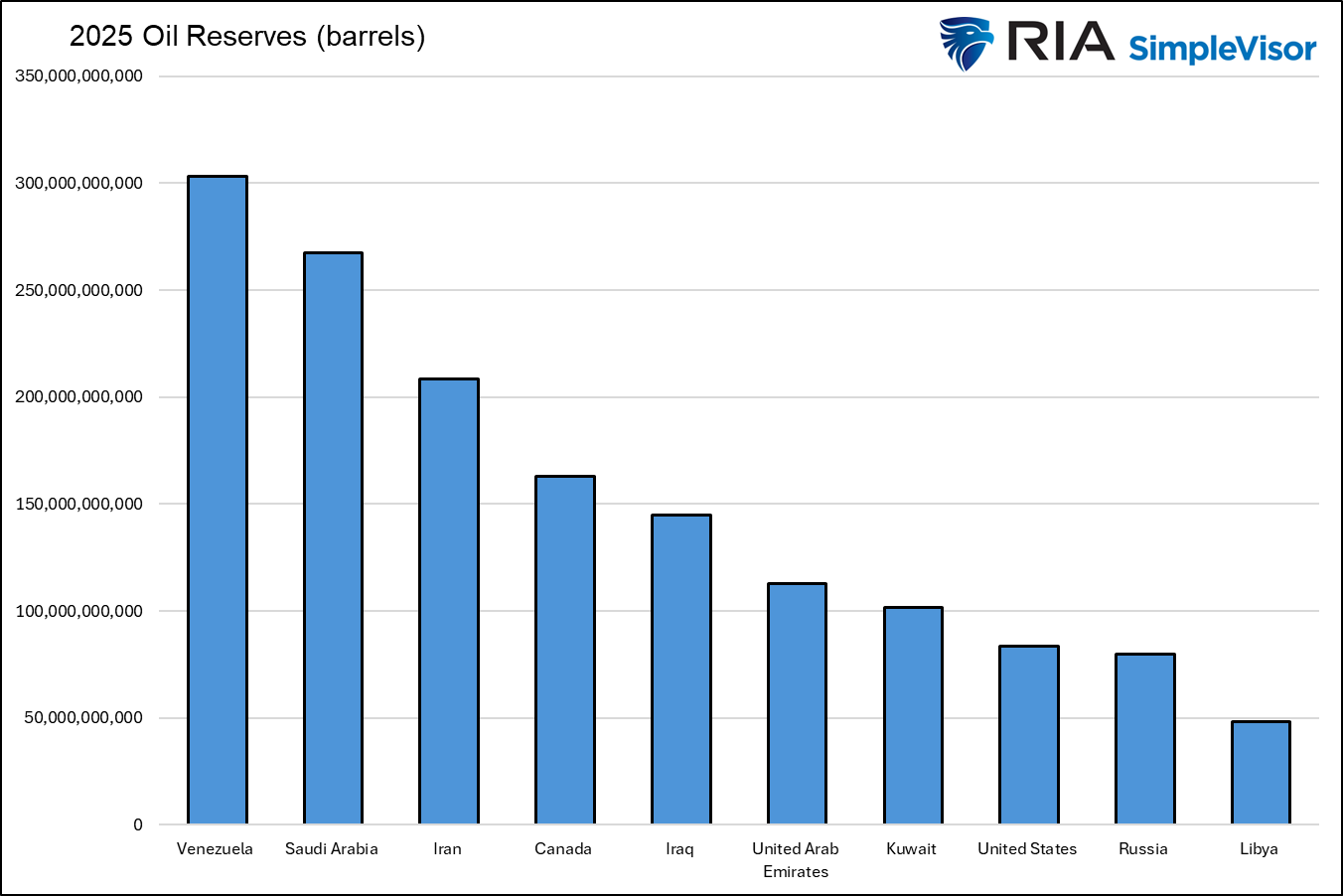
Rather than Iran being a "perfect storm" weakening the petrodollar, as some argue, Choyleva sees American military engagement in Iran as supportive of the dollar. Simply, control the flow of oil, and you control the currency it's traded in. Most Arab nations back the US campaign against Iran. Importantly, "the security commitment was tested; it held." This reinforced the security-for-oil-pricing bargain that underpins the petrodollar system. The removal of Venezuelan President Maduro and influence over Venezuelan oil accomplishes similar goals. If the US controls Western Hemisphere oil reserves, it would command more oil than OPEC combined, thus providing enormous leverage for keeping oil priced in dollars.
The author sees two scenarios for how the war ends. First, an agreement that gives the U.S. influence over Iranian oil flows. Second, US forces seize Kharg Island and police the Strait of Hormuz. In her words, controlling "the choke point through which a fifth of the world's oil flows." Either way, both events lead to more dollar-based oil trades, not less.
She concludes:
But those who conclude that the petrodollar is already in its death throes are reading the map upside down. The storm is real. The dollar is fighting back.
What To Watch Today
Earnings

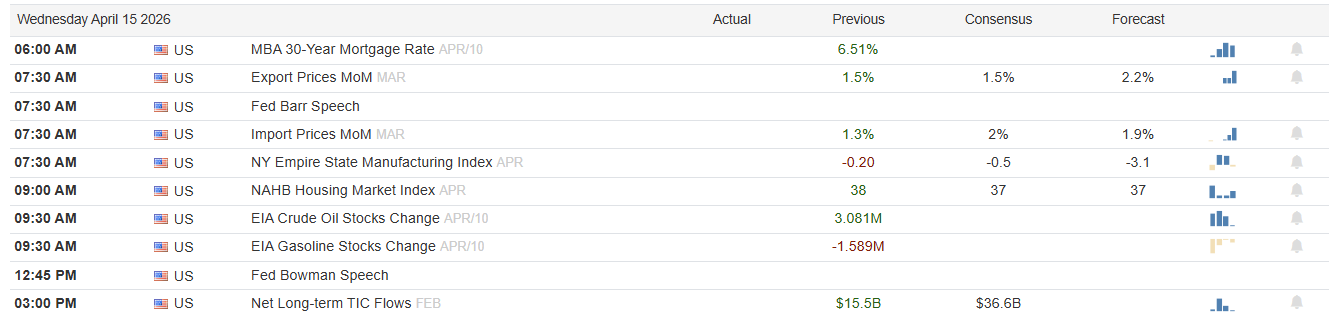
Economy
Market Trading Update
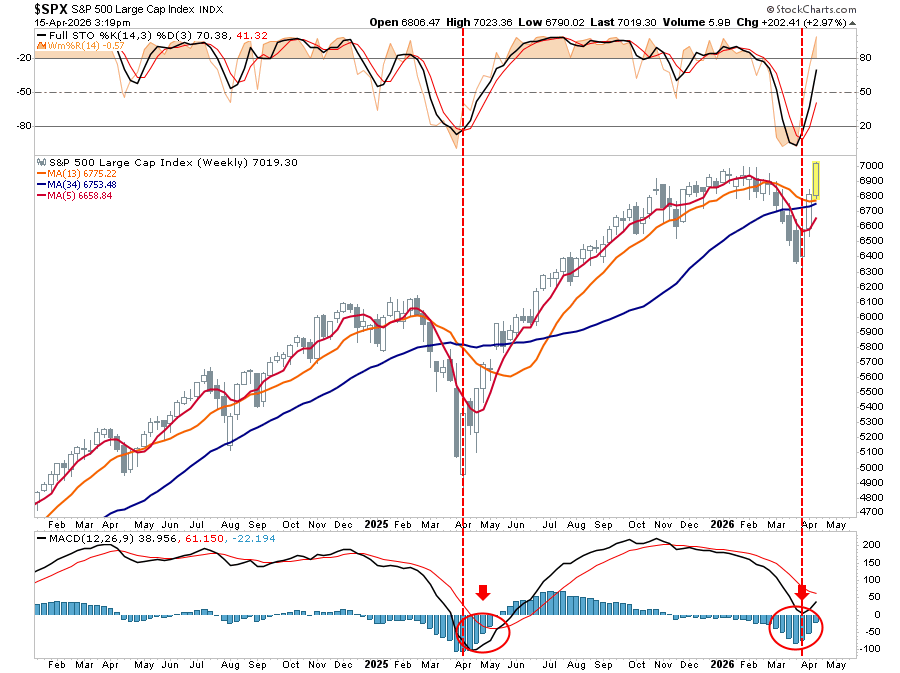
In yesterday's update, we discussed the market backdrop from an extreme negative perspective, which provided the fuel for the recent reversal. However, the rally off the April 3rd war lows has been nothing short of extraordinary. From the closing lows, when the S&P 500 sat more than 7% in the red for 2026, the index has staged a near-vertical recovery that put it back above both the 50-day and 200-day moving averages by April 8th. As of yesterday, the market now sits within an easy trading day of the all-time high set on January 27th.
Unsurprisingly, the bears are calling this a textbook short-covering squeeze. They may well be correct; as discussed yesterday, the very high levels of short interest certainly provided the rally's support. However, the bulls see something more durable taking shape, parlticularly are earnings season gets underway. Both camps have a legitimate case, which is exactly what makes this juncture so critical to get right.
The bear argument is straightforward: this rally was fueled by headlines, not fundamentals. Trump's comment that Iran wants to "work a deal" triggered an afternoon surge on Monday, and the Nasdaq logged what Bloomberg described as its best nine-session run on record. Yesterday, the markets advanced further on news of ongoing discussions on a deal and on ships moving through the Hormuz Strait. Moves that fast, driven by geopolitical hope rather than verified policy shifts, have a habit of retracing sharply the moment expectations meet a harder reality. Unfortunately, the macro and geopolitical backdrop hasn't changed - at least not yet.
That said, we shouldn't dismiss the technical improvement. The 50-day moving average never crossed below the 200-day during this selloff, so no death cross was ever confirmed. The market is now above all major moving average resistance, breadth has improved, and the VIX has retreated below 20. Those are not the internals of a market in distribution. As shown in the chart, this rebound is very similar to the post-Liberation Day rally that took the markets back to highs. With earnings season now underway, the market also has something to focus on besides Iran headlines. Those earnings reports will likely take the lead over the next three weeks.
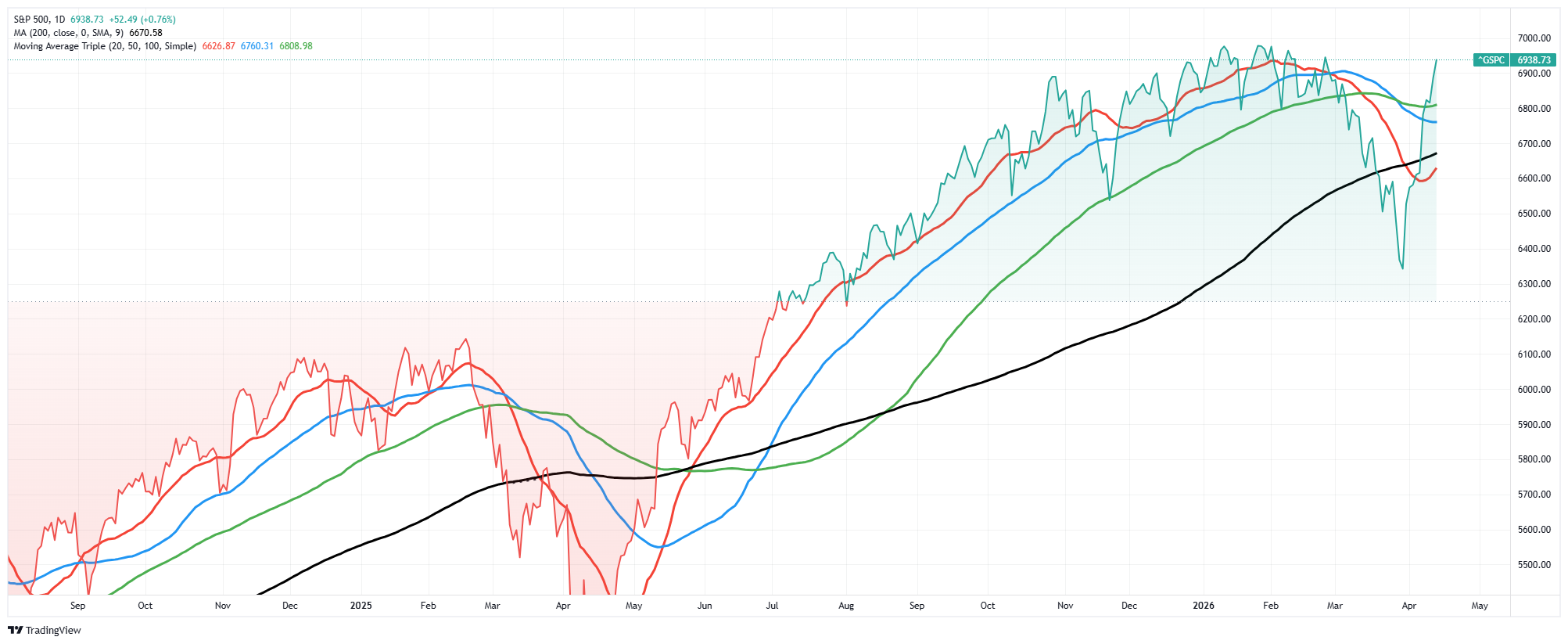
We're raising our equity exposure modestly on this break back above the 200-day, but we're not abandoning caution. The all-time high is close enough to be a magnet, but also close enough to be a ceiling if the geopolitical situation deteriorates again. We'll add further only on confirmation of a clean breakout with improving volume. Until then, we treat this as a market that has earned the benefit of the doubt, not a blank check.
The rally has technical merit and should be respected, but the risk of a retest remains real. Increase exposure on strength, maintain stop levels, and don't mistake speed for sustainability.

JPM Beats Expectations, But Its Stock Trades Lower
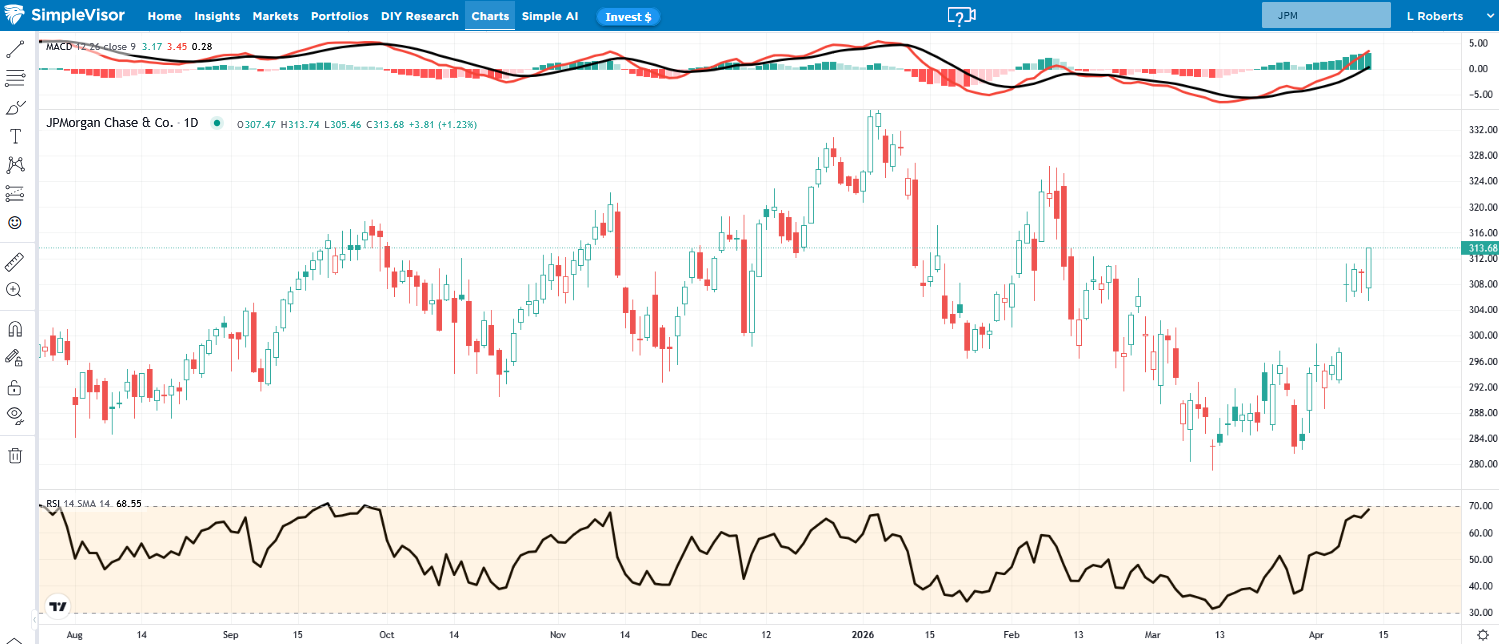
"Buy the rumor, sell the fact" best describes the market's reaction to JP Morgan's (JPM) earnings. America's largest bank handily beat expectations across almost all metrics, yet its stock opened down 2%. What gives:
1. CEO Jamie Dimon's cautious commentary: While the earnings were great, the forward-looking commentary was cautious. Accordingly, he said his bank is preparing for a wide range of different environments and risks. In particular, Dimon noted
"an increasingly complex set of risks — such as geopolitical tensions and wars, energy price volatility, trade uncertainty, large global fiscal deficits and elevated asset prices."
2. High expenses: Heading into earnings, the stock was already weighed down by guidance issued late last year that 2026 expenses would exceed $105 billion. That was about 10% above analysts' expectations. The culprit is AI investments, credit card competition, and branch expansion. The stock fell on that news at the last earnings call, and given that Dimon spoke again about updating technology and integrating AI systems, he likely didn't calm concerns.
3. Context: JPMorgan's stock was trading well before the earnings report. It has climbed about 10% since late March, despite higher oil prices and the potential negative impact on its credit book. Thus, a lot of good news was already priced in.
Tweet of the Day
“Want to achieve better long-term success in managing your portfolio? Here are our 15-trading rules for managing market risks.”
Please subscribe to the daily commentary to receive these updates every morning before the opening bell.
If you found this blog useful, please send it to someone else, share it on social media, or contact us to set up a meeting.
The post Is The Iran War Good For The Petrodollar? appeared first on RIA.
Full story here Are you the author?You Might Also Like
 Stable Coins Versus Banks: The Battle Over Interest Rates
2026-04-14
A battle is raging in the Halls of Congress between the banks and the crypto industry. The spark was a judgment by the White House’s Council of Economic Advisers, which recommended that stablecoins be allowed to pay interest to their holders. As a result of the Genius Act, passed almost a year ago, stablecoins are …
 Q1 Earnings Season: Buy Or Fade The Rally?
2026-04-11
🔎 At a Glance 🏛️ Market Brief – Stocks Surge On Relief Note: I am traveling home from the UK today, so this week’s missive will be short. Also, I had to write it on Friday before the U.S. markets officially closed. So, any discrepancies will be corrected next week when the full newsletter returns …
 Is A Squeeze In Bonds Coming?
2026-04-06
As sentiment shifts from a Fed rate-cutting forecast to one that now sees a chance of a rate increase, a potentially powerful short squeeze setup might be emerging in the Treasury market. Heading into the Iran conflict, speculative short positions in TLT and Treasury futures were near historically elevated levels, reflecting a broad consensus that …
 A No Landing Outcome Is Assumed: Should It Be?
2026-02-19
Quite often, investors describe economic forecasts as a hard landing (recession), a soft landing (weak growth but no recession), or no landing (moderate to strong economic growth). As evidenced by the massive rotation toward economically sensitive sectors like industrials and materials and the significant underperformance of interest-rate-sensitive growth stocks, the no landing, or as it’s …
 Apple Out Google In: Warren Buffett’s Latest Moves
2025-11-18
Warren Buffett’s Berkshire Hathaway has long viewed Apple as its crown jewel. In early 2024, Apple shares accounted for nearly 25% of the Berkshire Hathaway portfolio. However, Buffett has been selling out of Apple since then, trimming its stake by over 40%. Based on Buffett’s comments, they are reducing their holdings due to concerns about …
 The Bearish Bond Narrative Fades
2025-11-14
Not that long ago, bond yields were rising as concerns over deficits, inflation, and a series of bad Treasury auctions were paraded through the media. We bring this to your attention as the Ten-year Treasury auction on Wednesday was on the weaker side, yet the bond market reaction was minimal. Additionally, government deficits are just …
Tags: Featured,newsletter