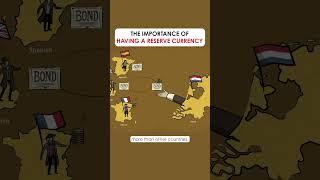




| Some businesses run like autocracies, and some run like democracies. In my experience, neither approach is particularly effective. That’s because autocratic leaders think they have all the answers, but in reality don’t know enough. And democratic leaders who crowdsource decision-making will filter in a lot of bad ideas. That dilemma led to me creating an idea meritocracy at Bridgewater, where we used analytics to better understand where people were weak or strong. That way, we knew whose opinion was most likely to be correct in any context. |

You Might Also Like
 The Most Important Lesson: Humility
2025-12-01
In 1979, I was so broke that I had to borrow $4,000 from my Dad to help take care of my family.
I had calculated that American banks had lent much more money to foreign countries than they would be able to pay back, and anticipated an imminent debt crisis.
But I couldn’t have been more wrong. I didn’t fully understand the impacts of quantitative easing, and so I lost money for myself and I lost money for my clients.
Looking back, it was the most painful experience I could imagine — but it was also the best thing that ever happened to me, because it taught me humility.
 The True Source of My Motivation
2025-11-21
The most important thing is that you have the life that you want to have. So, how you define success is important. There isn’t one path that’s right for everyone.
I was lucky in the sense that I fell in love with markets and playing the investment the game, which is what I’ve done for 50 years.
I recommend that people think about their own nature and what game they’d love to spend years playing. It’s okay to explore different paths—not everyone knows right away. Think of your journey as a process of discovery.
If you’re interested, you can find my full conversation with Bloomberg here. We discussed life, debt, global crisis, and the importance of investing in our oceans:
 What Happens When a Country Accumulates Too Much Debt?
2025-11-06
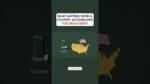
History shows us that having too much debt during an economic downturn leads to a classic, self-reinforcing cycle where:
1) The empire can no longer borrow the money to repay its debts
2) It prints a lot of new money, which devalues the currency and raises inflation
3) Living standards decline, leading to the rise of political extremism
4) Turbulent economic conditions undermine productivity and there is conflict about how to divide the shrinking resources
5) Populist leaders emerge pledging to take control and bring about order
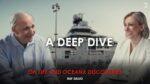 Ray Dalio and Bloomberg’s Francine Lacqua Discuss Life, Debt & Global Crisis
2025-10-29
The U.S.’s debts are on the edge of becoming unmanageable to the point where it could default if conditions are not changed.
But this problem isn’t a unique one. It has happened many times in history, which is why I believe studying the past is so important. The same cycles repeat over and over again, and there are important lessons we can learn from those experiences.
I recently met with Bloomberg @markets ahead of the UN Ocean Conference to discuss our debts, the possibility of global crisis, and the importance of investing in our oceans.
If you’re interested in learning more about our collective debt burden — and what steps we can take to solve these issues — I explain my thinking in my new book, How Countries Go Broke: The Big Cycle.
I hope you will read it and let me know your
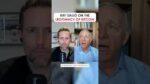 Ray Dalio on the Legitimacy of Bitcoin
2025-10-02
I can’t say exactly how effective Bitcoin is as a money, but it’s being perceived by many as an alternative money and so is worth paying attention to.
Money needs to be both a medium of exchange and a storehold of wealth — and the latter is more important.
I doubt that any central bank will take it on as a reserve currency. That’s because all of the transactions are public, so there’s no privacy to it, and there’s a risk that in the future the code could be broken to make it less effective through government controls.
My personal approach is that I do have some Bitcoin in my portfolio, but not much. @TheMasterInvestorPodcast
You can watch the full conversation here:
Tags: Featured,newsletter,Ray Dalio