






Men can be trained to regard their exploiters as the virtuous architects of safety and prosperity, as so many so-called "citizens" in America are so relentlessly trained to do.
Read More »
Category Archive: 6b.) Mises.org
Discrimination Is Libertarian
In a free society, the right to choose whom to associate with is fundamental, even when the choice is controversial.
Read More »
Read More »
How Equal Protection Laws Threaten Free Speech
Equal protection laws supposedly protect individual rights by guaranteeing the law protects everyone equally. However, Murray Rothbard noted that these laws often are used to suppress those rights.
Read More »
Read More »
Today Only: Donate and Receive the New Institute Magnet Along with the New Hayek Book
The mission of the Mises Institute is to preserve, promote and advance the ideas that can create a better, freer, and more prosperous world.
Read More »
Read More »
Today Only: Donate and Receive the New Institute Magnet!
The mission of the Mises Institute is to preserve, promote and advance the ideas that can create a better, freer, and more prosperous world.
Read More »
Read More »
Trump administration considers bailout for Argentina’s Milei
A weak showing for Milei’s party in provincial elections last week jolted investors and forced the country to start selling “every last dollar” to defend the peso.
Read More »
Read More »
Our Economy Has Never Needed an “Elastic” Currency
Mainstream economists have justified the creation of the Federal Reserve because they claim that a growing economy—especially the banking system—needs an “elastic” currency. In other words, the economy “needs” at least some inflation. Austrian economists know better.
Read More »
Read More »
Gold price nears $3,800 as China says it wants to be custodian of foreign gold reserves
The People’s Bank of China has reportedly pitched central banks on storing the yellow metal on their behalf, inside China.
Read More »
Read More »
Jerome Powell’s Tuesday speech on the 2025 Economic Outlook
" Job gains have slowed ...At the same time, inflation has risen recently and remains somewhat elevated."
Read More »
Read More »
“Hate Speech” Isn’t Real and Pam Bondi Is an Enemy of Freedom
“Hate speech” does not exist. At all. That’s a concept the Left invented to justify state-enforced censorship of speech the Left doesn't like.
Read More »
Read More »
Sound Money in Medieval Italy
The quest for sound money is hardly a recent phenomenon. In 13th century Italy, two different gold monetary units competed with each other in the Medieval Italian economy.
Read More »
Read More »
Thanks to Our Fall Campaign Donors
Thanks to all of our generous donors who participated in our 2025 Fall Campaign. Your continued support is vital and much appreciated.
Read More »
Read More »
The Law of Necessity
No matter how “inelastic” the demand, excessively high prices cannot persist indefinitely without human action.
Read More »
Read More »
Global Wealth and Power are Pivoting to the East
The USA is living in the past and still thinks it can abuse its potential allies, and still expect those countries to line up in support of the US. Article by Douglas Macgregor.
Read More »
Read More »
Fed Governor Stephen Miran wants to cut the interest rate by 200 basis points
Miran wants to fire up the Fed money printers. He absurdly believes Fed policy is " well into restrictive territory."
Read More »
Read More »
Will Private Defense Agencies Wage War—or Keep the Peace?
A common objection to Anarcho-Capitalism is that only the state can offer workable defense services to people through police and the armed forces, as private defense agencies would have an incentive to be at constant war. This objection, however, is not valid.
Read More »
Read More »
Bringing the Truth
The best people in the world support the Mises Institute. Who are they? People just like you. People who happen to care deeply about human liberty and human flourishing. People who care about real economics. Will you join them?
Read More »
Read More »
If Socialists Actually Understood Socialism
Hayek once remarked, “If socialists understood economics, they wouldn’t be socialists.” Building on this, if socialists understood socialism, they wouldn’t be socialists.
Read More »
Read More »
 On Swiss National Bank
-
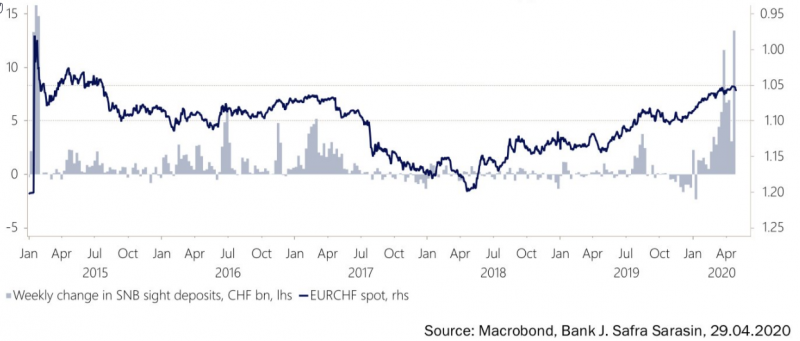
SNB Sight Deposits: decreased by 5.7 billion francs compared to the previous week
-
SNB’s Chairman Schlegel: A few months of negative inflation wouldn’t be a problem
-
2025-07-31 – Interim results of the Swiss National Bank as at 30 June 2025
-
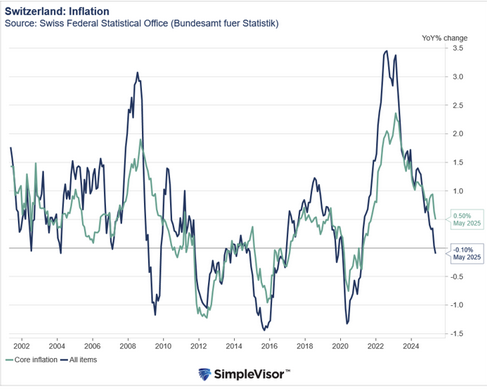
SNB Brings Back Zero Percent Interest Rates
-
Hold-up sur l’eau potable (2/2) : la supercherie de « l’hydrogène vert ». Par Vincent Held
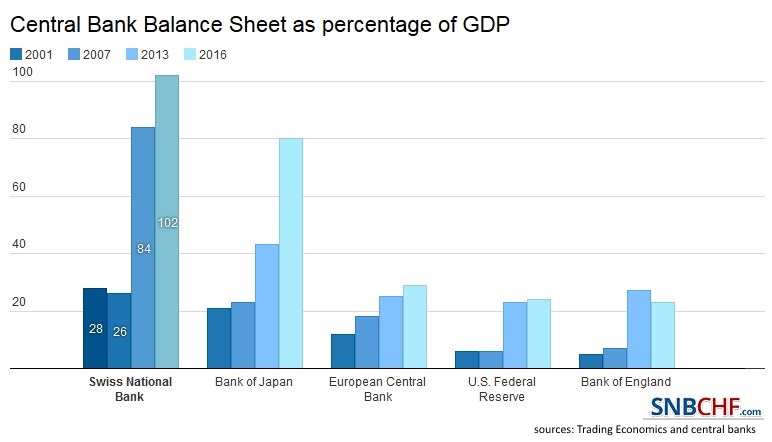
Main SNB Background Info

Featured and recent
-
 What central banks are really signalling with their record gold purchases
 -
 Öl, Gold & Aktien: Warum ich jetzt absolut optimistisch bleibe
 -
 Der RSI 14 Mythos: Warum Standard-Einstellungen oft scheitern
 -
 Sie feiern IHN #krieg #iran #usa #trump #putin #europa #wirtschaft #deutschland #khamenei #israel
 -
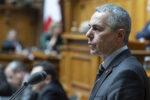 Swiss foreign minister to strengthen partnerships on tour of Africa
 -
 Swiss city draws positive results after three years of controlled cannabis sales
 -
 Could direct democracy put the brakes on trade?
 -
 Long bei Erdöl?
 -
 3-19-26 Will The Fed Backstop Exuberance Again?
 -
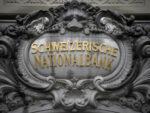 Swiss National Bank keeps interest rate unchanged