







With some simple logic and using Hobbes’s own presuppositions and arguments, we can internally critique Hobbes’s argument for the state, namely, that the state solves none of the problems he presents.
Read More »
Category Archive: 6b.) Mises.org
Socialists Are Reaping a Bountiful Political Harvest while They Create Havoc
As the economy falters, socialists are getting elected, promising free goods and services and an end to the chaos. Even when they make things worse, however, they will still gain political power.
Read More »
Read More »
The Job Market Has Only Gotten Worse Since Trump’s “Liberation Day”
In the year since Donald Trump's "liberation day" in April 2024 fewer Americans are now working, and inflation-adjusted hourly earnings are still below where they were in 2021.
Read More »
Read More »
Today’s AIs Show the Marginal Revolution’s Unfinished Business
In 1871, the “discovery” of marginal economic analysis soon took a wrong turn, moving towards quantification, data, and mathematics. It is time to “rediscover” the margin, this time the margin as explained by Carl Menger.
Read More »
Read More »
The GOP Fiscal Follies
While Republicans have promised robust economic growth to accompany their tax cuts, reality has been different. That is because Republicans increased government spending at the same time, dragging down the economy.
Read More »
Read More »
Rothbard University
In honor of Murray Rothbard's 100th birthday, this first-of-its-kind conference features an intensive course of lectures in Austrian economics.
Read More »
Read More »
Socialists Are Reaping a Bountiful Political Harvest while They Create Havoc
As the economy faulters, socialists are getting elected, promising free goods and services and an end to the chaos. Even when they make things worse, however, they will still gain political power.
Read More »
Read More »
Making Sense of the Trump Administration’s “Hail Mary” on Iran
Bob argues that many Austro-libertarians (himself included) have been too quick to dismiss the Trump administration's foreign and economic policy as mere incompetence or corruption, without grasping the strategic logic behind it.
Read More »
Read More »
Help Us Celebrate 40 Years of Mises U!
It is because of wonderful supporters that Mises University is 40 years old. Thank you for believing in this radical program for educating students.
Read More »
Read More »
The Command Economy in Green Clothing: Britain’s Contracts for Difference and Their Nazi Predecessors
In pursuing the so-called green economy, Great Britain’s Labour Government must resort to socialist planning and totalitarian propaganda.
Read More »
Read More »
Bad Inflation Data Drops While Trump’s in China (And Other Headlines)
On this episode of Power & Market, Ryan, Connor, and Tho break down a variety of headlines from the week, including bad inflation data, Trump's trip to China, Kevin Warsh's Senate confirmation, and the political theatre of Spencer Pratt and Zohran Mamdani.
Read More »
Read More »
The Job Market Has Only Gotten Worse Since Trump’s “Liberation Day”
In the year since Donald Trump’s “liberation day” in April 2024 fewer Americans are now working, and inflation-adjusted hourly earnings are still below where they were in 2021.
Read More »
Read More »
Feds move to seize private property to build border wall
The U.S. government has invoked eminent domain to seize 14.2 acres of Mount Cristo Rey, a sacred site topped by a 29-foot statue of Jesus.
Read More »
Read More »
Foreclosure filings across the US have surged 18 percent compared to last year
"The year-over-year increases suggest lenders may be working through distressed inventory as higher borrowing costs and affordability challenges impact some homeowners."
Read More »
Read More »
Changes at the Fed: The Trimmed Mean PCE Inflation Rate
Various inflation measures conceal more than they reveal, largely because they exclude measuring a large portion of high-inflation items.
Read More »
Read More »
The Economics of War
In this article from 1950, Murray Rothbard suggests some of the less bad ways of financing military operations. Hint: monetary inflation and taxing savings and investment are among the worst.
Read More »
Read More »
Progressives and Conservatives Are Wrong About Taxing the Rich
Both progressives and conservatives show a complete unwillingness or inability to distinguish between those who got rich by genuinely creating value by serving others and those who are getting rich by expropriating wealth through force.
Read More »
Read More »
Marx Was Wrong About the “Necessary” Ruin of Small Landed Property
Karl Marx not only misunderstood value and production, but he also was wrong about large-scale and small-scale property owners.
Read More »
Read More »
On The Duty Of Natural Outlaws To Shut Up
Who would join a radical minority movement, and commit him- or herself for life to social obloquy and a marginal existence, for the sake of 20% more bathtubs, or 15% more candy bars? Who will man the barricades either physically or spiritually, for more peanuts or Pepsi?
Read More »
Read More »
The Cost of Money: Coinage, Fiat Power, and the Quiet Corruption of Value
Governments take valuable things like paper and minerals, stamp something on them, and call them money, in the process rendering these things almost worthless. Something is wrong with this picture.
Read More »
Read More »
 On Swiss National Bank
-
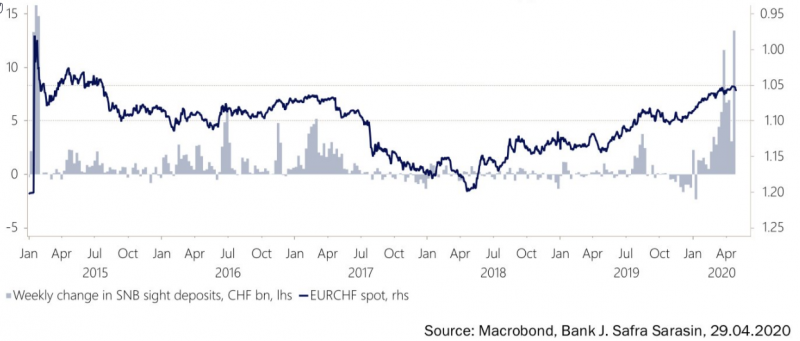
SNB Sight Deposits: decreased by 2.2 billion francs compared to the previous week
-
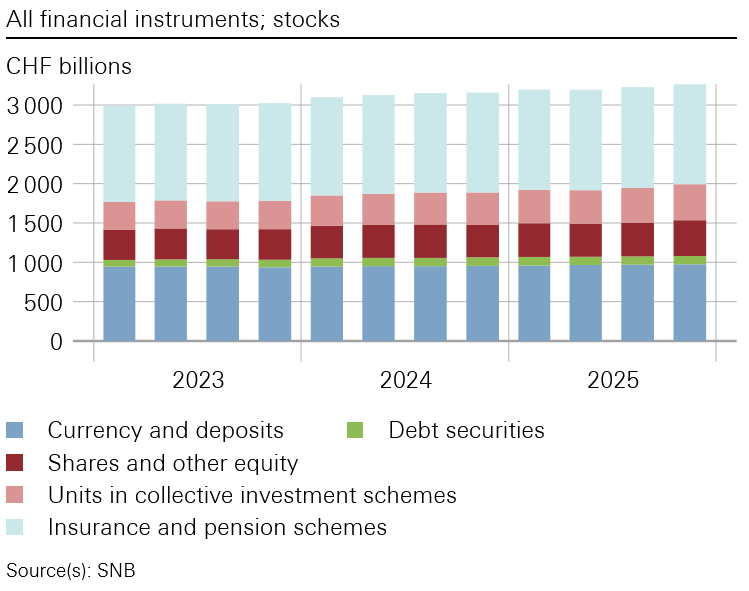
Household wealth in 2025
-
Heads up for NZD and CHF traders, RBNZ Gov Breman and SNB Chair Schlegel to speak
-
Swiss franc appreciation has led to tighter monetary conditions – SNB minutes
-
SNB’s Chairman Schlegel: A few months of negative inflation wouldn’t be a problem
Main SNB Background Info

Featured and recent
-
 SNB Sight Deposits: decreased by 2.2 billion francs compared to the previous week
 -
 Corrections vs. Bear Markets: Why 20% Declines Are Obsolete
 -
 -40 Kilo! Ricarda Lang feiert Abnehmerfolg! Das Internet feiert!
 -
 Steuerrecht digitalisieren mit KI – eine gute Idee?
 -
 Why Switzerland is launching a charm offensive in Southeast Asia
 -
 Ex-Raiffeisen bank CEO fined for tax evasion
 -
 The price of gold matters, but availability matters more.
 -
 FATAL: EU Chefdiplomatin blamiert ganz Europa! China außer sich!
 -
 India’s situation shows why physical gold is different from paper exposure.
 -
 ZUGRIFF auf dein Vermögen: So schützen sich INSIDER