







As the socialistic Canadian medical system runs aground, the government actively promotes physician-assisted suicide as a way to save the system and promoting “die with dignity” at the same time.
Read More »
Category Archive: 6b.) Mises.org
Does Evolution Undermine Ethics?
In today’s Friday Philosophy, Dr. David Gordon examines Robert Nozick’s answer to the question asked in the title of this article.
Read More »
Read More »
Team Netanyahu/Trump Sinks Iran Talks; Kushner Beefs Up Rap-Sheet
With an American imprimatur, Israel is on a “genocidal rampage” in Southern Lebanon, where it blew-up 350 human beings in the span of minutes, on April 9.
Read More »
Read More »
“Classical” Liberalism and Libertarianism
Joseph Solis-Mullen joins Ryan McMaken to talk about the real history of the libertarian movement, and its origins.
Read More »
Read More »
NewMexit: Secession in the Southwest?
Lea and Roosevelt counties in the US state of New Mexico (NM) in 2026 are seeking to secede and join the state of Texas.
Read More »
Read More »
Money-Supply Growth in 2026 Rises to Multi-Year High as the Fed Pumps New QE
In February, the total money supply again rose, heading above $20.4 and growing by a trillion dollars in seven months from July 2025 to February 2026.
Read More »
Read More »
Current Government Printing Is Going to Collapse The Economy
On VRIC Media, Darrell Thomas talks with Jonathan Newman about the real problem behind debt and deficits.
Read More »
Read More »
Assisted Suicide Is the Logical Outcome of Government-Controlled Medical Care
As the socialistic Canadian medical system runs aground, the government actively promotes physician-assisted suicide as a way to save the system and promoting “die with dignity” at the same time.
Read More »
Read More »
War and Trade Restrictions: Fallacious Paths to National Security and Prosperity
The Trump administration continues its bellicose war against Iran, destroying opportunities for prosperity through meaningful commerce along the way.
Read More »
Read More »
War Doesn’t Stop the Casinofication of the American Economy
On this episode of Power and Market, Ryan, Tho, and Connor discuss Fed drama, plummeting consumer sentiment, and how the American economy is becoming increasingly like a casino.
Read More »
Read More »
The Most Unpopular War in American History?
Rep: John Duncan, Jr.: "...this war has become less popular with each passing day. In fact, many people have called it the most unpopular war in US history."
Read More »
Read More »
War and Trade Restrictions: Fallacious Paths to National Security and Prosperity
The Trump administration continues its bellicose war against Iran, destroying opportunities for prosperity through meaningful commerce along the way.
Read More »
Read More »
The American People Should Not Be Forced to Fund Israel’s Atrocities
This Tax Day, as the American public reflects on what our government is using our money for, there is growing opposition to the behavior of the Israeli government. Yet we’re all still forced to send it some of our hard-earned tax dollars. Enough.
Read More »
Read More »
Trump Will Need Plenty of Inflation to Finance His New War
Through it all, we will likely hear the regime come up with every reason under the sun to explain rising prices in terms other that the real cause: monetary inflation.
Read More »
Read More »
Tax Freedom Day Underestimates How Long You Work for the Government
While Tax Freedom Day is mid-April, Rothbard’s measure of the government's fiscal burden reveals that Americans don’t truly start working for themselves until June 5, over seven weeks later.
Read More »
Read More »
Artificial Liquidity Brings Inflation Shocks
There is no shortfall of liquidity in financial markets. In fact, there is so much that inflation has become a way of life for market participants. This is not a good thing.
Read More »
Read More »
Precious Metals Work
In this time of war and uncertainty, we should expect to see the prices of precious metals rise and fall and the only certainty will be uncertainty.
Read More »
Read More »
The Feds Collect Twice as Much in Taxes than State and Local Governments Combined
For every tax dollar extracted by state governments, the federal government demanded nearly 3.5 dollars. Even if combined with local taxation, the Federal government is the biggest tax collector by far.
Read More »
Read More »
 On Swiss National Bank
-
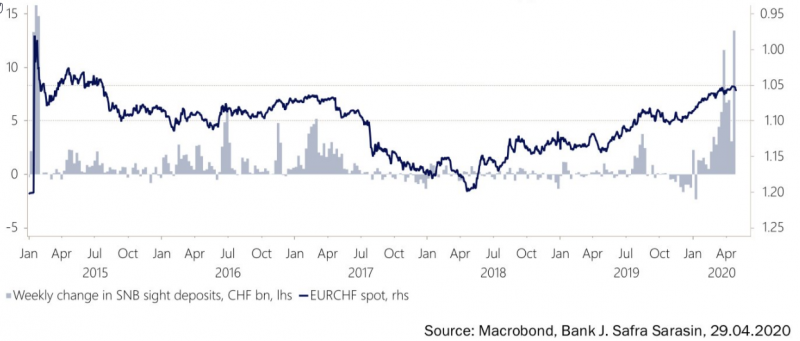
SNB Sight Deposits: decreased by 2.2 billion francs compared to the previous week
-
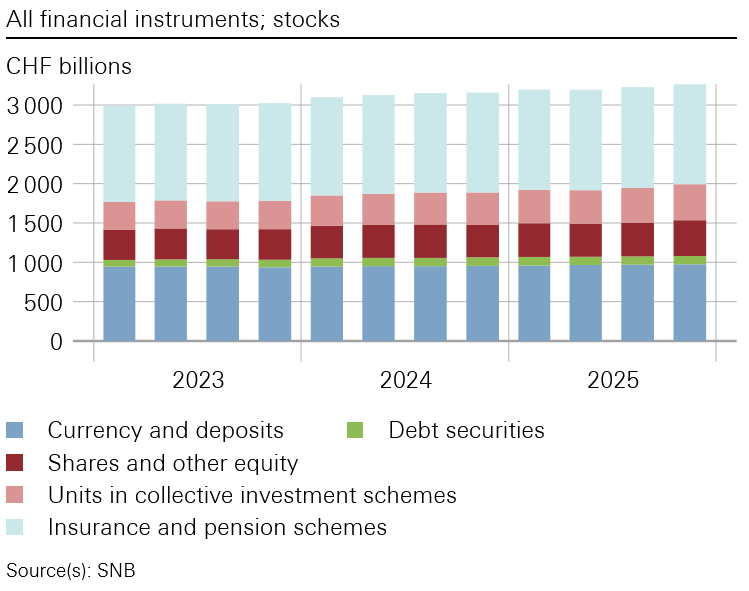
Household wealth in 2025
-
Heads up for NZD and CHF traders, RBNZ Gov Breman and SNB Chair Schlegel to speak
-
Swiss franc appreciation has led to tighter monetary conditions – SNB minutes
-
SNB’s Chairman Schlegel: A few months of negative inflation wouldn’t be a problem
Main SNB Background Info

Featured and recent
-
 SNB Sight Deposits: decreased by 2.2 billion francs compared to the previous week
 -
 Corrections vs. Bear Markets: Why 20% Declines Are Obsolete
 -
 -40 Kilo! Ricarda Lang feiert Abnehmerfolg! Das Internet feiert!
 -
 Steuerrecht digitalisieren mit KI – eine gute Idee?
 -
 Why Switzerland is launching a charm offensive in Southeast Asia
 -
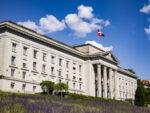 Ex-Raiffeisen bank CEO fined for tax evasion
 -
 The price of gold matters, but availability matters more.
 -
 FATAL: EU Chefdiplomatin blamiert ganz Europa! China außer sich!
 -
 India’s situation shows why physical gold is different from paper exposure.
 -
 ZUGRIFF auf dein Vermögen: So schützen sich INSIDER