In his concluding argument, Molinari envisions a society where security is provided by competing private firms chosen voluntarily by consumers.
Read More »2026-04-30




2026-04-30
In his concluding argument, Molinari envisions a society where security is provided by competing private firms chosen voluntarily by consumers.
Read More »
Molinari describes the inevitable consequences of monopolized security: rising costs, declining quality, and the use of force against the very citizens the government claims to protect.
Read More »
Molinari argues that majority rule is no more legitimate than royal absolutism when it violates individual rights.
Read More »
Molinari distinguishes between society, which arises naturally from voluntary human cooperation, and government, which imposes itself through force.
Read More »
Molinari describes how coercive control over defense led to the familiar abuses of taxation, war, and the suppression of individual liberty.
Read More »
Molinari draws a parallel between monopoly and communism, arguing that both represent departures from the principle of free competition.
Read More »
Molinari frames this choice as the central political question that determines whether a society will be free or oppressed.
Read More »
Molinari confronts the common objection that security is somehow different from other goods and must be exempted from market provision.
Read More »
Molinari applies the general principle of free competition directly to the provision of security services.
Read More »
Molinari argues that the division of labor and voluntary cooperation form the natural basis of social organization.
Read More »
Molinari opens by establishing that humans have a fundamental need for security of their persons and property.
Read More »2026-03-09
“Let us therefore try to investigate what would happen if political servitude were to be abolished, if ‘freedom of government’ were to be established as a logical and necessary complement to freedom of industry.”
Read More » On Swiss National Bank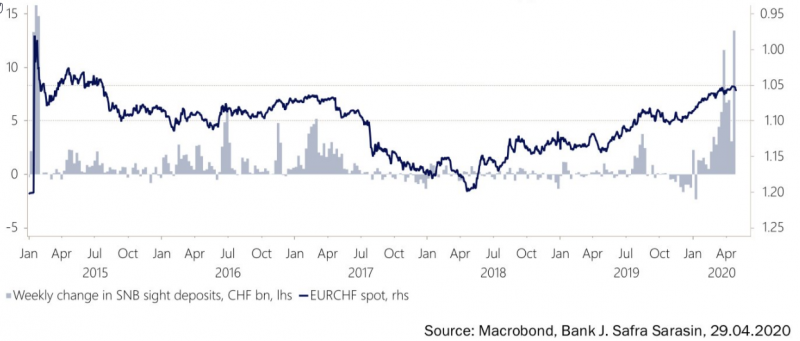
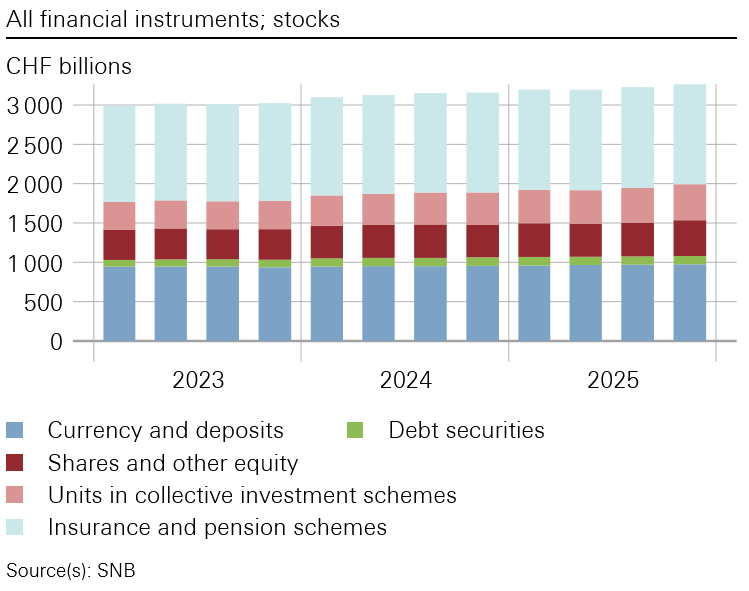 Main SNB Background Info