






A battle is raging in the Halls of Congress between the banks and the crypto industry. The spark was a judgment by the White House's Council of Economic Advisers, which recommended that stablecoins be allowed to pay interest to their holders. As a result of the Genius Act, passed almost a year ago, stablecoins are required to hold, as collateral, 100% reserves of US Treasury securities. However, the act banned stablecoins from paying interest. Shortly after the act passed, the crypto industry began pressing Congress to allow interest payments to stablecoin holders. Doing so would effectively make them a direct competitor to banks for checking and savings accounts.
Thus, the banks, especially the smaller and mid-sized regional banks that don't offer crypto services, could see a drain on deposits without an uptick in crypto business. Bear in mind that the assets banks buy and the loans they make require deposits to fund them. Losing deposits to stablecoins could sharply curtail their business. The President is generally pro-crypto and was a big supporter of the Genius Act. The question, however, that will come up for a vote this spring or summer, is whether the banking lobby will be able to persuade politicians not to allow direct competition via interest payments on stablecoins.
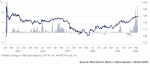
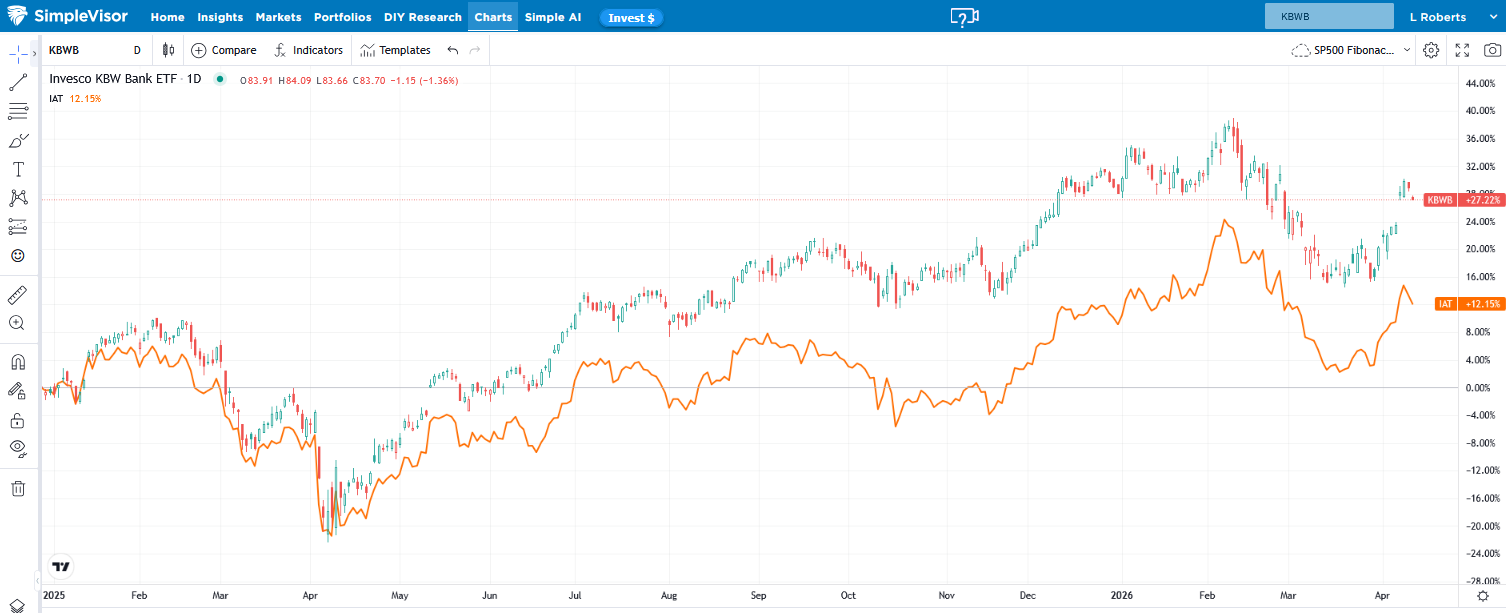
The graph below shows that the Invesco Big Bank ETF (KBW) has decently outperformed the iShares regional bank ETF (IAT) since 2025. If interest on stablecoins is allowed by Congress, we suspect the performance gap will further widen. Until there is more clarity, prioritizing larger banks over smaller ones seems like an appropriate allocation decision.
What To Watch Today
Earnings

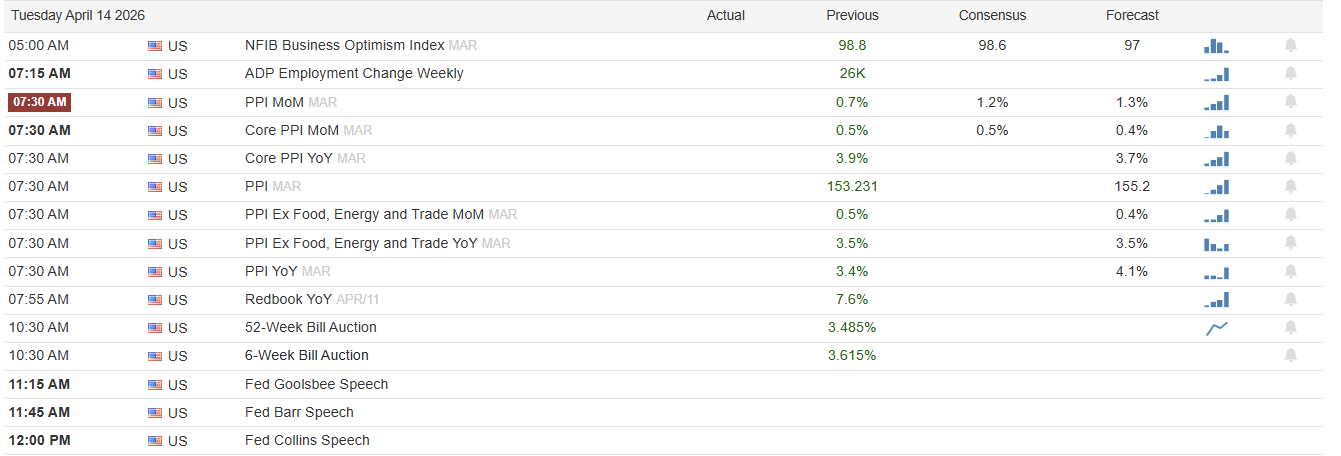
Economy
Market Trading Update
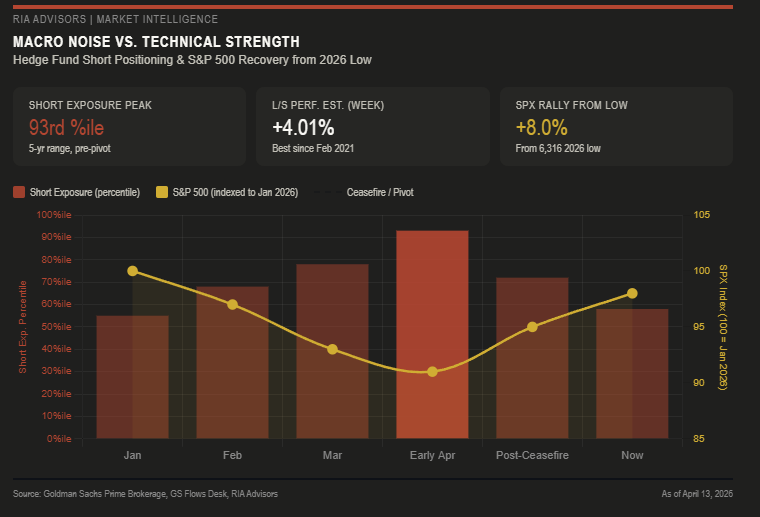
Yesterday, we reviewed the technical backdrop for the market this week. We laid out the bull and bear case for the market in yesterday's technical blog as well, which is worth a review. Last week's price action felt like a release valve being pulled. Goldman's prime brokerage flows guru, Lee Coppersmith, described a clear pivot toward risk-on, noting that sentiment has shifted toward FOMO among investors who dumped positions amid peak AI disruption fears and rising Middle East tensions.

That pivot makes sense from a mechanics standpoint. Short exposure across U.S. macro products, index futures, and ETFs had climbed to the 93rd percentile over the past five years, with hedge fund gross exposure near an all-time high of 307%. When the Iran ceasefire headlines crossed, that positioning became a coiled spring. Shorts covered, hedges unwound, and global equities were net bought for the first time in eight weeks, with Goldman's Equity Fundamental Long/Short Performance Estimate rising 4.01%, the best weekly reading since February 2021.

That's the good news, and we've seen this movie before. The build-up of stress in the market gets investors overly bearish, and then "hope" arrives, relieving the pressure. The "hope" causes a rush to gain positioning, short positions unwind sharply, and the headline indices surge. The trap, however, is confusing the "market squeeze" with a new bull leg higher.
The S&P 500 is now up roughly 8% from its 2026 low of 6,316. That's a meaningful bounce, and we're not dismissing it, but positioning remains friendly for further upside. This suggests that investors consider holding exposure through the catalyst-rich earnings season, particularly in Mag 7 names, where earnings growth is expected to be the strongest.

However, the macro environment hasn't changed just because the shooting paused. Goldman Asset Management's base case is that energy flows through the Strait of Hormuz will remain largely halted for a few weeks before gradually normalizing, with the caveat that if they don't, market fallout will be non-linear. Add in inflationary pressures from those higher oil prices, a Fed with little room to maneuver, and earnings estimates that still embed assumptions from a pre-disruption world, and you have a setup where the technical rally could easily meet a macro wall.
As such, we suggest remaining anchored and adhering to your process. Use rallies to rebalance, not to chase. If you added hedges on the way down, this week's strength is an opportunity to assess whether your portfolio reflects your actual risk tolerance rather than just the last 72 hours of price action. The short squeeze was real, and the technical strength is legitimate. What isn't legitimate is treating a ceasefire and a week of FOMO flows as a macro all-clear.
Stay hedged, stay process-oriented, and let the market prove itself before extending risk.

Avis Leads Transportation Stocks
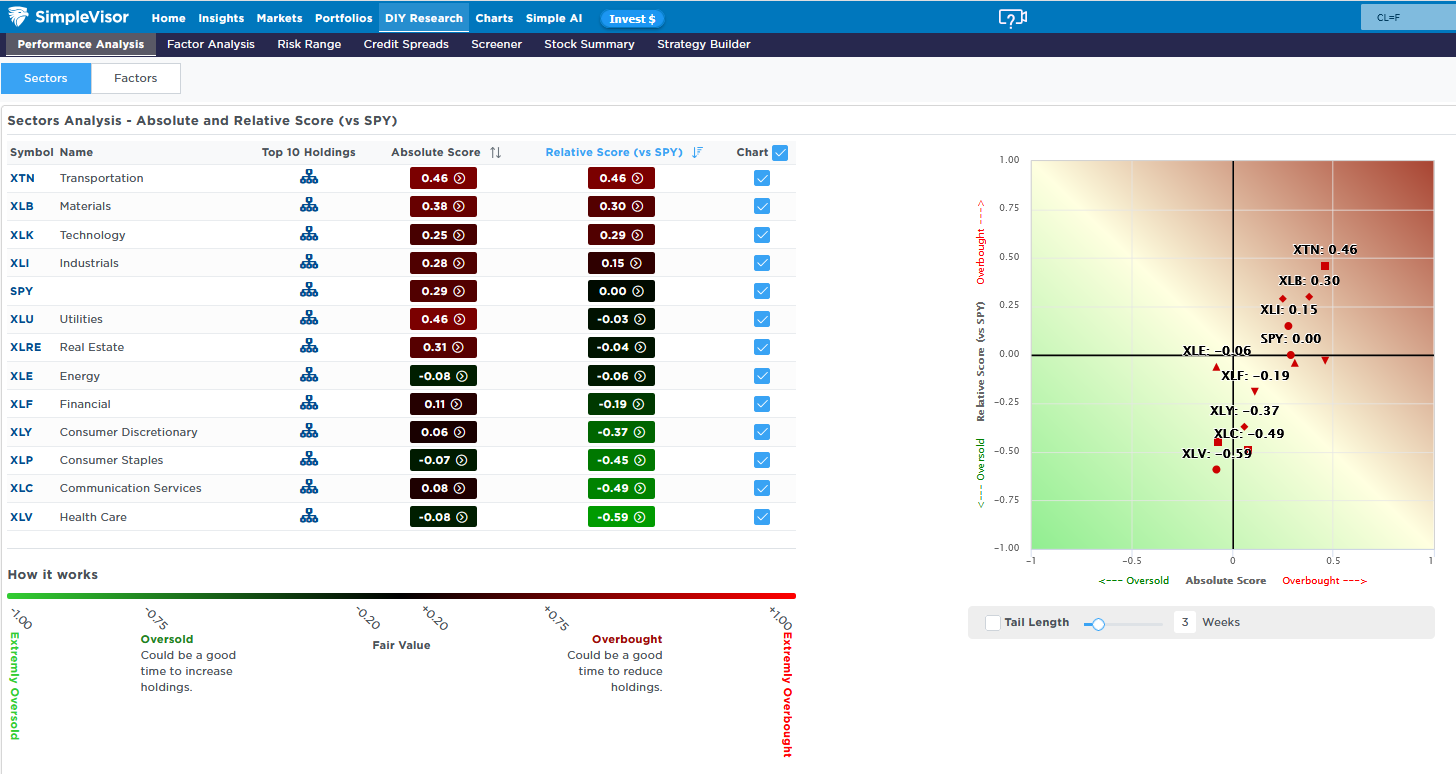
Avis Budget Group Inc. was up an astonishing 64% last week and a whopping 200% over the last month. A massive short squeeze is deemed the impetus behind its outsized move. Its 3.6% weighting in the transportation sector (XTN), coupled with its massive surge, helped the sector become overbought. However, the other top ten holdings are also overbought despite the negative impact that higher fuel prices will have on many of the companies. We share this in the second graphic, courtesy of SimpleVisor.
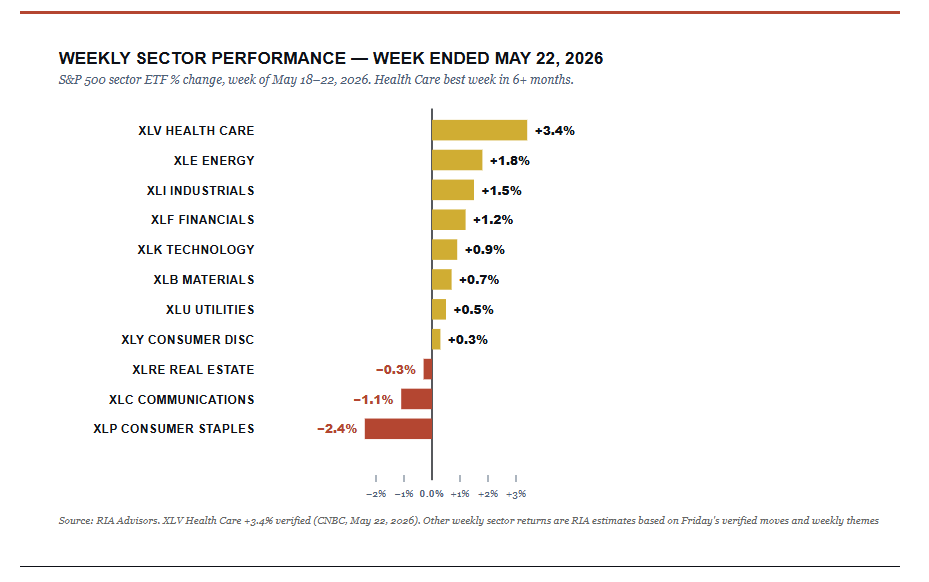
As we share in the first graphic, technology continues to move from being the most oversold sector to one of the most overbought. It certainly outperformed the market last week in the relief rally. Despite oil prices remaining stubbornly around $100 a barrel, the energy sector has fallen from extremely overbought to fair value. As we noted a week or two ago, its incredibly high absolute and relative scores (>.85) were going to be very difficult to sustain. Over the last five trading days, technology stocks rose by over 4%, while energy stocks fell by over 4%. Extreme scores using this analysis, coupled with a relief rally on the Iranian conflict, were the culprits.
Last week's price action provides guidance for which sectors might lead the way if the market continues higher. Conversely, if oil prices take another leg up, energy stocks, now at fair value, may be in a better position to lead the market once again.

S&P 500 Outlook: The 8.2% Rally & What Comes Next
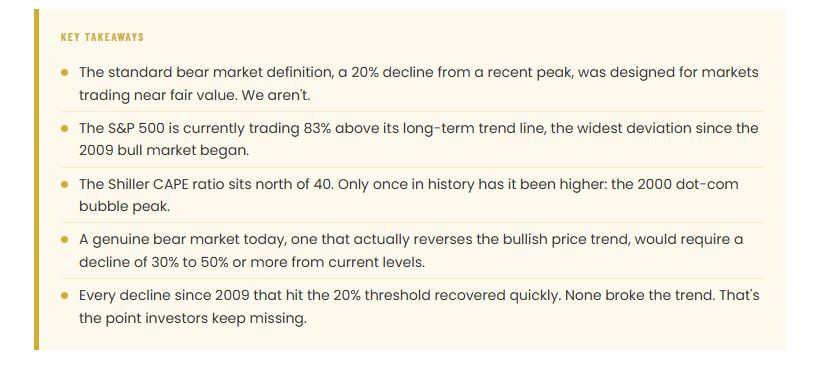
Over the last few weeks, we have published real-time market commentary as the correction proceeded. The goal was to help investors navigate the more dire outcomes promoted on social media. A largely unexpected outcome was that the S&P 500 outlook changed dramatically in a matter of days. After five consecutive weeks of decline driven by the Iran conflict, surging oil prices, and a Federal Reserve frozen between inflation and growth, we suggested a rally was likely. That rally came hard with an 8.2% surge from its March lows near 6,300. Furthermore, that rally reclaimed its 20-, 50-, and 200-day moving averages in rapid succession. As of Friday’s close at 6,816.89, the S&P 500 sits just 2.6% below January’s all-time high of 7,002. That’s a recovery that demands explanation, honest evaluation, and a clear-eyed view of what comes next.

So, let’s start with a review of how we got here. In our 200-DMA breakdown analysis, we noted that the combination of a still-rising 200-day average, an RSI in the low 30s, and AAII bearish sentiment above 52% historically produces a reflexive rally, even when the longer-term outcome remains uncertain. We also wrote clearly that the goal isn’t to go to cash. It’s to reduce the cost of being wrong while staying positioned for the recovery when it arrives.
That framing matters now more than ever, because the S&P 500 outlook from here is genuinely two-sided.
Tweet of the Day
“Want to achieve better long-term success in managing your portfolio? Here are our 15-trading rules for managing market risks.”
Please subscribe to the daily commentary to receive these updates every morning before the opening bell.
If you found this blog useful, please send it to someone else, share it on social media, or contact us to set up a meeting.
The post Stable Coins Versus Banks: The Battle Over Interest Rates appeared first on RIA.
Full story here Are you the author?You Might Also Like
 The Apple AI Strategy: Discipline Over Hype
2026-04-08
While tech giants invest billions in AI, Apple executives are quietly sitting on their hands and a mountain of cash. Given the massive growth in AI investments, as shown in the graphs below, executives of leading companies at the forefront of AI development must be ecstatic about the prospect of AI significantly boosting their bottom …
 The Business Cycle Narrative & War With Iran
2026-02-21
🔎 At a Glance 🏛️ Market Brief – War With Iran On Friday, the Supreme Court struck down Trump’s signature tariffs. The ruling affects tariffs levied under the International Emergency Economic Powers Act (IEEPA) which includes the so-called reciprocal tariffs at various levels against nations all around the world to address trade imbalances, as well …
 Time To Swap Gold For Bitcoin?
2026-02-17
The dollar-debasement narrative is in full swing, as evidenced by the price of precious metals. However, one look at bitcoin, which should also rally on the debasement narrative, tells you something is amiss. We do not buy into the dollar-debasement narrative; instead, we believe much of the activity in gold and bitcoin is more closely …
 The Seen And The Unseen Of QE-RMP
2025-12-22
In 1850, Economist Frederic Bastiat famously wrote an essay entitled “That which is seen, and that which is not seen.” The first chapter, “The Broken Window,” argues that good economics requires considering not just the immediate, visible effects of an action but also the delayed, less obvious (unseen) consequences. Unfortunately, most commentators, when asked about …
Tags: Featured,newsletter