



 by
by George Dorgan
My articles My siteAbout meMy videosMy books
Follow on:LinkedINTwitterSeeking Alpha
CFA SocietyEconomicBlogs
The Producer Price Index (PPI) or officially named “Producer and Import Price Index” describes the changes in prices for producers and importers. For us it is interesting because it is used in the formula for the Real Effective Exchange Rate. When producers and importers profit on lower price changes when compared to other countries, then the Swiss Franc reduces its overvaluation. The Swiss PPI values of -6% in 2015 (see below), compared to -3% in Europe or -1% in the U.S., diminished the overvaluation. In 2017, however, producer prices are rising again – in both Europe and Switzerland. See more in Is the Swiss Franc overvalued?
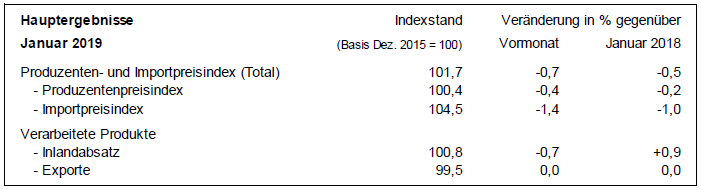
| 14.02.2019 – The Producer and Import Price Index fell in January 2019 by 0.7% compared with the previous month, reaching 101.7 points (December 2015 = 100). This decline is due in particular to lower prices for petroleum products. Compared with January 2018, the price level of the whole range of domestic and imported products fell by 0.5%. These are some of the findings from the Federal Statistical Office (FSO). |
Switzerland Producer Price Index (PPI) YoY, January 2019(see more posts on Switzerland Producer Price Index, )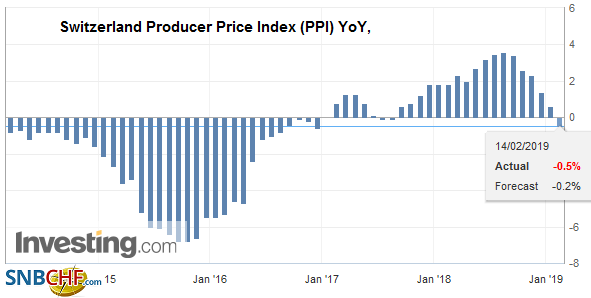 Source: investing.com - Click to enlarge |
Download press release: Producer and Import Price Index fell by 0.7% in January 2019
German Text:
Produzenten- und Importpreisindex im Januar 2019Produzenten- und Importpreisindex sinkt im Januar 2019 um 0,7%14.02.2019 – Der Gesamtindex der Produzenten- und Importpreise sank im Januar 2019 gegenüber dem Vormonat um 0,7% und erreichte den Stand von 101,7 Punkten (Dezember 2015 = 100). Der Rückgang ist vor allem auf tiefere Preise für Mineralölprodukte zurückzuführen. Im Vergleich zum Januar 2018 ging das Preisniveau des Gesamtangebots von Inland- und Importprodukten um 0,5% zurück. Dies geht aus den Zahlen des Bundesamts für Statistik (BFS) hervor. Für den Rückgang des Produzentenpreisindexes gegenüber dem Vormonat waren vor allem die tieferen Preise für Mineralölprodukte verantwortlich. Billiger wurde auch Schrott. Steigende Preise beobachtete man dagegen für Uhren. Tiefere Preise gegenüber dem Dezember 2018 registrierte man im Importpreisindex insbesondere für Mineralölprodukte, pharmazeutische Spezialitäten sowie Erdöl und Erdgas. Dasselbe gilt für Nichteisen-Metalle und daraus hergestellte Produkte wie auch für Metallprodukte. Preiserhöhungen zeigten dagegen Gemüse und Kartoffeln. |
 . |
Statistische Kennzahlen im Januar 2019
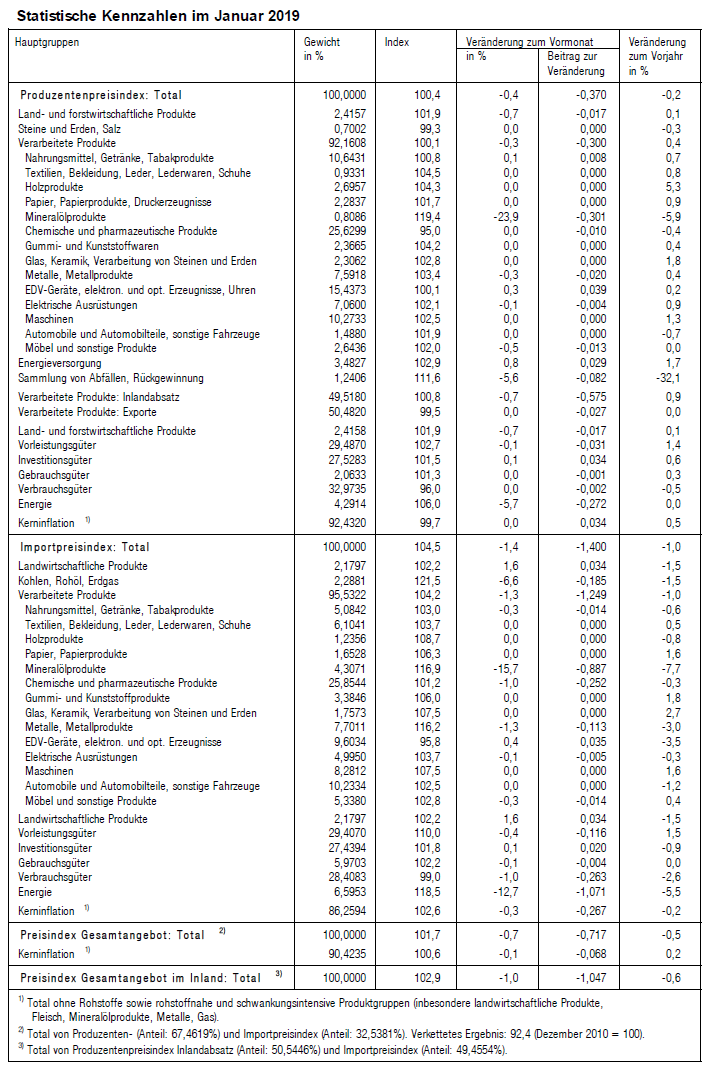
- Click to enlarge
Tags: newsletter,Switzerland Producer Price Index