Category Archive: 6b.) Mises.org

Entrepreneurship Should Be the Goal, Not White-Collar Jobs

Black entrepreneurship in the United States has a remarkable history. Even during the inhospitable climate of Southern slavery, both enslaved and free blacks managed to establish lucrative ventures. Research on black entrepreneurship has revealed that in the Antebellum South black entrepreneurs' pursuits spanned the entire gamut of industry, ranging from merchandising to transportation.

Read More »

Here We Go Again: The Fed Is Causing Another Recession

The primary cause of the recurring “boom and bust” business cycle is central banks like the Federal Reserve creating money out of thin air. This was first explained by Austrian economist Ludwig von Mises over a century ago. His student F.A. Hayek won the 1974 Nobel Prize in economics for his work on this theory, which is now known as Austrian business cycle theory.

Read More »

Director & filmmaker on how his career has led him to travel the world Japan, Africa, Brazil, London

In this segment Director and Filmmaker, Soflaa talks about how his career has led him to many travels around the world including Africa, Brazil, Japan, London, and more. FIYE show instagram: https://www.instagram.com/fiye.show/ Soflaa Instagram: https://www.instagram.com/soflaaa/

Read More »

Krugman Is Wrong (Again): Artificially Low Interest Rates Created Bubbles

In his June 21 New York Times article “Is the Era of Cheap Money Over?,” Paul Krugman argues against the view that the Fed has kept interest rates artificially low for the past ten to twenty years.

Read More »

filmmaker & director talks about real-life lessons “Escuelita” (part one)

In this first segment filmmaker & director Guillermo Alfonso (Soflaa) talks about his best learning experiences and those were his teaching moments that prepared him for his independent projects. FIYE show instagram: https://www.instagram.com/fiye.show/ Guillermo Alfonso instagram: https://www.instagram.com/soflaaa/

Read More »

To Avoid Civil War, Learn to Tolerate Different Laws in Different States

Most commentary on the Supreme Court's decision in Dobbs v. Jackson Women's Health Organization—which overturns Roe v. Wade—has focused on the decision's effect on the legality of abortion in various states. That's an important issue. It may be, however, that the Dobbs decision's effect on political decentralization in the United States is a far bigger deal.

Read More »

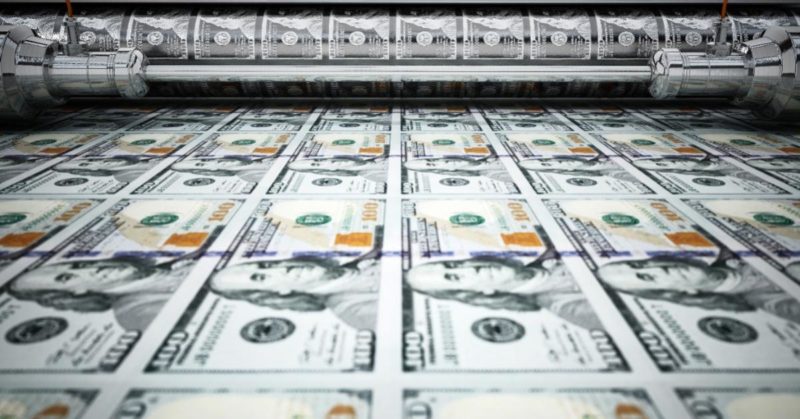
How Money Printing Destroyed Argentina and Can Destroy Others

Inflation in Argentina is far worse than neighboring countries. It has only one cause: an extractive and confiscatory monetary policy—printing pesos without control and without demand.

Read More »

Powell Is the New Arthur Burns, Not the New Paul Volcker

Last year, just as it was becoming increasingly clear that price inflation was mounting, Jerome Powell repeatedly denied there was any reason for concern. He called inflation "transitory." A few months later, he admitted it was not transitory, but denied it was "entrenched." Then, by late 2021, he admitted price inflation was getting out of control but still took no action of any consequence.

Read More »

Peter Lewin and Steven Phelan: How Do Entrepreneurs Calculate Economic Value Added? Subjectively.

At the core of the entrepreneurial orientation that is the engine of vibrant, growing, value-creating, customer-first businesses, we find the principles of subjectivism and subjective value. Subjective value embraces not only the value the customer seeks, but also the value that entrepreneurs establish in their companies: capital value.

Read More »

Who Really Makes US Foreign Policy? Who Benefits and Who Loses?

In a piece of news that shocked the mainstream media, but which shocked no one familiar with the academic industry writ large, retired US Army general John Allen was forced to resign as president of the Brookings Institution after it was revealed the FBI was investigating him for lobbying on behalf of the Qatari monarchy.

Read More »

How Bad Were Recessions before the Fed? Not as Bad as They Are Now

With a recession looming over the average American, the group to blame is pretty obvious, this group being the central bankers at the Federal Reserve, who inflate the supply of currency in the system, that currency being the dollar. This is what inflation is, the expansion of the money supply either through the printing press or adding zeros to a computer screen.

Read More »

What Will It Take to End Rampant Home-Price Inflation?

Real wages are falling, inflation is at a 40-year high, and the Atlanta Fed predicts we'll find GDP growth at zero for the second quarter. Meanwhile, both the yield curve and money-supply growth point to recession.  But when it comes to the latest data on home prices, there's still no sign of any deflation or even moderation.

Read More »

Economic Winter Has Arrived

The average card-carrying Austrian would say that the Federal Reserve is creating money by the bale, with evidence being Consumer Price Index prints of 8.6 percent per the Bureau of Labor Statistics or over 15 percent per John Williams’s shadowstats.com computation based on the way the government calculated CPI back in 1980.

Read More »

Contra Ben Bernanke, the Gold Standard Promotes Economic Stability

Currently the world is on a fiat money standard—a government-issued currency that is not backed by a commodity such as gold. The fiat standard is the primary cause behind the present economic instability, and is tempted to suggest that a gold standard would reduce instability. The majority of experts however, oppose this idea on the ground that the gold standard is in fact a factor of instability.

Read More »

How Governments Expropriate Wealth with Inflation and Taxes

In an interview with the Wall Street Journal, Treasury secretary Janet Yellen admitted that the chain of stimulus plans implemented by the US administration helped create the problem of inflation.

Read More »

A Critique of Neoclassical and Austrian Monopoly Theory

One of the most controversial areas in Austrian economics, and one where even long-established Austrian theorists differ sharply, is monopoly theory. Indeed, as we shall see below, the differences are not merely semantic, nor are they confined to detail or some minor theoretical implication.

Read More »

Markets Promote Real Equality Much More Than Progressive (and Conservative) Critics Claim

The economy consists of a huge chain of the division of labor that is interlocked to such a limit where there exists hardly any single individual or firm that produces the whole of the product alone. This is famously illustrated in the essay “I, Pencil,” by Leonard Read.

Read More »

Episode 756: *Throwback* Jeff Deist And Pete Discuss Their Post-Election Predictions from Nov 2020

This is an episode Pete released on Nov 1 2020 in which he and Jeff make predictions for all possible scenarios in a post-2020 election world. What did they get right?

Read More »

Wholesale Prices Rise More than 10 Percent, Pointing to Continued Price Hikes

Year-over-year PPI growth came in at over 10 percent for the sixth month in a row. This will put more pressure on the Fed to "do something." 

Read More »

The Return of the Anguish of Central Banking: Why the Fed and Inflation Go Hand in Hand

The recent outbreak of price inflation with the jump to an annual rate of 8.6 percent in May 2022 came as a surprise to the US central bank (the Federal Reserve). Having ignored the warnings of the Austrian school economists, the policy makers were paralyzed in the face of a phenomenon they deemed impossible to happen. None of their forecasting models had triggered an inflation alert.

Read More »