







The radical classical liberals of the past were not so naive as to think that words on paper would prevent the abuses of the central state. Allowing the central state to have a monopoly on coercive power is always a mistake.
Read More »
Category Archive: 6b.) Mises.org
The Duke Lacrosse Case 20 Years Later: How Durham Law Enforcement Promoted a Criminal Conspiracy
The Duke Lacrosse Case would never have been a legal item had not the police and prosecutors of the case lied and broken the law on numerous occasions. Here is a small sampling of the lies they told.
Read More »
Read More »
US Intel Warns Iran Regime ‘Not in Danger’ of Collapse
"A 'multitude' of intelligence reports provide 'consistent analysis that the regime is not in danger' of collapse and 'retains control of the Iranian public.'"
Read More »
Read More »
Iran is now exporting more oil than before the war
"The recent increase shows that, unlike other producers, their shipments are unimpeded and that China hasn’t lost its appetite for Tehran’s crude."
Read More »
Read More »
The Robot Won’t Take Your Job. The Government Might
Like the Luddites of two centuries ago, pundits tell us to fear AI because it might put people out of work and create mass unemployment. But AI is not a threat to our jobs, unlike the regulation the government unleashes ostensibly to control AI.
Read More »
Read More »
Only Power Can Check Power
The radical classical liberals of the past were not so naive as to think that words on paper would prevent the abuses of the central state. Allowing the central state to have a monopoly on coercive power is always a mistake.
Read More »
Read More »
The Strait of Hormuz is On Fire
On this episode of Power & Market, Ryan, Connor, and Tho look at the economic fallout from the war in Iran. How has Iran been able to control the Strait of Hormuz? How might central bankers react? And draft talk out of Washington? Tune in to hear about this and more, as well as a … Continue reading »
Read More »
Read More »
Morgan Stanley restricts redemptions as withdrawals surge
A flurry of bad news has drawn fresh scrutiny to the roughly $2 tln private credit market, as investors question the health of loan portfolios.
Read More »
Read More »
Crude spikes above $100 as oil tankers burn in Gulf
The rise in oil prices defied a U.S. effort hours earlier to reassure markets with an announcement of the second-largest ever release from the nation's petroleum reserve.
Read More »
Read More »
Warren Buffett on Corporate Taxation: A Reality Check
Although most economists tend to overemphasize the desirability of particular ways of collecting tax revenue as opposed to others, a tax on profits is perhaps one of the most evil and disastrous forms of taxation conceived.
Read More »
Read More »
Launching a War on Iran Was No Act of Courage
As recent history shows, there are few things more courageous for a president to do than face down the ever-accelerating, wealth-draining, conflict-amplifying warfare state in DC. Trump has decided to go in the opposite direction.
Read More »
Read More »
Launching a War on Iran Was No Act of Courage
As recent history shows, there are few things more courageous for a president to do than face down the ever-accelerating, wealth-draining, conflict-amplifying warfare state in DC. Trump has decided to go in the opposite direction.
Read More »
Read More »
The Persona and Legacy of Murray Rothbard
We continue celebrating the centennial of the birth of Murray Rothbard, one of the greatest economists of the 20th Century and the Dean of the Austrian School of Economics.
Read More »
Read More »
Congress quietly moves US closer to military draft
With the passage of NDAA expected this week, a sweeping change to the Selective Service will attempt to 'automatically' sign American males up to serve.
Read More »
Read More »
Will Aliens Trigger the Next Financial Crisis?
In 2011, Paul Krugman infamously declared that the US could revitalize its slow economy if it were to prepare for an invasion of space aliens. Would the real presence of aliens, however, touch off an economic crisis?
Read More »
Read More »
US bombs Somalia for 43rd time this year
After 43 air strikes this year, AFRICOM is still on track to break its annual record for total US airstrikes in Somalia, which it set at 124 strikes last year.
Read More »
Read More »
Largest ever release of oil from IEA stockpile. Oil price only slightly falls.
IEA members are advanced economies in Europe, North America and Northeast Asia. Japan said earlier it will release oil stockpiles as early as next week.
Read More »
Read More »
It’s clear that Trump miscalculated Iran’s response to US attacks
President Trump downplayed the risks to the energy markets as a short-term concern. This was clearly wishful thinking.
Read More »
Read More »
Fiscal Responsibility, Formalization, and the Modern Fiscal State
In a genuinely liberal framework, limited government, fiscal restraint, and legal clarity are not episodic accomplishments. They are the enduring foundations of a social order.
Read More »
Read More »
 On Swiss National Bank
-
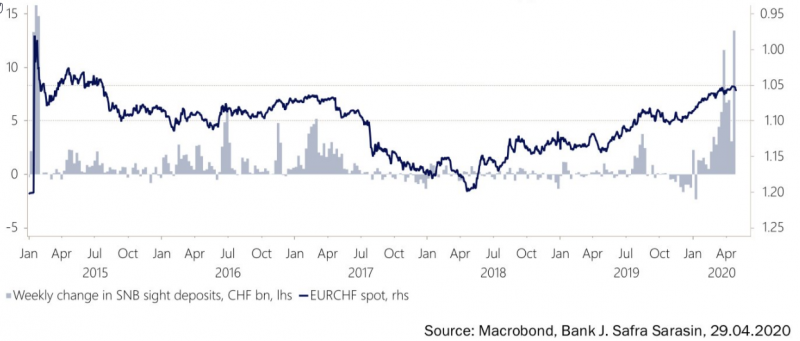
SNB Sight Deposits: decreased by 2.2 billion francs compared to the previous week
-
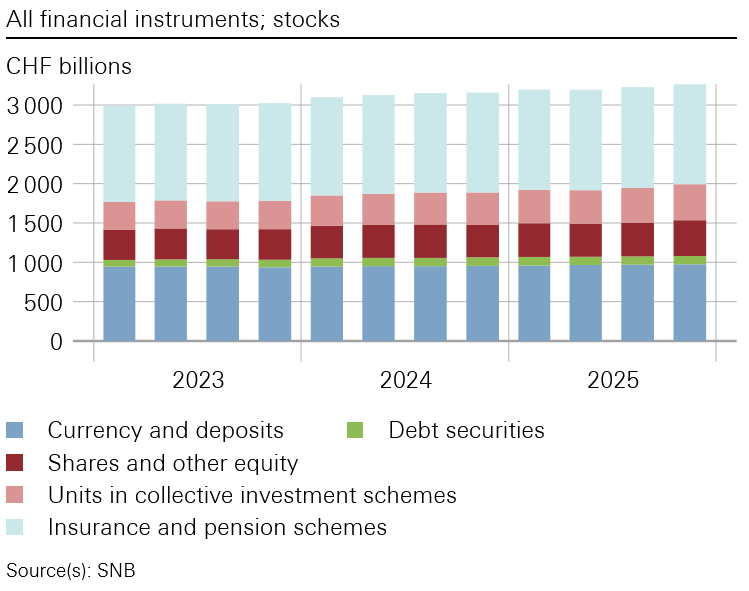
Household wealth in 2025
-
Heads up for NZD and CHF traders, RBNZ Gov Breman and SNB Chair Schlegel to speak
-
Swiss franc appreciation has led to tighter monetary conditions – SNB minutes
-
SNB’s Chairman Schlegel: A few months of negative inflation wouldn’t be a problem
Main SNB Background Info

Featured and recent
-
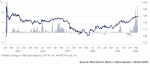 SNB Sight Deposits: decreased by 2.2 billion francs compared to the previous week
 -
 Corrections vs. Bear Markets: Why 20% Declines Are Obsolete
 -
 -40 Kilo! Ricarda Lang feiert Abnehmerfolg! Das Internet feiert!
 -
 Steuerrecht digitalisieren mit KI – eine gute Idee?
 -
 Why Switzerland is launching a charm offensive in Southeast Asia
 -
 Ex-Raiffeisen bank CEO fined for tax evasion
 -
 The price of gold matters, but availability matters more.
 -
 FATAL: EU Chefdiplomatin blamiert ganz Europa! China außer sich!
 -
 India’s situation shows why physical gold is different from paper exposure.
 -
 ZUGRIFF auf dein Vermögen: So schützen sich INSIDER