







[This article is excerpted from Conceived in Liberty, volume 1, chapter 6, "The Social Structure of Virginia: Bondservants and Slaves". An MP3 audio file of this article, narrated by Floy Lilley, is available for download.]
Until the 1670s, the bulk of forced labor in Virginia was indentured service (largely white, but some Negro); Negro slavery was negligible. In 1683 there were 12,000 indentured servants in Virginia and only 3,000...
Read More »
Category Archive: 6b.) Mises.org
The US Followed a Policy of Foreign Intervention Long before World War II

Read More »
In the Event of an Official US Bankruptcy

Read More »
ESG: Another Fraudulent Hustle That Progressive Elites Have Foisted on the Economy
In their attempts to remake the economy, progressive elites are pushing ESG. What they forget is that the economy runs on real things, not ideology.
Original Article: "ESG: Another Fraudulent Hustle That Progressive Elites Have Foisted on the Economy"
Read More »
Read More »
Practice Makes Parfit
Parfit: A Philosopher and His Mission to Save Moralityby David EdmondsPrinceton, 2023; xx + 380 pp.
The British philosopher Derek Parfit ranks as one of the most influential moral philosophers of the past century. But as David Edmonds says in his outstanding biography of him, Parfit was a “philosopher’s philosopher” who did not write for the general public. Edmonds, who has a gift for explaining difficult ideas simply, has made Parfit’s ideas...
Read More »
Read More »
Does the Inverted Yield Curve Signal a Coming Recession?
Dr. Paul Cwik joins Bob to discuss the inverted yield curve's "signal" of an impending recession.
Dr. Cwik's dissertation on inverted yield curves and economic downturns: Mises.org/HAP395a
Bob on the link between inverted yield curves and recessions: Mises.org/HAP395b
Bob's Understanding Money Mechanics: Mises.org/Mechanics
[embedded content]
Read More »
Read More »
Prices, Food, Employment: AI and Robotics Are for Regular Folks, Not Just the Elite
While politicians, media mavens, and the academic elite spread fear about artificial intelligence, AI is helping make life better for ordinary consumers.
Original Article: "Prices, Food, Employment: AI and Robotics Are for Regular Folks, Not Just the Elite"
Read More »
Read More »
Taxing Capital Leads to Capital Consumption
Read More »
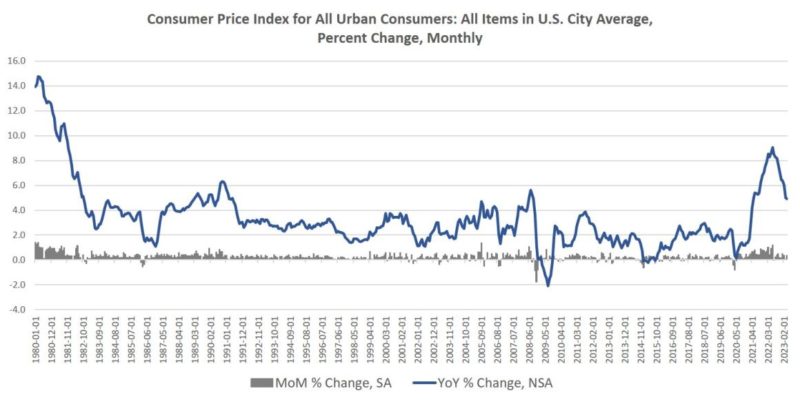
Price Inflation Growth Slowed Slightly in April. Now Wall Street Will Demand More Easy Money.
Read More »
Should Local Municipalities Default on Their Debts? Seems Like a Good Idea
While most free market advocates are fixated on the national debt, they also should be looking at municipal debt over which taxpayers have no say. Maybe default is the answer.
Original Article: "Should Local Municipalities Default on Their Debts? Seems Like a Good Idea"
Read More »
Read More »
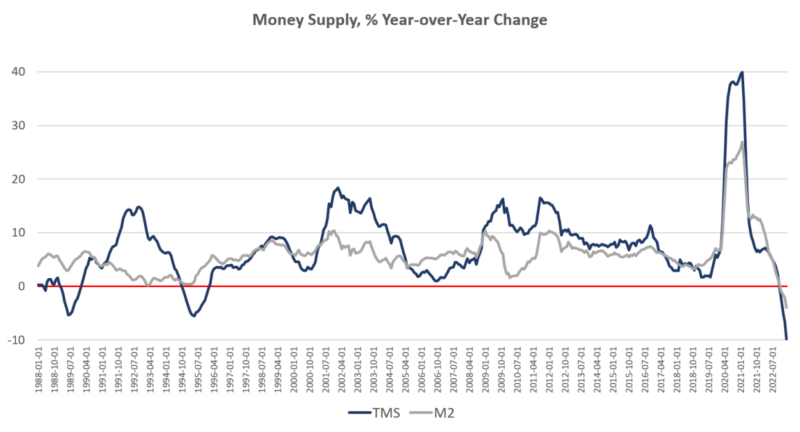
The Money Supply Has Plummeted in the Biggest Drop Since the Great Depression
Read More »
Finance Discovers Sting: “How Fragile We Are”

Read More »
The Ukraine War Isn’t about Democracy. It’s about States Seeking More Power.
The fight between Russia and NATO is not about "democracy versus authoritarianism." Rather both the US and Russian states are doubling down because they are doing what states do: seeking power.
Original Article: "The Ukraine War Isn't about Democracy. It's about States Seeking More Power."
Read More »
Read More »
Progressives Want to Eliminate Wealthy Entrepreneurs but Need the Wealth They Create

Read More »
Trump, Dominion, and the Weaponization of Defamation
On this episode of Radio Rothbard, Ryan McMaken and Tho Bishop talk about recent court cases involving defamation claims, justifying libertarian skepticism of the entire concept. As Ryan noted in a recent Wire article, the Dominion lawsuit in particular, is a particularly chilling case for free speech, with a taxpayer-funded company effectively silencing public critics. This, along with the recent Trump verdict, are an illustration of the...
Read More »
Read More »
Government Budget Deficits Cannot Stimulate True Economic Growth
A central tenet of Keynesian economics is that governments must run budget deficits to stimulate economic growth. But government spending actually shrinks the economy.
Original Article: "Government Budget Deficits Cannot Stimulate True Economic Growth"
Read More »
Read More »
Rothbard’s Button Doesn’t Exist, but It Needs to Be Invented

Read More »
NATO’s Great New Idea: “Let’s Start a War with China!”

Read More »
Canada’s Legal Counterfeiting Ring Is a Product of Progressive Democracy
Canada created its central bank during the Great Depression, ostensibly to stabilize the currency and protect the banking system. Today, that system is falling apart, thanks to inflationary central bank policies.
Original Article: "Canada’s Legal Counterfeiting Ring Is a Product of Progressive Democracy"
Read More »
Read More »
Is There an Optimum Growth Rate of Money?

Read More »
 On Swiss National Bank
-
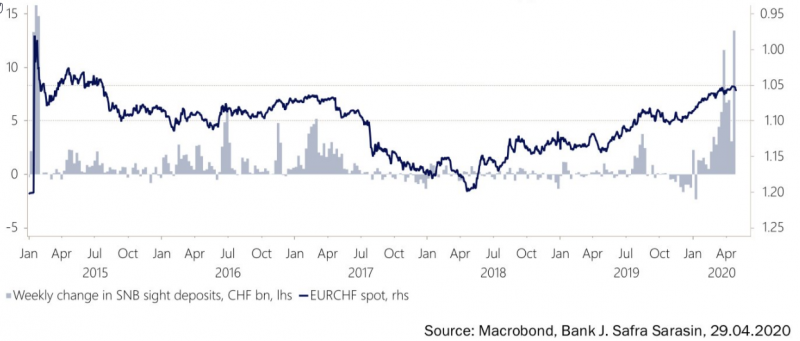
SNB Sight Deposits: decreased by 5.7 billion francs compared to the previous week
-
SNB’s Chairman Schlegel: A few months of negative inflation wouldn’t be a problem
-
2025-07-31 – Interim results of the Swiss National Bank as at 30 June 2025
-
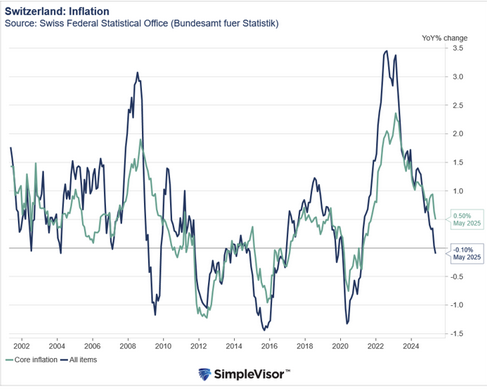
SNB Brings Back Zero Percent Interest Rates
-
Hold-up sur l’eau potable (2/2) : la supercherie de « l’hydrogène vert ». Par Vincent Held
Main SNB Background Info

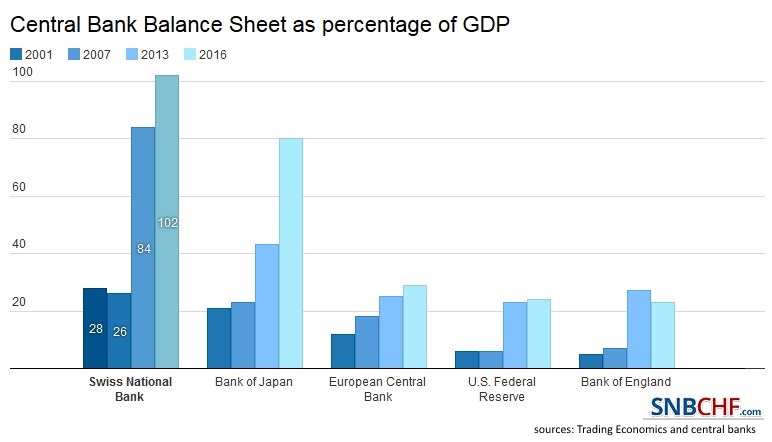
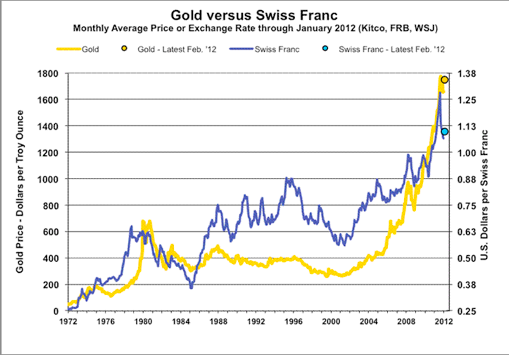

Featured and recent
-
 Auswandern mit Familie – Deine Checkliste #thorstenwittmann #finanzstrategien #freiheit #auswandern
 -
 Trumps Außenpolitik: Strategie oder Wahnsinn?
 -
 The Bear Market Hiding Beneath The Calm Surface
 -
 The Dollar’s Plumbing: Conspiracy Vs. Data
 -
 Neuer Schufa Score: Warum mir 201 Punkte fehlen
 -
 “Ölpreis bis zu 300 USD möglich“ – die Welt wird neu aufgeteilt | Währungsexperte Jürgen Wechsler
 -
 Ras Laffan getroffen – beginnt jetzt die globale Energiekrise?
 -
 What central banks are really signalling with their record gold purchases
 -
 Öl, Gold & Aktien: Warum ich jetzt absolut optimistisch bleibe
 -
 Deep Fakes erkennen – aber wie? | Ernst Wolff