







On the Investment News Network with Charlotte McLeod, Dr. Jonathan Newman presents a primer on Austrian economics.
Read More »
Category Archive: 6b.) Mises.org
When Corporations Resist the State: Ethics, AI, and the Limits of Government Power
What happens when a corporation resists a government edict because company leaders believe the policy to be morally wrong? The ordeal of Anthropic is a current case in point.
Read More »
Read More »
The Myth that Won’t Die: “War is Good for the Economy”
One of the legacies of Keynesian thought is the belief that war is “good for the economy.” While war may help enable employment, nonetheless, its overall legacy is destructive, and even the jobs war “creates” are economically undesirable.
Read More »
Read More »
The Myth that Won’t Die: “War is Good for the Economy”
One of the legacies of Keynesian thought is the belief that war is “good for the economy.” While war may help enable employment, nonetheless, its overall legacy is destructive, and even the jobs war “creates” are economically undesirable.
Read More »
Read More »
Gold Whiplash and the Petrodollar
Gold and silver whip around with war and liquidity stress, while the Fed quietly rolls out “emergency” support. Mark Thornton explains what’s driving the moves.
Read More »
Read More »
Barter, Media of Exchange, and Colonial America
Despite the claims of the chartalists, early American monetary history tells a much different story than one falsely claiming state-issued fiat money undergirded the colonial economy. In fact, much of the historical evidence illustrates Menger’s monetary theory.
Read More »
Read More »
The Ideological Impregnation of Thought
However one may turn the matter, one cannot discover any reason why an ideological distortion of truth should be more useful to the bourgeoisie than a correct theory.
Read More »
Read More »
Barter, Media of Exchange, and Colonial America
Despite the claims of the chartalists and modern monetary theory advocates, early American monetary history tells a much different story. In fact, much of the historical evidence illustrates Menger’s theory.
Read More »
Read More »
Why the Post Office and Non-Profits Share a Socialist Calculation Problem
Government entities like the Postal Service operate in a world of market prices, so they are not fully socialist. However, they still are subject to the limitations of socialist calculation problems.
Read More »
Read More »
The Golden Rule
In this week’s Friday Philosophy, Dr. David Gordon reviews Joseph Salerno’s Money, Sound and Unsound, and still finds it golden.
Read More »
Read More »
Why Naive, Pro-Democracy Classical Liberalism Doesn’t Work
In this lecture from the 2026 Libertarian Scholars Conference, Ryan McMaken looks at how the old classical liberal program of democracy and constitutions has failed, and why we need a more realist view of the state and its many crimes.
Read More »
Read More »
Roger Garrison: Pioneer of Digital Pedagogy at the Dawn of the Internet Age
A tribute to the late Roger W. Garrison (1944–2026) was delivered at the opening reception of the Austrian Economics Research Conference (AERC) in Auburn, Alabama on March 19, 2026.
Read More »
Read More »
The Duke Faculty and Administration Damaged the Intellectual Foundations of Higher Education
By opposing justice and throwing aside the facts of hard science, the Duke faculty and administration damaged all of higher education during the infamous lacrosse hoax.
Read More »
Read More »
There Is No Property-Rights Case for Birthright Citizenship
The process of naturalization is a government-created "right" with no basis in property rights. In other words, there is no libertarian case for birthright citizenship.
Read More »
Read More »
Why the US Regime Pretends Israel’s Nuclear Weapons Don’t Exist
The existence of the arsenal makes the State of Israel ineligible for US aid under US law. This is a problem for the US regime which exploits Americans to send military aid to the State of Israel.
Read More »
Read More »
The Duke Faculty and Administration Damaged the Intellectual Foundations of Higher Education
By opposing justice and throwing aside the facts of hard science, the Duke faculty and administration damaged all of higher education during the infamous lacrosse hoax.
Read More »
Read More »
“My Favorite Thing is to Take the Oil”
It's unknown what Trump thinks is the real reason for the current war with Iran, but stealing the oil is perhaps on the list, right after bombing the country "back to the stone ages."
Read More »
Read More »
The Hypocrisy of Western “Universal Values”
The original western values such as juridical equality, political freedom, natural rights, and religious tolerance are being co-opted into a system of “positive” rights that are socially and morally destructive.
Read More »
Read More »
Trump Is Right on Birthright Citizenship
On this episode of Power and Market, Ryan, Connor, and Tho discuss Pam Bondi being fired, the SCOTUS taking up Trump's executive order on birthright citizenship, and the difference between realist and naive libertarians.
Read More »
Read More »
Corruption in the System
Government corruption isn’t an anomaly. It is part of the system itself. We should expect government to be corrupt. Free markets are the antidote to this corruption.
Read More »
Read More »
 On Swiss National Bank
-
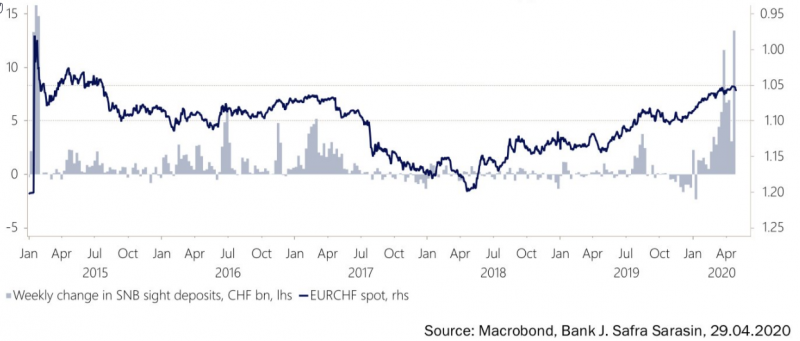
SNB Sight Deposits: decreased by 2.2 billion francs compared to the previous week
-
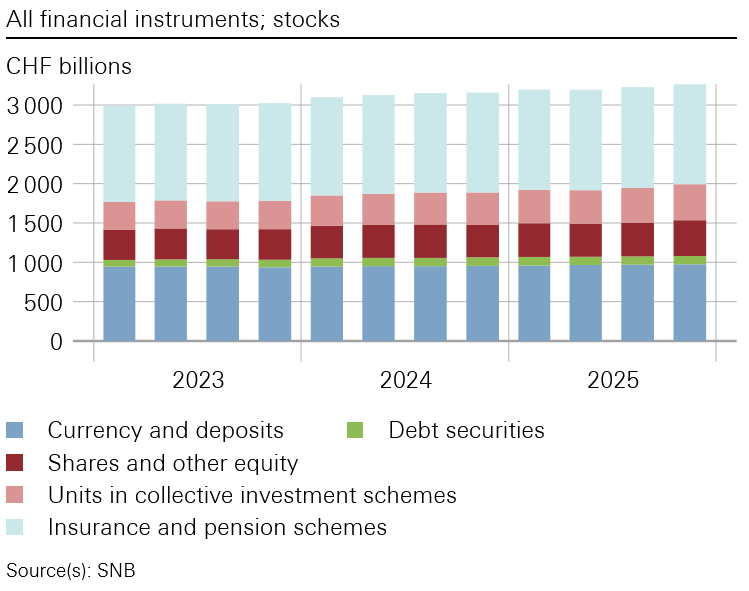
Household wealth in 2025
-
Heads up for NZD and CHF traders, RBNZ Gov Breman and SNB Chair Schlegel to speak
-
Swiss franc appreciation has led to tighter monetary conditions – SNB minutes
-
SNB’s Chairman Schlegel: A few months of negative inflation wouldn’t be a problem
Main SNB Background Info


Featured and recent
-
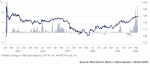 SNB Sight Deposits: decreased by 2.2 billion francs compared to the previous week
 -
 Corrections vs. Bear Markets: Why 20% Declines Are Obsolete
 -
 -40 Kilo! Ricarda Lang feiert Abnehmerfolg! Das Internet feiert!
 -
 Steuerrecht digitalisieren mit KI – eine gute Idee?
 -
 Why Switzerland is launching a charm offensive in Southeast Asia
 -
 Ex-Raiffeisen bank CEO fined for tax evasion
 -
 The price of gold matters, but availability matters more.
 -
 FATAL: EU Chefdiplomatin blamiert ganz Europa! China außer sich!
 -
 India’s situation shows why physical gold is different from paper exposure.
 -
 ZUGRIFF auf dein Vermögen: So schützen sich INSIDER