Professor Bagus concludes his arguments regarding the effects of the hypothetical close of Argentina’s central bank.
Read More »2025-12-02






2025-12-02
Professor Bagus concludes his arguments regarding the effects of the hypothetical close of Argentina’s central bank.
Read More »2025-11-18
2025-11-10
Philipp Bagus responds to Hülsmann’s prior response. The debate is over whether closure of Argentina’s central bank would cause an inflationary crisis.
Read More »2025-11-03
The debate regarding the would-be effects of the closure of Argentina’s central bank continues.
Read More »2024-07-03
What is the Mises Institute?
The Mises Institute is a non-profit organization that exists to promote teaching and research in the Austrian School of economics, individual freedom, honest history, and international peace, in the tradition of Ludwig von Mises and Murray N. Rothbard. Non-political, non-partisan, and non-PC, we advocate a radical shift in the intellectual climate, away from statism and toward a private property order. We believe that our foundational ideas are of permanent value, and oppose all efforts at compromise, sellout, and amalgamation of these ideas with fashionable political, cultural, and social doctrines inimical to their spirit.
Read More »2024-04-17
My latest contribution to the debate on Milei´si banking reform and the 100% reserve ratio has received a response in form of a video by Juan Ramón Rallo who defends a fractional reserve banking system based on real bills. The video is mainly about the question of whether fractional reserve banking necessarily triggers an Austrian business cycle, given that fractional reserves allow banks to create new money (fiduciary media) and channel it into the loan market, thus lowering interest rates. Rallo argues that the credit expansion of fractional reserve banks poses no problems, if it is based on real bills and is even beneficial because it avoids deflation and a change in relative prices.In the following, I would like to make a few brief comments on his argument and the example he employs in
Read More »2024-04-11
Unsurprisingly, Javier Milei´s monetary reform plans are discussed intensively in libertarian circles. For the first time, a real libertarian reform of the monetary and financial system is in sight. One of the main issues of contentions is Milei´s plan to introduce a 100% reserve banking system. Such a move would be truly revolutionary. The Argentinian banking system would be sound and stable. Harmful credit expansion would be ruled out. Unfortunately, but perhaps not surprisingly fractional reserve bankers have come out to criticize Milei´s plan.In this context, we find a video by the Spanish economist Juan Ramón Rallo which he has produced in response to a brief note by Jesús Huerta de Soto, responding in turn to another video Rallo where Rallo criticizes the 100% reserve ratio. Huerta
Read More »2024-04-02
There have been criticisms against Javier Milei´s plan to install a 100% reserve banking system in Argentina. One of the fears is that in a 100% reserve banking system there would be price deflation which would be detrimental to the economy. I have written about the myth that falling prices are to be fought against with inflation of the money supply in my book “In Defense of Deflation” which has recently been recommended by Javier Milei on X.Now Professor Huerta de Soto has expressed himself on the matter. His comments on dollarization in Argentina, the necessity of a 100% reserve ratio to prevent bank runs, and Milei´s plans are worth reading by everyone interested in the matter.Jesús Huerta de Soto:Let me make two comments on the monetary reform plan of Javier Milei: 1.- Dollarization
Read More »2022-01-21

Recently, there has been a debate in Germany on the constitutionality of additional government borrowing of €60 billion. The borrowing is debated because Germany has a constitutional debt brake. The debt brake limits the possibility of the government to indebt itself and pushes it toward a balanced budget in normal times.
Read More »2021-12-21

According to many economists, we need the state to provide public goods.2 The assertion seems to be so crystal-clear that it is not even worth discussion in the mainstream. One typical and popular example of public goods in Germany is the case of dikes or levees.
Read More »2020-07-08

On June 29, the German parliament reacted as parliaments normally do when there is a problem, namely, by allowing the government to spend more. In order to respond to the economic difficulties due to the corona epidemic and the government restrictions, it passed a typical Keynesian stimulus package in order to boost aggregate demand.
Read More »2020-03-25

The last days and weeks of the coronavirus epidemic give an interesting insight into the human psyche. Elementary liberties are restricted all over the world, such as the freedom of movement or private property. Yet most people accept these restrictions without blinking, as the state declares their indispensability.
Read More »2017-10-10

Andreas Marquart and Philipp Bagus (see their mises.org author pages here and here) were recently interviewed about their new book by the Austrian Economics Center. Unfortunately for English-language readers, the book is only available in German. Nevertheless, the interview offers some valuable insights.
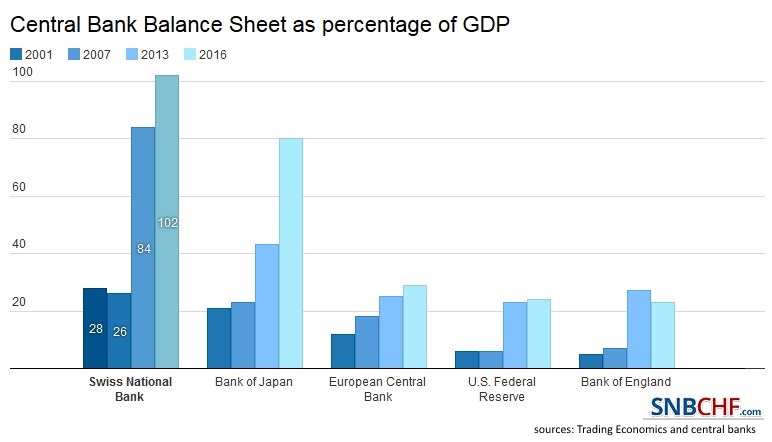
Read More » On Swiss National Bank
 Main SNB Background Info