



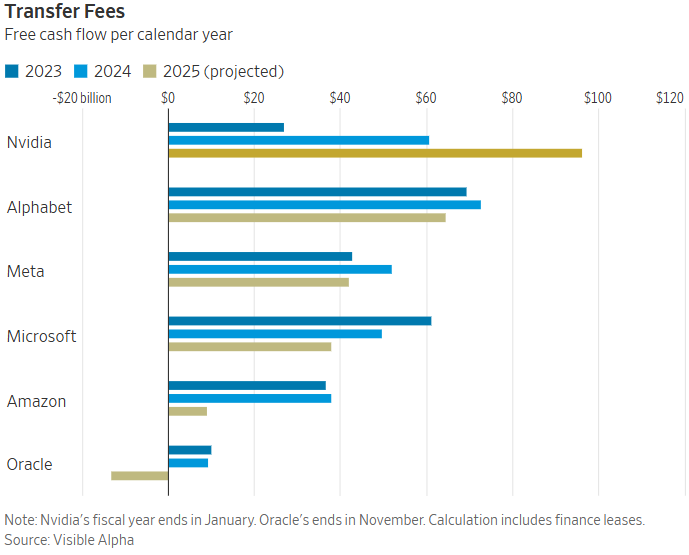
Nvidia’s explosive growth has created a new challenge: how to deploy an unprecedented amount of cash in a world where scale itself has become a regulatory constraint. The chart below, from The Wall Street Journal, illustrates Nvidia’s massive free cash flow growth. However, traditional uses of its cash, such as large acquisitions, are increasingly difficult given heightened scrutiny around AI infrastructure and market dominance. Nvidia’s cash strategy is now being shaped as much by regulation as by opportunity.
That dynamic helps explain Nvidia’s recent $20 billion “nonexclusive licensing agreement” with AI startup Groq. Rather than pursuing a full acquisition, Nvidia structured the deal to gain access to talent and inferencing technology without triggering the regulatory hurdles that would likely accompany an outright takeover. In effect, Nvidia’s cash strategy has shifted toward creative partnerships and licensing arrangements that avoid antitrust flashpoints.
Regulators, however, may find themselves under growing political pressure to show flexibility. Global competition for AI chip leadership is intensifying, particularly as the U.S. seeks to maintain an edge over China. Aggressively constraining Nvidia’s ability to invest, hire, or partner risks undermining America’s position in a strategically critical industry. While antitrust scrutiny is unlikely to disappear, the geopolitical importance of AI chips could lead to more lenient enforcement at the margins.
For investors, Nvidia’s cash strategy is less about financial excess and more about preserving its competitive moat. As AI workloads increasingly shift from training to inferencing, access to specialized technology and engineering talent will matter as much as raw compute. Nvidia’s ability to navigate regulation while deploying capital effectively may ultimately determine how long it can sustain its dominance in the AI ecosystem.
What To Watch Today
Earnings
- No earnings releases today
Economy

Market Trading Update
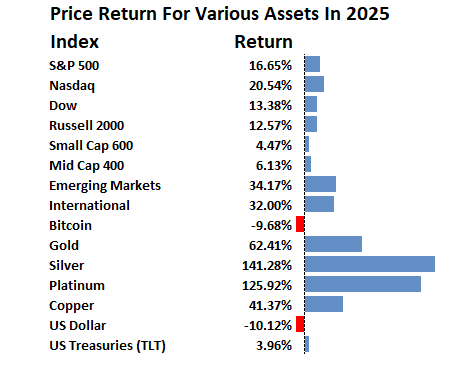
First, let me wish you a very Happy (and prosperous) New Year. As discussed in our previous commentary, 2025 was indeed another prosperous year for investors. The table below shows the price returns for various asset classes. While precious metals skew the chart somewhat, only Bitcoin and the US dollar noted declines for the year. (Not everyone can be a winner.)
Of course, as we look forward into 2026, everyone is asking what the most significant risk to look out for is. A recent survey of Deutsche Bank's investors revealed the following.
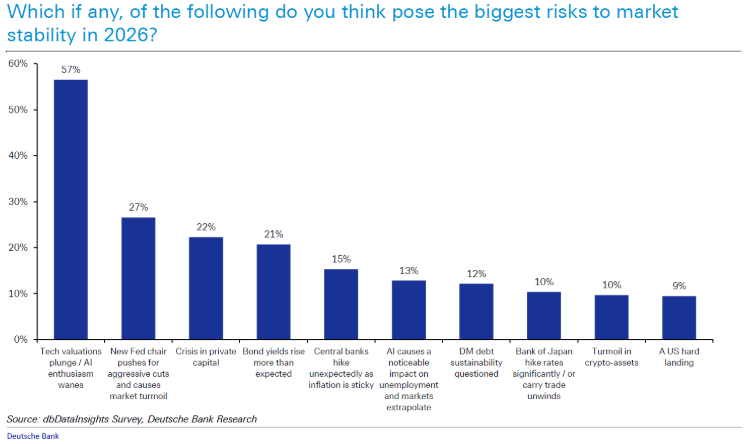
Which one will it be that "derails the apple cart?"
The most likely answer is that it will be none of them. This is because when investors are monitoring some risk, they make portfolio changes to hedge against that risk. Therefore, that "risk" becomes priced into the market. Most likely, the risk that eventually manifests itself will be something that no one is expecting. That "surprise" is what causes markets to buckle. Consider Trump's tariff announcement last March; investors had to materially reprice the markets for a rapid change in forward expectations of earnings.
Furthermore, investors have become extremely complacent about above-average returns. Take a look at the total annual returns of the market since 2019.
- 2019 +31.2%
- 2020 +18.0%
- 2021 +28.5%
- 2022 -18.0%
- 2023 +26.1%
- 2024 +24.9%
- 2025 +17.8%
While those returns have been very healthy, they are detached from the underlying drivers of economic growth, which is why valuations have risen so much in recent years.
My best guess is that 2026 will see a fairly decent reversal in the asset classes that performed the best in 2025 as economic growth slows, and money will likely rotate to more defensive areas of the market.
But maybe not. Perhaps 2026 will see a continued surge in rampant investor speculation.
Anything is certainly possible; however, from a prudent portfolio management perspective, erring to the side of caution will likely help you weather whatever sudden storms appear next year.

Are Small and Mid-cap Stocks Poised for a Comeback?
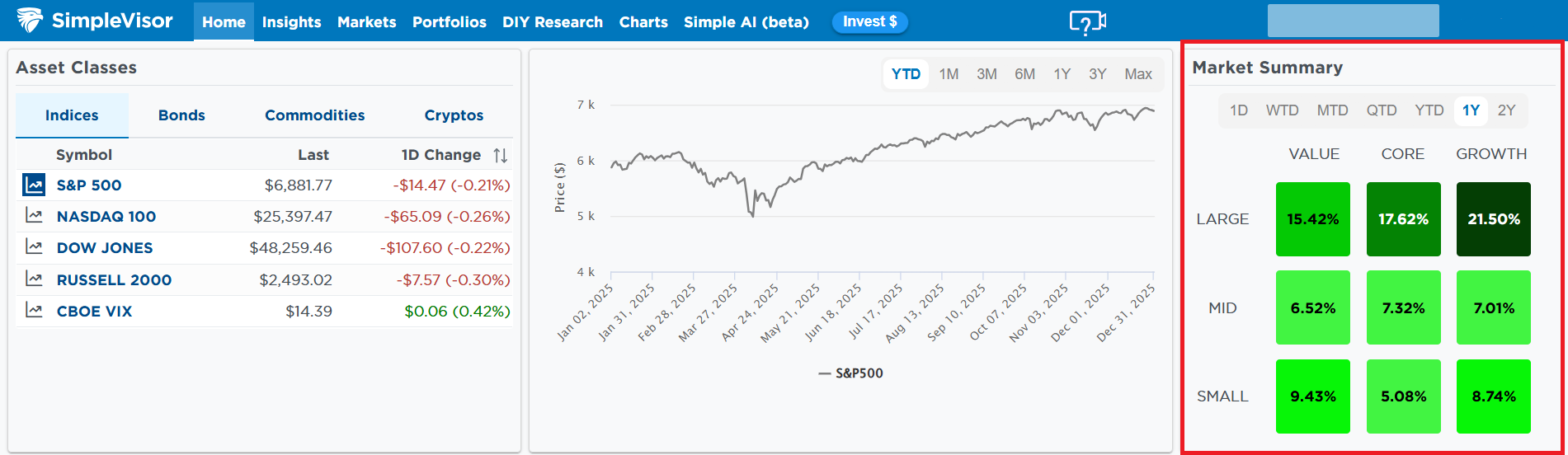
We kick off 2026 with a review of 2025 equity performance, focusing on size and style factors. The SimpleVisor graphic below shows that large-cap stocks dominated across the board in 2025. Within the large-cap size cohort, growth stocks outperformed value stocks significantly. That’s not unusual given the incredible market performance over the past year. What is unusual, however, is the degree to which large-cap stocks outperformed small- and mid-cap stocks last year. This raises the question: Will small- and mid-cap stocks experience a resurgence this year, or will the performance gap continue expanding?
Market Volatility Strategies for Investors
In volatile periods, investment psychology can hijack good judgment. Loss aversion makes declines feel unbearable. Recency bias convinces investors that what’s happening now will define future results. Add constant commentary about the Dow Jones and “potential winners,” and you get emotional investing pressure from every angle.
This is where risk averse investors are especially vulnerable. When fear spikes, many investors abandon their originally invested plan and shift into cash at the wrong time. Then they hesitate to re-enter, which can damage long term returns.
The antidote is not bravado. It is structure. A well designed plan reduces the odds of reactive investment decisions during greater volatility.
Tweet of the Day
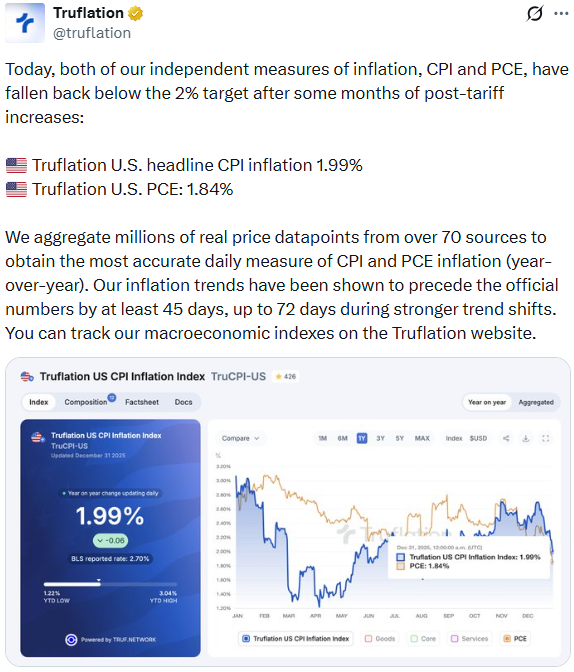
“Want to achieve better long-term success in managing your portfolio? Here are our 15-trading rules for managing market risks.”
Please subscribe to the daily commentary to receive these updates every morning before the opening bell.
If you found this blog useful, please send it to someone else, share it on social media, or contact us to set up a meeting.
The post Nvidia’s Cash Strategy Reflects Regulatory Landscape appeared first on RIA.
Full story here Are you the author?You Might Also Like
 Year-End Rally Begins
2025-11-29
🔎 At a Glance 💬 Ask a Question Have a question about the markets, your portfolio, or a topic you’d like us to cover in a future newsletter? 📩 Email: [email protected]🐦 Follow & DM on X: @LanceRoberts📰 Subscribe on Substack: @LanceRoberts We read every message and may feature your question in next week’s issue! 🏛️ …
 The K Shaped Economy In One Graph
2025-11-28
Tuesday’s weak Consumer Confidence report was a good reminder of why some economists are calling our economy the K shaped economy. The Conference Board Consumer Confidence Index fell 6.8 points to 88.7 in November, below expectations of 93. Moreover, it sits at levels similar to those of early 2020, when the pandemic shuttered the economy. …
Tags: Featured,newsletter