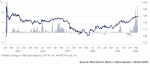
Annual consumer-price growth was zero in April, Switzerland’s statistics office said on Monday. That’s down from 0.3% in March and weaker than predicted by all but one analyst in a Bloomberg survey of economists.
Inflation was pushed down by hotels and holiday accommodation, while clothing and vegetables were a driver, according to the government agency.
The core gauge – which excludes fresh and seasonal products as well as energy – also slowed more than anticipated, dropping to 0.6%.
The slowdown was due to imported goods – particularly energy and fuels – dragging the gauge down, according to Arthur Jurus, an economist at Oddo BHF. The only major source of structural consumer-price growth was residential rents, he added, without which the reading would have been negative.
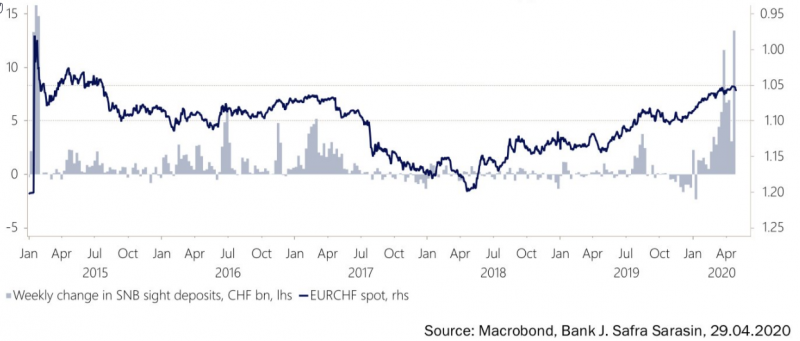
April saw the franc appreciate against all major peers as United States President Donald Trump’s on-again, off-again tariffs and fiscal policies pushed investors to havens like the Swiss currency. The country has a track record of weak inflation and the Swiss National Bank (SNB) expects it to average just 0.4% this year.
SNB president Martin Schlegel has warned that it could dip below zero in some months.
Less economic activity could also weigh on prices after Swiss manufacturing on Friday showed the biggest drop in four years due to the twin shock of tariffs and the strong franc. The government previously dropped its growth forecast for this year.
With low energy prices and the franc weighing on inflation, it becomes more likely that next month’s reading will be negative, said Maxime Botteron, an economist at UBS.
“Against this backdrop, we expect the SNB to lower its policy rate to 0% at its June meeting,” he added.
Borrowing cost decision
Weaker consumer prices have already forced the central bank to bring down its benchmark by 150 basis points in five consecutive steps to just 0.25%, with some economists now saying that a return to sub-zero interest rates is possible.
The next rate decision – on June 19 – may be too soon for such a move as the SNB will only have one additional inflation reading by then and Trump’s current reprieve in the trade war won’t be over before early July.
More
Swiss house prices rise 4% in a year
This content was published on
The cost of buying a home in Switzerland rose by 4.1% year-on-year in the last quarter and by 0.7% compared to the previous three months.
Still, markets are fully pricing in a 25 basis-point cut at that meeting, bringing the policy rate to 0%. Price growth is also below the central bank’s most recent forecast, further strengthening the case for lowering borrowing costs.
Schlegel could face questions on that when he speaks at a Zurich conference on Tuesday.
At 2.2% in April, inflation in the euro area surrounding the country is rising significantly quicker than in Switzerland. Based on the European Union’s harmonised measure, Swiss prices saw a rise of 0.3% in the period.
Based on the weak reading, Bank J Safra Sarasin’s chief economist Karsten Junius even expects a discussion about a big half-point cut ahead of officials’ meeting next month. Still, he sees such as unlikely as the origin of the franc’s appreciation is “clearly political” and as such could falter very quickly again.
“The SNB shouldn’t panic about 0% inflation,” he said. “We have been there before and we will get out of there as well.”
This content was published on
An unstable glacier above the Swiss village of Blatten has stopped breaking up, but there is still no question of lifting a landslide alert.
Swiss education chief wants fewer mobile phones in schools
This content was published on
The new head of the Swiss cantonal education authority would like to ban mobile phones in schools, apart from use in lessons.
Swiss regulator criticises banks for being lax with mortgages
This content was published on
Switzerland's financial watchdog has condemned a tendency for banks to apply less stringent internal guidelines for granting mortgage loans.
Uber drivers subject to the law on services in Geneva
This content was published on
The Federal Court has ruled against a Geneva-based company, a partner of Uber, which challenged its liability under the law on the hiring of services.
Swiss nuclear power plants are not at risk from flooding
This content was published on
According to an inspection by the Swiss Federal Nuclear Safety Inspectorate, the safety-relevant buildings of the Swiss nuclear power plants are not at risk.
SWI swissinfo.ch – the international service of the Swiss Broadcasting Corporation (SBC).
Since 1999, swissinfo.ch has fulfilled the federal government’s mandate to distribute information about Switzerland internationally, supplementing the online offerings of the radio and television stations of the SBC. Today, the international service is directed above all at an international audience interested in Switzerland, as well as at Swiss citizens living abroad.