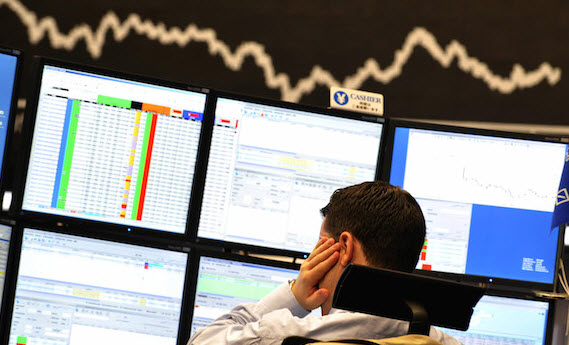
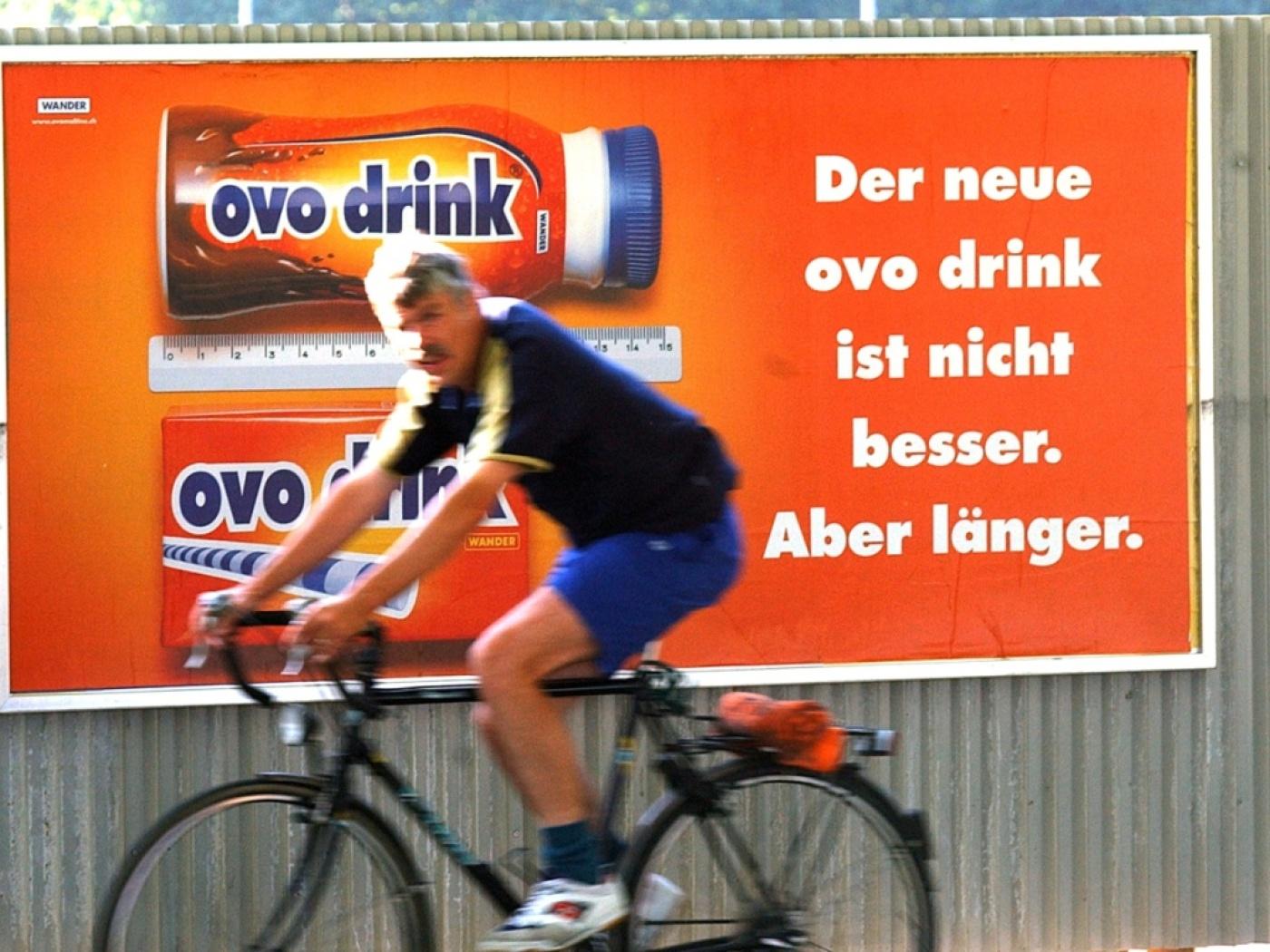
Roche and Novartis lost up to 3% in Zurich on Monday morning.
Keystone / Georgios Kefalas
Generated with artificial intelligence.
US President Trump wants to make medicines, some of which are exorbitantly expensive, cheaper in the US. This would mean huge losses for drugmakers, including those in Switzerland.
Shares in the pharmaceutical sector have come under heavy pressure worldwide due to concerns about profitability in the US business. US President Donald Trump wants to lower prices for prescription drugs in the USA and is therefore targeting the entire industry.
One of the “most consequential decrees” in US history will be signed on Monday, the Republican announced on his online platform Truth Social. Trump had already held out the prospect of an “earth-shattering” announcement last week. US media had already speculated that it could be about drug prices.
The fact that Trump now wants to get serious has put pharmaceutical shares under heavy pressure internationally: the losses are likely to extend to the US stock markets via Japan and Europe. In European trading on Monday, Sanofi and Novo Nordisk were hit particularly hard with losses of almost 6%. Shares in AstraZeneca and GSK fell by up to 4% in London. Roche and Novartis lost up to 3% in Zurich. Pfizer was down 2.3% in pre-market trading in New York.
More
US tariffs pressure Swiss pharma powerhouse
This content was published on
Looming US pharma tariffs could challenge the status quo in pharmaceutical hubs like Switzerland as investment shifts to the US.
Trump wants to force pharmaceutical companies to accept internationally comparable prices. He sees his country at a disadvantage due to high prices. In the US, there is no central government price regulation that applies to all medicines. The pharmaceutical industry plays the most important role in the question of how much a drug costs – government influence is limited. This sometimes leads to enormously high prices – in an international comparison, many drugs in the US are significantly more expensive.
The world wonders why prescription drugs are so much more expensive in the US than in other countries around the world, even though they are produced in the same laboratory by the same company, Trump wrote. He promised that drug prices in the US would fall by 30-80% “almost immediately”.
Translated from German by DeepL/jdp
How we work
We select the most relevant news for an international audience and use automatic translation tools such as DeepL to translate them into English. A journalist then reviews the translation for clarity and accuracy before publication. Providing you with automatically translated news gives us the time to write more in-depth articles. The news stories we select have been written and carefully fact-checked by an external editorial team from news agencies such as Bloomberg or Keystone.
Did you find this explanation helpful? Please fill out the short survey below to help us understand your needs.
External Content
Don’t miss your chance to make a difference! Take our survey and share your thoughts.
More
Unstable Swiss glacier still cause for concern
This content was published on
An unstable glacier above the Swiss village of Blatten has stopped breaking up, but there is still no question of lifting a landslide alert.
Swiss education chief wants fewer mobile phones in schools
This content was published on
The new head of the Swiss cantonal education authority would like to ban mobile phones in schools, apart from use in lessons.
Swiss regulator criticises banks for being lax with mortgages
This content was published on
Switzerland's financial watchdog has condemned a tendency for banks to apply less stringent internal guidelines for granting mortgage loans.
Uber drivers subject to the law on services in Geneva
This content was published on
The Federal Court has ruled against a Geneva-based company, a partner of Uber, which challenged its liability under the law on the hiring of services.
Swiss nuclear power plants are not at risk from flooding
This content was published on
According to an inspection by the Swiss Federal Nuclear Safety Inspectorate, the safety-relevant buildings of the Swiss nuclear power plants are not at risk.
SWI swissinfo.ch – the international service of the Swiss Broadcasting Corporation (SBC).
Since 1999, swissinfo.ch has fulfilled the federal government’s mandate to distribute information about Switzerland internationally, supplementing the online offerings of the radio and television stations of the SBC. Today, the international service is directed above all at an international audience interested in Switzerland, as well as at Swiss citizens living abroad.