



Tax‑Efficient Investing: Keep More of What You Earn
Growing wealth is only part of the story. Keeping it, especially after taxes, is where strategy makes the biggest difference. For high-net-worth investors, tax drag can be a persistent leak in performance, especially when taxable income and capital gains stack up inside the wrong accounts.
Tax-efficient investing strategies are essential if you want your investment returns to translate into real, retained wealth. Whether you’re managing retirement accounts, brokerage accounts, or complex family assets, structuring your investments with taxes in mind is a powerful way to improve long-term outcomes. At RIA Advisors, we integrate tax efficiency into every client portfolio, not as a side note, but as a core planning principle.
Key Takeaways:
- Tax-efficient investing reduces unnecessary tax burden and helps preserve more of your net returns.
- Proper asset location across taxable accounts and tax-deferred accounts is essential.
- Tax-loss harvesting can offset capital gains and reduce overall federal income tax liability.
- RIA Advisors develops personalized investment strategies to help clients minimize taxes and retain more wealth over time.
How Tax-Efficient Investing Strategies Reduce Tax Drag
Many investors assume that a 7% portfolio return equals 7% more wealth. But once the federal income tax, state and local taxes, and short term capital gains taxes apply, that number often shrinks. This tax burden, known as tax drag, compounds across the years if left unaddressed.
Investment income, interest payments from taxable bonds, and gains from mutual funds all count as taxable income, and depending on your income tax bracket, that can result in a sizable tax bill each year. Over time, these recurring hits can erode your wealth more than market volatility ever does.
The solution? Implementing tax-efficient investing strategies that reduce friction between your portfolio and the Internal Revenue Service.
Tax-Efficient Investing Strategies That Create Long-Term Value
Successful investors don’t just track performance, they measure what’s retained. Here are four tax-efficient investing methods we use at RIA Advisors to help clients hold onto more of their investment gains.
1. Asset Location Within Investment Accounts
Smart asset allocation is just the beginning; asset location is where tax efficiency takes shape. By strategically placing different asset classes in specific account types, you can reduce taxable income and maximize tax benefits.
For example, tax-inefficient investments like REITs, taxable bonds, or high-dividend stock funds may be better housed in tax-deferred accounts such as a traditional IRA or employer sponsored retirement plan. These shield ordinary income from immediate taxation and allow for tax deferral on compounding growth.
Conversely, tax-efficient investments—such as municipal bonds, index funds, and certain exchange traded funds—are often better suited for taxable accounts. Their lower turnover and reduced distributions help minimize current income tax exposure.
Matching the right capital asset with the right type of account can significantly reduce your overall tax liability without changing your risk profile or long-term objectives.
2. Tax-Loss Harvesting: A Powerful Tax Strategy for Down Markets
Markets fluctuate, but savvy investors can use that volatility to their advantage. Tax-loss harvesting involves selling investments that have declined in value to realize capital losses, which can then offset capital gains elsewhere in the portfolio.
This technique helps reduce your net capital gains for the year. If your capital losses exceed your gains, you can also use up to $3,000 of that net capital loss to offset ordinary income; any remainder can be carried forward to future tax years. This makes tax-loss harvesting especially effective in high tax bracket scenarios, where even small offsets can lead to meaningful reductions in federal taxes owed.
It’s important to avoid triggering the wash sale rule, which disallows the deduction if you buy the same investment (or one substantially identical) within 30 days before or after the sale. At RIA Advisors, we monitor portfolios continuously to capture harvesting opportunities while keeping your investment strategy intact.
3. Using Capital Gains to Your Advantage
Capital gains come in two types: short term and long term. Short term capital gains (on assets held less than a year) are taxed at the ordinary income tax rate, which can be as high as 37% for top earners. Long term capital gains, however, are typically taxed at 15% or 20%, depending on income.
Proper planning around when to sell investments can mean the difference between paying 20% or nearly double that. We help clients defer gains strategically, gift appreciated assets to reduce capital gains tax, and occasionally offset capital gains with harvested losses, all while staying aligned with market conditions and broader financial goals.
For those filing married filing separately or with income exceeding certain thresholds, managing net capital gains efficiently becomes even more critical to avoid additional Medicare surtaxes or state-level exposure.
4. Selecting Investments With Long-Term Efficiency in Mind
Frequent trading creates frequent taxable events. Actively managed mutual funds often distribute capital gains and dividends throughout the year, even when the fund underperforms. These can increase your federal income tax liability and surprise investors with higher year-end tax bills.
Low-turnover vehicles like broad-market exchange traded funds and index funds tend to generate fewer taxable distributions. These can serve as the core of a tax-efficient investing strategy, especially in taxable accounts where avoiding annual surprises matters.
By choosing investment accounts and products that naturally minimize taxes, RIA Advisors helps reduce exposure while still capturing meaningful returns. This isn’t about sacrificing growth; it’s about structuring growth to stay with you longer.
Why Your Financial Advisor Should Prioritize Tax Efficiency
Tax efficiency doesn’t happen in isolation. Our team of financial advisors analyzes each client’s complete financial picture—including their tax bracket, types of investment accounts, and long-term goals—to build plans that manage both risk and federal income tax exposure.
We coordinate closely with CPAs and tax advisors to ensure strategies align with current tax laws and upcoming changes. Whether you’re considering a Roth conversion, adjusting your retirement accounts, or balancing income from multiple entities, we’re here to structure your portfolio for clarity, performance, and minimized tax exposure.
Efficient Investing Means Keeping More of Your Gains
Efficient investing isn’t just about what goes up; it’s about what stays in your account after you pay taxes. Over decades, even modest improvements in tax efficiency can result in hundreds of thousands in preserved capital.
If your current advisor isn’t proactively evaluating tax liability or capital gains exposure, there may be money slipping through the cracks. At RIA Advisors, we believe your investment strategy should reflect your ambitions, not just your risk tolerance. That includes helping you plan smartly for the tax bill, not just the market cycle.
Ready to Build a More Tax-Efficient Portfolio?
Smart investing means more than chasing returns. It means understanding how taxes affect your progress and structuring your plan to reduce unnecessary costs.
Contact RIA Advisors today to schedule a confidential consultation and see how our tax-efficient investing approach can help you keep more of what you earn, now and into the future.
FAQs: Capital Gains, Taxes, and Smarter Strategies
What kinds of investments belong in tax-deferred accounts?
Investments that generate significant interest payments or ordinary income, such as taxable bonds or actively managed funds, are ideal for tax-deferred accounts like a traditional IRA.
How does tax-loss harvesting reduce taxes?
It allows you to offset gains with losses, reducing your net capital gains. If losses exceed gains, they can also offset up to $3,000 of ordinary income annually.
Are ETFs better than mutual funds for taxable accounts?
Often, yes. ETFs typically have lower turnover and use in-kind redemption strategies that help reduce capital gains distributions and tax exposure.
When should I sell investments to minimize capital gains tax?
Selling after holding for over a year may qualify you for the lower long term capital gains tax rate. Timing sales based on your current tax bracket also matters.
What role does my tax advisor play in investment planning?
Your tax advisor helps ensure your investment decisions align with your overall tax situation. We coordinate with tax professionals to optimize your plan across both disciplines.
Do tax-efficient strategies only benefit high-income investors?
No, but the tax savings become more significant as taxable income and investment gains increase. Everyone can benefit from intentional planning, especially when balancing multiple accounts.
The post Tax-Efficient Investing Strategies appeared first on RIA.
Full story here Are you the author?You Might Also Like
 Bull Market Genius Is A Dangerous Thing
2025-12-15
During extended upward-trending markets that reward risk-takers and punish caution, everyone is a “bull market genius.” That dynamic flips investor psychology and, over time, creates a false sense of control. As the market continues to climb, risk appears to vanish, and investors believe that nothing can go wrong, leading them to take on increasing levels …
 The DPI Link To Margin Debt
2025-12-08
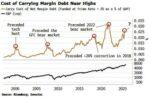
A recent article by Simon White, via Bloomberg, discussed the rising cost of margin debt for investors. While his analysis below compares the cost of debt to GDP, we will also consider a more critical comparison to disposable personal income (DPI). Here is Simon’s point. “Yet, where history does raise a red flag is if …
 Jobs Data From Alternative Sources May Drive Fed’s Next Move
2025-12-05
With the federal government shutdown delaying critical economic reports, the official jobs data remains incomplete. Last week, the Bureau of Labor Statistics (BLS) released the September jobs report. However, the October report, originally expected earlier this month, remains in limbo, potentially permanently. The reason is due to the shutdown, as the BLS was unable to …
 Leveraged ETFs: Yet Another Sign Of Rampant Speculation
2025-10-22
Not only is the market chasing the most speculative of assets, but it is employing record amounts of leverage to do so. Traditionally, investors use margin loans to gain leverage. More recently, however, leveraged ETFs allow investors to get leverage in one package. To wit, the graph below, courtesy of BofA, shows that there are …
 SRF: The Fed’s Newest Liquidity Backstop In Action
2025-10-20
In July of 2021, after the pandemic and the liquidity issues that arose in 2019, the Fed established a new liquidity backstop. This program, the Standing Repo Facility (SRF), allows financial institutions to borrow on a collateralized basis from the Fed. Unlike the Overnight Reverse Repurchase facility (ON RRP), which allows financial institutions to park …
 Rally Into Year-End: 3-Reasons To “Buy Dips”
2025-10-18
🔎 At a Glance 💬 Ask a Question Have a question about the markets, your portfolio, or a topic you’d like us to cover in a future newsletter? 📩 Email: [email protected]🐦 Follow & DM on X: @LanceRoberts📰 Subscribe on Substack: @LanceRoberts We read every message and may feature your question in next week’s issue! 🏛️ …
Tags: Featured,newsletter