










Tag Archive: Lance Roberts
Spotting Market Bubbles: Why History Says It’s Nearly Impossible
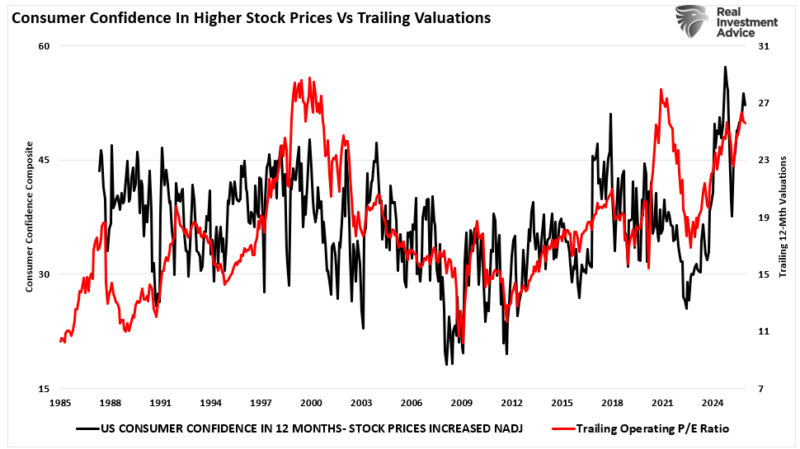
If you knew you were standing inside a stock market bubble, you wouldn't be standing in it for long. You'd sell. So would I, and so would everyone reading this. And if spotting market bubbles was something everyone could do in real time, the bubble couldn't form in the first place. That paradox is why … Continue...
Read More »
Read More »
Margin Debt Risk: The Ratios That Mislead Investors
Margin debt just set another record. In May 2026, investors owed their brokers a combined $1.42 trillion, the highest in history and a 53.7% jump from the prior year.1 Every time this number prints a new high, the same charts circulate: margin debt against GDP, against M2, against the total value of the market. They look authoritative. …
Read More »
Read More »
Record Retail Inflows: Where Is All The Money Coming From?
A couple of weeks ago, I showed Adam Taggart the following chart of record retail levels of household cash as a percentage of total financial assets. This chart is hard to square with the financial media narratives. For example, two stories ran side by side this month, and on the surface, they cannot both be … Continue reading...
Read More »
Read More »
The Technical Backdrop: When Flows Meet a Hawkish Fed
Here's the setup most investors are underrating right now. Over the next two weeks, the tape will trade on plumbing rather than fundamentals. We just cleared the largest options expiration in history. Quarter-end pension selling comes next, and then July 1 reopens the passive-money firehose into a market that already routes forty cents of every …
Read More »
Read More »
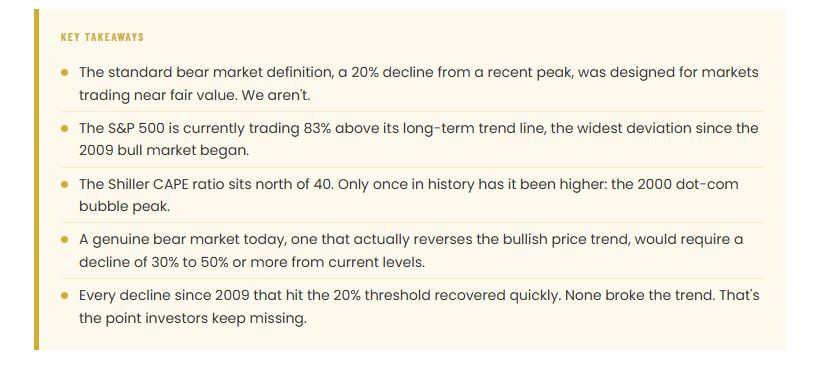
Corrections vs. Bear Markets: Why 20% Declines Are Obsolete
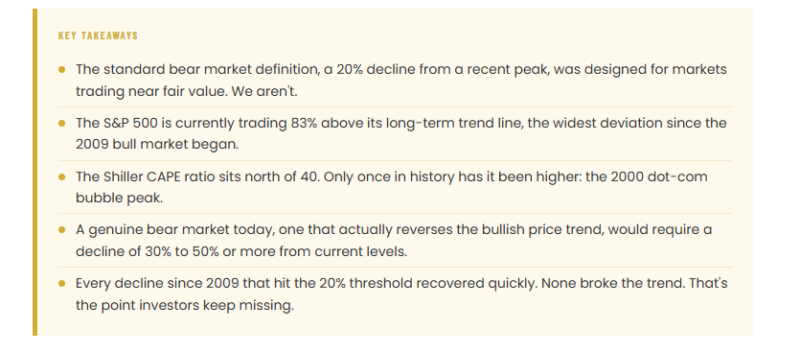
After three decades of watching market cycles play out from both sides of the trade, I've come to a simple conclusion: Wall Street's love of simple rules is one of the most dangerous aspects of investing. When stocks fall 10%, it's just a "correction." However, if they decline 20%, it's a "bear market." Simple, clean, …
Read More »
Read More »
Buffett Cash Hoard: Why $397 Billion Sits On The Sidelines
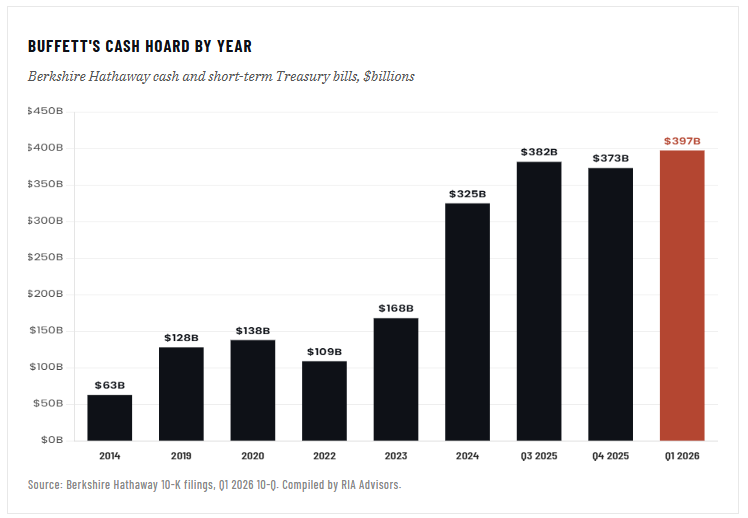
$397 billion. That's how much "Buffett cash" now sits on Berkshire Hathaway's balance sheet after Greg Abel's first quarter as CEO. Warren Buffett left $373 billion behind when he stepped down at the end of 2025. Three months later, after Abel's debut earnings report on Saturday, the hoard had grown by another $24 billion. The figure …
Read More »
Read More »
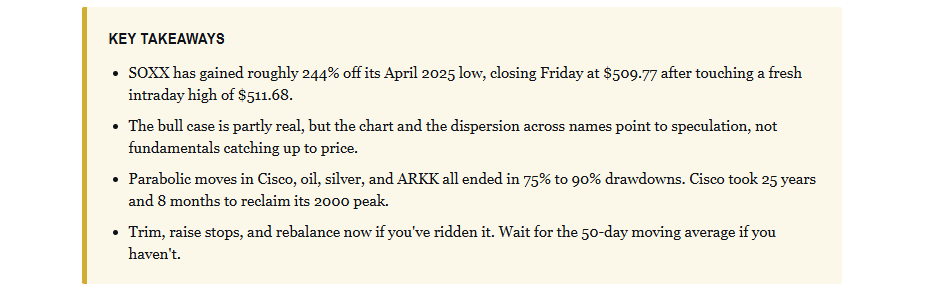
Parabolic Semiconductor Rally Is Pricing In 2028 Already
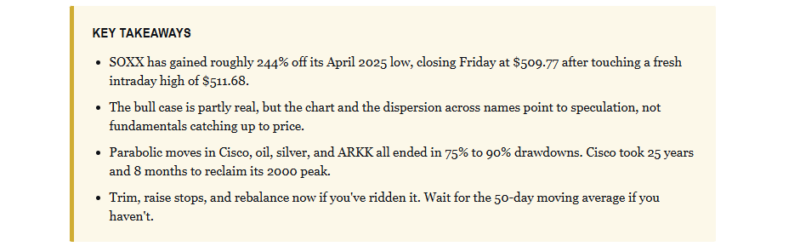
The parabolic semiconductor rally crossed a line this week. SOXX, the iShares Semiconductor ETF, closed Friday at $509.77 after touching a fresh intraday high of $511.68. That's a gain of roughly 244% from the April 2025 low of $148.31. Most of that move has been compressed into the last two months alone. Since mid-March, SOXX …
Read More »
Read More »
Market Correction Risk: Why Summer 2026 Looks Risky
Collapsing breadth. Stretched positioning. The worst seasonal window of the year. The worst year of the political cycle. And a war that won't end. Market correction risk is stacking up. The S&P 500 hit a fresh record high last week. The median stock in the index is sitting 13% below its 52-week peak. That divergence is …
Read More »
Read More »
Hormuz: Why Markets Are Shrugging Off The Oil Shock
As of this writing, the Strait of Hormuz remains effectively closed since February 28. Roughly 20% of the world's seaborne oil stopped moving through the chokepoint. The International Energy Agency described the event as "the largest supply disruption in the history of the global oil market." Gulf producers shut in nearly 9 million barrels a day …
Read More »
Read More »
Market Lesson: Why Panic Is A Costly Mistake
The Iran shock erased 18% from valuations and fully recovered in two weeks. Investors who panicked missed it all. Here's what the market lesson is about: risk management, behavior, and what to do with your portfolio right now. The stock market selloff between February 28 and April 14 produced one of the more instructive market …
Read More »
Read More »
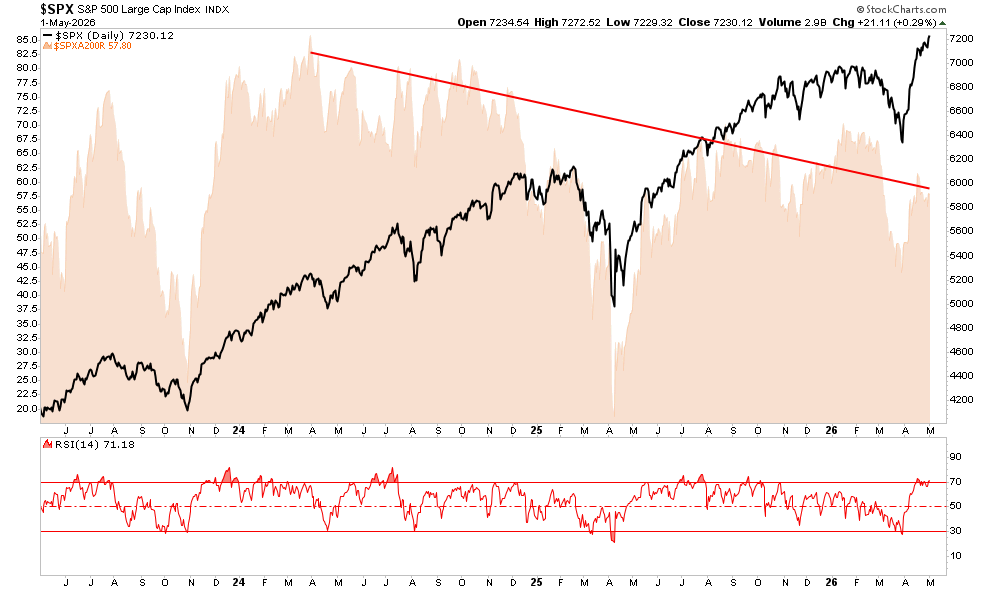
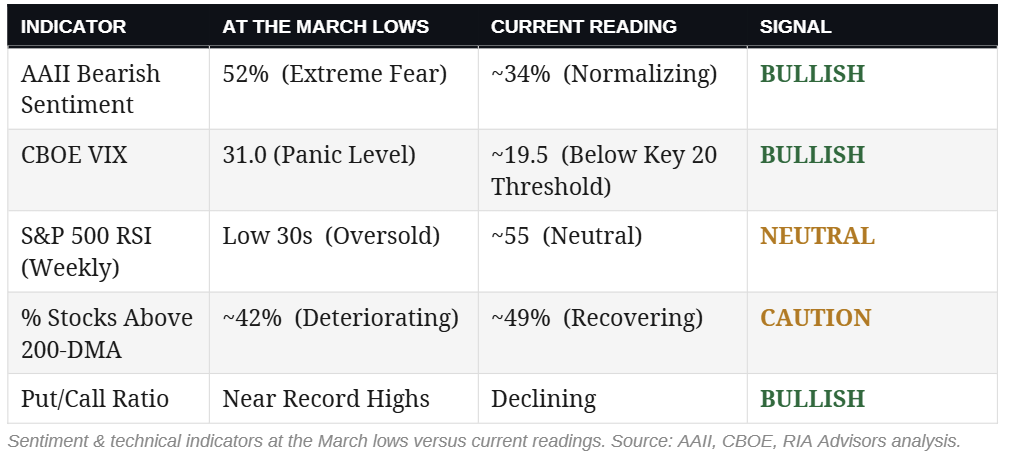
S&P 500 Outlook: The 8.2% Rally & What Comes Next.
Over the last few weeks, we have published real-time market commentary as the correction proceeded. The goal was to help investors navigate the more dire outcomes promoted on social media. A largely unexpected outcome was that the S&P 500 outlook changed dramatically in a matter of days. After five consecutive weeks of decline driven by …
Read More »
Read More »
The Stock Market Rally: Buy Or Fade It?
Last week, the stock market rally was one of the best performances in nearly a year. The S&P 500 surged 3.4%, the Nasdaq climbed 4.4%, and the bulls declared the correction over. As I have stated before, having watched markets for more than 35 years, I have come to recognize the difference between a relief … Continue reading »
Read More »
Read More »
Stock Market Breadth: Warning Or Opportunity?
The S&P 500 is down roughly 7% from its January 27 all-time high. Unsurprisingly, the media is full of "red" headlines discussing the seemingly "endless" correction we are in. Unsurprisingly, previously complacent investors are now anxious, as nothing seems to be working. But that index-level headline conceals something far more alarming: stock market breadth has …
Read More »
Read More »
The 200-DMA Just Broke: What Every Investor Should Know
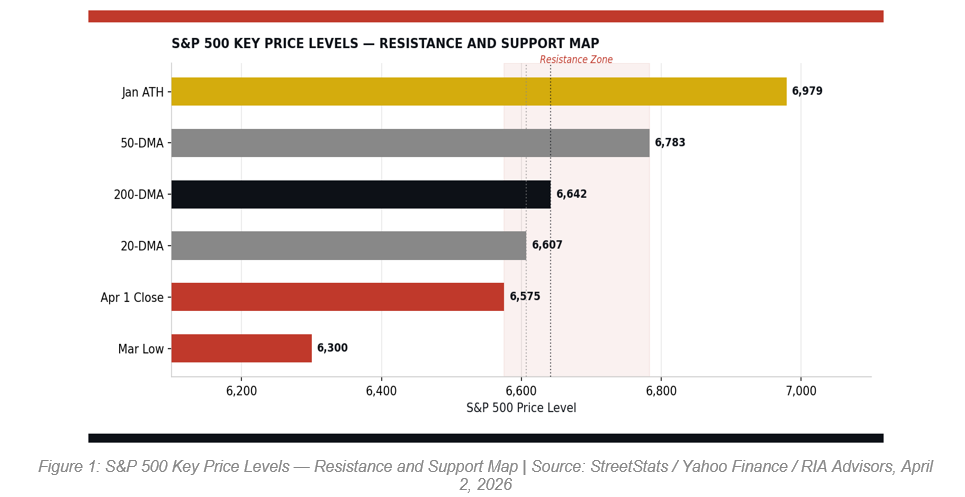
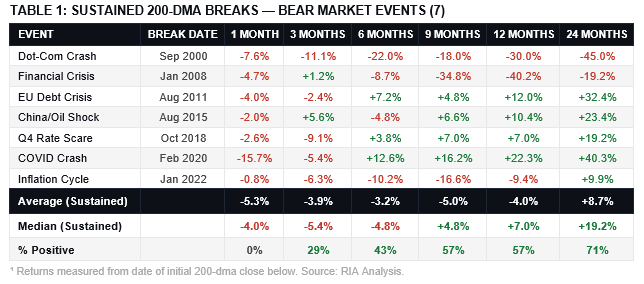
There are hundreds of technical indicators that market analysts track, but only one gets a live television chyron the moment it breaks. The 200-day moving average (200-DMA) is the single most widely followed technical level in global financial markets, and the reason isn't mystical; it's institutional. Quant funds, pension allocators, programmatic traders, systemic funds, and …
Read More »
Read More »
Treasury Bond Yields Don’t Lie: But Wars Don’t Drive Them
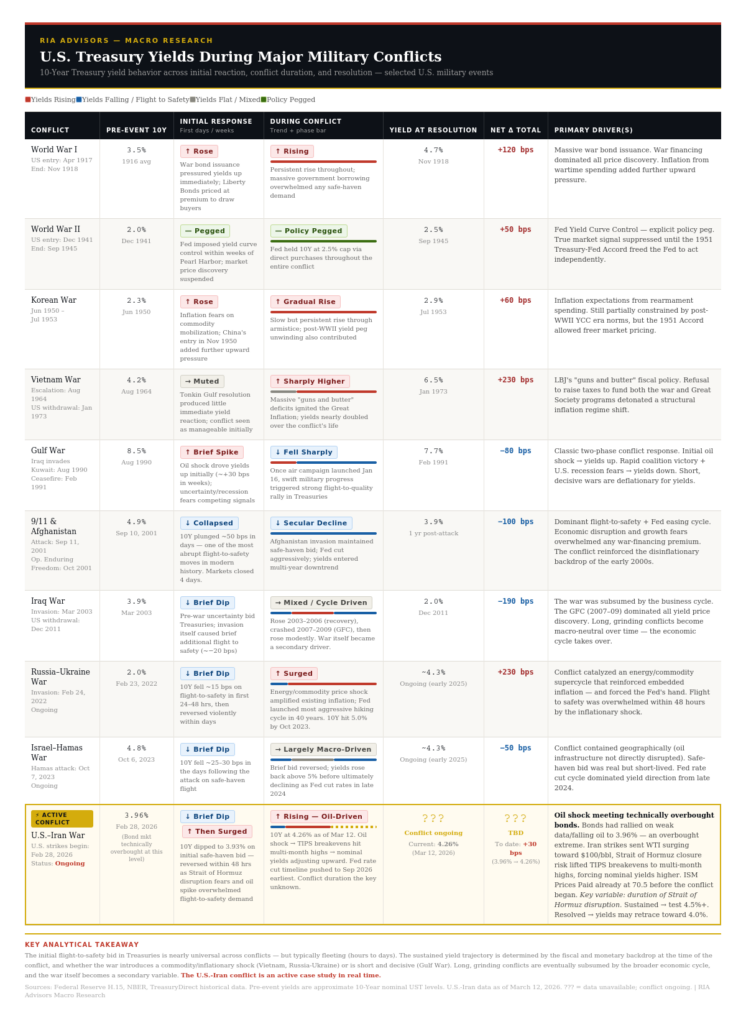
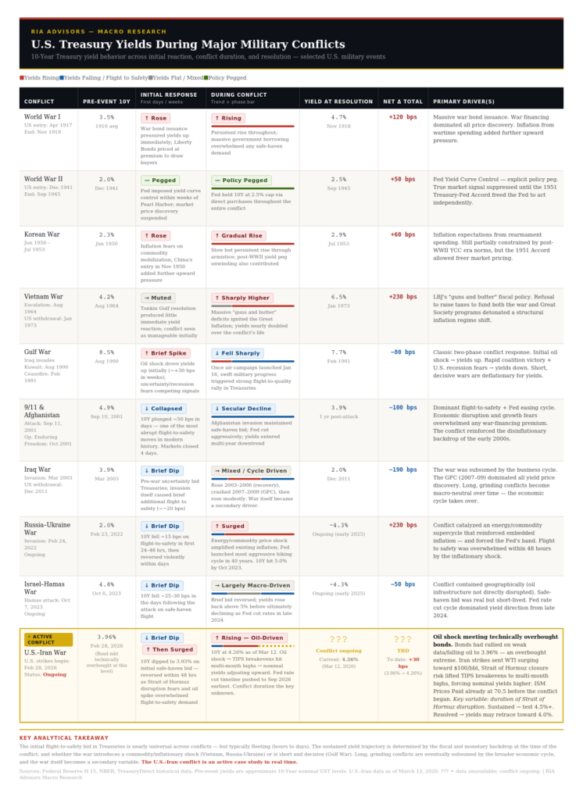
This past weekend, Adam Taggart and I discussed what happens to Treasury bond yields when the United States enters a military conflict. The conventional wisdom is reflexive and tidy. A conflict triggers a flight to safety, money floods into U.S. government bonds, and yields fall. It’s a clean narrative. Unfortunately, it is wrong more than …
Read More »
Read More »
Technical Deterioration: Risk Management Is Key
The S&P 500 closed at 6,740 on Friday, its lowest level since mid-December, as technical deterioration, collapsing payrolls, and $100 oil converged on the charts. Every major moving average has broken. Here’s what comes next. The S&P 500 closed at […] The post Technical Deterioration: Risk Management Is Key appeared first on RIA.
Read More »
Read More »
SaaS: Is There Opportunity In The Destruction?
A specter is haunting Wall Street—the specter of the “SaaSpocalypse.” Since the iShares Expanded Tech-Software Sector ETF (IGV) peaked on September 19, 2025, it has fallen roughly 30%. For context, the broad technology indexes like XLK and QQQ are essentially flat over the same period, and the semiconductor ETF (SMH) is up 30%. Between mid-January …
Read More »
Read More »
Is China Really Dumping US Treasuries?
"China is dumping US Treasuries to get out of the dollar." This claim has been circulating the mainstream feeds lately, with the narrative that the "end of the dollar is near," or "the US will lose its funding base" and the "bond yields will surge." But are those claims valid? Such is what we will … Continue reading »
Read More »
Read More »
Market Sector Review: Extreme Market Bifurcation
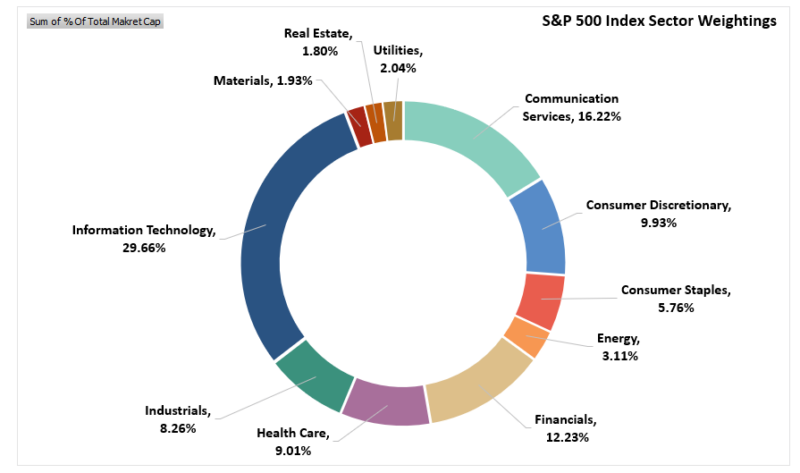
Since the beginning of the year, we have discussed the "reflation trade" and its impact on specific market sectors. This past weekend's newsletter also showed some of these more extreme returns in various market sectors since the beginning of the year. To wit: "Despite what seemed like a rough week in the market, it really wasn’t as …
Read More »
Read More »
Speculative Narrative Unwinds
For nearly two years, markets were driven by the same speculative narrative that "this time is different.” Bitcoin, precious metals, and AI-linked equities rose not only because of robust fundamentals, but also because investors clung to powerful narratives about inflation, disruption, and monetary collapse. Those speculative narratives are not only seductive but also contribute to …
Read More »
Read More »