










Category Archive: 6b.) Mises.org
Christine Lagarde’s New Vision for the ECB
On December 12, Christine Lagarde introduced her goals and vision in her first rate-setting meeting as the new president of the European Central Bank (ECB). On the actual policy front, there were no surprises. She remained committed to the path set by her predecessor, Mario Draghi, and kept the current monetary stimulus unchanged.
Read More »
Read More »
The Truth About Taxes | by Murray N. Rothbard
Orthodox neoclassical economics has long maintained that, from the point of view of the taxed themselves, an income tax is “better than” an excise tax on a particular form of consumption, since, in addition to the total revenue extracted, which is assumed to be the same in both cases, the excise tax weights the levy …
Read More »
Read More »
The Fed Slashes Rates as Powell Declares Economy “Strong”
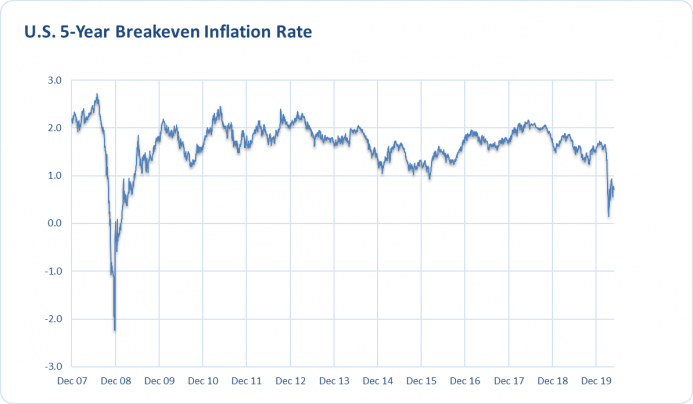
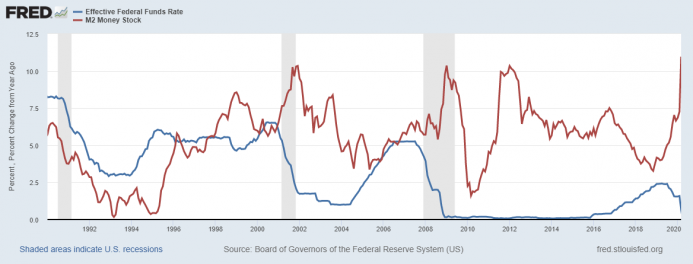
The Federal Reserve this morning slashed the target federal funds rate by 0.5 percent today. According to CNBC: The Federal Reserve moved to an enact an emergency interest rate cut after officials saw the coronavirus having a material impact on the economic outlook, Chairman Jerome Powell said Tuesday.
Read More »
Read More »
Repudiating the National Debt | by Murray N. Rothbard
Before the Reagan era, conservatives were clear about how they felt about deficits and the public debt: a balanced budget was good, and deficits and the public debt were bad, piled up by free-spending Keynesians and socialists, who absurdly proclaimed that there was nothing wrong or onerous about the public debt. Since Reagan, however, intellectual-political …
Read More »
Read More »
The Health Plan’s Devilish Principles | by Murray N. Rothbard
The standard media cliché about the Clinton health plan is that God, or the Devil, depending on your point of view, “is in the details.” There is surprising agreement among both the supporters and all too many of the critics of the Clinton health “reform.” The supporters say that the general principles of the plan …
Read More »
Read More »
Mises: To Adopt Keynesian Terminology Is to Legitimize It
Some years ago, there was published a book in the German language with the title L.T.I. These three letters stood for three Latin words, lingua Tertii Imperii, the language of the Third Reich. And the author, a former professor of Romance languages at one of the German universities, described in this book his adventures during the Nazi regime.
Read More »
Read More »
The US’s “Free Trade” Isn’t Very Free
The false notion that the US has eliminated virtually all of its barriers to foreign imports has been repeated more and more in recent years. The claim is made both by advocates for free trade and by critics of free trade. For instance, Patrick Buchanan has claimed only American elites "are beneficiaries to free trade" while implying the US either has free trade, or something close to it.
Read More »
Read More »
Vermögen schützen: So wird Gold zur echten Krisenwährung
Gold gilt als die klassische Krisenwährung. Das Edelmetall soll das Vermögen schützen, wenn die ungedeckten Papierwährungen zusammenbrechen. Doch Gold allein wird in der Krise nicht helfen. Thorsten Polleit, Chefvolkswirt bei Degussa, rät Anlegern, für den Krisenfall auch Silber vorzuhalten. Er glaubt nicht, dass Gold im Krisenfall tatsächlich im Tagesgeschäft zum Bezahlen verwendet wird. Dafür eigne …
Read More »
Read More »
The EU’s Latest Screw-You to the UK Shows a Big Problem with Trade Agreements
All too often, discussion over trade deals focuses almost solely on tariffs. It's true that tariffs—i.e., taxes—are always a significant barrier to free exchange at all levels, but there are also plenty of ways to block or lessen trade that are not primarily tariff-based. Recent conflicts over the pending negotiations between the UK and the EU are a reminder of this.
Read More »
Read More »
Central Banking since the 2008 Financial Crisis
[This article is part of the Understanding Money Mechanics series, by Robert P. Murphy. The series will be published as a book in late 2020.] In chapter 5 we reviewed the textbook analysis of how a central bank buys government debt in “open market operations” to add reserves to the banking system, with which commercial banks can then advance loans to their own customers.
Read More »
Read More »
Mises and the “New Economics”
[This article is excerpted from a talk delivered on February 22, 2020 at the Austrian Student Scholars Conference, hosted by Grove City College in Pennsylvania.] I. Introduction What a wonderful gathering of students today, on this impressive and beautiful campus. We can see why Hans Sennholz loved this place, and why Drs. Herbener and Ritenour so enjoy living and teaching here.
Read More »
Read More »
The WTO Is Both Irrelevant and Unnecessary
The World Trade Organization (WTO) is in a state of crisis. When it comes to trade negotiations among large states like the US, India, and China, the WTO has been shown to be an organization that is largely irrelevant.
Read More »
Read More »
Tax Burdens, Per Capita Income, and Simpson’s Paradox
How many times have you heard that higher taxes mean greater social welfare and economic development? The statement is backed up by a touch of popular wisdom: “More taxes, more public services.” Almost incontestable empirical evidence is also cited: with very few exceptions, the richest countries’ tax rates are very high, whereas taxes in poor countries are relatively low.
Read More »
Read More »
Thorsten Polleit – Währungsgeschichte der Deutschen – Ein Trauerspiel (ef Konferenz 2020)
Thorsten Polleit über die Währungsgeschichte der Deutschen: Ein Trauerspiel in fünf Akten.
ef-Deutschlandkonferenz 2020 auf Usedom
Read More »
Read More »
Thorsten Polleit – Währungsgeschichte der Deutschen – Ein Trauerspiel (ef Konferenz 2020)
Thorsten Polleit über die Währungsgeschichte der Deutschen: Ein Trauerspiel in fünf Akten. ef-Deutschlandkonferenz 2020 auf Usedom
Read More »
Read More »
Nationalism as National Liberation: Lessons from the End of the Cold War
During the early 1990s, as the world of the old Soviet Bloc was rapidly falling apart, Murray Rothbard saw it all for what it was: a trend of mass decentralization and secession unfolding before the world's eyes. The old Warsaw Pact states of Poland, Hungary, and others won de facto independence for the first time in decades. Other groups began to demand full blown de jure secession as well.
Read More »
Read More »
Capitalism vs. Socialism | Jeff Deist
Is Bernie right to say America has become a socialist country? Mises Institute president Jeff Deist (Mises.org/Deist) joins Judge Andrew P. Napolitano on Fox Business (FoxBusiness.com) to discuss the “Capitalism vs. Socialism” debate within the Democrat Party. Original video © 2020 FOX News Network, LLC (https://video.foxbusiness.com/v/6134471482001). Republished here under “Fair Use” for scholarship and research …...
Read More »
Read More »
Is Free Market Economics Too “Ideological”?
Free market economics is often ignorantly dismissed for being "ideological" rather than scientific. It probably sounds smart to the economically illiterate, but it is decidedly not. It doesn't mean nearly what most people assume it does. The word "free" in free market economics is not used as a normative value judgment but indicates an economy that is unaffected by exogenous (from the outside) factors.
Read More »
Read More »
Jeff Deist: Why the U.S. is Beyond the Point of No Return
Jeff Deist (Mises.org/Deist) is president of the Mises Institute. Recorded at Loyola University New Orleans on February 15, 2020. In this clip he argues that the U.S. is Beyond the point of no return. This is part of a two-part series. Check out the talk by Cliff Maloney who argues for the converse proposition: https://www.youtube.com/watch?v=i0vo3WOeOOQ …
Read More »
Read More »