






Progressive historians have been able to define the terms of debates of historical events as well to ask the biased and loaded questions in the name of historical inquiry. That is no way to find the truth.
Read More »
Category Archive: 6b.) Mises.org
The Psychological Walls to Freedom
Even though freedom produces a better and wealthier society, people—and especially elites—have an aversion to it. Their fears, while rational, are also harmful to society.
Read More »
Read More »
Massachusetts 1690: The First Western Fiat Experiment
When the Massachusetts colony issued its own unredeemable paper money in 1690, it was with the promise that it would soon be redeemable in specie. Like all paper money issued by government, it lost value and the confidence of the people.
Read More »
Read More »
Bondi Strikes Out
Rep. Thomas Massie has worked to expose the policymakers with close ties to sex offender Epstein. Pam Bondi, on the other hand, has worked to protect politicians from accountability.
Read More »
Read More »
Companies are using AI as an excuse for layoffs
Sam Altman said some companies are engaging in “AI washing,” invoking the technology as cover for layoffs they would have made anyway.
Read More »
Read More »
What Is the State of the Union?
On this episode of Power and Market, we feel compelled to discuss this week's State of the Union speech.
Read More »
Read More »
New producer inflation number much higher than expected
The core PPI increased a seasonally adjusted 0.8%, more than the 0.6% gain in December and well ahead of the Dow Jones consensus estimate for 0.3%.
Read More »
Read More »
Gallup: The majority of Americans now sympathize with Palestine more than Israel
Forty-one percent of Americans now say they sympathize more with the Palestinians in the Middle East situation, while 36% sympathize more with the Israelis.
Read More »
Read More »
Does Democracy Require Conformity and Equality?
Hélène Landemore of Yale University believes she has a radical proposal to make democracy work. In this week’s Friday Philosophy, Dr. David Gordon reviews her book Politics without Politicians: The Case for Citizen Rule and concludes it isn’t radical enough.
Read More »
Read More »
UBS downgrades the U.S. stock market
UBS downgraded U.S. equities, saying factors that powered years of outperformance are starting to fade.
Read More »
Read More »
House To Vote on Iran War Powers Next Week as Trump Has US on Brink of a Major Conflict
“As soon as Congress reconvenes next week, we will compel a vote of the full House on the bipartisan Khanna-Massie War Powers Resolution.”
Read More »
Read More »
Ignore the Rich, Don’t Loot Them
With California’s government looking to pile onerous taxes on the state’s wealthiest citizens, it is time to understand that if state officials try to inflict financial harm on wealthy people, they should know that such schemes do not end well.
Read More »
Read More »
‘Nature-Al’ Entrepreneurship: Being Green Without the State
Dr. Timothy Terrell explains how entrepreneurs and property rights can protect forests, wildlife, and open spaces better than bureaucracies, using real-world examples of “enviropreneurs” who profit by conserving nature instead of exploiting it.
Read More »
Read More »
The Bill of Rights Against the States
We are told that the Bill of Rights is the bedrock of our freedom, yet this same Bill of Rights ultimately has been used as a weapon against state sovereignty and against our individual rights.
Read More »
Read More »
Massachusetts 1690: The First Western Fiat Experiment
When the Massachusetts colony issued its own unredeemable paper money in 1690, it was with the promise that it would soon be redeemable in specie. It was a lie.
Read More »
Read More »
In Defense of National Borders
The current outburst of protests against President Trump’s enforcement of immigration laws is overshadowing a question that is not being asked: Can we defend having national borders in the first place?
Read More »
Read More »
We Act in a World of Uncertainty, Not Probabilities
Human action involves people engaging in unique events in which outcomes often are uncertain, when expertise and planning often do not give us the results we anticipate.
Read More »
Read More »
 On Swiss National Bank
-
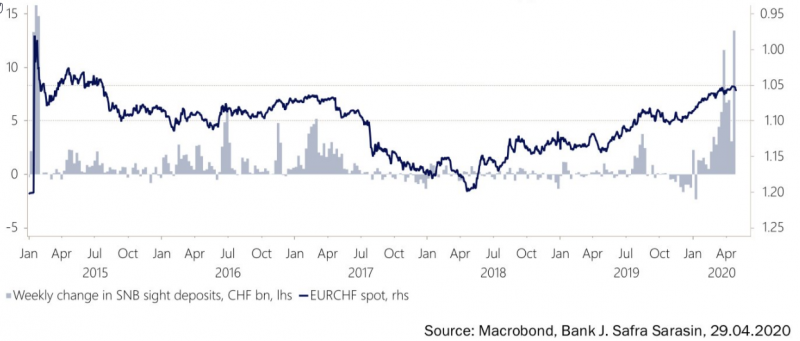
SNB Sight Deposits: decreased by 2.2 billion francs compared to the previous week
-
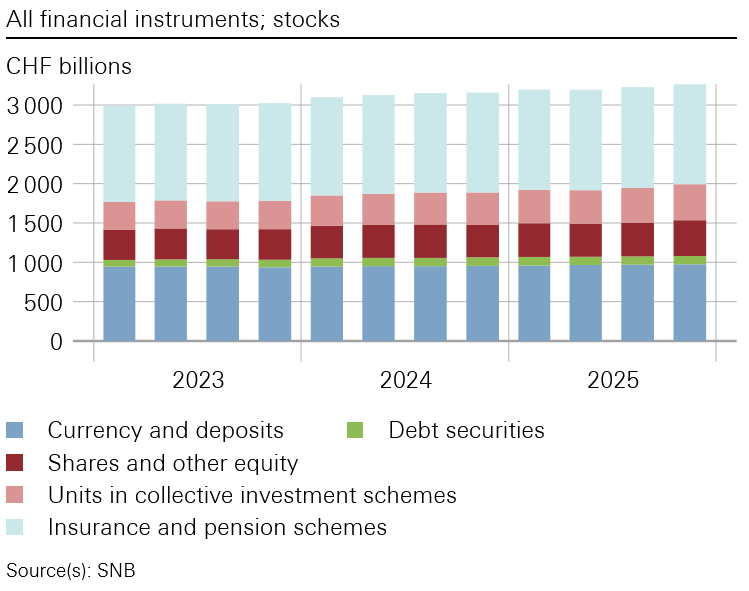
Household wealth in 2025
-
Heads up for NZD and CHF traders, RBNZ Gov Breman and SNB Chair Schlegel to speak
-
Swiss franc appreciation has led to tighter monetary conditions – SNB minutes
-
SNB’s Chairman Schlegel: A few months of negative inflation wouldn’t be a problem
Main SNB Background Info
Featured and recent
-
 SNB Sight Deposits: decreased by 2.2 billion francs compared to the previous week
 -
 Corrections vs. Bear Markets: Why 20% Declines Are Obsolete
 -
 -40 Kilo! Ricarda Lang feiert Abnehmerfolg! Das Internet feiert!
 -
 Steuerrecht digitalisieren mit KI – eine gute Idee?
 -
 Why Switzerland is launching a charm offensive in Southeast Asia
 -
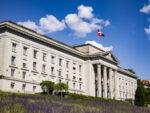 Ex-Raiffeisen bank CEO fined for tax evasion
 -
 The price of gold matters, but availability matters more.
 -
 FATAL: EU Chefdiplomatin blamiert ganz Europa! China außer sich!
 -
 India’s situation shows why physical gold is different from paper exposure.
 -
 ZUGRIFF auf dein Vermögen: So schützen sich INSIDER