In memory of Roger Garrison, Bob walks through Garrison’s famous capital-based macroeconomics diagrams, showing how they translate the Mises-Hayek theory of the boom-bust cycle into the language of modern macroeconomics.
Read More »2026-03-21






2026-03-21
In memory of Roger Garrison, Bob walks through Garrison’s famous capital-based macroeconomics diagrams, showing how they translate the Mises-Hayek theory of the boom-bust cycle into the language of modern macroeconomics.
Read More »2026-03-13
In commemoration of Murray Rothbard’s 100th birthday, Bob shares five “greatest hits” from Rothbard’s economics, covering deficits vs. inflation, monopoly theory, excess capacity, the time structure of production, and his reconstruction of utility and welfare economics.
Read More »2026-03-03
Bob uses Trump’s call to ban congressional insider trading as a springboard to explain why, from an Austro-libertarian perspective, insider trading and speculation could help markets work, while still justifying special rules for government employees.
Read More »2026-02-24
This week, Bob walks through Javier Milei’s 2026 address to the World Economic Forum, explaining the Austrian and neoclassical ideas behind Milei’s defense of capitalism—from Rothbard and Kirzner to Pareto efficiency and the welfare theorems.
Read More »2026-02-17
Bob lays out California’s proposed 5% wealth tax on billionaires, using it to explain why taxes on wealth are especially destructive, how different tax structures change incentives, and what recent migration data says about people voting with their feet.
Read More »2026-02-05
Bob applies Mises’ taxonomy of money and the regression theorem to Bitcoin, asking whether it should be classified as commodity or fiat money and whether Austrian theory really rules out Bitcoin ever becoming money.
Read More »2026-01-24
Bob responds to James Rickards’ recent tweet on record U.S. gold exports driving an improved trade balance, walking through the official data on non-monetary gold, Trump-era tariff uncertainty, and the broader question of what chronic trade deficits really mean in a post-gold-standard world.
Read More »2026-01-18
Bob revisits Böhm-Bawerk’s critique of the exploitation theory of interest to answer modern claims that billionaires like Elon Musk must have “stolen” their wealth from workers who supposedly create 100 percent of a firm’s value.
Read More »2025-12-29
Bob uses three recent controversies–Richard Murphy’s “Christmas all year” claim, Elon Musk’s net worth, and Ron DeSantis on the Great Depression–to clear up common economic fallacies about work, wealth, and wartime spending.
Read More »2025-12-25
Consumer spending does not drive the economy. On the contrary, saving, investment, and entrepreneurship are the critical components of economic growth.
Read More »2025-12-15
Bob uses clips from his recent interview with Eric Weinstein to explain why Weinstein thinks gauge theory can fix how economists measure the cost of living, and why Austrians shouldn’t dismiss him as a crank.
Read More »2025-12-08
This week, Bob walks through two related debates: Hoppe’s criticism of Argentina’s President Milei for not immediately closing Argentina’s central bank, and the follow-up exchange between Guido Hülsmann and Philipp Bagus over dollarization and the peso.
Read More »2025-11-28
Bob walks through a recent WIRED video on “the economics behind the Great Depression,” correcting its claims on lax regulation, Hoover’s alleged inaction, the role of the Fed and the gold standard, and the notion that World War II ended the slump.
Read More »2025-11-23
Dr. Robert Murphy explains why America’s chronic trade deficits trace to Nixon’s 1971 gold exit—not China—and how a popular reading of Triffin’s “dilemma” confuses the issue.
Read More »
Bob revisits capital and interest theory to show why the textbook result “interest = MPK” only holds in a one-good world, and why in actual markets the interest rate emerges from time, prices, and capital valuation—not raw productivity.
Read More »2025-11-17
Prompted by an online debate about whether economics belongs with the hard sciences, Bob reviews common defenses of mainstream practice and explains why they don’t settle the scientific status of the field.
Read More »2025-11-02
Is paying down the federal debt a recession trigger? Bob takes on the MMT claim and checks the record, citing US debt payoffs, Canada’s 1990s reforms, and ECB case studies.
Read More »2025-10-22
Bob explains Lerner’s Symmetry Theorem and shows how tariffs ripple through exchange rates, exports, and trade balances—then tests those predictions against today’s Trump-era tariff shocks.
Read More »2025-10-13
Bob breaks down the fears about AI-driven unemployment and shows why economic reasoning still favors human prosperity in a high-tech world.
Read More »2025-09-21
Bob explains why blaming private equity for America’s housing woes misses the deeper economic forces at play, from speculation to Federal Reserve intervention.
Read More »2025-09-18
Jeff Degner joins Bob Murphy to explain how inflation reshapes marriage, fertility, and family life, linking Austrian monetary theory to today’s cultural hurdles.
Read More »2025-09-07
Bob analyzes the myth of Federal Reserve independence, exposing its political nature and long history of serving power.
Read More »2025-08-26
Bob Murphy reviews The Gold Standard: Retrospect and Prospect. This is a useful collection for those who want an evenhanded analysis of the gold standard that extends to modern topics such as cryptocurrency and currency boards.
Read More »2025-08-22
Rothbard argued that the Fed stripped away the natural checks of free banking, paving the way for endless credit expansion and inflationary cycles.
Read More »2025-08-15
Bob breaks down the mechanics behind how commercial banks create money out of thin air—and why that power fuels economic booms and busts.
Read More »2025-08-09
Bob Murphy critiques New York Assemblyman Zohran Mamdani’s proposal for a government-run grocery store, dissecting its economic flaws and highlighting why such policies fail in practice.
Read More »2025-07-27
Bob Murphy and Jason Priddle discuss the Genius Act, stablecoins, and what the future holds for cryptocurrency regulation and monetary freedom.
Read More »2025-07-24
Bob Murphy examines Hazlitt’s key insights on monetary expansion, Cantillon effects, and the distinction between nominal and real variables.
Read More »2025-07-18
Bob provides a detailed, realistic plan for abolishing the Federal Reserve and returning to a stable, gold-backed monetary system.
Read More »2025-07-13
Bob dismantles the arguments supporting the Federal Reserve and presents a clear strategy for its abolition and replacement.
Read More »2025-07-10
The CBO‘s forecasting restrictions prevent it from predicting an inflationary debt crisis, despite rising US debt and deficits. This limitation hinders proactive policy-making, risking economic instability.
Read More »2025-05-30
Bob breaks down the recent Soho Forum immigration debate between Dave Smith and Alex Nowrasteh, clarifying the critical libertarian questions around property rights, open borders, and government authority.
Read More »2025-05-25
Bob responds to Oren Cass’s appearance on Tucker Carlson, offering a charitable yet firm economic critique of the anti–free trade ideas gaining ground on the political right.
Read More »2025-05-12
Bob Murphy digs into the latest GDP numbers, questions Peter St. Onge’s optimistic spin, and shows what the data really says about tariffs, trade, and recession fears.
Read More »2025-03-14
What is the Mises Institute?
The Mises Institute is a non-profit organization that exists to promote teaching and research in the Austrian School of economics, individual freedom, honest history, and international peace, in the tradition of Ludwig von Mises and Murray N. Rothbard. Non-political, non-partisan, and non-PC, we advocate a radical shift in the intellectual climate, away from statism and toward a private property order. We believe that our foundational ideas are of permanent value, and oppose all efforts at compromise, sellout, and amalgamation of these ideas with fashionable political, cultural, and social doctrines inimical to their spirit.
Read More »2025-02-24
The Misesian: Unfortunately, we live in an age of a “mixed economy” and “regulated capitalism.” This means that the private sector and the government sector are mixed together, and it’s not always clear where the state ends and the private sector begins. How can we determine if a private company is a true partner of the state— truly benefiting from state power—or if the private company is really a victim of the state?Robert P. Murphy: Let me say at the outset that when it comes to evaluating the real world from the perspective of normative libertarian ethics— as opposed to positive Austrian economics—we don’t always end up with crystal-clear answers. This is why legal systems require judges to apply the law to specific cases, and why even unbiased expert judges often disagree with each
Read More »2025-02-21
What is the Mises Institute?
The Mises Institute is a non-profit organization that exists to promote teaching and research in the Austrian School of economics, individual freedom, honest history, and international peace, in the tradition of Ludwig von Mises and Murray N. Rothbard. Non-political, non-partisan, and non-PC, we advocate a radical shift in the intellectual climate, away from statism and toward a private property order. We believe that our foundational ideas are of permanent value, and oppose all efforts at compromise, sellout, and amalgamation of these ideas with fashionable political, cultural, and social doctrines inimical to their spirit.
Read More »2024-12-13
What is the Mises Institute?
The Mises Institute is a non-profit organization that exists to promote teaching and research in the Austrian School of economics, individual freedom, honest history, and international peace, in the tradition of Ludwig von Mises and Murray N. Rothbard. Non-political, non-partisan, and non-PC, we advocate a radical shift in the intellectual climate, away from statism and toward a private property order. We believe that our foundational ideas are of permanent value, and oppose all efforts at compromise, sellout, and amalgamation of these ideas with fashionable political, cultural, and social doctrines inimical to their spirit.
Read More »2024-12-07
What is the Mises Institute?
The Mises Institute is a non-profit organization that exists to promote teaching and research in the Austrian School of economics, individual freedom, honest history, and international peace, in the tradition of Ludwig von Mises and Murray N. Rothbard. Non-political, non-partisan, and non-PC, we advocate a radical shift in the intellectual climate, away from statism and toward a private property order. We believe that our foundational ideas are of permanent value, and oppose all efforts at compromise, sellout, and amalgamation of these ideas with fashionable political, cultural, and social doctrines inimical to their spirit.
Read More »2024-11-30
What is the Mises Institute?
The Mises Institute is a non-profit organization that exists to promote teaching and research in the Austrian School of economics, individual freedom, honest history, and international peace, in the tradition of Ludwig von Mises and Murray N. Rothbard. Non-political, non-partisan, and non-PC, we advocate a radical shift in the intellectual climate, away from statism and toward a private property order. We believe that our foundational ideas are of permanent value, and oppose all efforts at compromise, sellout, and amalgamation of these ideas with fashionable political, cultural, and social doctrines inimical to their spirit.
Read More »2024-11-23
The Mises Institute is a non-profit organization that exists to promote teaching and research in the Austrian School of economics, individual freedom, honest history, and international peace, in the tradition of Ludwig von Mises and Murray N. Rothbard.
Read More »2024-11-16
What is the Mises Institute?
The Mises Institute is a non-profit organization that exists to promote teaching and research in the Austrian School of economics, individual freedom, honest history, and international peace, in the tradition of Ludwig von Mises and Murray N. Rothbard. Non-political, non-partisan, and non-PC, we advocate a radical shift in the intellectual climate, away from statism and toward a private property order. We believe that our foundational ideas are of permanent value, and oppose all efforts at compromise, sellout, and amalgamation of these ideas with fashionable political, cultural, and social doctrines inimical to their spirit.
Read More »2024-11-08
What is the Mises Institute?
The Mises Institute is a non-profit organization that exists to promote teaching and research in the Austrian School of economics, individual freedom, honest history, and international peace, in the tradition of Ludwig von Mises and Murray N. Rothbard. Non-political, non-partisan, and non-PC, we advocate a radical shift in the intellectual climate, away from statism and toward a private property order. We believe that our foundational ideas are of permanent value, and oppose all efforts at compromise, sellout, and amalgamation of these ideas with fashionable political, cultural, and social doctrines inimical to their spirit.
Read More »2024-10-26
What is the Mises Institute?
The Mises Institute is a non-profit organization that exists to promote teaching and research in the Austrian School of economics, individual freedom, honest history, and international peace, in the tradition of Ludwig von Mises and Murray N. Rothbard. Non-political, non-partisan, and non-PC, we advocate a radical shift in the intellectual climate, away from statism and toward a private property order. We believe that our foundational ideas are of permanent value, and oppose all efforts at compromise, sellout, and amalgamation of these ideas with fashionable political, cultural, and social doctrines inimical to their spirit.
Read More »2024-10-18
What is the Mises Institute?
The Mises Institute is a non-profit organization that exists to promote teaching and research in the Austrian School of economics, individual freedom, honest history, and international peace, in the tradition of Ludwig von Mises and Murray N. Rothbard. Non-political, non-partisan, and non-PC, we advocate a radical shift in the intellectual climate, away from statism and toward a private property order. We believe that our foundational ideas are of permanent value, and oppose all efforts at compromise, sellout, and amalgamation of these ideas with fashionable political, cultural, and social doctrines inimical to their spirit.
Read More »2024-10-16
What is the Mises Institute?
The Mises Institute is a non-profit organization that exists to promote teaching and research in the Austrian School of economics, individual freedom, honest history, and international peace, in the tradition of Ludwig von Mises and Murray N. Rothbard. Non-political, non-partisan, and non-PC, we advocate a radical shift in the intellectual climate, away from statism and toward a private property order. We believe that our foundational ideas are of permanent value, and oppose all efforts at compromise, sellout, and amalgamation of these ideas with fashionable political, cultural, and social doctrines inimical to their spirit.
Read More »2024-09-28
What is the Mises Institute?
The Mises Institute is a non-profit organization that exists to promote teaching and research in the Austrian School of economics, individual freedom, honest history, and international peace, in the tradition of Ludwig von Mises and Murray N. Rothbard. Non-political, non-partisan, and non-PC, we advocate a radical shift in the intellectual climate, away from statism and toward a private property order. We believe that our foundational ideas are of permanent value, and oppose all efforts at compromise, sellout, and amalgamation of these ideas with fashionable political, cultural, and social doctrines inimical to their spirit.
Read More »2024-09-06
What is the Mises Institute?
The Mises Institute is a non-profit organization that exists to promote teaching and research in the Austrian School of economics, individual freedom, honest history, and international peace, in the tradition of Ludwig von Mises and Murray N. Rothbard. Non-political, non-partisan, and non-PC, we advocate a radical shift in the intellectual climate, away from statism and toward a private property order. We believe that our foundational ideas are of permanent value, and oppose all efforts at compromise, sellout, and amalgamation of these ideas with fashionable political, cultural, and social doctrines inimical to their spirit.
Read More »2024-08-23
What is the Mises Institute?
The Mises Institute is a non-profit organization that exists to promote teaching and research in the Austrian School of economics, individual freedom, honest history, and international peace, in the tradition of Ludwig von Mises and Murray N. Rothbard. Non-political, non-partisan, and non-PC, we advocate a radical shift in the intellectual climate, away from statism and toward a private property order. We believe that our foundational ideas are of permanent value, and oppose all efforts at compromise, sellout, and amalgamation of these ideas with fashionable political, cultural, and social doctrines inimical to their spirit.
Read More »2024-08-09
What is the Mises Institute?
The Mises Institute is a non-profit organization that exists to promote teaching and research in the Austrian School of economics, individual freedom, honest history, and international peace, in the tradition of Ludwig von Mises and Murray N. Rothbard. Non-political, non-partisan, and non-PC, we advocate a radical shift in the intellectual climate, away from statism and toward a private property order. We believe that our foundational ideas are of permanent value, and oppose all efforts at compromise, sellout, and amalgamation of these ideas with fashionable political, cultural, and social doctrines inimical to their spirit.
Read More »2024-08-01
What is the Mises Institute?
The Mises Institute is a non-profit organization that exists to promote teaching and research in the Austrian School of economics, individual freedom, honest history, and international peace, in the tradition of Ludwig von Mises and Murray N. Rothbard. Non-political, non-partisan, and non-PC, we advocate a radical shift in the intellectual climate, away from statism and toward a private property order. We believe that our foundational ideas are of permanent value, and oppose all efforts at compromise, sellout, and amalgamation of these ideas with fashionable political, cultural, and social doctrines inimical to their spirit.
Read More »2024-07-27
What is the Mises Institute?
The Mises Institute is a non-profit organization that exists to promote teaching and research in the Austrian School of economics, individual freedom, honest history, and international peace, in the tradition of Ludwig von Mises and Murray N. Rothbard. Non-political, non-partisan, and non-PC, we advocate a radical shift in the intellectual climate, away from statism and toward a private property order. We believe that our foundational ideas are of permanent value, and oppose all efforts at compromise, sellout, and amalgamation of these ideas with fashionable political, cultural, and social doctrines inimical to their spirit.
Read More »2024-07-12
What is the Mises Institute?
The Mises Institute is a non-profit organization that exists to promote teaching and research in the Austrian School of economics, individual freedom, honest history, and international peace, in the tradition of Ludwig von Mises and Murray N. Rothbard. Non-political, non-partisan, and non-PC, we advocate a radical shift in the intellectual climate, away from statism and toward a private property order. We believe that our foundational ideas are of permanent value, and oppose all efforts at compromise, sellout, and amalgamation of these ideas with fashionable political, cultural, and social doctrines inimical to their spirit.
Read More »2024-06-21
What is the Mises Institute?
The Mises Institute is a non-profit organization that exists to promote teaching and research in the Austrian School of economics, individual freedom, honest history, and international peace, in the tradition of Ludwig von Mises and Murray N. Rothbard. Non-political, non-partisan, and non-PC, we advocate a radical shift in the intellectual climate, away from statism and toward a private property order. We believe that our foundational ideas are of permanent value, and oppose all efforts at compromise, sellout, and amalgamation of these ideas with fashionable political, cultural, and social doctrines inimical to their spirit.
Read More »2024-05-18
What is the Mises Institute?
The Mises Institute is a non-profit organization that exists to promote teaching and research in the Austrian School of economics, individual freedom, honest history, and international peace, in the tradition of Ludwig von Mises and Murray N. Rothbard. Non-political, non-partisan, and non-PC, we advocate a radical shift in the intellectual climate, away from statism and toward a private property order. We believe that our foundational ideas are of permanent value, and oppose all efforts at compromise, sellout, and amalgamation of these ideas with fashionable political, cultural, and social doctrines inimical to their spirit.
Read More »2024-05-10
What is the Mises Institute?
The Mises Institute is a non-profit organization that exists to promote teaching and research in the Austrian School of economics, individual freedom, honest history, and international peace, in the tradition of Ludwig von Mises and Murray N. Rothbard. Non-political, non-partisan, and non-PC, we advocate a radical shift in the intellectual climate, away from statism and toward a private property order. We believe that our foundational ideas are of permanent value, and oppose all efforts at compromise, sellout, and amalgamation of these ideas with fashionable political, cultural, and social doctrines inimical to their spirit.
Read More »2024-04-12

Tu ne cede malis, sed contra audentior ito
Website powered by Mises Institute donors
Mises Institute is a tax-exempt 501(c)(3) nonprofit organization. Contributions are tax-deductible to the full extent the law allows. Tax ID# 52-1263436
Read More »2024-03-29

Tu ne cede malis, sed contra audentior ito
Website powered by Mises Institute donors
Mises Institute is a tax-exempt 501(c)(3) nonprofit organization. Contributions are tax-deductible to the full extent the law allows. Tax ID# 52-1263436
Read More »2024-02-16
On February 13, 2024, Bob participated (with Jim Rickards, Brent Johnson, and Michael Every) in a ZeroHedge debate on the fate of the USD. In this episode of the Human Action podcast, Bob highlights some of the key issues and explains why he thinks his side won.
Murphy Gives Post-Game Analysis of ZeroHedge Dollar Debate
Video of Murphy Gives Post-Game Analysis of ZeroHedge Dollar Debate
The ZeroHedge Debate: Mises.org/HAP435a
Brent Johnson’s Milkshake Theory: Mises.org/HAP435b
Egert’s Article on the Public Debt Threshold: Mises.org/HAP435c
Bob’s Article on the Latest CBO Federal Debt Report: Mises.org/HAP435d
Human Action Podcast listeners can get a free copy of Dr. Guido Hülsmann’s How Inflation Destroys Civilization: Mises.org/HAPodFree
2024-02-09
Bob goes solo to give a point-by-point rebuttal to James Lindsay’s recent essay arguing that "national divorce means national suicide." Bob argues that James employs inconsistent claims and ignores the tremendous economic boon to an independent Texas.
James Lindsay’s Article "National Divorce is National Suicide": Mises.org/HAP434a
Bob’s Book "Common Sense: The Case for an Independent Texas": Mises.org/HAP434b
AntiWar.com Article on Gaza: Mises.org/HAP434c
Scott Horton’s Interview with Arnon Soffer: Mises.org/HAP434d
Join Tom DiLorenzo, Joe Salerno, and Patrick Newman in Tampa on February 17: Mises.org/Tampa2024Use code "Action24" for 15% off admission.
Human Action Podcast listeners can get a free copy of Dr. Guido Hülsmann’s How Inflation Destroys Civilization: Mises.org/HAPodFree
2024-01-19
Bob goes solo to discuss a recent Twitter controversy, in which opponents of a proposed tax argued that unrealized capital gains couldn’t possibly be a form of income. Bob cites both Austrian theory and corporate accounting practice to respond that all capital gains are income, which is not to say that they ought to be taxed. The dispute is important because understanding the definition of "income" sheds light on the role of market prices in guiding entrepreneurial action.
Bob Talks to David Schizer on the Moore Ruling: Mises.org/HAP431a
Bob’s Econlib Article on Capital and Income: Mises.org/HAP431b
Join Tom DiLorenzo, Joe Salerno, and Patrick Newman in Tampa on February 17: Mises.org/Tampa2024Use code "Action24" for 15% off admission.
Human Action Podcast listeners can get a free copy
2023-12-23
On a recent installment of the Pynx debate series, Bob had a friendly debate with Dean Baker on a soft or hard landing in 2024. In this episode of the Human Action Podcast, Bob comments on the key disputes, underlying the differences between the Austrian and Keynesian frameworks.
Bob’s Debate with Dean Baker: Mises.org/HAP427a
Bob’s Paper on the Inverted Yield Curve: Mises.org/HAP427b
Join Tom DiLorenzo, Joe Salerno, and Patrick Newman in Tampa on February 17: Mises.org/Tampa2024Use code "Action24" for 15% off admission.
Human Action Podcast listeners can get a free copy of Murray Rothbard’s Anatomy of the State: Mises.org/HAPodFree
Dean Baker Debates Bob Murphy on Recession Outlook
Video of Dean Baker Debates Bob Murphy on Recession Outlook
Read More »2023-11-10
Recorded at the Mises Circle in Fort Myers, Florida, 4 November 2023.
Special thanks to Murray and Florence M. Sabrin for making this event possible.
Read Bob’s book Understanding Money Mechanics: Mises.org/Mechanics
The Fed and the Fate of the Dollar | Bob Murphy
Video of The Fed and the Fate of the Dollar | Bob Murphy
Read More »2023-11-03
Robert Murphy explains how traders make money in a world of uncertainty and diabolical risk.
Original Article: Making Money While Making Sense of Chaos: Understanding the World of the Traders
2023-10-27
Recently Yaron Brook and Bryan Caplan debated the merits of anarchism at the Soho Forum. Bob critiques Brook’s opening statement.
The Soho Forum Debate: Mises.org/HAP419a
Bob’s Book on Market Anarchy, Chaos Theory: Mises.org/HAP419b
Rothbard’s Book on Natural Rights and the State, For a New Liberty: Mises.org/HAP419c
Hans-Herman Hoppe’s Book on Private Defense, The Private Production of Defense: Mises.org/HAP419d
Responding to Yaron Brook’s Critique of Anarcho-Capitalism
Video of Responding to Yaron Brook's Critique of Anarcho-Capitalism
Join us in Fort Myers on November 4 to cut through the campaign talking points and offer an uncompromising look at what is coming next. Use Code "FL2023" for $10 off admission: Mises.org/FL23
Human
2023-10-16

Review of Chaos Kings: How Wall Street Traders Make Billions in the New Age of Crisis
Scott Patterson
New York: Scribner, 2023; 293 pages
Scott Patterson has delivered an unusual book. At least to this reader, it produced the same effect as watching a Black Mirror episode where you think you know where the story is heading, then suddenly all of your moorings go out the window in a most unpleasant fashion. In the case of Chaos Kings, the book starts out as an interesting and well-paced biographical treatment of Mark Spitznagel and Nassim Taleb, developers of a tail-hedging approach to financial risk. Patterson is a veteran Wall Street Journal reporter, and his devotion to detailing a specific trade that Taleb had made on out-of-the-money currency options makes it appear that this will be a
2023-09-15
Lawyers for two of the Proud Boys convicted for their role in the January 6 assault on the Capitol are filing appeals claiming that they are being subject to a "trial tax," being punished for rejecting a plea deal offer. Bob uses the occasion to explain his long-standing objection to plea deals.
Article on the ‘Trail Tax’ Imposed on the Proud Boys: Mises.org/HAP413a
Ex-Proud Boys Leader Sentenced Despite Not Being in Washington on Jan. 6th: Mises.org/HAP413b
Twitter Thread on Plea Deals and Justice: Mises.org/HAP413c
Why Plea Deals Are a Miscarriage of Justice
Video of Why Plea Deals Are a Miscarriage of Justice
Join us in Fort Myers on November 4 to cut through the campaign talking points and offer an uncompromising look at what is coming
Read More »2023-07-07
Bob walks through a recent interview of MMT champion Warren Mosler, in which he claims that Fed rate hikes lead to larger government interest expenses and hence support economic growth and inflation. Bob presents both theoretical and empirical evidence against Mosler’s claims.
MMT’s Warren Mosler Argues Fed Rate Hikes Cause Growth and Inflation
Video of MMT's Warren Mosler Argues Fed Rate Hikes Cause Growth and Inflation
Bob’s Debate with Warren Mosler: Mises.org/HAP403a
Bob’s Review of Stephanie Kelton: Mises.org/HAP403b
Bob’s EconLib Article on Austerity: Mises.org/HAP403c
Technical Article on Why the Treasury Can’t Overdraft: Mises.org/HAP403d
Join us in Nashville on September 23rd for a no-holds-barred discussion against the
2023-06-16
University of Rochester economist Steve Landsburg joins Bob to discuss the abysmal performance of ChatGPT on his undergraduate exam. They also discuss the importance of market prices in guiding behavior and the unexpected problems with the government handing out "free" goodies.
Bob’s article "Superman Needs an Agent:" Mises.org/HAP400a
Steven’s Book The Armchair Economist: Mises.org/HAP400b
More Economic brainteasers: Mises.org/HAP400c
Why ChatGPT Failed an Economics Exam
Video of Why ChatGPT Failed an Economics Exam
Read More »2023-04-27
Contrary to Krugman, DeSantis and others warning about a CBDC aren’t being paranoid: they are simply drawing the obvious conclusions from history.
Original Article: "It’s Not Paranoid to Worry about a Central Bank Digital Currency"
This Audio Mises Wire is generously sponsored by Christopher Condon.
2023-04-17
In a recent NYT column, economist Paul Krugman mocks Florida Governor Ron DeSantis, who warned that a central bank digital currency (CBDC) would give the government too much power over Americans. Specifically, DeSantis argued that the feds could use a CBDC to further implement the “woke” agenda, penalizing Floridians if they bought too much gas or guns.
Human Action Podcast: Krugman Says It’s Paranoid to Worry About a Fed Digital Currency with Robert Murphy and Jonathan Newman
Krugman ridiculed the very notion that a CBDC might threaten civil liberties:
If this sounds crazy, that’s because it is. I have no idea whether DeSantis believes any of it, or even knows what a central bank digital currency is or what it would do (more on that later). And it’s possible that he’s taking this stand
2022-06-17
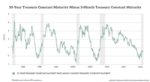
The “yield curve” refers to a graph showing the relationship between the maturity length of bonds—such as one month, three months, one year, five years, twenty years, etc.—plotted on the x axis, and the yield (or interest rate) plotted on the y axis.1
Read More »2022-04-29
Bob critiques the economic views of Yuval Harari, who predicts “useless people” because of technological advances. Bob then showcases similar thinking from right-wingers. He ends by addressing a common critique of the Christian God.
Read More »2022-04-21
In a recent episode of “The Problem With Jon Stewart,” the former Daily Show host asks former president of the Kansas City Fed Thomas Hoenig why the Fed couldn’t have bailed out homeowners, or just “quantitative ease” away the Treasury’s debt. Hoenig gives muddy answers, so Bob tries to clarify.
Read More »2022-04-19
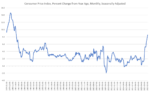
The government’s latest report puts the twelve-month official consumer price inflation rate at 8.5 percent, the highest since December 1981:
As economists debate the causes of, and cure for, this price inflation, it’s worth recounting which schools of thought saw it coming. Although individuals can be nuanced, generally speaking the Austrians have been warning that the Fed’s reckless policies threaten the dollar. In contrast, as I will document in this article, two of the leaders of the Keynesian and market monetarist schools didn’t see this coming at all.
My Worst Professional Mistake
Before diving into it, I need to address a problem: my hands-down worst professional mistake occurred during the early years of the Fed’s “QE” (quantitative easing) programs, when I made bets on (consumer
2022-03-11
Bob continues his series on Klaus Schwab and the Great Reset, highlighting an interesting remark in Biden’s SOTU, Strobe Talbott’s open support for global government, and the introduction to Schwab’s book on Covid-19 and the Great Reset.
Read More »2022-01-29
Bob continues his series on Klaus Schwab, explaining the WEF’s plans for redesigning the world, and providing quotes from Schwab’s book on the fourth industrial revolution.
Read More »2022-01-28
Bob starts a series looking into Klaus Schwab, founder of the World Economic Forum and, along with Prince Charles, proponent of the “Great Reset.”
Mentioned in the Episode and Other Links of Interest:
Klaus Schwab and Prince Charles promoting the “Great Reset”The World Economic Forum’s page on the Great ResetAn example of a session from the WEF’s Davos Agenda 2021 conferenceThe WEF’s bio for its founder, Klaus SchwabSchwab’s books The Fourth Industrial Revolution and Covid-19 and the Great ResetThe video of Schwab explaining his connection to KissingerThe “red pill” documentary Wake Up CallMurphy’s new book from the Mises Institute, Understanding Money MechanicsFor more information, see BobMurphyShow.com. The Bob Murphy Show is also available on Apple Podcasts, Google
2021-09-16
Bob reviews Mark Spitznagel’s latest book, Safe Haven: Investing for Financial Storms, on which he was a consultant. Bob explains that Spitznagel rejects the alleged dichotomy between risk and return, and then gives a numerical example to illustrate the two schools of thought.
Read More »2021-08-06
Bob unveils a new recurring series, in which he gives the context of infamous quotations. In this episode, he covers two allegedly shocking quotes from John Lennon, John Maynard Keynes’ "in the long run we’re all dead," Trump on Nazis being very fine people, Dan Quayle misspelling potato, Obama’s "you didn’t build that," and Bohm-Bawerk on Karl Marx.
Read More »2021-06-03
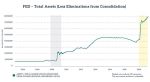
In chapter 7 we summarized some of the major changes in how central banks have operated since the 2008 financial crisis. In the present chapter, we detail some of the even more recent changes in Federal Reserve operations since the onset of the coronavirus panic in March 2020.
Read More »2021-03-14
[unable to retrieve full-text content]Since the deep freeze in February caused millions of Texas homes to lose their power, partisans have been fighting over the blame. The governor blamed wind turbines and the green agenda, whereas Paul Krugman said the fault was with natural gas. Bob shows the numbers; natural gas was to blame only in the sense that nobody expected wind to be useful during a winter crisis.
Read More »2021-03-10
Bob discusses three separate items all related to nonviolence: (1) Gene Sharp’s work, (2) Bob’s old dream of how to topple a tyrant, and (3) the winners of the Louis CK contest.
Mentioned in the Episode and Other Links of Interest:
Gene Sharp’s book, From Dictatorship to DemocracyThe trailer for the documentary “How to Start a Revolution”Sharp’s list of 198 methods of nonviolent actionThe original Louis CK clip that inspired Bob’s contestFor more information, see BobMurphyShow.com. The Bob Murphy Show is also available on Apple Podcasts, Stitcher, Spotify, and via RSS.
2020-10-26
Bob unveils a new series in which he explains and then evaluates apparent contradictions in the way free-market libertarians handle certain issues.
Mentioned in the Episode and Other Links of Interest:
Bastiat’s “Petition of the Candlemakers”Bob’s article on price gougingFor more information, see BobMurphyShow.com. The Bob Murphy Show is also available on iTunes, Stitcher, Spotify, and via RSS.
2020-10-19
Bob offers his commentary on the movies “The Hunt” and “The Purge”—both produced by Blumhouse Productions—and focuses on whether The Purge storyline offers a challenge to Rothbard’s depiction of anarcho-capitalism.
Read More »2020-10-13

Before proceeding, we should be clear on what an economic theory of value is supposed to do: its task is simply to explain the exchange value of particular goods and services. That is, an economic theory of value must explain why someone selling good X can receive x berries in exchange for it, whereas someone selling good Y will only find someone willing to give up y berries in exchange for his good (where y< x).
Read More »2020-10-06
Bob reads from an article recently tweeted out by the NEA, which calls for an end to schooling as we know it in order to promote anti-racism. He then discusses what the Fed has been up to since the coronavirus panic began.
Read More »2020-09-14

The most famous Austrian economist is 1974 Nobel laureate Friedrich Hayek. Because of his moderate views excusing state interventions in various circumstances, hardcore Rothbardians tend to regard Hayek as less than pure in many areas.
Read More »2020-08-19
As a follow-up to his discussion on MMT with Rohan Grey (in ep. 130), Bob goes solo to explain the basic cash balance framework for thinking about money, inflation, and debt. Specifically, Bob will explain why he thinks it’s far more important to know how the government finances a deficit rather than knowing what it spends the money on.
Read More »2020-07-01
The good news is that Stephanie Kelton has written a book on MMT that is very readable and will strike many readers as persuasive and clever. The bad news is that Stephanie Kelton has written a book on MMT that is very readable and will strike many readers as persuasive and clever.
Narrated by the author.
Original Article: "A Review of Stephanie Kelton’s The Deficit Myth".
2020-06-28

I’ve got good news and bad news. The good news is that Stephanie Kelton—economics professor at Stony Brook and advisor to the 2016 Bernie Sanders campaign—has written a book on modern monetary theory (MMT) that is very readable and will strike many readers as persuasive and clever.
Read More »2020-06-18

[This article is part of the Understanding Money Mechanics series, by Robert P. Murphy. The series will be published as a book in late 2020.] In chapter 8 we presented Ludwig von Mises’s explanation of how bank credit expansion causes the boom-bust cycle, what is now known as Austrian business cycle theory. However, the reigning view today in both academia and the popular media is the Keynesian explanation, derived from John Maynard Keynes’s famous 1936 book The General Theory.
Read More »2020-06-09
Editor’s Note: We keep hearing from the Fed’s defenders that the current spate of new stimulus and bailouts from the central bank are really not a big deal and are all very prudent and moderate. I asked Senior Fellow Bob Murphy to provide some much needed perspective.
Read More »2020-05-27
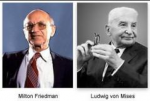
Listen to the Audio Mises Wire version of this article. People often ask me, How are the Austrians different from the Chicago School economists? Aren’t you all free market guys who oppose big-government Keynesians?
Read More »2020-05-15
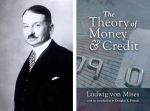
[This article is part of the Understanding Money Mechanics series, by Robert P. Murphy. The series will be published as a book in late 2020.] Starting with Carl Menger’s undisputed role in the “marginal revolution,” which ushered in subjective value theory, the Austrian school has made important contributions that have been absorbed into standard economic theory.
Read More »2020-05-02
Government restrictions on production are driving prices up as unemployment drives them down. It’s impossible to say now whether price inflation or price deflation will be the predominant factor in the crisis’s next phase.
Read More »2020-03-31
Oren Cass is the executive director of American Compass (AmericanCompass.org), a conservative think tank that stresses the importance of family and domestic industry, in opposition to a singleminded devotion to economic efficiency. Cass was previously a senior fellow at the Manhattan Institute for Policy Research, and was the domestic policy director for Mitt Romney’s 2012 presidential campaign.
Read More »2020-03-17

There’s a lot to be said regarding the Fed’s surprise announcements—including its Sunday surprise of $700 billion in renewed QE and the complete elimination of all reserve requirements for banks—but here let me just focus on one element: the tendency for Fed officials and all the pundits to treat injections of “liquidity” as if they don’t count as much when distorting the economy.
Read More »2020-03-12

[This article is part of the Understanding Money Mechanics series, by Robert P. Murphy. The series will be published as a book in late 2020.] In addition to the Keynesian perspective (covered in chapter 14), a relatively new challenge to the Austrian framework comes from the “market monetarists” and their endorsement of a central bank policy of “level targeting” of nominal gross domestic product (sometimes abbreviated as NGDPLT1).
Read More »2020-02-27
[This article is part of the Understanding Money Mechanics series, by Robert P. Murphy. The series will be published as a book in late 2020.] In chapter 5 we reviewed the textbook analysis of how a central bank buys government debt in “open market operations” to add reserves to the banking system, with which commercial banks can then advance loans to their own customers.
Read More »2020-02-09
Bob Murphy first explains a standard progressive viewpoint when it comes to dealing with issues like virus outbreaks, underage drinking, and prostitution. Yet, when it comes to dealing with people whose views they abhor, the progressives suddenly are “zero tolerance” and ignore the mechanisms they point to for the other issues.
Read More »2020-01-16
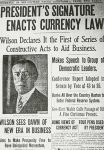
[This article is part of the Understanding Money Mechanics series, by Robert P. Murphy. The series will be published as a book in late 2020.] This chapter will provide a brief sketch of the historical context in which the Federal Reserve was founded, summarize some of the major changes to the Fed’s institutional structure and mandate over the years, and end with a snapshot of the Fed’s current governing structure.
Read More » On Swiss National Bank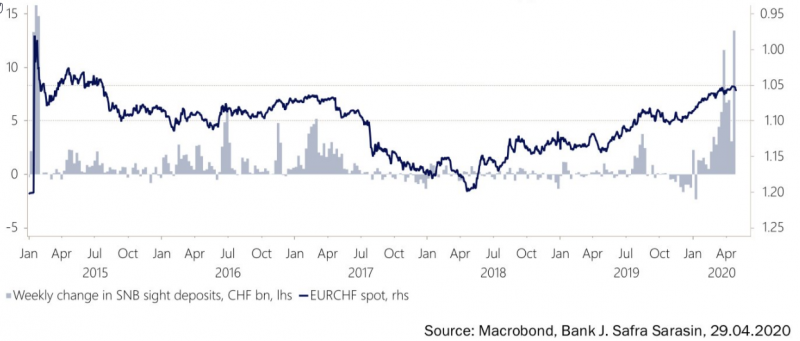
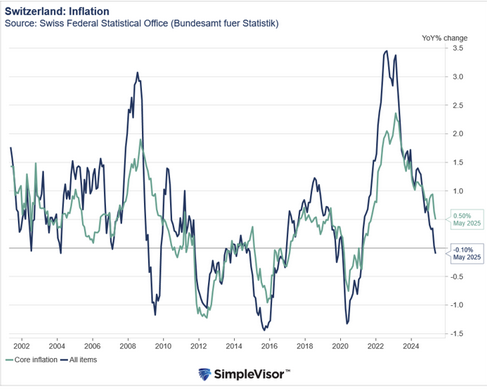 Main SNB Background Info