













Tag Archive: Ray Dalio

The Big Cycle: How Great Powers Rise

When great powers rise throughout history, they generally do so for the same reasons. These successful new orders are typically started by powerful revolutionary leaders doing four things: 1) Winning power by gaining more support than their opposition 2) Consolidating power by converting, weakening, or eliminating that opposition 3) Establishing systems and institutions that make the country work well 4) Creating systems that pick successors well...

Read More »

Ray Dalio’s Update on U.S. Government Debt

The basic picture has not changed — if the US doesn’t cut the deficit to 3% of the GDP, and soon, we risk facing an economic heart attack in the next three years. The good news is that these cuts are possible. If we change spending and income (tax returns) by 4% while the economy is still good, the interest rate will go down as a result and we’ll be in a much better situation. And we know this kind of balance is possible because it happened...

Read More »

The Invention of Capitalism in Building Powerful Empires

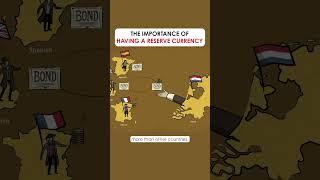
What can the former Dutch Empire teach us about the importance of capitalism in driving long-term success? #principles #raydalio #history #capitalism

Read More »

How Japan Dealt With Their Debt Problem

What happens when a country mismanages its debt? In 1990, Japanese policymakers decided to deal with its debt obligations by printing a lot of money to buy bonds. They further devalued the currency by giving bondholders significantly lower interest rates than in the US. As a result, Japanese bonds lost 45% relative to US bonds and 60% relative to gold over the next few years. That had a real impact on the average Japanese worker, who lost a...

Read More »

Ray Dalio Talks with CNBC’s Squawk Box About How the System Breaks Down Once a Lifetime

The world order is now changing in a way that I described in my book and video Principles for Dealing with the Changing World Order. For a complete picture I encourage you to read the book or you can watch the animated video on my channel. #raydalio #principles #politics #economics

Read More »

Will the United States Government Go Broke?

In 10 years, the US government will be $55-60 trillion in debt (which will be 7-7.5 times government revenue) because there will be $25-30 trillion of additional borrowing. That amounts to about $425,000 of debt per American family. When I calculate the supply and demand for this debt, I don’t see enough buyers to buy the debt the US needs to sell, which will cause big problems. We can avoid the worst-case scenario, but we need to act now. To...

Read More »

My New Book How Countries Go Broke: The Big Cycle

I’m very happy to learn that my new book, How Countries Go Broke: The Big Cycle was selected by @barnesandnoble as one of their Best Business Books of the year. The book conveys what I’ve learned over the past 50 years as a macro investor about the mechanics of how countries go broke — and what that means for the US today. I hope you’ll read it and learn about it so that you understand what we’re dealing with, and what you can do to navigate the...

Read More »

What Happens When a Country Accumulates Too Much Debt?

History shows us that having too much debt during an economic downturn leads to a classic, self-reinforcing cycle where: 1) The empire can no longer borrow the money to repay its debts 2) It prints a lot of new money, which devalues the currency and raises inflation 3) Living standards decline, leading to the rise of political extremism 4) Turbulent economic conditions undermine productivity and there is conflict about how to divide the shrinking...

Read More »

My Honest Thoughts on the United States’ Tariffs

I’ve gotten a lot of questions on the recent Trump tariffs and their impact on the global economy. There is a belief that tariffs will bring manufacturing back to the United States, I am uncertain of that. You can learn more about why, and what the current big debt cycle the United States is going through in my new book, How Countries Go Broke: The Big Cycle. #raydalio #principles #politics #economics

Read More »

How Domestic and World Orders Change

An order is a governing system that helps people deal with each other in a structured way. There are internal orders for governing within countries, and a world order for governing between countries. Orders typically change after wars, when revolutionary new forces defeat weak old ones. When this happens, new agreements and treaties are signed that detail how global governance and monetary systems will work moving forward. And a new world order...

Read More »

How Government Debt Reduces Your Buying Power

History tells us the preferred path for government policymakers trying to deal with too much debt is lowering interest rates and devaluing the currency the debt is denominated in. Doing this is a very hidden way of reducing wealth, because as your currency goes down, it makes it look like other things are going up. But despite the downsides, this wealth shrinkage and reduction in buying power is favored by policy makers precisely because its...

Read More »

The Challenge of Absolutist Politics

After spending time in Washington, DC discussing the budget deficit with senior people on both sides of the aisle, it’s clear to me that we are unlikely to change the debt trajectory we’re on and avoid the painful consequences. While virtually everyone agrees on the need to address our debt problem in a balanced way that includes tax increases and cuts to benefits, they also agree that they cannot speak up because politics have become absolutist....

Read More »

Can the Right and Left Agree on This?

Everybody I speak with on both sides of the aisle agrees that we need to get our spending down to 3% of GDP. But politics is standing in the way of making good decisions. The idea of compromise is out. I think we all agree that we’re in need of a big renovation. The question is how that renovation gets done — and there’s a lot of fighting over what that renovation might look like. My advice: Politicians on both sides need to agree on a...

Read More »

This is Why the U.S. Deficit is so Alarming

It’s critical that we bring our deficits down — and soon. Since one man’s debts are another man’s assets, debt problems pass through the system very quickly. When there’s a lot of debt, like there is today, it has to be sold — and we’re now at a point where there aren’t enough buyers for that debt. Historically, when that happens, bad things follow. So we need to get this problem under control and we need to do it fast.

Read More »

Will the Central Bank Lose Independence Under Trump?

It is the job of central banks to maintain a balanced economy by not allowing too much credit into the monetary system. Learn more about central banks and their responsibilities in my new book, How Countries Go Broke: The Big Cycle here: https://bit.ly/3F5OFvN #raydalio #principles #politics #economics

Read More »

Should the Federal Reserve Cut Interest Rates?

The Fed is in a very difficult position as it tries to balance the benefits of cutting interest rates with maintaining the value of money. Right now, there is a great deal of uncertainty throughout the economy, along with a deterioration in sentiment. Combine that with political pressures and the realities of our upcoming debt service payments, and you have this value of money conflict. So changes in the monetary policy — especially if the cut...

Read More »

Ray Dalio on Why the U.S. Must Restructure Global Trade Deals

We’re entering a period of history where countries must be much more self-sufficient. Not just because of the debt and trade issues — and those imbalances are unsustainable — but also because of security. With today’s geopolitical instability, a country like the U.S. can’t afford to be be dependent on imports from countries like China. As a result, restructuring our trade relationships is critical and necessary. At least, that’s what it looks...

Read More »

Dalio’s 3% 3 Part Solution to Decrease the Deficit

The US is approaching the end of the long-term debt cycle. There are 3 levers we can pull to bring the deficit down to ~3% of GDP and mitigate our debt burdens: 1) reducing spending, 2) increasing taxes, and 3) lowering interest rates. While we need to consider each of these levers, I recently discussed why reducing interest rates will ultimately have the greatest impact on the budget deficit with @the_IMF. You can learn more about my proposed...

Read More »

The Reason I Studied 500 Years of History

What's happening now with money, debt, and credit has never happened before in our lifetime. But it has happened many times in history, which is why I believe studying the past is so important. The same cycles repeat over and over again, and there are important lessons we can learn from those experiences. If we apply that understanding to the issues we face today, we can increase the chances of positive geopolitical and economic outcomes. That’s...

Read More »

The Mechanics of the Big Cycle

If you study the patterns of history, you find interrelated cycles in which global economic and political orders rise and inevitably break down due to specific cause-effect relationships playing out through time. In my research, I’ve found that when you have the combination of the monetary order breaking down — like a debt crisis — and the internal political order breaking down, you have a very serious situation. I believe we are facing one of...

Read More »