







Tag Archive: Ray Dalio
How Ray Dalio Got Hooked on the Markets
My first real job was caddying, and it changed my life.
It was the 1960s, and the people I was caddying for were always talking about the stock market.
So, I took my caddying money and bought Northeast Airlines because it was the only company I had heard of that was selling for less than $5 a share.
Little did I know, but the stock was so cheap because they were about to go broke. But I got lucky and they got acquired, so I tripled my money....
Read More »
Read More »
How the Economic Machine Works Part 5
This simple animated video series answers the question, "How does the #economy really work?" Based on my practical template for understanding the economy.
This series breaks down economic concepts like #credit, #deficits and #interest rates, allowing viewers to learn the basic driving forces behind the economy, how economic policies work and why economic cycles occur.
This is Part 5, I hope you find these helpful.
Read More »
Read More »
Ray Dalio & Andrew Ross Sorkin on His New Book “1929” and How Debt Drives Every Crash
I sat down with CNBC's Andrew Ross Sorkin to discuss his latest book, 1929: Inside the Greatest Crash in Wall Street History — and How It Shattered a Nation.
A lot of what Andrew learned researching this book is analogous to what happened during the 2008 financial crisis, and also to what is happening today. That’s because history moves in cycles — the same cause-effect relationships are at play, and there are important lessons to be learned....
Read More »
Read More »
Ray Dalio and Bloomberg’s Francine Lacqua Discuss Life, Debt & Global Crisis
The U.S.'s debts are on the edge of becoming unmanageable to the point where it could default if conditions are not changed.
But this problem isn’t a unique one. It has happened many times in history, which is why I believe studying the past is so important. The same cycles repeat over and over again, and there are important lessons we can learn from those experiences.
I recently met with Bloomberg @markets ahead of the UN Ocean Conference to...
Read More »
Read More »
Interest is the United States’ Second Largest Expenditure
This year, the US will spend 40% more than it’s taking in. This number is increasing each year — and our debt plays a major role.
This is a big problem, especially because cutting our spending is a difficult political issue. And as we continue to add to the debt, the supply-demand picture worsens.
I fear that we are approaching the point where we won’t be able to rectify it.
@TheProfGPod
Read More »
Read More »
Why I’m Pessimistic About the Debt Problem
The way I see it, any serious effort to solve the debt crisis will likely come too late.
It’s a timing issue. 2026 is a midterm election year — politicians won’t want to take the painful steps needed to improve our economic picture: cutting spending, raising taxes, and the like.
Any sort of bipartisan effort that comes after will both take time and be unlikely to be effective, because those commissions generally don’t work very well in practice....
Read More »
Read More »
Ray Dalio on His Biggest Failure
In the late 1970’s, I calculated that we were going to have a global debt default. I was so confident in what that meant for the markets that I went to Congress to share my perspective.
I couldn’t have been more wrong. While several countries defaulted on their debt, the impact on markets was the opposite of what I expected.
And I lost a lot of money — for me and for my clients. I had to let all of my employees go.
But it was the best experience...
Read More »
Read More »
Ray Dalio on the #1 Issue Facing the United States
Ultimately, it’s all about human nature.
In my view, the biggest risk we face are our own selfish, mutually-destructive tendencies. If we’re able to rise above them and find compromises, we can avoid the worst possible outcomes.
But to do that, we need to stop fighting with each other and align on policies that improve conditions for everyone.
Read More »
Read More »
If you’re worried, you don’t need to worry — and if you’re not worried, you need to worry.
One of my principles is that if you’re worried, you don’t need to worry — and if you’re not worried, you need to worry.
That’s because worrying about what can go wrong will protect you and not worrying about what can go wrong will leave you exposed.
Read More »
Read More »
Why I’m Pessimistic About the Debt Problem
The way I see it, any serious effort to solve the debt crisis will likely come too late.
It’s a timing issue. 2026 is a midterm election year — politicians won’t want to take the painful steps needed to improve our economic picture: cutting spending, raising taxes, and the like.
Any sort of bipartisan effort that comes after will both take time and be unlikely to be effective, because those commissions generally don’t work very well in practice....
Read More »
Read More »
Why We Are at an Inflection Point with U.S. Debt
I want to explain in a nutshell why the US debt situation is at a very dangerous inflection point.
Put simply, the US is now spending 40% more than we’re taking in. This accumulation of debt service payments has spiraled over decades and is starting to squeeze away buying power.
And if you run the numbers, there’s an imbalance between how much debt has to be sold, who the buyers are, and the likelihood of it all being bought.
Together, these...
Read More »
Read More »
Ray Dalio on the Legitimacy of Bitcoin
I can’t say exactly how effective Bitcoin is as a money, but it’s being perceived by many as an alternative money and so is worth paying attention to.
Money needs to be both a medium of exchange and a storehold of wealth — and the latter is more important.
I doubt that any central bank will take it on as a reserve currency. That’s because all of the transactions are public, so there’s no privacy to it, and there’s a risk that in the future the...
Read More »
Read More »
How the Economic Machine Works – Part 4
This simple animated video series answers the question, "How does the #economy really work?" Based on my practical template for understanding the economy.
This series breaks down economic concepts like #credit, #deficits and #interest rates, allowing viewers to learn the basic driving forces behind the economy, how economic policies work and why economic cycles occur.
This is Part 4, I hope you find these helpful.
Read More »
Read More »
How to Hedge Against Risk
I like inflation-indexed bonds — or TIPS (Treasury inflation protected securities) — because they guarantee a real return.
The markets are a zero sum game, and if you’re speculating, you’ll probably be the loser. But these bonds are among the safest asset classes you can find.
Read More »
Read More »
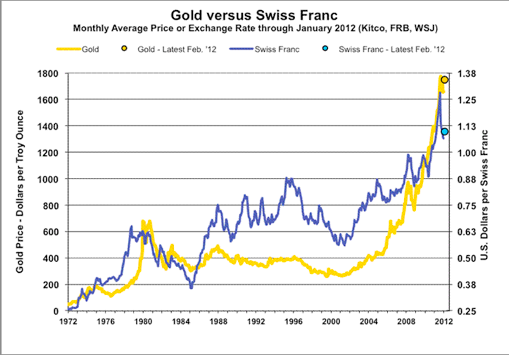
Ray Dalio Explains Gold v. Fiat Currencies
Gold is now the second largest reserve currency, behind the US dollar.
To understand why, you need to look at the history of fiat currencies (like the dollar) and hard currencies (like gold).
The way I see it, we’re currently facing a classic currency devaluation similar to what we saw in the 1970s or the 1930s. In both of those cases, fiat currencies around the world all went down together — and also went down in relationship to hard currencies,...
Read More »
Read More »
Ray Dalio Analyzes AI’s Impact on the Markets
The reality is that AI is so revolutionary and so disruptive that it’s very hard to say for sure whether superscalers are currently priced accurately in the markets.
But what will be even more impactful and is not adequately priced in is the effect AI is going to have on applications of it on company earnings, efficiencies, and the like.
I’m often asked whether these future productivity improvements will convert to the profits and incomes needed...
Read More »
Read More »
Why are UK Debt Costs Higher than the United States’?
Ultimately, it all comes back to supply and demand.
Debt costs are higher in the UK than in the US because the British pound is no longer a reserve currency. It’s not an effective storeholder of wealth because people aren’t transacting in it like they do with US dollars.
Since many people around the world transact in dollars, that increases the demand and ultimately helps when it comes to servicing debt. @MasterInvestorChannel
You can watch...
Read More »
Read More »
Ray Dalio’s Thoughts on Democracies with @ChrisWillx
The increasing political polarization we’re seeing today isn’t anything new. It’s similar to what we saw in the 1930s, and it’s even something Plato wrote about a couple thousand years ago.
In democracies, people vote for their interests. And since people generally want more, politicians want to give it to them — and are willing to go into debt to make that happen.
Ultimately, things reach a breaking point where discipline is needed. People want...
Read More »
Read More »
Is the United States less Happy?
Is the United States less #happy?
#raydalio #principles #happiness #mindfullness #education #healthcare
Read More »
Read More »