







Part of the upcoming “World War III” documentary
American foreign policy and the nation’s geopolitical strategy have slowly but surely undergone a radical transformation. War is no longer seen as an absolute last resort reserved for genuine self-defense scenarios or as a response to clear and present danger to US citizens. It has been rebranded into a permanent managerial exercise and it has become part of everyday life. And even though...
Read More »
Category Archive: 6b) Austrian Economics

The Economic Problem Behind Zohran Mamdani’s Government Grocery Plan
Zohran Mamdani’s proposal reflects a growing belief that economic problems can be solved through public ownership and political management. But a grocery store is still a business governed by costs, and economic reality regardless of who owns it.
Read More »
Read More »
Economics: The Sociological Foundation of Civilization
Economics is far more than what people see as “the economy.” It is the central organizing factor for civilized society.
Read More »
Read More »
Trump pone a China ante la encrucijada: Ormuz, Irán o crecimiento.

Read More »
The Minerals Consortium Will Result in Malinvestment
Washington is pursuing industrial policy again, this time being an attempt to form a minerals consortium with other countries to secure minerals vital to US manufacturing. No doubt, this initiative will end up on the ash heap of bad policy.
Read More »
Read More »
Diese Warnsignale werden ignoriert! KI-Blase kurz vor dem Platzen?

Read More »
Price Inflation Accelerates as Wars and Deficits Expand
Last week’s CPI report, and this week’s PPI report both showed price inflation surging to multi-year highs, and not just on oil prices.
Read More »
Read More »
When a Society Chooses Freedom in an Unfree World
What might be the process of a society moving from being unfree to being free? Here is one scenario.
Read More »
Read More »
Warum Gold und Silber noch lange nicht fertig sind

Read More »
Review: Moonshots and the New Industrial Policy
Can government policy replicate a market economy and improve the outcomes? That is the subject of the book, Moonshots and the New Industrial Policy. Lipton Matthews takes a deep dive into these questions.
Read More »
Read More »
Massie Defeated in Kentucky Primary
The campaign worked, and now the anti-Massie elderly GOP voters will get what they wanted: a pro-Israel, pro-federal, pro-welfare, pro-war, and pro-Epstein Congressman who will never question federal power or the status quo.
Read More »
Read More »
Causes of Uncontrollable US Public Spending and Debt
The US fiat monetary regime not only has given us inflation and boom-and-bust cycles, but it also is the main contributor to the out-of-control government spending and debt accumulation.
Read More »
Read More »
Is Deflation Bad for the Economy?
The standard line among most economists is that deflation is as bad or even worse than inflation. In reality, the economy needs deflation now more than ever.
Read More »
Read More »

California’s Billionaires Tax Ballot Initiative
If this ballot initiative passes in November 2026, then California’s billionaire exodus will continue, followed by the multimillionaires.
Read More »
Read More »
Why Socialism Fails: From Mises’s 1920 Article to Today
Bob sits down with Dr. Jonathan Newman to discuss his Mises Academy course for homeschooling families based on Lessons for the Young Economist, using it as a starting point to walk through the full Austrian case against socialism.
Read More »
Read More »
Silberminen Report mit 14 Top Aktien Link dazu in der Beschreibung

Read More »
The Lines We Thought Machines Wouldn’t Cross
We know that Q-Day is coming upon us when AI moves to another level and humans must make the adjustments. State-sponsored solutions will fail, and the only way forward is the free market.
Read More »
Read More »
 On Swiss National Bank
-
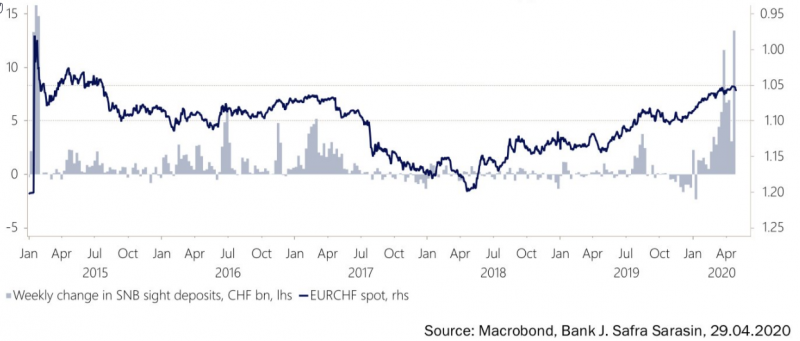
SNB Sight Deposits: decreased by 2.2 billion francs compared to the previous week
-
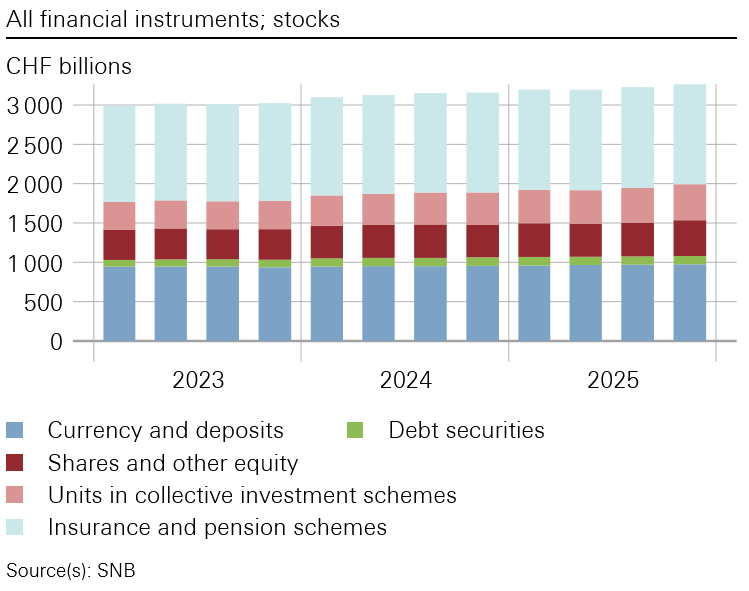
Household wealth in 2025
-
Heads up for NZD and CHF traders, RBNZ Gov Breman and SNB Chair Schlegel to speak
-
Swiss franc appreciation has led to tighter monetary conditions – SNB minutes
-
SNB’s Chairman Schlegel: A few months of negative inflation wouldn’t be a problem
Main SNB Background Info

Featured and recent
-
 SNB Sight Deposits: decreased by 2.2 billion francs compared to the previous week
 -
 Corrections vs. Bear Markets: Why 20% Declines Are Obsolete
 -
 -40 Kilo! Ricarda Lang feiert Abnehmerfolg! Das Internet feiert!
 -
 Steuerrecht digitalisieren mit KI – eine gute Idee?
 -
 Why Switzerland is launching a charm offensive in Southeast Asia
 -
 Ex-Raiffeisen bank CEO fined for tax evasion
 -
 The price of gold matters, but availability matters more.
 -
 FATAL: EU Chefdiplomatin blamiert ganz Europa! China außer sich!
 -
 India’s situation shows why physical gold is different from paper exposure.
 -
 ZUGRIFF auf dein Vermögen: So schützen sich INSIDER