







Before the American Revolution, there were the Levellers, who sought liberty during the English Civil War. While their influence on the American colonists would be indirect, nonetheless, many of their ideas reflected what came after American independence.
Read More »
Category Archive: 6b.) Mises.org
We Should Not Apologize for Businesses Being Profitable
In this week's Friday Philosophy, Dr. David Gordon reviews Profit Without Apology: The Need to Stand Up For Business by Onkar Ghate and Dan Watkins. While praising the effort, he also shares some concerns.
Read More »
Read More »
Scholars and Schemers: How the Left Ruined Higher Education
One cannot deny that American institutions have been corrupted by leftist thought, which demonstrates the success of Italian communist Antonio Gramsci's call to bring about socialism in the West by eroding the institutional barriers against it.
Read More »
Read More »
Scholars and Schemers: How the Left Ruined Higher Education
One cannot deny that American institutions have been corrupted by leftist thought, which demonstrates the success of Italian communist Antonio Gramsci's call to bring about socialism in the West by eroding the institutional barriers against it.
Read More »
Read More »
The European Miracle: How Contractual Politics and Divided Power Gave Birth to Western Prosperity
How did Europe move from a collection of impoverished city states and kingdoms to a prosperous state of affairs? Europeans learned the value of contracts, private property, and the limited power of the state, and in turn, they flourished.
Read More »
Read More »
The European Miracle: How Contractual Politics and Divided Power Gave Birth to Western Prosperity
How did Europe move from a collection of impoverished city states and kingdoms to a prosperous state of affairs? Europeans learned the value of contracts, private property, and the limited power of the state, and in turn, they flourished.
Read More »
Read More »
Tariffs on India, Redistricting Battles, and a Possible Trump-Putin Meeting
The Power and Market group looks at the redistricting fight, tries to make sense of Trump’s trade deals, and discusses the possible meeting between Putin and Trump.
Read More »
Read More »
43% of workers’ wages are not keeping up with inflation
"According to federal data, 57% of workers’ pay grew faster than inflation in June, up from a monthly low of 44% during the height of inflation."
Read More »
Read More »
Leftists Still Want to Abolish the Family
The reduction of individuals to impotent, isolated units—who interact primarily with state agents—is the ultimate outcome of the Left's efforts, regardless of what its stated goals may be.
Read More »
Read More »
Can the BRICS Nations Lead Us to a Better World?
There is much gnashing of teeth and pulling of hair by just about every leader in the West, especially by an almost apoplectic President Trump, over a so-called “sinister threat” by the BRICS.
Read More »
Read More »
Can the BRICS Nations Lead Us to a Better World?
There is much gnashing of teeth and pulling of hair by just about every leader in the West, especially by an almost apoplectic President Trump, over a so-called “sinister threat” by the BRICS.
Read More »
Read More »
America’s War on Arab Christians
The recent attack by Israeli setters on the village of Taybeh in the West Bank has brought attention to the conflicts between Israel and the Christian population in Palestine. American Christians who uncritically support Israel should take a harder look at what is happening.
Read More »
Read More »
No Matter Who Is President, Don’t Trust Government Data
Whether President Trump overreacted to the recent BLS is irrelevant to the fact that government data often is inaccurate and politically suspect.
Read More »
Read More »
The Threats of AI Come from the State
Artificial Intelligence is advancing, but people often fear it for the wrong reasons. AI is not a threat in itself, but rather becomes a threat when the state uses it as one more tool to limit individual liberty and to engage in oppressive behavior.
Read More »
Read More »
The Threats of AI Come from the State
Artificial intelligence is advancing, but people often fear it for the wrong reasons. AI is not a threat in itself, but rather becomes a threat when the state uses it as one more tool to limit individual liberty and to engage in oppressive behavior.
Read More »
Read More »
No Matter Who Is President, Don’t Trust Government Data
President Trump is right to raise doubts about the motivations of the government officials tasked with collecting and releasing economic data. But it would also be a mistake for the right to take after Biden and dismiss any sign of economic pain.
Read More »
Read More »
America’s War on Arab Christians
The recent attack by Israeli setters on the village of Taybeh in the West Bank has brought attention to the conflicts between Israel and the Christian population in Palestine. American Christians who uncritically support Israel should take a harder look at what is happening.
Read More »
Read More »
Harry Truman and the Atomic Bomb
The destruction of Hiroshima and Nagasaki was a war crime worse than any that Japanese generals were executed for in Tokyo and Manila. If Harry Truman was not a war criminal, then no one ever was.
Read More »
Read More »
The Complexity of Historical Narratives
Understanding any era of history requires the ability to view complex things. However, people often employ simple narratives as their historical guides, which leads to wrong conclusions. The pre-war history of the American South is one that is much more complex than the narratives imply.
Read More »
Read More »
 On Swiss National Bank
-
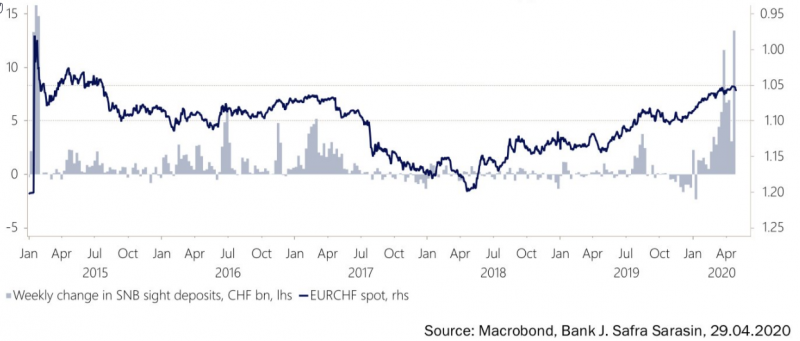
SNB Sight Deposits: decreased by 5.7 billion francs compared to the previous week
-
SNB’s Chairman Schlegel: A few months of negative inflation wouldn’t be a problem
-
2025-07-31 – Interim results of the Swiss National Bank as at 30 June 2025
-
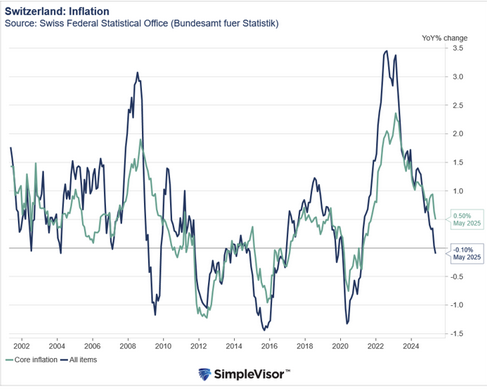
SNB Brings Back Zero Percent Interest Rates
-
Hold-up sur l’eau potable (2/2) : la supercherie de « l’hydrogène vert ». Par Vincent Held
Main SNB Background Info
Featured and recent
-
 What central banks are really signalling with their record gold purchases
 -
 Öl, Gold & Aktien: Warum ich jetzt absolut optimistisch bleibe
 -
 Der RSI 14 Mythos: Warum Standard-Einstellungen oft scheitern
 -
 Sie feiern IHN #krieg #iran #usa #trump #putin #europa #wirtschaft #deutschland #khamenei #israel
 -
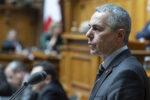 Swiss foreign minister to strengthen partnerships on tour of Africa
 -
 Swiss city draws positive results after three years of controlled cannabis sales
 -
 Could direct democracy put the brakes on trade?
 -
 Long bei Erdöl?
 -
 3-19-26 Will The Fed Backstop Exuberance Again?
 -
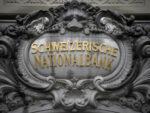 Swiss National Bank keeps interest rate unchanged