







He was always a New York Democrat billionaire, and he was never going to be a champion of working people or free markets. Trump is a Likudnik, not America First, and always was the former and never the latter.
Read More »
Category Archive: 6b.) Mises.org
Latest Federal Killing in Minnesota Echoes Ruby Ridge
The latest killing of a protester in Minneapolis by federal agents is reminiscent of the shooting of Vickie Weaver by a government sniper in 1992. In both cases, the government has refused to acknowledge wrongdoing and has engaged in legal coverups.
Read More »
Read More »
Gold price soars past $5,000 per ounce
"Gold prices tore past another milestone, with tariff threats against Canada and the possibility of a fresh U.S. government shutdown adding fuel to the metal’s historic rally."
Read More »
Read More »
Dedollarization? It’s More Like “De-fiatization”
Investors are not abandoning dollars so much as they are abandoning fiat currency in favor of gold. Gold is rising as a share of reserves, but euros and yen are not.
Read More »
Read More »
Trump says he wants Bessent as Fed Chair
"President Donald Trump said Wednesday that he would like to appoint Treasury Secretary Scott Bessent to chair the Federal Reserve."
Read More »
Read More »
Does Liberalism Fuel Imperialism?
Conventional wisdom tells us the liberal democracies are the most peace-loving nations. But the record tells us something else.
Read More »
Read More »
In the Company of Mavericks: Mark Thornton on the Austrian Comeback
Mark Thornton shares an in-depth interview with Jeremy McKeown on the long rivalry between Austrian and Keynesian economics, and why Austrian ideas may be gaining new traction today.
Read More »
Read More »
Gold Exports, Trade Deficits, and Tariffs
Bob responds to James Rickards’ recent tweet on record U.S. gold exports driving an improved trade balance, walking through the official data on non-monetary gold, Trump-era tariff uncertainty, and the broader question of what chronic trade deficits really mean in a post-gold-standard world.
Read More »
Read More »
How “The Vision of The Anointed” Explains Every Crisis in America
Sowell’s Vision of the Anointed provides a compelling framework to examine key political processes.
Read More »
Read More »
Virtuous Market Distribution vs. Nefarious State Redistribution
Progressives sell state intervention into economic affairs as “protecting” consumers and workers. In all cases, free markets do a better job of protecting all participants.
Read More »
Read More »
On the Failure of Constitutionalism Through the Ages: Norms, Emergencies, and the Administrative State
Constitutionalism gives us the expectation of governance according to rules that everyone from those that are governed to the ones that govern are expected to obey. But what happens if those that govern exempt themselves from those rules?
Read More »
Read More »
The Polish Rothbardians
This week, Dr. Gordon reviews a new work— Reinterpreting Libertarianism: New Directions in Libertarian Studies—and offers insights on some of the contributions.
Read More »
Read More »
The Declaration of Independence Created 13 New Sovereign Countries
Ryan McMaken and historian Larsen Plyler talk about how the Americans of the 1770s envisioned a new community of independent and sovereign states. The first constitution made this clear. But then the new counterrevolutionaries like Hamilton wrote a new constitution designed to create one big national state with vast new powers.
Read More »
Read More »
Using Carl Menger’s Insights To Understand Jew-Gentile Polarizations
Throughout history, Jews have been denounced as “moneylenders,” yet, as Carl Menger noted, there are very good reasons why Jewish people have been overrepresented in banking and finance.
Read More »
Read More »
Menger versus Chartalism: Standards of Empirical Evidence
Menger said alternative monetary theories were “unhistorical,” but one could argue that Menger’s theory also lacks historical evidence necessary to verify his theory. Did Menger display a double standard or a nuanced view as to what we should expect from different monetary theories?
Read More »
Read More »
Trading with the Enemy: An American Tradition
Murray Rothbard recounts how during the French and Indian War (1754–63), Americans continued the great tradition of trading with the enemy.
Read More »
Read More »
Davos Calls For A New World Order
On this episode of Power and Market, Ryan, Connor, and Tho look at the headlines coming out of Davos, including Mark Carney's speech calling out the lie of a "rules-based international order," the European reaction to Trump's plans for Greenland, and the political fallout on both sides of the Atlantic.
Read More »
Read More »
Guns Against the State
Statists denounce self defense as “vigilantism,” declaring that only the “defense” services provided by the state are legitimate. Yet, self defense has always been a fundamental right.
Read More »
Read More »
Reparations Are a Welfare Scheme and Would Have No Effect on Racial Wealth Gaps
For all of the demands for reparations for blacks, the schemes so far have been unworkable and would not address the real wealth gaps between black and white Americans.
Read More »
Read More »
 On Swiss National Bank
-
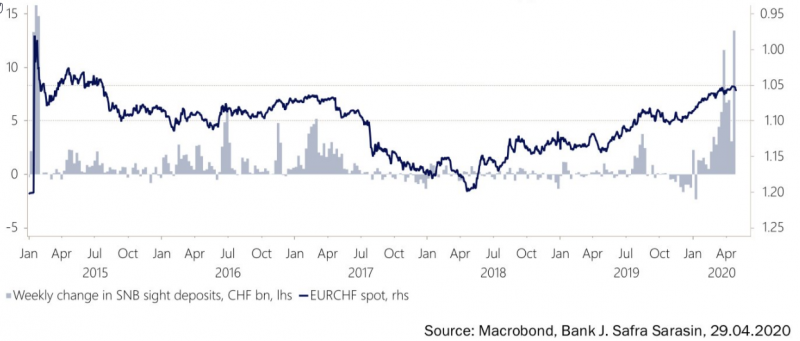
SNB Sight Deposits: decreased by 2.2 billion francs compared to the previous week
-
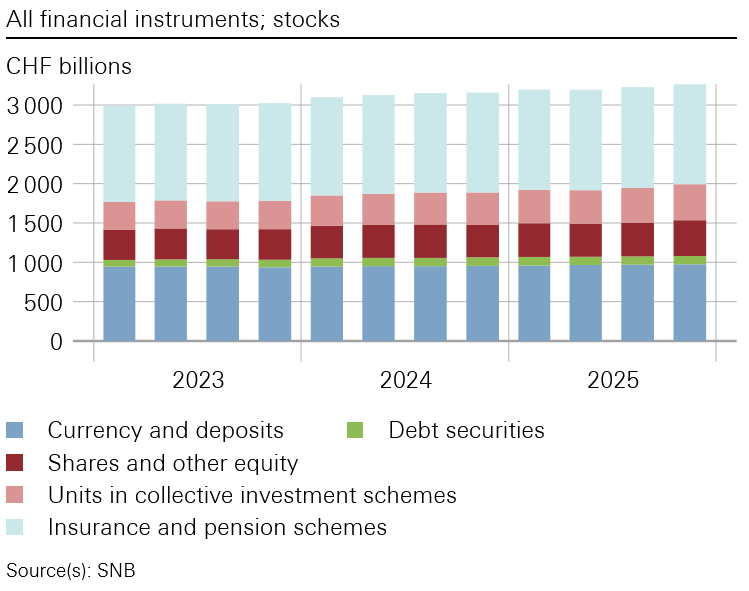
Household wealth in 2025
-
Heads up for NZD and CHF traders, RBNZ Gov Breman and SNB Chair Schlegel to speak
-
Swiss franc appreciation has led to tighter monetary conditions – SNB minutes
-
SNB’s Chairman Schlegel: A few months of negative inflation wouldn’t be a problem
Main SNB Background Info

Featured and recent
-
 SNB Sight Deposits: decreased by 2.2 billion francs compared to the previous week
 -
 Corrections vs. Bear Markets: Why 20% Declines Are Obsolete
 -
 -40 Kilo! Ricarda Lang feiert Abnehmerfolg! Das Internet feiert!
 -
 Steuerrecht digitalisieren mit KI – eine gute Idee?
 -
 Why Switzerland is launching a charm offensive in Southeast Asia
 -
 Ex-Raiffeisen bank CEO fined for tax evasion
 -
 The price of gold matters, but availability matters more.
 -
 FATAL: EU Chefdiplomatin blamiert ganz Europa! China außer sich!
 -
 India’s situation shows why physical gold is different from paper exposure.
 -
 ZUGRIFF auf dein Vermögen: So schützen sich INSIDER