











Category Archive: 6b.) Mises.org

There’s Nothing Hawkish About the Fed’s New Tapering Plan

The Federal Reserve concluded its November Meeting of the Federal Open Market Committee on Wednesday. According to the FOMC’s statement, the Fed now plans to taper beginning in mid-November by cutting back its asset purchases by 10 billion in Treasury securities and 5 billion in mortgage-backed securities.

Read More »

Employer Vaccine Mandates: When the Feds Pay the Piper, they Call the Tune

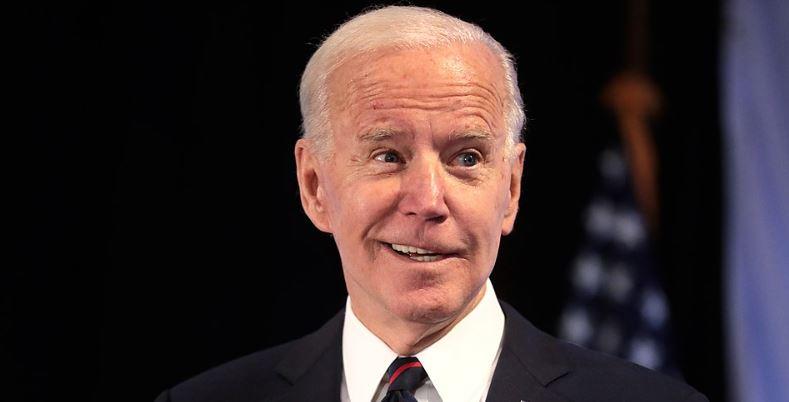
Advocates for vaccine mandates—led by the Biden Administration—are apparently unconcerned that the mandates are likely to drive down total employment and reduce access to government services.

Read More »

Thanks to Central Banks, the Old Investment Rules Don’t Apply Anymore

Thanks to central banks' easy money policies, historically low interest rates and a desperate search for yield have created new danger zones for investors trying to stay out of trouble.

Read More »

What “Inflation” Really Means

Most commentators label increases in the prices of goods and services over a period of time as inflation. Ludwig von Mises however, held that the popular definition of inflation is erroneous.

Read More »

The Great Reset, Part VI: Plans of a Technocratic Elite

In previous installments, I introduced the Great Reset idea1 and treated it in terms of its economic2 and ideological3 components. In this, the sixth installment, I will discuss what the Great Reset entails in terms of governance and the Fourth Industrial Revolution (4-IR), closing with remarks about the overall Great Reset project and its implications.

Read More »

Marxism versus Libertarianism: Two Types of Internationalism

There are two main philosophical and ideological schools of thought that include the problem of internationalism in their principles. The first is liberal internationalism, which developed within the framework of classical liberalism. The second is orthodox Marxism and its various derivatives that entertain the idea of proletarian internationalism.

Read More »

The Federal Reserve’s Assault on Savers Continues

The front-page headline in the Wall Street Journal on October 14 says it all, “Inflation Is Back at Highest in over a Decade.” The Labor Department reported that the Consumer Price Index (CPI) increased 5.4 percent from a year ago.

Read More »

“Idle Resources” Are Problems Caused by the Central Bank

It is not possible to replace productive credit by means of the easy monetary policies of the central bank. If this could have been done, then the world would have already ended poverty. Original Article: "'Idle Resources' Are Problems Caused by the Central Bank" This Audio Mises Wire is generously sponsored by Christopher Condon. Narrated by Michael Stack.

Read More »

Bharat Kanodia: How Subjective Value Generates Valuation In Business

All value is subjective. But often, when an exchange is to be made, a numerical value is required. It’s a special kind of economic calculation, what Bharat Kanodia terms “a subjective opinion based on objective facts”. Bharat has built a career on valuations, from 2-founder garage start-ups to the Eiffel Tower. He shares his knowledge, experience, and insights with the Economics For Business podcast.

Read More »

The Battle over the Free Market

Nicholas Wapshott is a British journalist and biographer with a strong interest in economic theory. He says that the Nobel laureate Edmund Phelps is his mentor. One theme in twentieth-century economics dominates his work: the clash between economists who favor the free market and those who support a “mixed economy,” in which the government plays a large role.

Read More »

Thanks to Central Banks, the Old Investment Rules Don’t Apply Anymore

Sixty percent equities, 40 percent bonds. What has been considered the golden rule of portfolio theory for decades is of less and less value to investors today. Because central banks have backstopped almost every market, essentially mimicking the market maker of last and first resort, returns have been low, correlations have increased, and valuations are deprived of their meaning.

Read More »

Monetary Policy and the Present Trend toward Central Planning

The people of all countries agree that the present state of monetary affairs is unsatisfactory and that a change is highly desirable. However, ideas about the kind of reform needed and about the goal to be aimed at differ widely. There is some confused talk about stability and about a standard which is neither inflationary nor deflationary.

Read More »

Ep. 1995 Jeff Deist and Tom Woods on What Must Be Done

At the Mises Institute's supporters summit over the weekend, Institute president Jeff Deist and I had an informal discussion after dinner in front of the assembled attendees, and reviewed Hans Hoppe's essay "What Must Be Done" as the springboard for our discussion. Warning: zingy.

Read More »

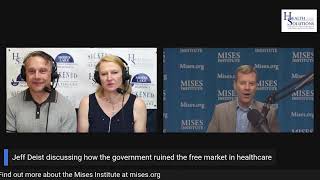
Digitalization Could Move Medical Care Beyond “Government Healthcare”

The reductive and lazy dismissals of the possibility of bringing about free market systems of healthcare, in addition to the administrative and legislative hurdles imposed by government agencies, have all been brought into the limelight in the wake of the pandemic.

Read More »

1789: The First Thing the New American Government Did Was Impose a Huge Tax Increase

It may come as a surprise—though it should not—that one of the very first acts of the new Congress, under the Constitution, was a tax program at least as great as the one imposed on the colonies by Great Britain. It turned out that taxation with representation could be just as oppressive as taxation without representation or worse.

Read More »

Inferno, Canto 21 with Dr. Andrew Moran

Dr. Andrew Moran of the University of Dallas explores canto 21 of Dante's Inferno. 100 Days of Dante is brought to you by Baylor University in collaboration with the Torrey Honors College at Biola University, University of Dallas, Templeton Honors College at Eastern University, the Gonzaga-in-Florence Program and Gonzaga University, and Whitworth University, with support from the M.J. Murdock Trust. To learn more about our project, and read with...

Read More »

Jeff Deist: Why Covid is an Opportunity for the Right!

Our topic is assessing the new post-Covid world. After more than a year of unprecedented state intervention in our private lives, have Americans accepted a grim "new normal"? How bad is the post-Covid economy, from shortages of goods and workers to inflation to rent moratoriums? Will all the monetary and fiscal stimulus really work?

Read More »

How the West Pushed back the Frontiers of Death

The world we come from had lots of death. Every society we know of before the mid-1800s or so saw more than one in four children die during their first year of life. Of those who made it through this first difficult year—through disease, malnutrition, famines, or natural disasters—another quarter or so died before they reached fifteen.

Read More »

Rothbard: With Interest Rates, “There Are Two, Opposite Causal Chains at Work.”

Editor's Note: Interest rates and inflation are certainly connected to efforts on the parts of central banks to loosen and tighten the money supply. These relationships, however, are much more complex than many people suppose. As we've seen in recent weeks, with constant talk about what the Fed will do next, expectations are an important factor in how markets respond to central bank actions.

Read More »

Paul Krugman’s One-Man War on Science

When David Card was recently awarded the Nobel Memorial Price in Economic Science (along with two other economists), I figured Paul Krugman would weight in, since Card, along with the late Alan Krueger, authored an economic study almost thirty years ago that allegedly debunked standard economic theory on the effects of a binding minimum wage. Krugman did not disappoint.

Read More »