Welcome to Whose Economy Is It, Anyway?, where the rules are made up and the dollars don’t matter. Or at least that seems to be the view of the Yellen regime.
As Doug French noted last week, Silicon Valley Bank (SVB) was the canary in the coal mine. Over the weekend, Signature Bank became the third-largest bank failure in modern history, just weeks after both firms were given a stamp of approval by KPMG, one of the Big Four auditing firms.
While...
Silicon Valley Bank (SVB) failed on Friday and was shut down by regulators. It was the second-largest failure in US history and the first since the global financial crisis. Almost immediately, the calls for bailouts started to come in. (Since Friday, First Republic Bank has failed, and many other banks are facing collapse.)
In fact, on March 9, even before SVB failed, billionaire investor Bill Ackman took to Twitter to insist a federal “bailout...
Two "distinguished" healthcare analysts have examined the medical system in the USA and conclude that the REAL problem is . . . large hospitals. Dale Steinreich applies economic analysis to their claims.
Original Article: "Are Large Hospitals the Problem with US Healthcare?"
This Audio Mises Wire is generously sponsored by Christopher Condon.
Keynesians and other economists believe the central bank can influence economic growth via monetary policy but that it may bring inflation. Thus, if the goal is faster economic growth and lower unemployment, then the economy may pay the price with a higher inflation rate. There is supposedly a tradeoff between inflation and unemployment, described by the Phillips curve: the lower the unemployment rate, the higher the rate of inflation; conversely,...
The second-largest collapse of a bank in recent history after Lehman Brothers could have been prevented. Now the impact is too large, and the contagion risk is difficult to measure.
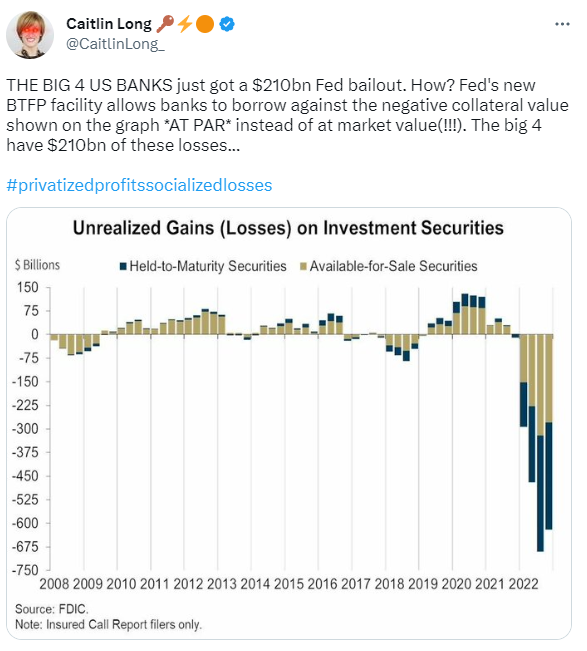
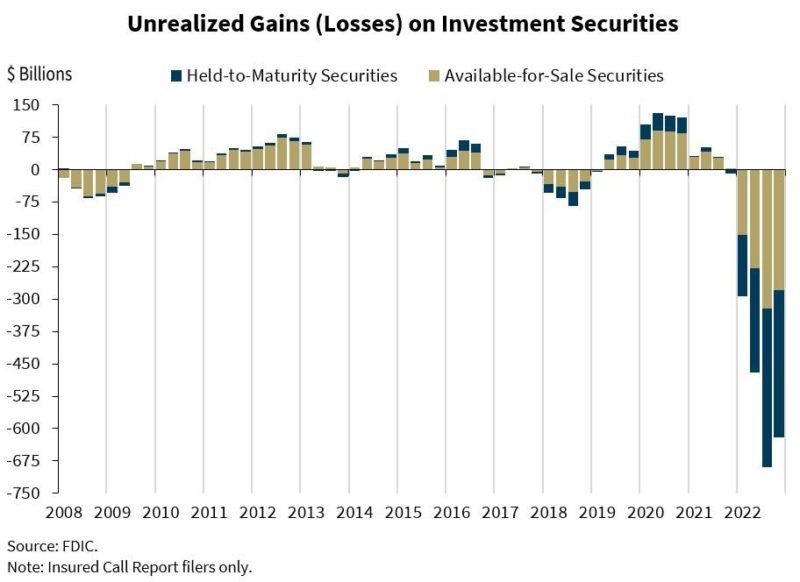
The demise of the Silicon Valley Bank (SVB) is a classic bank run driven by a liquidity event, but the important lesson for everyone is that the enormity of the unrealized losses and the financial hole in the bank’s accounts would not have existed if not for ultra-loose...
Get beyond the PhDs running the Federal Reserve or the way people treat the Fed with deference. In the end, it is nothing but a legal counterfeiting ring.
Original Article: "We Are All Counterfeiters Now"
This Audio Mises Wire is generously sponsored by Christopher Condon.
People say government is corrupt. If it were corrupt, it would be acting in ways contrary and detrimental to its purpose, and it would be possible to right the course. In truth, government acts in ways that befit its nature.
Today’s governments are states ruling by legal coercion. There is another, unacknowledged “government” that works to govern our behavior peacefully, and it’s usually called the free market. But to states, the market—whether...
President Biden's executive order to "strengthen equity" in the federal government is doomed to fail. It will create a lot of havoc in the meantime.
Original Article: "Biden's Executive Order on Equity: It Will Create Greater Inequality"
This Audio Mises Wire is generously sponsored by Christopher Condon.
There is no denying the awful history of slavery in the Western Hemisphere. However, to better understand its legacy, we must rely on truth, not myths.
Original Article: "Slavery in the Americas: Separating Fact from Fiction"
This Audio Mises Wire is generously sponsored by Christopher Condon.
Progressivism is collectivist, anti-individual, and ultimately destroys civilization itself. Austrian economics stands against this force.
Original Article: "Austrian Economics Stands against the Collectivism of Progressive Thought"
This Audio Mises Wire is generously sponsored by Christopher Condon.
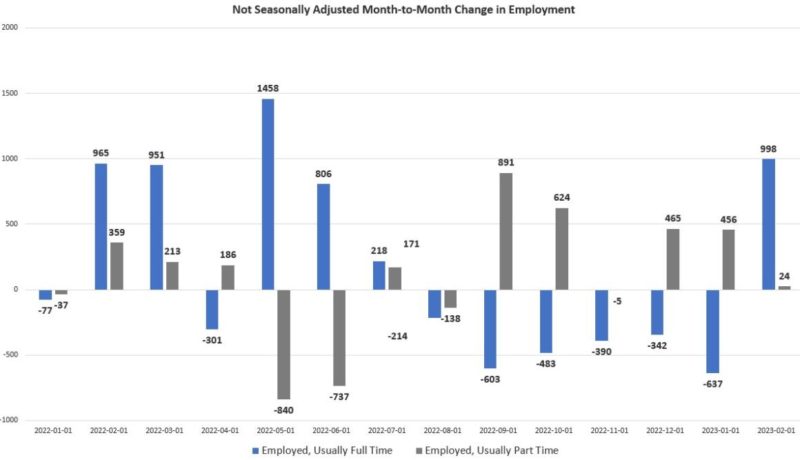
The Bureau of Labor Statistic (BLS) released new jobs data on Friday. According to the report, seasonally adjusted total nonfarm jobs rose 311,000 jobs (seasonally adjusted) in February, which was nearly 100,000 jobs above expectations. The unemployment rate rose slightly from 3.4 percent to 3.6 percent (month over month) but this partly reflected a rising labor participation rate which rose to 62.5 percent, the highest estimate since March 2020. ...
Mark discusses how the Federal Reserve and Covid restrictions greatly increased the price of cardboard boxes; but, with online sales softening, we should expect suppliers to shift the raw materials used to make boxes (wood pulp) into the production of other paper goods, such as toilet paper. Because our demand for toilet paper is relatively inelastic, we should see a decline in the price of toilet paper and better availability.
The market will...
[This article is excerpted from volume 2, chapter 10 of An Austrian Perspective on the History of Economic Thought (1995).
Another important reason for Marx's failure to publish was his candid depiction of the communist society in the essay "Private Property and Communism." In addition to its being philosophic and not economic, he portrayed a horrifying but allegedly necessary stage of society immediately after the necessary violent...
Progressives view all aspects of human life as a struggle against forces of oppression. Earlier this week on BBC, Professor Mariana Mazzucato suggested governments across the West should simply print money not only to help Ukraine, but also to finance other "wars" against climate change, inequality, and more. Should national treasuries essentially adopt a permanent wartime footing and print far more money, as Mazzucato and Warren Mosler...
The foreign policy "elites" have been wrong about regime change, sanctions, "the lesson of Munich," a "rules-based order," and pretty much everything else.
Original Article: "One Year Later in Ukraine: Washington and NATO Got It Very Wrong"
This Audio Mises Wire is generously sponsored by Christopher Condon.
Yearning for Beauty in the Truth of Economic Thinking
We as a human race have a natural desire for beauty, and we as academics have a tendency to get lost in the weeds and forget this. Mises Institute president Jeff Deist has articulated this better than perhaps anyone before him in a speech (“We Need Truth and Beauty”) where he stated:
We know Austrian economics is fundamentally true; in fact, truth is its most important and fundamental...
If you watched the Fed Chair Jerome Powell testify before the senate and the House, you heard over and over that banks are well capitalized. The non-sequitur should inspire the Shakespearean quote “Methinks you protest too much.” The very next day after the hearings, shares of SVB Financial Group, parent of Silicon Valley Bank, fell 60 percent (and another 30 percent in afterhours trading at this writing) after a Wall Street Journal article...
Economics in ActionBy Brian BalfourThales Press, 2022; 306 pp.
“Public” high schools are for the most part rotten to the core, and it is widely recognized, if not quite “a truth universally acknowledged,” that they need to be replaced. But what should students in private schools or homeschooling programs be taught? If we wish to rescue our young people from the socialist and “woke” propaganda inflicted on them in government institutions, it is...
President Biden's call for more protectionism isn't aimed improving the US economy. Instead, it is about creating a war-footing autarky.
Original Article: "Readying the War State: Biden Recommits to Protectionism in the SOTU"
This Audio Mises Wire is generously sponsored by Christopher Condon.
Thus, the nearly half the adults in America who haven’t saved remain childlike and live in barbarism.
For those who are saving, volatile markets point to a less-than-cozy retirement for the majority. Last year’s beat down of the average 401(k) plan was 20 percent, which didn’t help. But retirement participants are keeping the sunny-side up, believing “they’ll move closer to their retirement goal by ending 2023 with more in retirement savings than...











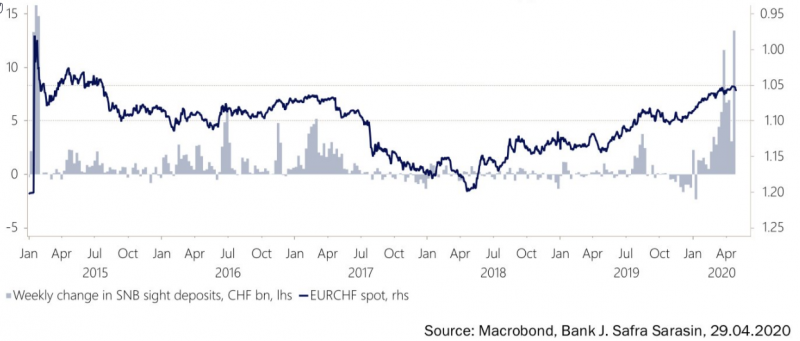
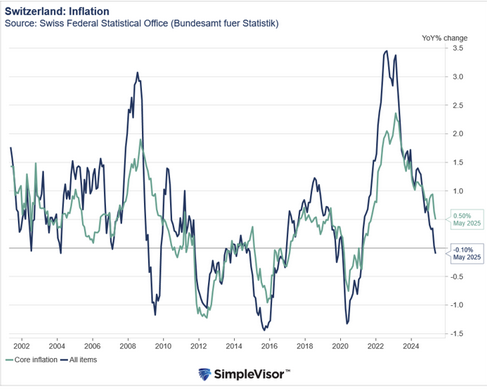
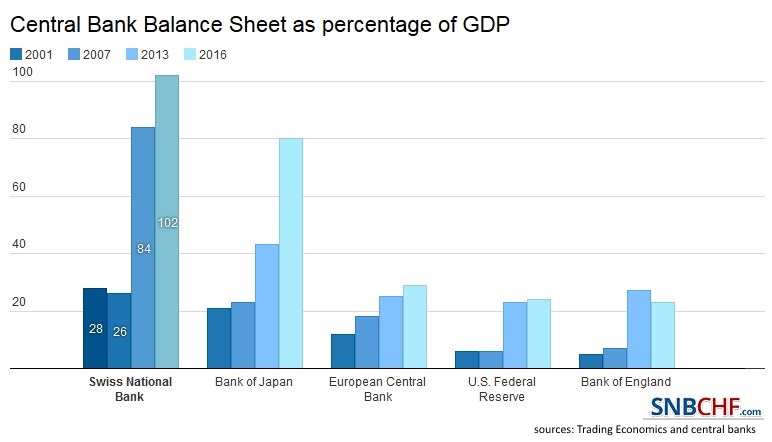
 On Swiss National Bank