







Most supporters of the free market when Murray wrote MES supported a limited state, but Murray wanted to get rid of the state altogether. This was too much for the Cold Warriors.
Read More »
Category Archive: 6b.) Mises.org
War with Iran Is Not in the Interest of the American People
The United States is dangerously close to entering yet another war in the Middle East. But this one has the potential to be a lot costlier for the American people while remaining just as unlikely to bring about peace and stability in the region.
Read More »
Read More »
US Intelligence: Iran Was Not Pursuing Nuclear Bomb Before Israel’s Attack
The US assessment goes against claims from Israeli PM Netanyahu, who launched the war under the pretext of preventing Iran from obtaining a nuclear weapon.
Read More »
Read More »
Interest Paid on the US Debt Soars, and Trump Pushes for a New Costly War
During 2024 taxpayers were on the hook for $1.13 trillion in interest on the debt. That’s nearly $7,400 for each of the 153 million people who file tax returns.
Read More »
Read More »
Interest Paid on the US Debt Soars, and Trump Pushes for a New Costly War
During 2024 taxpayers were on the hook for $1.13 trillion in interest on the debt. That’s nearly $7,400 for each of the 153 million people who file tax returns.
Read More »
Read More »
Ending Subsidies to Amtrak Will Benefit Rail Travelers
Amtrak subsidies keep many of Amtrak‘s routes alive despite the fact that ridership is down on many of them. These subsidies guarantee that Amtrak will be a second-rate, undercapitalized passenger railroad system.
Read More »
Read More »
Trump Says he Wants Lower Interest Rates as the Fed Holds Steady at 4.5 Percent
Thanks to the sort of inflationary policy Trump prefers, it will take years to rebuild the economy on a stable foundation of saving and investment, rather than on mountains of easy-money-fueled bubbles.
Read More »
Read More »
Airline Passenger Volume Is Down Amid Falling Demand and Slowing Economy
Year-over-year drops in passenger traffic is well correlated with changes in the employment level, and passenger traffic fell for two months in a row.
Read More »
Read More »
War with Iran Is Not in the Interest of the American People
The United States is dangerously close to entering yet another war in the Middle East. But this one has the potential to be a lot costlier for the American people while remaining just as unlikely to bring about peace and stability in the region.
Read More »
Read More »
Israeli Official Says War With Iran Is ‘Premised’ on the Idea of the US Entering
The Israeli state and its supporters view the American taxpayers as people to be exploited and defrauded for the benefit of a regime that offers Americans nothing in return.
Read More »
Read More »
Sound Monetary Policy in Under 40 Words
If wealth could be created out of scraps of paper or their digital equivalent, world poverty would be a thing of the past. Remember, the commodity money takes care of itself—and us too, if we let it.
Read More »
Read More »
Trump’s Tariff Policies Are Schizophrenic
Why is the Trump administration levying tariffs? Are they for tax purposes? Protecting domestic industries? Bargaining chips for international deal making? The administration and its supporters have floated mutually-exclusive reasons for these policies, making the confusion worse.
Read More »
Read More »
Trump, DOGE, and the Machiavellians
Despite Trump‘s campaign promises and despite DOGE‘s so-called reputation of cutting government waste, the new administration is spending money faster than the supposed spendthrift Biden administration. This is Machiavellianism at its best.
Read More »
Read More »
Trump (Again) Demands More Easy Money To Help Fund Even Bigger Deficits
Trump says he wants the US central bank to be more like the European Central Bank which has been more aggressively forcing down interest rates in recent months.
Read More »
Read More »
Ending Subsidies to Amtrak Will Benefit Rail Travelers
Amtrak subsidies keep many of Amtrak‘s routes alive despite the fact that ridership is down on many of them. These subsidies guarantee that Amtrak will be a second-rate, undercapitalized passenger railroad system.
Read More »
Read More »
Trump, DOGE, and the Machiavellians
Despite Trump‘s campaign promises and despite DOGE‘s so-called reputation of cutting government waste, the new administration is spending money faster than the supposed spendthrift Biden administration. This is Machiavellianism at its best.
Read More »
Read More »
How Trump Chose the State of Israel and Ditched America First
Trump is now weighing sending in the US military. This presidency looks like an extension of George W. Bush's.
Read More »
Read More »
Trump says he decides what is “America First” and he goes to war for a foreign country
Tucker Carlson opposes Trump's new war, so Trump claims to have invented "America First" and repeats banal slogans about weapons of mass destruction.
Read More »
Read More »
Great Big Ugly Surveillance State
The abandonment of liberty because fear drives people to trust government promises of safety is a phenomenon we have witnessed several times this century.
Read More »
Read More »
The Young Rothbard: An Uncomfortable Neoclassical Economist
Before he revolutionized economics, Rothbard mastered the mainstream. Salerno traces Rothbard's path from neoclassical insider to Austrian iconoclast.
Read More »
Read More »
 On Swiss National Bank
-
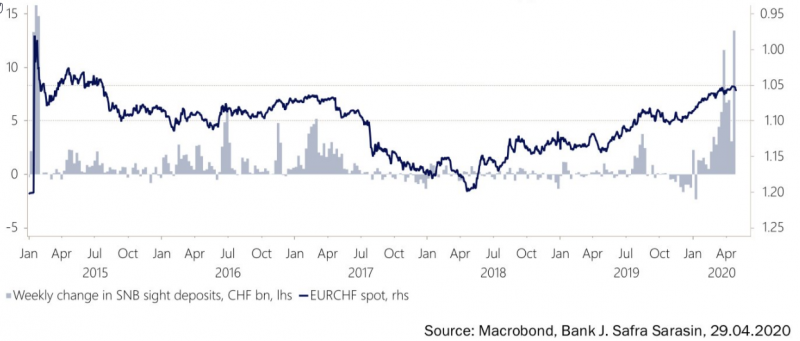
SNB Sight Deposits: decreased by 2.2 billion francs compared to the previous week
-
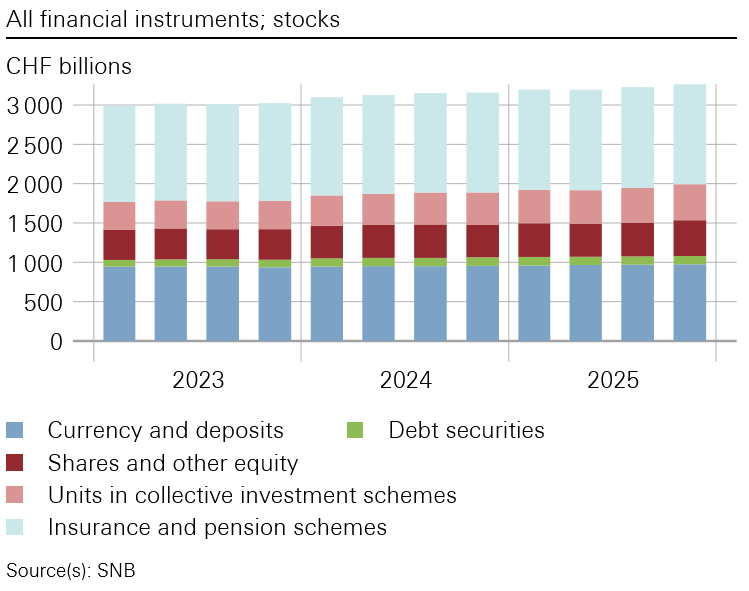
Household wealth in 2025
-
Heads up for NZD and CHF traders, RBNZ Gov Breman and SNB Chair Schlegel to speak
-
Swiss franc appreciation has led to tighter monetary conditions – SNB minutes
-
SNB’s Chairman Schlegel: A few months of negative inflation wouldn’t be a problem
Main SNB Background Info

Featured and recent
-
 SNB Sight Deposits: decreased by 2.2 billion francs compared to the previous week
 -
 Corrections vs. Bear Markets: Why 20% Declines Are Obsolete
 -
 -40 Kilo! Ricarda Lang feiert Abnehmerfolg! Das Internet feiert!
 -
 Steuerrecht digitalisieren mit KI – eine gute Idee?
 -
 Why Switzerland is launching a charm offensive in Southeast Asia
 -
 Ex-Raiffeisen bank CEO fined for tax evasion
 -
 The price of gold matters, but availability matters more.
 -
 FATAL: EU Chefdiplomatin blamiert ganz Europa! China außer sich!
 -
 India’s situation shows why physical gold is different from paper exposure.
 -
 ZUGRIFF auf dein Vermögen: So schützen sich INSIDER