For more than two centuries, the doomsday crowd has claimed that capital development will create mass unemployment. And for two centuries, they have been wrong. The same goes for artificial intelligence.
Read More »2026-03-23




2026-03-23
For more than two centuries, the doomsday crowd has claimed that capital development will create mass unemployment. And for two centuries, they have been wrong. The same goes for artificial intelligence.
Read More »2026-02-09
The modern state doesn’t get its power from the consent of the governed. Instead, it creates crises and then uses coercion to demand obedience.
Read More »2026-02-08
The modern state doesn’t get its power from the consent of the governed. Instead, it creates crises and then uses coercion to demand obedience.
Read More »2025-11-18
Inflation is not just an economic phenomenon. It also undercuts the foundations of a civilization, leading to the breakdown of society itself.
Read More »2025-11-16
Inflation is not just an economic phenomenon. It also undercuts the foundations of a civilization, leading to the breakdown of society itself.
Read More »2025-11-11
As Americans celebrate the destructive wars that helped shape this country, we also remember that free markets promote peace and individual liberty.
Read More »2025-10-04
Artificial Intelligence, for all of the fear-mongering taking place, simply is a tool that if applied in a free market setting will make our economy stronger, not weaker.
Read More »2024-11-26
What is the Mises Institute?
The Mises Institute is a non-profit organization that exists to promote teaching and research in the Austrian School of economics, individual freedom, honest history, and international peace, in the tradition of Ludwig von Mises and Murray N. Rothbard. Non-political, non-partisan, and non-PC, we advocate a radical shift in the intellectual climate, away from statism and toward a private property order. We believe that our foundational ideas are of permanent value, and oppose all efforts at compromise, sellout, and amalgamation of these ideas with fashionable political, cultural, and social doctrines inimical to their spirit.
Read More »2024-10-23
In the broad liberty movement, within its niche subcommunities, it’s almost inevitable that you’ll encounter infighting, especially when debates arise about using political means to achieve liberty. These discussions tend to flare up online around election season, as the topic of voting becomes more prominent in the public discourse. Generally, two camps emerge in these debates: what we might call the “purist” camp and the “practical” camp. By highlighting the often-overlooked nuances within these arguments, we can step back and see the bigger picture—understanding how liberty-minded individuals can make informed voting choices that align with their principles.The “Purists”Let’s begin by examining the purist camp. When the topic of voting or political engagement arises, they often rally
Read More »2024-05-12
What is the Mises Institute?
The Mises Institute is a non-profit organization that exists to promote teaching and research in the Austrian School of economics, individual freedom, honest history, and international peace, in the tradition of Ludwig von Mises and Murray N. Rothbard. Non-political, non-partisan, and non-PC, we advocate a radical shift in the intellectual climate, away from statism and toward a private property order. We believe that our foundational ideas are of permanent value, and oppose all efforts at compromise, sellout, and amalgamation of these ideas with fashionable political, cultural, and social doctrines inimical to their spirit.
Read More »2024-04-04
Statists demand that proponents of the free market explain in painstaking detail how every conceivable service would be provided without the heavy hand of government coercion. How would law be administered? How would security be maintained? How would charity and education function? And of course, the tiresome refrain—who will build the roads? While Austrian economists have offered satisfactory answers to these questions, entertaining them may project a fundamental misunderstanding of the nature of the free market itself.The Austrian insight into spontaneous order transcends the realm of mere economic theory, representing a profound epistemological paradigm shift. It rejects the hubristic notion that human reason can fully comprehend, let alone control, the complexities of social
Read More »2023-12-01
While the Fed tries to engineer the mythical “soft landing” for the economy, Austrian economists know that this is an exercise in futility. Once the credit-fueled boom occurs, the bust logically follows.
Original Article: The Inevitable Bust: Why Economic Booms Contain the Seeds of Their Own Destruction
2023-11-16
While the White House claims that inflation is losing steam, the truth is that unless the government changes its reckless monetary course, hyperinflation could be in our economic future.
Original Article: The Specter of Hyperinflation Looms over the Economy
2023-11-14
The recurring cycle of economic booms followed by inevitable busts has remained a puzzle for generations of observers. While mainstream Keynesian and monetarist theories propose monetary interventions to smooth these fluctuations, the Austrian School offers a compelling and alternative perspective. Austrian business cycle theory provides a profound understanding of how artificially inflated booms sow the seeds of their own destruction. Delving into the depth of this theory illuminates the inherently unsustainable nature of economic upswings driven by the availability of cheap credit and inflation.
The Core of the Theory: Artificial Booms Lead to Busts
The Austrian business cycle theory argues that efforts to artificially suppress interest rates below natural market levels fuel an
2023-10-28
The threat of hyperinflation has haunted fiat money economies throughout history. Although past empires crumbled under the weight of unrestrained money printing, modern bankers at the Federal Reserve assure us that today’s financial system is immune to such a fate. Austrian business cycle theory, however, reveals that current economic stimulation may be propelling us toward a crisis of catastrophic proportions: a crack-up boom that marks the dramatic end of this boom-and-bust cycle. When a central bank expands the money supply to reinflate bubbles, it destroys the currency’s purchasing power. This endgame, in which the monetary system crumbles beneath a weak economy, represents the ultimate failure of interventionism. Once the public expects prices to keep rising, hyperinflation becomes a
Read More »2023-09-23
To progressive elites, the state (at least one run by progressives) is omniscient and all-powerful. To anyone with understanding, the state is an entity usually run by gangsters.
Original Article: The State as Modern-Day Superstition: Unraveling the Illusions of Authority
Read More »2023-09-14
After governments create crises, they use those crises to seize new powers. After the crisis subsides, governments give up some, but not all, of their new authority, which we call the ratchet effect.
Original Article: "Beyond Crisis: The Ratchet Effect and the Erosion of Liberty"
2023-09-11
It is no crime to be ignorant of economics, which is, after all, a specialized discipline and one that most people consider to be a “dismal science.” But it is totally irresponsible to have a loud and vociferous opinion on economic subjects while remaining in this state of ignorance.
—Murray Rothbard, “The Death Wish of the Anarcho-Communists”
The Austrian school of economics stands as a beacon, illuminating the path to economic understanding through a perspective that diverges markedly from the methodologies of controlled experimentation and empirical observation that define the natural sciences. Instead, Austrian economics lays bare the timeless truths of economic phenomena through the art of deductive reasoning, drawing its power from self-evident axioms that underpin the intricate
2023-09-02
The open protocols on the internet would seem to create chaos, but it turns out that they produce the opposite results, encouraging a digital spontaneous order.
Original Article: "Breaking Free: How Open Protocols Foster Entrepreneurship, Spontaneous Order, and Individual Sovereignty"
Read More »2023-08-28

Without the erroneous public perception and judgment of the state as just and necessary and without the public’s voluntary cooperation, even the seemingly most powerful government would implode and its powers evaporate. Thus liberated, we would regain our right to self-defense and be able to turn to freed and unregulated insurance agencies for efficient professional assistance in all matters of protection and conflict resolution.
—Hans-Hermann Hoppe, The Production of Defense
In contemporary times, the state has assumed an aura of sacred infallibility, commanding zealous and unquestioning devotion from its citizenry. This blind allegiance mirrors the fervent tribal reverence once conferred upon shamans in ancient societies, where faith and tradition superseded rational inquiry. However,
2023-08-24
The simplest action of economics—beneficially mutual voluntary exchange—is also its most profound. People serve each other while improving their own lot in life.
Original Article: "The Simplicity and Significance of Mutual Economic Exchange"
Read More »2023-08-18

The Constitution “is not a suicide pact,” said Justice Arthur Goldberg in the court’s opinion in the 1963 Supreme Court case of Kennedy v. Mendoza-Martinez. His statement highlights a fundamental truth: in times of crisis, governments often feel compelled to take extraordinary measures to protect their citizens and maintain order.
However, this desire to act swiftly and decisively can lead down a perilous path where the expansion of government power becomes a seemingly irreversible process. Welcome to the world of the ratchet effect.
What Is the Ratchet Effect?
This phenomenon gets its name from the mechanical device called a ratchet, which allows motion in one direction only. Just as a ratchet prevents backward movement, the ratchet effect ensures that government power advances
2023-08-08

In the dynamic and ever-evolving digital landscape, open protocols have emerged as a powerful force, challenging closed-source models and reshaping industries. Beyond their technical merits, open protocols embody fundamental economic principles that foster innovation, competition, decentralized decision-making, and even censorship resistance. By embracing open protocols, societies can harness the creative energies of individuals and entrepreneurs, empowering them to discover, create, communicate freely, and resist censorship in the digital age.
Spontaneous Order and the Market Process
At the core of open protocols lies the principle of spontaneous order, enabling decentralized decision-making and voluntary interactions among individuals and businesses. Unlike closed-source models that
2023-08-01

Economic exchange stands as the defining essence of any economy, epitomizing the intricate web of interconnected transactions that shape its very existence. In essence, an economy derives its essence from the culmination of individual exchanges. However, the profound impact of the crucial distinction between voluntary choice and coercion often goes unnoticed by many outside the realm of economic study. In this article, we delve deeper into the dynamics of economic exchange, shining a light on the transformative power of voluntary exchanges and the far-reaching repercussions of coercion on societal well-being.
Economic exchange operates along a spectrum, with voluntary choice on one end and coercion on the other. Voluntary exchanges occur when individuals willingly engage in transactions
2023-07-27
More than two thousand years ago, the ancient Chinese Tao presented ideas that are reflected in F.A. Hayek’s concept of spontaneous order.
Original Article: "The Tao and the Synergy of the Spontaneous Order"
Read More »2023-07-14

The recognition of the insuperable limits to his knowledge ought indeed to teach the student of society a lesson in humility which should guard him against becoming an accomplice in men’s fatal striving to control society—a striving which makes him not only a tyrant over his fellows, but which may well make him the destroyer of a civilization which no brain has designed but which has grown from the free efforts of millions of individuals.
—Friedrich A. Hayek, “The Pretense of Knowledge”
Friedrich Hayek’s theory of spontaneous order has long been regarded as a cornerstone of classical liberalism within Austrian economic thought. It delves into the intricate tapestry of human action, emphasizing the limitations of individuals—driven by their unique knowledge and desires—to coordinate
2023-07-01

Most cartels and trusts would never have been set up had not the governments created the necessary conditions by protectionist measures. Manufacturing and commercial monopolies owe their origin not to a tendency immanent in capitalist economy but to governmental interventionist policy directed against free trade and laisser-faire.
—Ludwig von Mises, Socialism
The concept of natural monopolies has often intrigued economists and policymakers, serving as a cornerstone for proponents of statism. They argue that certain industries naturally lead to a dominant firm, impeding competition and requiring government intervention. However, closer inspection reveals that these “natural monopolies” are illusions caused by harmful government interference.
To understand the fallacy of natural monopolies,
2023-06-23

The free market system has faced its fair share of criticism, often being labeled as a breeding ground for greed and self-interest. However, let’s take a closer look and see how greed, when properly channeled and regulated within a free market framework, can actually bring about positive outcomes for society.
One fascinating thought experiment that showcases the positive role of greed in the free market is Adam Smith’s concept of the “invisible hand.” Smith proposed that when individuals pursue their own self-interest, unintended benefits are generated for society as a whole. By seeking personal gain, individuals are motivated to produce goods and services that others value, leading to voluntary exchanges that benefit both parties. This intricate network of self-interest forms the
 On Swiss National Bank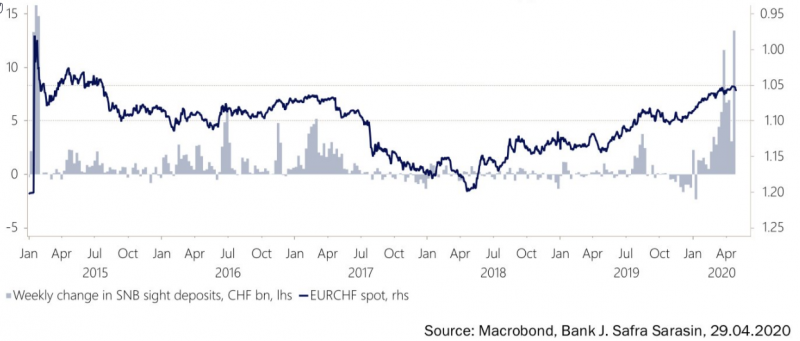
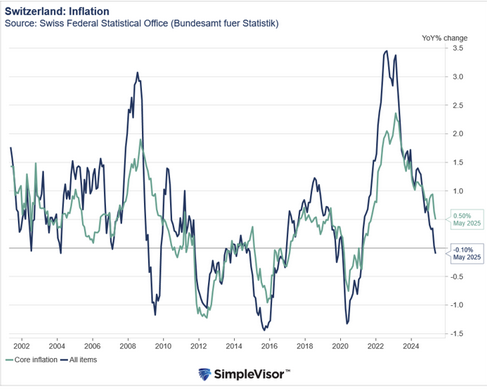 Main SNB Background Info