James Grant
James Grant was born in 1946, the year interest rates put in their mid-20th century lows. He founded Grant’s Interest Rate Observer, a twice-monthly journal of the financial markets, in 1983, two years after interest rates recorded their modern-day highs.Full bio
James Grant was born in 1946, the year interest rates put in their mid-20th century lows. He founded Grant’s Interest Rate Observer, a twice-monthly journal of the financial markets, in 1983, two years after interest rates recorded their modern-day highs.
Born in New York City and raised on Long Island, he had thoughts, first, of a career in music, not interest rates—french horn was his love. But he threw it over to enter the Navy. Following enlisted service aboard the U.S.S. Hornet, and, as a newly minted, 20-year-old civilian, on the bond desk of McDonnell & Co., he enrolled at Indiana University. There he studied economics under Scott Gordon and Elmus Wicker and diplomatic history under Robert H. Ferrell. He graduated, Phi Beta Kappa, with a Bachelor of Arts degree in economics in 1970. Next came two happily unstructured years at Columbia University that produced a master’s degree in something called international affairs but, more importantly, the privilege of studying under the cultural historian, critic and public intellectual Jacques Barzun.
In 1972, at the age of 26, Grant landed his first real job, as a cub reporter at the Baltimore Sun. There he met his future wife, Patricia Kavanagh, and discovered a calling in financial journalism. It seemed that nobody else wanted to work in business news. Grant served an apprenticeship under the longsuffering financial editor, Jesse Glasgow. He moved to Barron’s in 1975.
The late 1970s were years of inflation, monetary disorder and upheaval in the interest-rate markets—in short, of journalistic opportunity. It happened that the job of covering bonds, the Federal Reserve and related topics was vacant. In the mainly placid years of the 1950s and 1960s, those subjects had seemed too dull to care about. But now they were supremely important—even interesting—and the editor of Barron’s, Robert M. Bleiberg, tapped Grant to originate a column devoted to interest rates. This weekly department, called “Current Yield,” he wrote until the time he left to found the eponymous Interest Rate Observer in the summer of 1983.
Grant’s books include three financial histories, a pair of collections of Grant’s articles and three biographies. The titles are these: “Money of the Mind” (Farrar, Straus & Giroux, 1992), “The Trouble with Prosperity” (Times Books, 1996) “Minding Mr. Market” (Farrar, Straus & Giroux, 1993), “Mr. Market Miscalculates” (Axios Press, 2008) and “The Forgotten Depression, 1921: the Crash that Cured Itself” (Simon & Schuster, 2014), which won the 2015 Hayek Prize of the Manhattan Institute for Policy Research.
Also, “Bernard M. Baruch: The Adventures of a Wall Street Legend” (Simon & Schuster, 1983), “John Adams: Party of One” (Farrar, Straus & Giroux, 2005) and Mr. Speaker! The Life and Times of Thomas B. Reed, the Man Who Broke the Filibuster” (Simon & Schuster, 2011).
Grant’s television appearances include “60 Minutes,” “The Charlie Rose Show,” Deirdre Bolton’s “Money Moves” program on Bloomberg TV and a 10-year stint on "Wall Street Week". His journalism has appeared in a variety of periodicals, including the Financial Times, The Wall Street Journal and Foreign Affairs, and he contributed an essay to the Sixth Edition of Graham and Dodd's “Security Analysis” (McGraw-Hill, 2009).
Grant is a 2013 inductee into the Fixed Income Analysts Society Hall of Fame. He is a member of the Council on Foreign Relations and a trustee of the New-York Historical Society.
He and his wife live in Brooklyn. They are the parents of four grown children.
Born in New York City and raised on Long Island, he had thoughts, first, of a career in music, not interest rates—french horn was his love. But he threw it over to enter the Navy. Following enlisted service aboard the U.S.S. Hornet, and, as a newly minted, 20-year-old civilian, on the bond desk of McDonnell & Co., he enrolled at Indiana University. There he studied economics under Scott Gordon and Elmus Wicker and diplomatic history under Robert H. Ferrell. He graduated, Phi Beta Kappa, with a Bachelor of Arts degree in economics in 1970. Next came two happily unstructured years at Columbia University that produced a master’s degree in something called international affairs but, more importantly, the privilege of studying under the cultural historian, critic and public intellectual Jacques Barzun.
In 1972, at the age of 26, Grant landed his first real job, as a cub reporter at the Baltimore Sun. There he met his future wife, Patricia Kavanagh, and discovered a calling in financial journalism. It seemed that nobody else wanted to work in business news. Grant served an apprenticeship under the longsuffering financial editor, Jesse Glasgow. He moved to Barron’s in 1975.
The late 1970s were years of inflation, monetary disorder and upheaval in the interest-rate markets—in short, of journalistic opportunity. It happened that the job of covering bonds, the Federal Reserve and related topics was vacant. In the mainly placid years of the 1950s and 1960s, those subjects had seemed too dull to care about. But now they were supremely important—even interesting—and the editor of Barron’s, Robert M. Bleiberg, tapped Grant to originate a column devoted to interest rates. This weekly department, called “Current Yield,” he wrote until the time he left to found the eponymous Interest Rate Observer in the summer of 1983.
Grant’s books include three financial histories, a pair of collections of Grant’s articles and three biographies. The titles are these: “Money of the Mind” (Farrar, Straus & Giroux, 1992), “The Trouble with Prosperity” (Times Books, 1996) “Minding Mr. Market” (Farrar, Straus & Giroux, 1993), “Mr. Market Miscalculates” (Axios Press, 2008) and “The Forgotten Depression, 1921: the Crash that Cured Itself” (Simon & Schuster, 2014), which won the 2015 Hayek Prize of the Manhattan Institute for Policy Research.
Also, “Bernard M. Baruch: The Adventures of a Wall Street Legend” (Simon & Schuster, 1983), “John Adams: Party of One” (Farrar, Straus & Giroux, 2005) and Mr. Speaker! The Life and Times of Thomas B. Reed, the Man Who Broke the Filibuster” (Simon & Schuster, 2011).
Grant’s television appearances include “60 Minutes,” “The Charlie Rose Show,” Deirdre Bolton’s “Money Moves” program on Bloomberg TV and a 10-year stint on "Wall Street Week". His journalism has appeared in a variety of periodicals, including the Financial Times, The Wall Street Journal and Foreign Affairs, and he contributed an essay to the Sixth Edition of Graham and Dodd's “Security Analysis” (McGraw-Hill, 2009).
Grant is a 2013 inductee into the Fixed Income Analysts Society Hall of Fame. He is a member of the Council on Foreign Relations and a trustee of the New-York Historical Society.
He and his wife live in Brooklyn. They are the parents of four grown children.
Receive a Daily Mail from this Blog
Live Currency Cross Rates
On Swiss National Bank
-
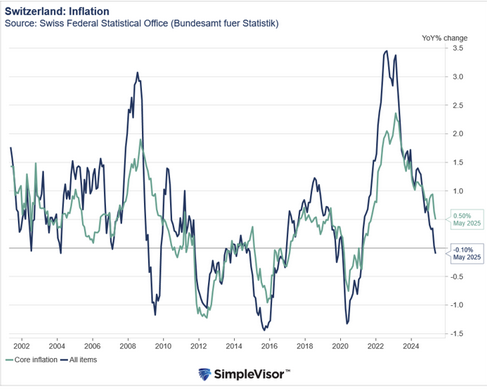
SNB’s Chairman Schlegel: A few months of negative inflation wouldn’t be a problem
2026-01-21 -
2025-07-31 – Interim results of the Swiss National Bank as at 30 June 2025
2025-07-31 -
SNB Brings Back Zero Percent Interest Rates
2025-06-26 -
Hold-up sur l’eau potable (2/2) : la supercherie de « l’hydrogène vert ». Par Vincent Held
2025-06-24 -
2025-06-25 – Quarterly Bulletin 2/2025
2025-06-25
Main SNB Background Info
-
The Secret History Of The Banking Crisis
2017-08-14 -
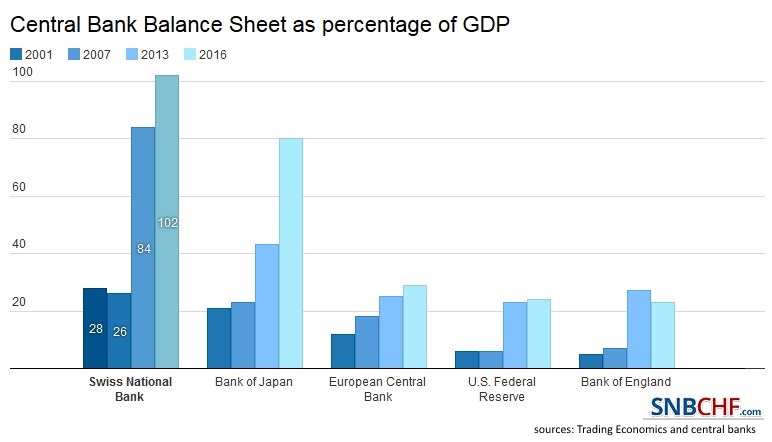
SNB Balance Sheet Now Over 100 percent GDP
2016-08-29 -
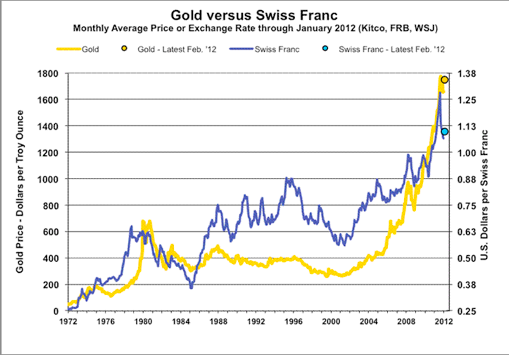
The relationship between CHF and gold
2016-07-23 -
CHF Price Movements: Correlations between CHF and the German Economy
2016-07-22 -
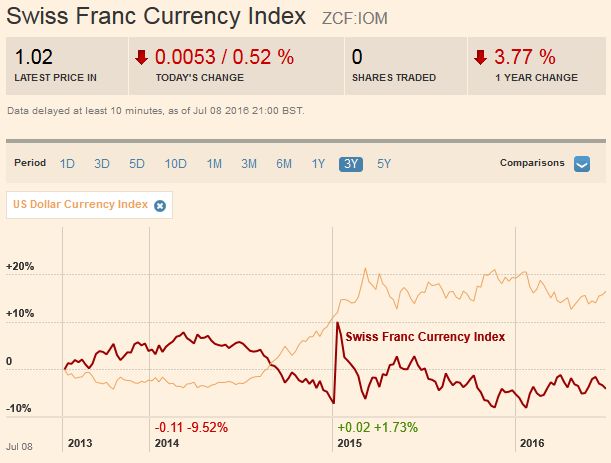
Swiss Franc Trade-Weighted Index, Performance Far Worse than Dollar Index
2016-07-08
Featured and recent
-
The Elusive Giffen Good, Once Again
-
Die 300.000 Euro Steuerfalle beim Dividenden-Trading! -
Wealth vs. Money -
4-7-26 AI Advertising Explained: How Brands Win Inside ChatGPT -

Entrepreneurship as Agreement Under Uncertainty
-
Gotthard tunnel see traffic logjam at end of Easter break -

Price Inflation and the Price of Oil
-
Trump begs for ceasefire. Iran rejects it.
-
Petition defends Swiss roots at iconic brand Aromat -
Trump’s Iran War: Worse Than Expected, But Better Than Hoped?