The Economist’s editor-in-chief, Zanny Minton Beddoes, pushes Keir Starmer on why he hasn’t made bigger reforms, given the pressure Britain’s Labour party is under from the populist right-wing.
View moreWhy hasn’t Keir Starmer made bigger reforms?







The Economist’s editor-in-chief, Zanny Minton Beddoes, pushes Keir Starmer on why he hasn’t made bigger reforms, given the pressure Britain’s Labour party is under from the populist right-wing.
View more
Sir Keir Starmer called Reform UK, Nigel Farage’s populist right-wing party, “pro-Putin or Putin-neutral”. In an interview with The Economist’s editor-in-chief, @ZannyMintonBeddoes, Britain’s embattled prime minister said a Reform government would harm Britain and potentially break the West.
The full interview will be available to watch at 4pm UK time. Click the link to watch: https://www.economist.com/insider
View more
Britain’s prime minister, Sir Keir Starmer, has told The Economist that the populist right-wing Reform UK party would "tear our country apart" if they came to power.
Speaking to our editor-in-chief, Zanny Minton Beddoes, the prime minister said he believes that his government is the last chance for centrist politics in Britain.
The full interview will be available to watch at 6pm UK time at https://www.economist.com/insider
View more
Arrested as he tried to leave Iran, Nicolas Pelham, The Economist’s Middle East correspondent, was detained for seven weeks in 2019. Now the regime has invited him back.
View more
India is taking a different path on AI. It is embedding AI models built by Indian universities in the government tech stack.
On the latest episode of Inside Tech, Tom Standage and Alex Hern explain how India’s approach works and why it stands out globally.
00:00 – Why India’s AI strategy stands out
01:12 – Why language is important
03:05 – What India’s experiment means for global AI
Watch the full show: https://econ.st/4iyEJu7
How can a middle power compete in AI: https://econ.st/3Y5X48o
India has a unique opportunity to lead in AI: https://econ.st/4pa1ZBf
Sign up to the Insider newsletter: https://econ.st/4nOyzIb
View more
Looking for a Christmas present for a bookworm in your life? Rachel Lloyd, our deputy culture editor, shares five of our favourite non-fiction books of 2025.
View more
Plagued by corruption and weakened on the battlefield, Ukraine now risks being beaten at the negotiating table. If it does not show that it is willing to talk peace, it risks losing American support. Zanny Minton Beddoes, our editor-in-chief, and Edward Carr, deputy editor, and a panel of our experts dissect the latest peace plan and what it means for Ukraine. #ukraine #russia
View more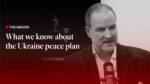
Plagued by corruption and weakened on the battlefield, Ukraine now risks being beaten at the negotiating table, too. If it does not show that it is willing to talk peace, it risks losing American support. Zanny Minton Beddoes, our editor-in-chief, and Edward Carr, deputy editor, and a panel of our experts dissect the latest peace plan and what it means for Ukraine.
00:00 – What we know about the negotiations
03:30 – Who leaked the Steve Witkoff-Yuri Ushakov call?
04:48 – The details of the “peace plan”
06:35 – What the deal could mean for Ukraine
Watch the full show: https://econ.st/4indiU2
Read our coverage of the war: https://econ.st/48sr43i
Ukraine may be a step closer to peace, or to destruction: https://econ.st/4rqtCaB
If the fighting ends in Ukraine, the infighting in
View more
What connects a drug cartel in Mexico with a flat purchase in New York? The Economist explores how Chinese underground banking networks launder billions of illicit dollars every year, often on American soil.
View more
Is Britain’s budget a failure? Tom Carter, our Britain economics correspondent, and Jason Palmer, co-host of The Intelligence podcast, discuss why this is a missed opportunity for the Labour Party and why the government’s new policies are anti-growth.
#theeconomist #budget2025 #labour
View more
Is Britain’s budget a failure? Tom Carter, our Britain economics correspondent, and Jason Palmer, co-host of The Intelligence podcast, discuss why this is a missed opportunity for the Labour Party and why the government’s new policies are anti-growth.
00:45 – What is the economic backdrop to the budget?
01:31 – Was the government’s economic windfall put to strategic use?
02:38 – Did the budget cause "violent market reactions"?
03:23 – Was this a good budget for Labour?
Listen to the full episode: https://econ.st/4rpIndI
This bodge-it budget does not give Britain what it needs: https://econ.st/4p9Hl4c
Sign up to our weekly newsletter: https://econ.st/3J0xzBr
#TheEconomist #Budget2025 #Labour
View more
The Republican Party has a near-universal devotion to Donald Trump. But according to John Bolton, the president’s former national security adviser, Mr Trump’s grip on the party is starting to weaken.
View more
There is no love lost between Donald Trump and John Bolton, his former national security adviser. Mr Bolton made a dramatic exit from the first Trump administration after months of tension. Since then he has been a fierce critic of the president’s character and competence. He has also been indicted for transmitting and storing classified information—which he denies. Mr Bolton joins David Rennie, our geopolitics editor, to dissect Mr Trump’s worldview, evaluate his America-first foreign policy and consider the future of American power.
00:00 – Is Donald Trump on a “downhill slope”?
02:19 – What Trump could do as a lame-duck president
03:29 – Has Trump damaged America’s institutions irreparably?
05:21 – The long-term impact of ‘America-First’ foreign policy
Watch the full interview:
View more
“They should be scared.” John Bolton, the US President’s former national security adviser, says Donald Trump would sell out Taiwan for a trade deal with China.
View more
Donald Trump is trying to create his own police force.
The federal crackdown in Chicago was officially to arrest and deport dangerous foreign criminals. In practice it looks like a blueprint for a new force answerable to the president as Aryn Braun, our West Coast correspondent, explains.
View more
Stamp duty and property-transaction taxes are warping housing markets everywhere. Scrapping them would increase the buying and selling of homes and stimulate the economy, as our economics editor, Henry Curr, explains.
View more
Is raising the minimum wage a good thing? Callum Williams, our Senior economics writer, and Rosie Blau, co-host of The Intelligence podcast, discuss whether raising wage floors or the welfare state is better at reducing poverty.
00:00 – Why are people talking about the minimum wage right now?
00:20– Isn’t raising the minimum wage a good thing?
01:54 – What does the research on minimum wage suggest?
02:57 – Is raising the minimum wage the best way to fight poverty?
04:35 – So the idea that “work pays” actually isn’t good for overcoming inequality?
Listen to the full episode: https://econ.st/3KjDbYl
Why governments should stop raising the minimum wage: https://econ.st/4ocF4Ux
Sign up to our weekly newsletter: https://econ.st/3J0xzBr
#TheEconomist #budget2025 #RachelReeves
View more
For most of history parents have wanted sons, but in recent years mums and dads in the rich world have shown an emerging preference for girls. Why is this, and what happens if they start to use technology to act on this?
Video supported by @mishcondereya
00:00 – Are baby boys going out of fashion?
00:26 – Why are more boys born than girls?
01:03 – How many “missing” girls are there?
02:17 – Why do parents want baby girls?
02:58 – Are people choosing their baby’s sex?
03:39 – What are these procedures?
04:34 – What could happen to society if there are more girls?
The new economics of babymaking: https://econ.st/3WufkYw
Why the best time to be a dad is now: https://econ.st/3UHLnTJ
America’s fertility crash reaches a new low: https://econ.st/48NfYaS
Technology Quarterly: Designing
View more
Should parents be able to choose the sex of their baby? Advances in sex-selective IVF are making this an option in some parts of the world.
View more
The world’s population is heading for collapse—but how worried should we be? Our top economics editors explain why women around the globe are having fewer babies.
View more
Will transplanting animal organs into humans become normal? Emilie Steinmark, our Science correspondent and Alok Jha, host of Babbage podcast, discuss the logic behind transplanting genetically-modified pig organs into humans and if this might help resolve the global organ-donor shortage.
00:00 – Why is xenotransplantation interesting again in 2025?
00:12 – Why do scientists use pigs for organ transplants?
01:05 – What risks come from using organs from animals?
02:10 – How do you prepare a pig organ for a human transplant?
03:39 – How do scientists edit pig genes to reduce rejection?
06:03 – Will pig-to-human organ transplants become normal in the future?
Links:
Listen to the full episode: https://econ.st/3X9oIkA
How pig-organ transplants might soon save lives:

Nicolas Pelham, our Middle East correspondent, and Adam Roberts, our digital editor, are just back from a rare reporting trip to Tehran. They join our top editors in the studio to discuss the future of the Islamic Republic. After 46 years of theocracy and a brief but bruising 12-day-war, where does power now lie? And with the prospects of a succession crisis, has Iran been permanently weakened—or is it storing up trouble?
00:00 – Has Iran’s defence strategy failed?
01:09 – Who could be the next supreme leader?
03:51 – Can the regime survive for another five years?
04:59 – How Iranian society is changing
06:21 – What could prevent the opening of Iranian society
Watch the full show: https://econ.st/4r9mmzX
An interview with Iran’s foreign minister: https://econ.st/43HWDEL
View more
Nicolas Pelham, our Middle East correspondent, and Adam Roberts, our digital editor, are just back from a rare reporting trip to Tehran. They join our top editors to discuss the future of the Islamic Republic. After 46 years of theocracy and a brief but bruising 12-day-war, where does power now lie? And with the prospects of a succession crisis, has Iran been permanently weakened—or is it storing up trouble?
View more
“We are ready to go for a deal, but for a fair and balanced deal, not a one-sided deal” Iran’s foreign minister, Abbas Araghchi, tells our journalists.
Nicolas Pelham, our Middle East correspondent, and Adam Roberts, our digital editor, have been on a rare reporting trip to Tehran. On today’s Insider episode they join our top editors to discuss what they learnt from the interview with the foreign minister and what the future holds for the Islamic Republic.
View more
Can Gaza be rebuilt? Gregg Carlstrom, our Middle East Correspondent and Rosie Blau, co-host of The Intelligence podcast, discuss the scale of the destruction in Gaza and why every major plan to rebuild Gaza has stalled.
00:00 – What rebuilding proposals are on the table?
00:59 – How bad is the destruction in Gaza?
02:25 – Could that Egyptian plan work?
06:01 – Can the Israeli–American plan work?
08:16 – What happens in the interim?
Listen to the full episode: https://econ.st/3LHyrfA
Sign up to The Economist’s weekly newsletter: https://econ.st/3J0xzBr
#TheEconomist #Gaza #Israel
View more
Recessions are painful. But long periods without them also carries risks. Our senior economics writer, Callum Williams, explains why an occasional downturn can be healthy.
View more
The UN has predicted that the global population will peak in 2084. Our top economics editors explain why we could reach that milestone sooner than expected. Plus, what people often get wrong about why birth rates are falling.
Watch the full show to learn about the economic impact of falling fertility rates—and whether that spells catastrophe.
00:00 – Where fertility rates have fallen
01:28 – When will the world’s population peak?
05:16 – Why women are having fewer babies
Watch the full show: https://econ.st/4ppyDyF
Don’t panic about the global fertility crash: https://econ.st/4nxGpFl
Humanity will shrink, far sooner than you think: https://econ.st/4oS6u3l
A contracting population need not be a catastrophe: https://econ.st/43CEXKy
America’s fertility crash reaches a new low:
View more
Jordan Bardella, the leader of France’s populist-right party, the National Rally, could be the country’s next president. What does his vision for France mean for the EU?
View more
What does Sheikh Hasina’s conviction mean for Bangladesh’s future? Vishnu Padmanabhan, our Asia correspondent, and Rosie Blau, co-host of The Intelligence podcast, discuss how the former prime minister’s death sentence could reshape the country’s politics—and whether India will hand her over to authorities in Dhaka
00:00 – How was Sheikh Hasina sentenced?
00:34 – What caused last year’s protests?
01:45 – What has Sheikh Hasina been found guilty of
02:42 – How has the verdict been received in Bangladesh
03:36 – Was it a fair trial?
04:18 – What happens next for Bangladesh?
05:38 – How will this test India-Bangladesh relations?
Listen to the full episode: https://econ.st/4o8cnrT
Sign up to our weekly newsletter: https://econ.st/3J0xzBr
Sign up to our world in brief newsletter:

For most of history parents have wanted sons, but in recent years mums and dads in the rich world have shown an emerging preference for girls. We explain why this is.
Politicians have begun taking an interest. Click the link [in our bio] to find out how they are trying to “uplift” boys
Video supported by @mishcondereya
View more On Swiss National Bank
 Main SNB Background Info