







The movement toward liberty has roots in two eras, neither of which saw much liberty. One lineage comes from the Enlightenment while the other emanates from ancient philosophers.
Read More »
Category Archive: 6b) Austrian Economics

The State Is Coming for Your Roomba
Not even your Roomba vacuum cleaner is safe from state control. Time for the state to give up all economic controls across the board.
Read More »
Read More »
Printability Matters
Mark Thornton explains the Fed’s real problem: the power to paper over debt, deficits, war, and market cracks until the bill hits consumers.
Read More »
Read More »
The State Is Coming for Your Roomba
Not even your Roomba vacuum cleaner is safe from state control. Time for the state to give up all economic controls across the board.
Read More »
Read More »
What Do “Capitalism” and “Socialism” Really Mean?
Ask a socialist critic of capitalism how to define capitalism and you will probably receive an incoherent answer. Defining these ways of social organization is vital and understanding them is even more important.
Read More »
Read More »
The Life and Times of Murray N. Rothbard
Murray Rothbard entered Columbia University at age 16 and by the time he was graduated from that institution with a Ph.D. in economics, he already had done path-breaking work in economics. His legacy has only grown since then.
Read More »
Read More »
Austrian Economics Research Conference 2027
The Austrian Economics Research Conference is the international, interdisciplinary meeting of the Austrian School, bringing together leading scholars doing research in this vibrant and influential intellectual tradition.
Read More »
Read More »
Nationality: You Belong to the State
There are two types of nationality. The first, as defined by Ludwig von Mises, involves people united by common languages and customs. The second is defined by the state.
Read More »
Read More »
Great News: Your Boots Are Poor Quality
Freer markets have made what were once luxuries available to the masses, despite state interventions and regulations.
Read More »
Read More »
The Telephone, Political Entrepreneurship, and Theodore M. Vail
Vail recognized that market competition and “regulation and control are inconsistent with each other, and cannot be had at the same time.” Obviously, Vail favored the latter.
Read More »
Read More »
The Telephone, Political Entrepreneurship, and Theodore N. Vail
Vail recognized that market competition and “regulation and control are inconsistent with each other, and cannot be had at the same time.” Obviously, Vail favored the latter.
Read More »
Read More »
The Two Lineages of Liberty
The movement toward liberty has roots in two eras, neither of which saw much liberty. One lineage comes from the Enlightenment while the other emanates from ancient philosophers.
Read More »
Read More »
Nationality: You Belong to the State
There are two types of nationality. The first, as defined by Ludwig von Mises, involves people united by common languages and customs. The second is defined by the state.
Read More »
Read More »
Three Reasons Why the French Revolution Was So Different from the American Revolution
In America, French-style violence was simply unnecessary for the revolutionaries to win, and we will never know if the Americans might have resorted to greater violence in different circumstances.
Read More »
Read More »
The Information State: Progressives’ Road to Dystopia
Jacob Siegel visualizes that, in an information-state form of government, government’s ultimate control by voters would get replaced by the digital monopolization of voters’ attention, adjustment of voters’ perceptions, and conditioning of voters to see certain outcomes as inevitable.
Read More »
Read More »
Inflation: How Government Generates It and Then Endeavors to Shift Responsibility
To avoid being blamed for the nefarious consequences of inflation, the government and its henchmen resort to a semantic trick. They try to change the meaning of the terms. They call “inflation” the inevitable consequence of inflation, namely, the rise in prices.
Read More »
Read More »
The Destabilizing Stabilizers: Why Increasing Government Spending Prolongs a Recession
Keynesian theory says that the way to end a recession in which the economy is in a “liquidity trap” is for government to ramp up spending. Murray Rothbard demonstrated that this policy actually blocks an economic recovery.
Read More »
Read More »
The Arday Tragedy: A Story of Institutional Failure, Not a Witch Hunt
The left is trying to reframe the Jason Arday affair as a witch hunt in which a racist media and a jealous professor hounded him to suicide. However, it was Cambridge University that failed, not those that sought the truth.
Read More »
Read More »
Ludwig Lachmann and the Role of Uncertainty in Economic Affairs
While not as effective an economist as Ludwig von Mises or Murray N. Rothbard, Ludwig Lachmann played an important role in the revitalization of Austrian economics after 1974.
Read More »
Read More »
 On Swiss National Bank
-
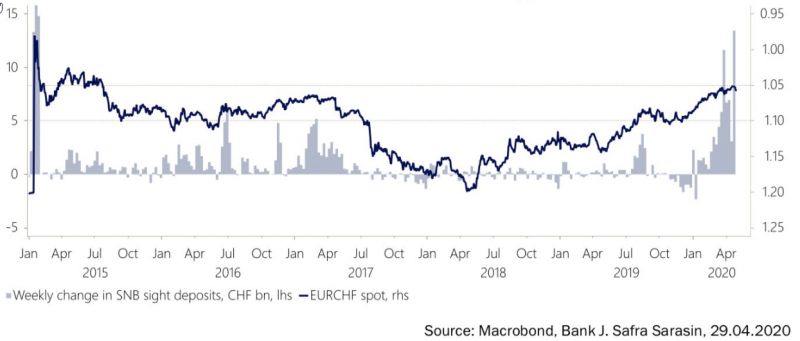
SNB Sight Deposits: is stable 0.0 billion francs compared to the previous week
-
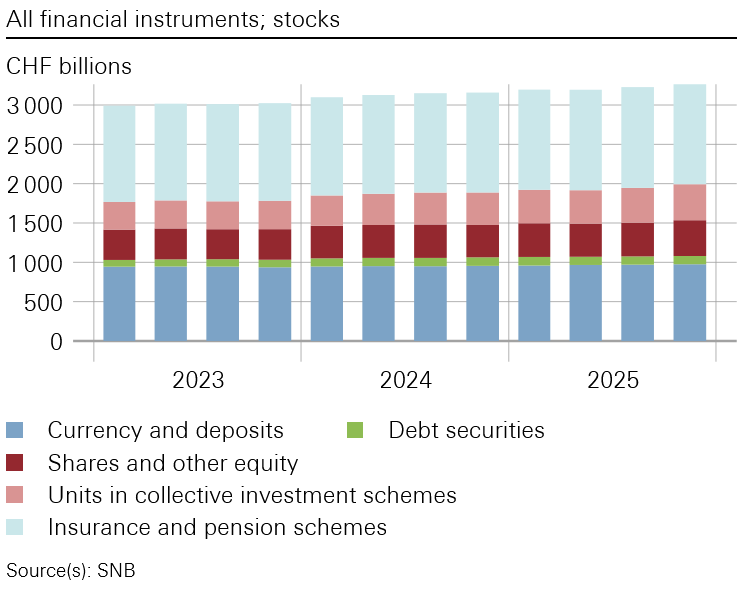
Household wealth in 2025
-
Heads up for NZD and CHF traders, RBNZ Gov Breman and SNB Chair Schlegel to speak
-
Swiss franc appreciation has led to tighter monetary conditions – SNB minutes
-
SNB’s Chairman Schlegel: A few months of negative inflation wouldn’t be a problem
Main SNB Background Info

Featured and recent
-
 Prices for cars drop in Switzerland thanks to Chinese brands
-
 SWISS CEO: ‘crises are becoming more frequent’
-
 China’s Trade Surplus Swells and the Market Awaits US CPI
-
 Swiss regulator fails PostFinance financial emergency plans
-
 Think Rates Are Peaking? Consider Mortgage-Backed Securities
-
 What The NFL Can Teach Us About Risk Management
-
 Court throws out CHF18m Swisscom fine in fibre-optic dispute
-
 Glencore starts secondary listing on Australian stock exchange
-
 Swiss health group Galderma acquires US skincare brand for $1.5bn
-
 Swiss rollercoaster maker investigates fatal US Six Flags accident